Browsed by
Tag: felting

Felted Pictures Serving as Illustrations for a Book by Nada Vukadinovič

Felted Pictures Serving as Illustrations for a Book by Nada Vukadinovič

Our guest artist/author today is Nada Vukadinovič (Halay) who has some exciting news about felting in the book publishing world.

The other day I visited a local exhibition in Mozirje, Slovenia, where a local felter, Spela Oresnik, displayed about 20 felted canvases. All had been made for a particular purpose, i.e. to serve as illustrations for the book entitled Gori doli sem in tja (Up and Down and Everywhere) written by Marta Oresnik. I found this approach very interesting. Usually a painter is engaged to make illustrations for a book but in this case a felter was invited to use wool to depict the scenes from the stories. She used local wool from the Solčava breed, which is a rather coarse wool, mainly used for making slippers, hats, bags, etc.

1. 3.


The book is an interesting collection of old anecdotes and folk stories which were passed from generation to generation, written in a dialect spoken in this region, e.g. someone meeting a devil, or death, dwarfs, Solcava in fire, witches everywhere, blueberry and strawberry etc . She used wet felting technique to do the background using local wool and needle felted 3D figures which were attached to the base. Only the coloured fibres were bought.

10 2014-05-30-369


The collection of old stories was made as part of a national project. Here I need to mention that Slovenia is very small country in Central Europe with population of only 2 million people and a lot of effort is being put into preserving the language and culture. The size of Slovenia compares to the size of New Jersey, however, there are seven main dialects spoken and 49 sub-dialects. The dialect which is spoken in Solcava is spoken only by 500 people. This means that on a walking distance of one and a half hour one comes across another dialect.

2014-05-30-371 2014-05-30-370


lovec 2014-05-30-373


The book has been published and includes a CD so you can listen to it in different dialects. You can learn more about the book here: http://www.mohorjeva.org/oresnik-marta/gori-doli-sem-in-tja  There is a felted picture on the front page. The publisher was Mohorjeva družba (2013).

The Solčava felters to whom Špela Oresnik belongs, are organised in a local felters union, but I think I’ll leave it here for now and describe the felting scene in Slovenia in another post.

Thank you Nada for bringing this exciting new venue in book publishing to our attention.

What exciting things have you seen in the felting world lately?


Second Quarter Challenge Finally Done.

Second Quarter Challenge Finally Done.

That’s right I have it done and with days to spare. 12 whole days at that! Here are the details of the challenge if you missed them.  Challenge

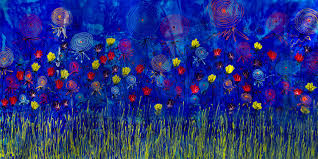
I have know what I was going to do for ages I just hadn’t done it. I like Stephenson’s mirror pieces but I also liked the flower pieces so I decided to combine them.

stevenson 1  stevenson 2

I used a thin piece of black prefelt I had and doubled it up for the back ground. I then used my own handspun for the stems. I added silk throwers waste for the flowers and then more hand spun for the spirals. I wasn’t sure how everything would stick. There was not a lot of fuzzy about any of it. It worked out fine though.

I forgot to take a picture of it before felting but here it is finished. I like it a lot more than I thought I was going to.

stepnenson picture

I found this frame on my front porch ( have no idea why it was there) and laid it over the picture and I like it even more.

stepnenson picture frame

If you haven’t done a piece, go ahead and give it a try, you still have time.

Don’t for get to visit the Forum to see how others have interpreted the theme.  Challenge

The Four Day Dye Experiment

The Four Day Dye Experiment

I recently read some new instructions for dyeing using citric acid and salt. Well not new,  I took a class a couple of years ago where the instructor used similar instructions. Normally, I use vinegar for dyeing.  But I like to experiment.  I have also been wanting to try some new fibers and have never dyed something I’ve already felted.  So, I decided to combine the experiments.

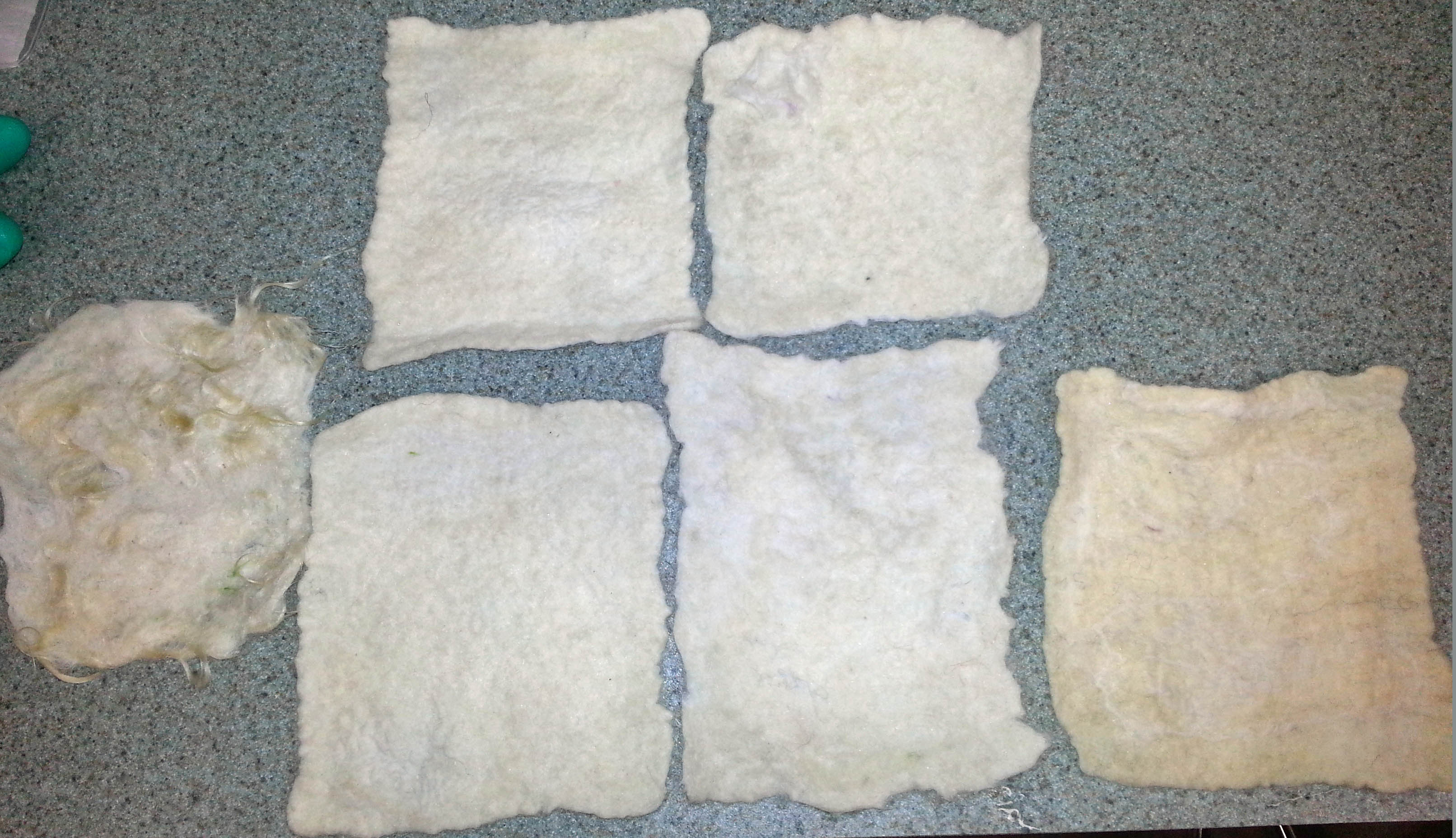
I made samples using Cheviot, Romney, Icelandic, Texas Mohair locks and Domestic 56’s.  On each sample I put a piece of silk Habatoi, silk gauze, thick and thin yarn, mulberry silk and prefelt. I was going to make a placemat out of them, but they all shrank differently, so I have to rethink what to do with them.

felted samplesAccording to the instructions, I had to weigh the fabric to dye (before soaking in synthrapol).  I had a large pot so I put together some Merino, silk habatoi, wool yarn, and wool thick and thin yarn along with my samples.  All total 128 grams.  Next, into the soak, then on to mixing the citric acid and salt solutions.

After a thorough search, I couldn’t find the citric acid I thought I had. Whoops.  Well, it should still work with vinegar, right?

1 gram of fiber= 1 milliliter of dye.  Then depending on the Depth of Shade desired the amount can be multiplied by 1 through 5 (light to dark.)  When I filled the syringe with 120 ml of dye, it looked like a lot so I decided just one DOS would be enough to start. Normally, I would use a tablespoon of dye.  If I wanted a darker shade, I could add more dye later or overdye it.  I used my own dye stock that I had on hand.  After getting the fiber and dye bath up to temperature (185 degrees), I let it simmer for 30 minutes and checked it.  The water was still very dark.  I added more vinegar and let it simmer for another 15 minutes. No change. Another 15 minutes, then I added more vinegar and turned the heat off and left it until morning expecting it to be exhausted.

day 1 BSurprise!  Beautiful colors, but plenty of dye left.  I removed the fibers, rinsed and rinsed then let them dry.

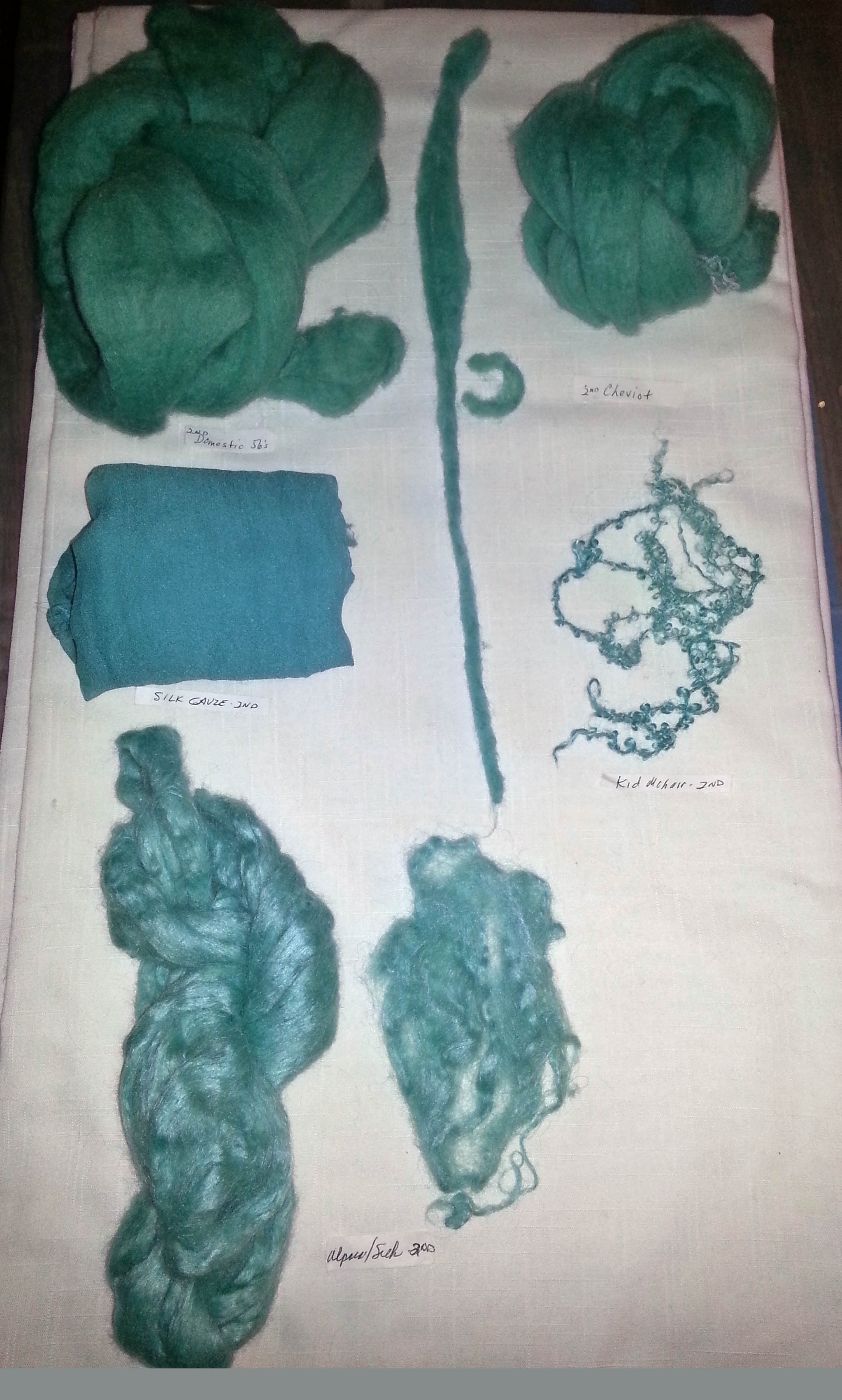
Back to the dye pot.  I decided I probably didn’t need more teal fiber, so I added a couple of teaspoons of yellow.  Then put in some Domestic 56s, alpaca/silk, kid mohair yarn, Cheviot and silk gauze after soaking in vinegar. I repeated the dye procedure.

day 2Staring at the dye pot the next morning, there was still plenty of color left.  So, on to day 3 with Domestic 56s and Cheviot.

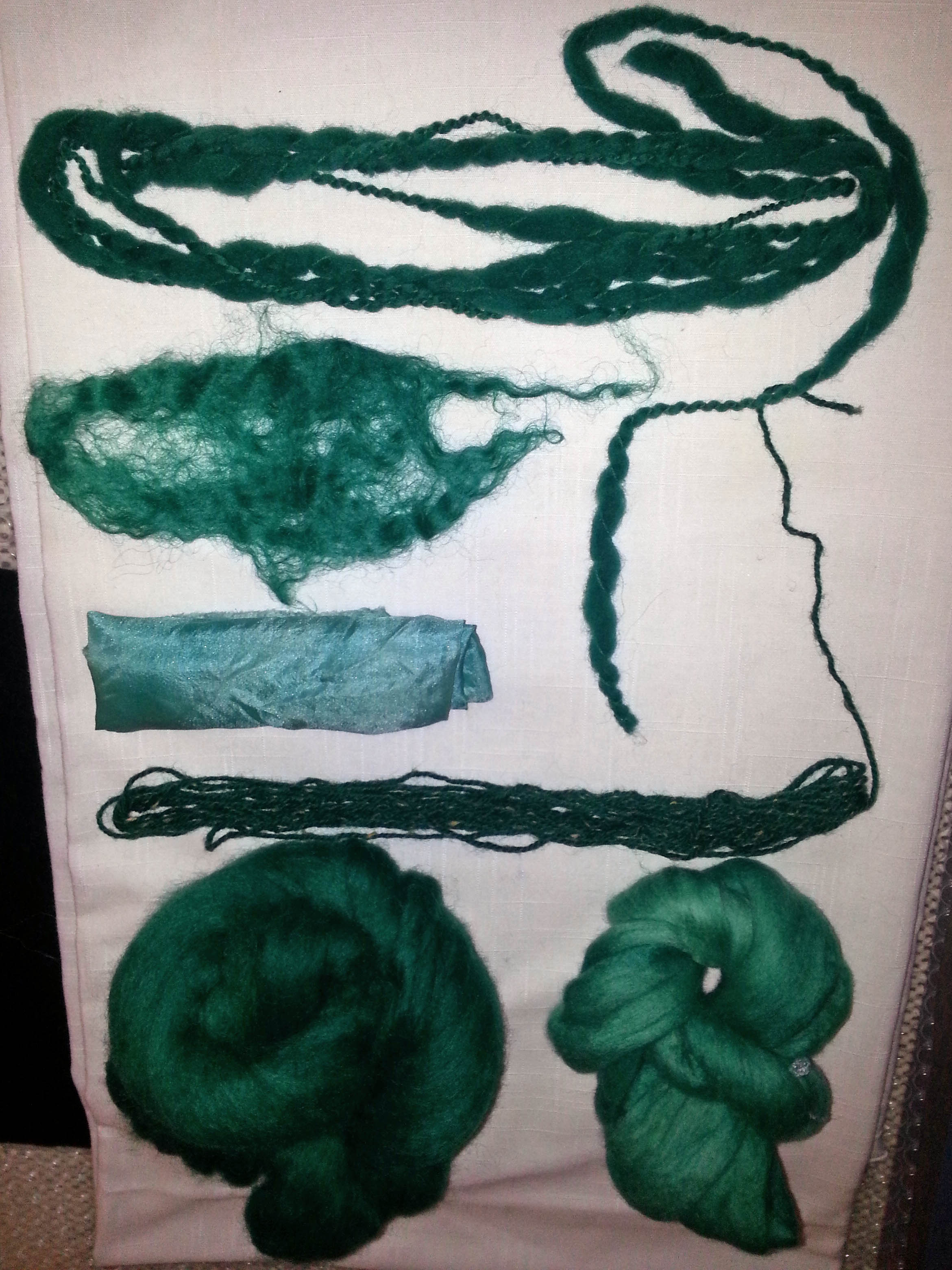
Day 3bOkay, enough, right? Dont laugh. I had to see this through.  Day 4 included thick and thin yarn, wool yarn, a piece of felted Wensleydale, silk habatoi, Romney and Merino. I expected some pastel colors the next morning. No.

Day 4Finally, the dye bath was exhausted and I had the biggest surprise of all. The Romney was darker than the fibers on the first day.  It’s a good thing I like teal.

4 days

I finally realized my mistake — my prepared dye mix  is 1 teaspoon dye powder to 8 ounces of water which is double the concentration than what the instructions were for making the dye solution.  (1 part dye powder to 100 parts water — i.e. 5 gm dye powder to 500 ml of water.)  I didn’t pay attention to the dye solution instructions because I had already had some made.  My bad.

I haven’t given up.  I have citric acid now but will try a much smaller amount of fiber and the right amount of dye solution.  But now on to make some batts and start a new project.


The Results are in…

The Results are in…

In an effort to evaluate our marketing plan and see if we were meeting our Felt and Fiber Forum Members needs, we conducted a member and guest survey May 20 though 27.

Overall, the results were good in terms of the satisfaction of our members.  There are a few things we will be working on to make some improvements to enhance the site and information available to members.

Our first question  was “What Brought you to the Felt and Fiber Studio forum/Blog?”  Since we are an online community, it was important to know how people find us.

forum

I added invitation to the list on the graph because several comments we had included that as an option we hadn’t offered on the questionnaire.

For those members who found us on an online search, half of the respondents chose “wet felting” as their search criteria, 25% “fiber,” and 25% used “needle felting.” Other comments included — felting, fibre, fleece,  and wool roving.

93% of the respondents said they were satisfied with the interaction on the forum. Sometimes was the response for 7%.  The comments for “Why not” were,  “I don’t feel I have much to contribute to the conversations, but find them interesting” and “I check in occasionally, but not regularly.”

Meknittingmbers (79%) feel valued.  65% feel their interests are well represented. Friendly and helpful members rated 93%.  Comments requested more information on spinning, weaving, crochet, etc.


One of the most interesting answers for me was the activities members are looking for on the forum.

activities

Comments included “Mixed media is more interesting to me,” and “online classes.”

class

Participation would be higher if we were able to give our members more time.  100% of the respondents checked this off.  What this tells me is that those regular members somehow make time to visit, while others pop in occasionally when they have a few minutes timeavailable.  Giveaways and classes were also considerations at 8% each.  “A larger membership with increased posts would naturally prompt me to respond more frequently” was a surprising comment for this question.  We’d love to have more members participate, if only we could find a way to give them more time!


92% of Forum members also subscribe to the Blog.  Again time was mentioned in the comments as to why members did not belong to both.

One of the reasons I wanted to do the survey was to see how we could get our members to help us increase our membership and participation.  Here were the results:

promotingAgain there is that power of “word of mouth.”

I was also curious how people felt about the lack of advertising since we make an effort to keep the site uncluttered and supportive of the purpose of the forum without compromising the integrity of the site.  71% liked not having advertising.  29% had no opinion.  However, the comments were revealing — quality fiber related vendors would be welcome. Others commented that the sponsorship banner was a good idea.

What does all this mean?

Generally, it means for those members who responded,  The Felt & Fiber Studio Forum/Blog is doing a good job as a friendly place to share most things fiber enthusiasts care about.  The information gives us a few directions to improve or make changes that would benefit our members and, hopefully, engage our current members to help attract new members and other ways such as Search Engine Optimization clues to drive more online traffic our way.

Can we improve?  Of course!  There are things we will be doing in the future to offer more of what our members want to see and do.  In addition, we will provide some material to promote the forum for anyone who wants to help.

help

In the mean time, keep telling your friends about us and come by often to share what you’ve been working on with us, offer some tips or let us know how we’re doing.

Our thanks to everyone who took the time to complete the survey!

We hope to see you all on the Forum soon! http://feltandfiberstudio.proboards.com


A Felt Beret

A Felt Beret

The other week I decided to make a beret to see if I remembered how as I haven’t made one in years.  They seem to be making a bit of a comeback where I live.

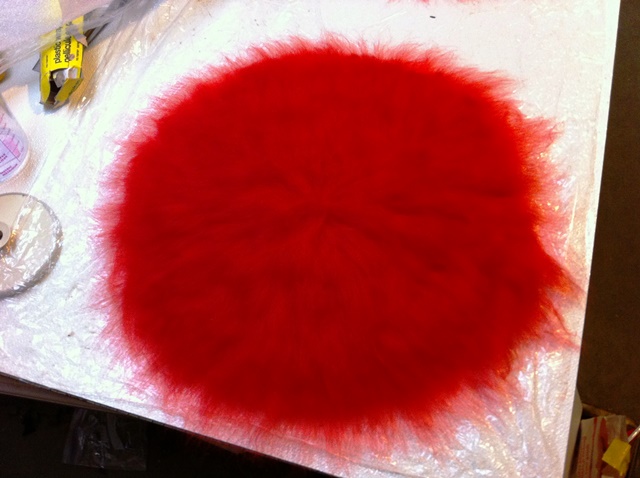
I decided on a nice bright red

side one first side wet

I added some white throwsters waste for some interest

silk on beret silk on beret close up

After some rubbing and rolling I cut a small hole to get the resist out and to make a hole for my head.

cut out for head

The whole stretches easily to the correct size

fulling and stretching the head hole beret finnished

As it turns out a little bigger ( not much) would have been better it is a size small so tight on my head.  I stretched it as much as I could.   Just as well as I do not look good in a beret. I could make it bigger by cutting and adding sewn on brim but I am lazy.

finished beret 1 finished beret 2

I really like how the silk worked. It is quite big but I was thinking the you could put your hair inside it.


Visit to Waldron Grove Alpaca Farm

Visit to Waldron Grove Alpaca Farm

Last weekend, I took a little ride to the Waldron Grove Alpaca Farm in Campton Hills, Illinois for their annual Open House and Art Sale. The two day event featured their 30 Suri alpacas and an array of handmade items for sale and demonstrations by five featured artists.

alpaca farm

The farm is owned by Susan and Ron Waldron since 2003.  Susan is an oil painter and felter.  She combines needle and wet felting using her Suri Alpaca fleece exclusively for her designs.  She and Ron also specialize in alpaca farm start ups.

The alpacas are a little shy so they kept to themselves, but it was fun watching them in the field.  Susan had two wonderful weather days for the event.  (Lately, our weather has been very iffy.) A little windy but sunny and warm.

The garage was filled with wonderful art pieces for sale.  While I was there I was able to watch a spinning and drop spindle demonstration by Laurie McGee who is a dyer, spinner, weaver and knitter.  She also makes custom yarn, hand combed tops and gives spinning lessons.

Laurie spinningLaurie w


Laurie 1

There were many of Susan’s oil paintings, tapestries, silk scarves, shawls, silk coverups and clothing beautifully displayed around the area.  She also sells alpaca needle felting kits featuring alpacas, irises, and other flowers. You can learn more about Waldron Grove at www.susanwaldronart.com

                            more scarves shawl on rack scarves


felt kits          clothes rack

LuAnn Toborg and Anita Riemer were manning the cash register while I was there and I had an opportunity to talk to both of them.

LuAnn specializes in hand dyeing yarn with natural plants, berries and flowers.

Lu AnnLaurie

Anita creates dyed yarn with acid dyes and makes cowls, scarves, hats, felted wallets, jewelry and baby blankets.

Anita

While I was there, Susan demonstrated needle felting and hand carding for her guests. She’s modeling a wool jacket she embellished with alpaca.

susan demo

Of course, I bought some alpaca to play with.  I also arranged to come back to take a lesson on using the needle felting machine.

It was a fun afternoon talking with fellow felters and artists and perusing all the wonderful works of art available for sale.

What special events have you attended recently?  Remember, if you have a project or event you’d like to blog about, please contact one of the moderators and let us know.

Cheese cloth Nuno Felt Experiment.

Cheese cloth Nuno Felt Experiment.

A while back Ruth got some free samples of some cheese cloth  or cotton gauze from Cheese Cloth Fabric.com. She dyed some and sent me some samples. I also had a more open weave cheese cloth that I will use so you can see the difference. I thought if I am going to use my time I should make something that will be salable in the end so decided to make bracelets or cuffs so I could easily compare the cottons.

gauze on black
gauze on black
gauze on white
gauze on white

The pink on the left is the sample sent to Ruth and the purple on the right is the gauze I got at a place called Lens Mill  http://www.lensmill.com/ in Guelph Ontario. You can see the purple is a much more open weave.

first two samples first two samples wool on

Ruth sent to colour samples. Here is before and after adding the wool.

purple gauze ready to felt purple gauze  2 ready to felt

I did one sample of the purple flat and one scrunched up. You can see my template marks behind the right one.

purple gauze finished purple gauze  2 finnished close

I like the way both these tuned out. they are very different than the tighter weave cotton.

green gause finished close orange finnished orange 2 finnished

I did a scrunched up pink one for comparison. I think I like the scrunched up ones the best. I may add some beads in to folds.  They will be for sale later in the summer once I get some buttons and button holes done.


Felt Bird House Class.

Felt Bird House Class.

Last week I taught 3 ladies from my guild how to make felt Bird houses.

There was rubbing

Alison in working Nancy and rollingLinda rubbing

and rolling

Alison rolling

Cutting

Linda

and more rubbing

Nancy rubbing

Then the really fun part, scrunching and throwing. Sorry to say no non blurry pictures.

After that they rinsed their houses and blew up balloons inside so the will dry nice and round.

Nancy finished Alison finnished

Lynda made the hole a little bigger to use it as a bird feeder instead of a bird house.

Linda finished

Felting with friends: scarves, dying and more bags.

Felting with friends: scarves, dying and more bags.

On our felting week end Maureen decided to do scarves. She wanted to try out some 50/50 merino silk that she had.  She laid out the wool quite thin and rubbed it into prefelt.

maureen felting thin scarf

Once it was prefelt  she spun the water out of it and started cutting it. She made slits that she then stretched out and started fulling.  You stretch and full, stretch and full and end up with great holes.

maureens cut scarf 2

Next was into the dye pot. Although the scarf turned out great, it did not show off the silk. Usually the silk and wool take the dye a little differently, with this blend I was all one. We decided that it was because the it was to well blended.

maureens cut scarf

Maureen did 2 more scarves one in the same style and one solid. Sorry the pictures of them did not turn out.

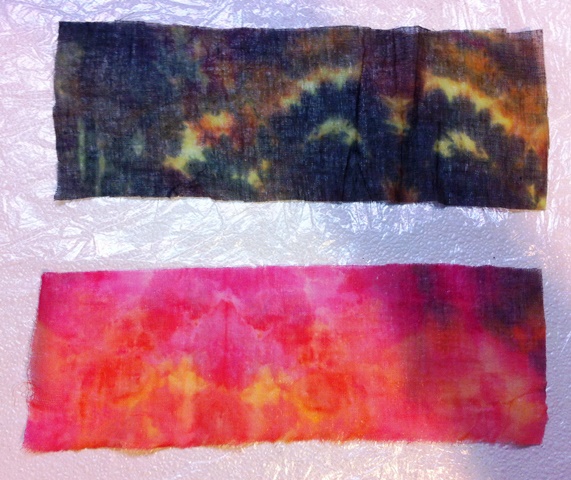
Diane hasn’t done a lot of dying so Diane and Maureen dyed some silk chiffon.  The silk was twisted and dyed with several colors.

dyed fiber dyed fiber.

On the last afternoon I decided to make a bag for my mothers birthday.

moms bag startThe inside of the bag will have a red stripe. I used a combination of commercial prefelt and top. I also added some Blue Faced Lester wool to add some strength and stiffen it.

moms bag ready to felt  This is the outside. There is black next to the resist and the white on top. I wanted the black to migrate through the white and make a light gray. This is the finished bag. its reversible.

gray felt bag gray felt bag reversed

Diane decided she wanted a new shopping bag. She started out huge and did many layers of prefelt and wool.

dianes giant bag

Here she is fulling it

dianes giant bag fulling dianes giant bag fulling more

You can see it did shrink but just after this she gave up and said she will put it in the washer at home to see if she can shrink it more. At this point it is a large sturdy basket.

This is our group shot. We were very busy. You can see Maureen’s two scarves on the left.

fruits of our labour

The one on the right was one Maureen had made recently, added just the balance the picture. And finally that was the end of the weekend. We needed to go home and rest.


Second Quarter Challenge: Stewart Stephenson

Second Quarter Challenge: Stewart Stephenson

As you probably know we have decided to pick a different artists for our quarterly challenges this year. This quarter I have chosen Stewart Stephenson http://www.stewartstephenson.com/home He is a Canadian artist that has a large body of work in a variety of mediums and styles. I think there is something for everyone here.

He has a gallery in Vancouver British Columbia Canada

gallery-img1 stevenson 1 stevenson 3 stevenson 5 stevenson 2stevenson 4

It says he did some sculptures but I couldn’t find any pictures. I even sent them an email asking about them but got no response. If you find some please share them with us. Have fun with this.

Don’t forget there will be a post over on the felting and fiber forum where you can ask questions, discuss and post pictures of what you where inspired to make.