Browsed by
Month: November 2020

Holiday Card Exchange

Holiday Card Exchange

Each year on the forum, we have a holiday card exchange. It’s always lots of fun to see all the different cards created and to receive one in the mail. If you’d like to see other cards, you can see them here. Make sure to scroll down and then look at all the pages in this thread to see the ones posted so far. 

I was getting a bit concerned about the card that I sent to Janet in Canada. I sent it out on November 4th and she didn’t receive it until November 27th. That is one of the reasons that we have people send their cards early so it has more time to arrive safely during the busy holiday season. But at last, she got it! So now I can tell you how I made the card.

Here’s the layout. I used a piece of white prefelt for the background and then added short fiber merino in blue green for the sky. I left patches very thin to make it look more snowy. I used “white” mixed 56’s for the snow but it wasn’t very white so I added a bit of white cashmere fiber that I have been saving. It was very white. Then I added silk noil to create a more snow like effect on the ground and in the sky. Finally over top of this, I added white prefelt tree trunks. I started with only one layer of prefelt but decided to add another layer over the trunks in the sky section as I felt that the blue green was going to bleed through too much.

Here it is after felting. I liked how the tree trunks overlapped on the top so I left them for awhile.

Next up was to add a little free motion machine stitching. I used an off white thread to give a slight shadow and more texture on the trunks. It’s kind of hard to see here but you can click on the photo to enlarge it.

Then I added a dark grey thread to give the characteristic birch tree look. I don’t use black for this because it feels much too stark. I think the grey looks more natural. Then I had to decide whether to crop or leave it as is. I finally decided on the cropping because it was just slightly too big to fit on my 5″ x 7″ card. I trimmed it up with a rotary cutter and attached it to a greeting card to send to Janet.

So here it is. I do think it looks very wintery which was the goal. I am going to have to make some more of these to sell as small art pieces.

And this is the wonderful card that I received from Janet. This is Janet’s first attempt at making a fiber/felt card and didn’t she do an awesome job? Thanks Janet for this beautiful card.

Fourth Quarter Challenge

Fourth Quarter Challenge

Although I don’t normally make a big deal out of Christmas the one thing I’ve always enjoyed, and can’t imagine not doing, is decorating my tree. The bigger the tree the better….in fact if it doesn’t touch the ceiling it isn’t up to the job! At this point I will come clean and admit that, as the trees got bigger and bigger, I made the shift from real trees to an 8 foot artificial one. I can hear the groans from those who wouldn’t dream of buying artificial, that used to be me, but it is what it is!

Most of my tree decorations have been homemade or received as gifts with some of the quirkiest, and most meaningful, coming from my Aunty Das who sadly isn’t with us any more. These lovely wooden decorations were gifted from Das to my partner who’s hobby is flying.

And these are a few I’ve made in the past…..

These rosette paper baubles took hours to make and won’t be repeated! The dark one is 17cm diameter and was made from black and white photos cut from magazines, the other two are 11cm and made from an old book.

With a big tree there’s always room for more baubles and with the fourth quarter challenge being Christmas Decorations it was the perfect excuse to make more. I found some 10cm and 8cm polystyrene balls locally and covered the large ones with four coordinating cream/black fabrics and the small ones with four green/red fabrics.

Some of the balls have been cut into eight segments and others have had extra horizontal cuts to create a patchwork effect.
I’ve found a stash of old baubles in the loft and these are getting a makeover this year, drawing on them with the hot glue gun and then covering them with Matt emulsion.

One of the first wet felting workshops I attended was run by Robyn Smith who taught how to make these gorgeous fairy boots…..I’ve made them as gifts every Christmas since then. With more time on my hands this year, and prompted by the Challenge, I’ve made myself some plus a few extras to sell.

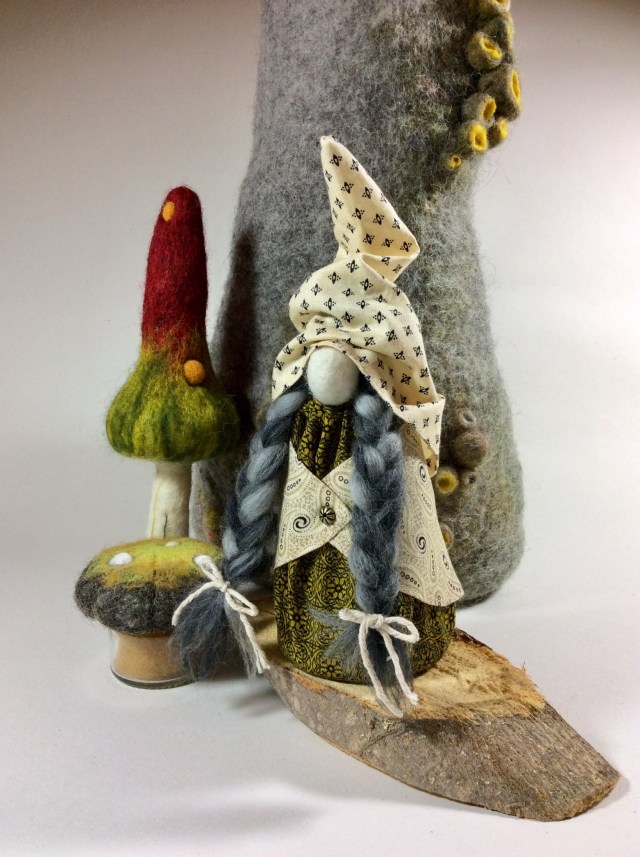
As it’s the season to be jolly, and gnomes have always made me smile, I’ve had a go at making some of those too. The Scandinavian gnome is typically associated with the Winer Solstice and Christmas season so I thought I’d have a go at making my version of a Scandi gnome.

The gnomes came about by accident really. Spurred on by the challenge I’d ordered some 14cm high polystyrene cones online (by this time we were in lockdown) with the intention of making Christmas Tree shaped table decorations. When they arrived every one of the ten cones was damaged.

Rather than send them back, the challenge now was, what could I make with them that didn’t need to be a perfect cone shape? That’s when the gnomes came to mind….the wonky cones would make the perfect base!

Originally I thought about making flat felt for their clothes but then decided to use the same cream/black fabrics I had used for the large baubles, plus a few others. Being in lockdown and wanting to get straight on with them I searched around for something to make the beards out of and found an old cardigan at the back of my wardrobe that had a faux fur collar…..needless to say it doesn’t any more! The first beard I cut didn’t look right. With trial and error I’ve discovered that the way to cut faux fur is by working from the back and only cutting the backing fabric, not the fur itself, using a scalpel blade. That way you get a nice shaggy beard.

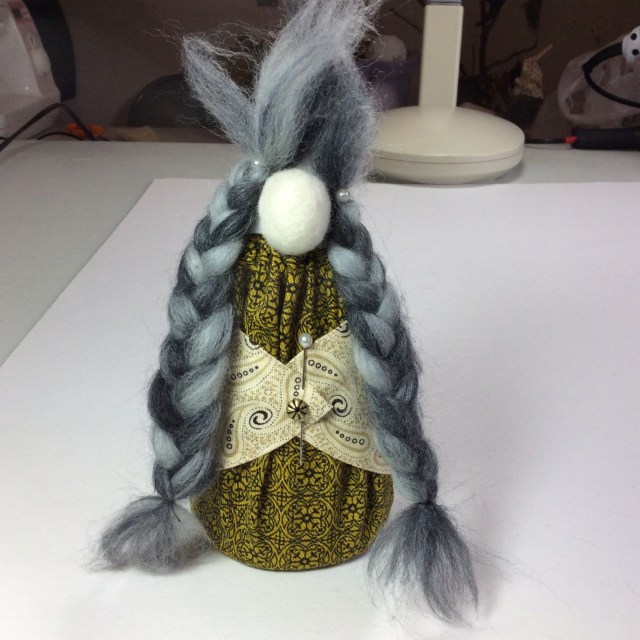
The females have Merino wool plaits and both sexes have felted button noses. I’ve machine sewn their outfits but if you were making these with children they could be made just with the glue gun for a quicker finish.

The clothes are simply a triangle for the hat, a semicircle for the jacket and a circle for the dress and/or gents undergarment.

The dress circle is simply hand stitched around the circumference, put on the cone and then pulled tight and the thread knotted. The front of the dress is then pulled up to approx 10cm from the base and hot glued in position.

I decided to use a belt and braces method to attach the nose as I was afraid it might get knocked off (really??) It’s been hand stitched to a strip of white fabric and that in turn is glued onto the cone. Thinking about it now, was this over engineered? Definitely!

The waistcoat was finished with a metal bead and the Merino fibre plaits attached either side of the nose using hot glue. The oversized hat has been glued in several places to create the sloppy look. To finish them off I’ve stood each gnome on a slice of wood.

I’ve had fun making these and I’m keeping a male and female on a shelf in my studio because I can’t look at them without smiling! Besides, a gnome isn’t just for Christmas!

Whatever you get up to over the Christmas period have fun and stay safe!

Finishing the Flax  2020 Flax study group

Finishing the Flax  2020 Flax study group

I promise we are almost done, but I suspect you wanted to see the culmination shots from this year’s harvest!

This year we had planted two rows of flax, which did not look too excessive until we started to harvest it. Even with the flax being shorter this year, we still doubled the number of stocks we were dealing with. So, it took 3 Saturdays to finish the processing of the line this time. We did not finish all the tow into batts, there is a small bag of hackle waste left. This year we kept the best feeling drum carder waste to try combing the tow into top.

We were chilly but from Cathy Louise’s research, we needed dry, low humidity conditions for the final part of the process. Other than Remembrance Day on the 11th, which often rains, it is usually dry and cold in November here. Thus, we waited to work on it.  Sure enough, day 3 was about 4 degrees Celsius, which was quite nice in the sun but quickly lost its illusion of warmth when the sun hid out behind clouds.

Day 3  the plan – get the last of the Line through the hackles and finish tow from the hackle waste with drum carders.  We had Ann’s drum carder with the blue metal base from last week and Glenn had pulled out my two. One is chain driven; the other is belt driven. One is a bit coarser than the other but both are in the medium range.

 1 all 3 drum carders to finish the tow

To work on the line we had a coarse, medium and fine set of homemade hackles using nails. They had a hardwood base that had been predrilled before the nails were added. We also had an antique one that was between the medium and fine ones. The old one had blacksmith-made nails that tapered and had tin on the base.

 2 all the hackles

3-6  The New Hackles


7-11 the old hackles

While we worked, we compared last year’s line to this year’s. The colour is different and this years is finer (last years is in the plastic bag).


12- 19 working on the line and tow

The team worked hard until lunch arrived (more pizza). Glenn joined us after stopping at the farmers market to pick up butter tarts from Ann, it was very busy so he was running late and just in time for pizza.

 20  in the foreground; Cheese and mushroom pizza, mid-ground; flax going from the course to the medium hackles and in the background; the hackle waste to go to the drum carder.

The Cow supervisors were enjoying the weather and just generally looking cute decoratively draping themselves around the field beside the coverall barn.

 21 the Supervisors taking a break

Back to work finishing the last bit of line and deciding to leave the last of the hackle waste.


22-24 the last of the line

It was time to clean up the drum carders then gather and weigh the culmination of our summer’s work. Henry had brought the air compressor over to help clean the drum carders. It was a brilliant idea.  I do not think my carders have ever been so clean.


25- 27 Cleaning the Drum carders

Now it was time for the bagging and weighing. Cathy Louse had brought a scale and I had one of my wool washing buckets which we used to contain the fibre on the scale.  As Cathy Louse weighed it, Glenn wrote it down on the bag and Ruthann kept notes on the totals.


28-30  doing the math

We divided the line into 8 sections of 33 grams, bagged and labelled it.

31-34 Line bagged and ready to go

When the line was divided, we moved on to the batts of tow.


35-37 bagging the batts of tow

That left a bag of waste from the hackles that could be drum carded later and two bags of the waste from the drum carder. This we had set aside to try combing it since the test sample looked like it had potential.

Now for the Totals you have been waiting for!

Ruthanne said we got 271 grams of line, 556 of carded tow, 130 grams of uncarded tow and 573 grams of carder waste that we can try to comb and see what we get.

Cathy Louise and Henry calculated that we got 1530g of useable fibre from 400 square feet. Henry did the math and figured if we had done a full acre we would have had 29.52 Kg of line per acre and Carded tow 76.5Kg per acre.  If we tried an acre we would have to add Sundays as well as Saturdays or we would be working at it all winter! We would likely improve with all the practice but it’s still a lot of work!

We had a larger team than the final processing day. Some wanted to experience what it was like to process flax trying some or all of the steps. some were interested in the fibre to try spinning while others were not. It was a wonderful experience to be able to participate in.  It was especially welcome to look forward to seeing friends during the fibre work parties, especially during covid!  Thank you again to Cathy Louise and Henry for giving up a section of their Market garden, doing the ground prep and planting and the aromatic section of retting that we missed.  Thank you also to all the other members of the Flax Study Group 2020.

 38 the team for the final processing, Glenn taking the picture this time!

Fingerless Mitts or maybe they are Gauntlets or Wrist warmers

Fingerless Mitts or maybe they are Gauntlets or Wrist warmers

I am super busy getting ready for our last farmers market of the year. We sold so many meat pies I will be frantically trying to make as many as possible for this Saturday. I thought you might like this fingerless mitts post I did a few years ago.


I decided I want to sell some fingerless mitts this fall. Or maybe they are gauntlets or wrist warmers? Does anyone know what the difference is?

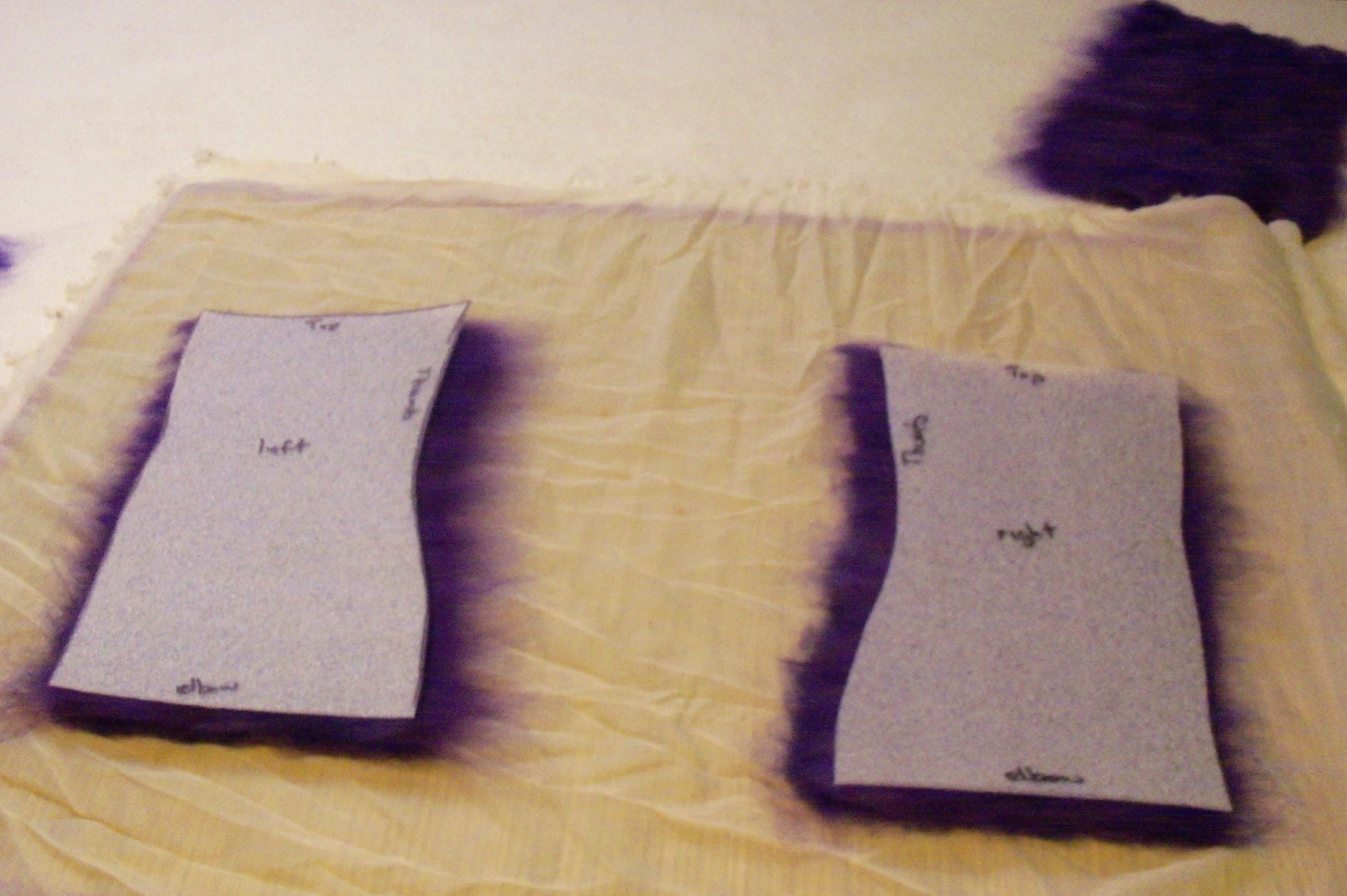
First I have to make a pair of resists. I traced my arm from knuckles to almost my elbow.  then measured around my arm to see how much I had to add for depth. then I figured on 30% shrinkage.

fingerless mitt resist

Naturally, I picked purple wool. I used about 60 grams for the pair. mostly because that is what was in the ball of wool I grabbed.

100_7131


fingerless mitts ready to felt

Here they are finished

fingerless mitt finnished

They turned out fine and they fit me and my much thinner daughter so sizing is good.  I may add some stitching and beading.  I think they are a little heavy or thick. I was going to put a thumb hole in but I think it would be uncomfortable with the thickness. Next time I think I will use 40 grams of wool and see how that goes.  I may try making the part over the hand pointed too. I think it would look nice.


Snowman Ornaments Complete

Snowman Ornaments Complete

Thanks for all the suggestions for completing the back of my snowmen ornaments. There were some great ideas which I might have tried except for the fact that this was supposed to be a quick project. I have seven ornaments and I already have thought of more than seven people that I could give them to as holiday gifts. So I really couldn’t do them back to back or I would have had to double my workload. I liked the idea of a cord around the edge or blanket stitch to snazz up the design, but again, that would take much more time than I have allowed myself for this project. So I took the easy way out and fused black craft felt circles to the back of each ornament. Before I did that, I stitched on a hanger with some black shiny cord that I have in my stash.

Here’s the back of one of the ornaments. I didn’t worry too much about an exact circle but just cut them to match the felted circles. You can definitely tell it’s hand crafted!

And here they are all together. I kept thinking I should be naming them like the Seven Dwarves, Happy, Bashful… But they were all fairly happy so I wasn’t sure I could come up with enough names meaning Happy.

I did use plastic over the last set of six while felting to see if there would be less transfer of black and red fiber to the snowman face. It was slightly less and definitely kept the surface of the felt a little smoother. The one on the bottom right is the one I didn’t use plastic on when felting and it is a little darker than the others, maybe.

This slideshow requires JavaScript.

And here they all are separately a bit bigger. All the faces were stitched with #5 perle cotton and the hat bands are sari silk ribbon. I don’t usually do “cute” so it was a departure from my usual style but I enjoyed creating the different faces on each one.

Have you created any holiday decorations this year? We’d love to see over on the forum, you can post any photos of your hand crafted holiday creations here (either past or present).

Fun with Foils

Fun with Foils

Like many of you, I belong to some textile groups that would normally meet in person but this year have needed to find alternative ways to work together. One such group is the Farnborough Embroiderer’s Guild (EG). This EG group is quite unusual in that rather than inviting speakers to talk about their practice, we all take it in turns to teach each other new skills. Three months ago we started meeting via Zoom and I have to confess in some ways I actually prefer it! We aren’t a large group but when we meet in person I often end up only talking to the 2-3 people I am sat nearest to, on Zoom the whole group shares the same conversation which is nice and feels very inclusive. The other advantage is the lack of commute, for me, this means I get to eat before we gather and I can have a glass of wine while we play together 🙂

Last month Sue took us through a technique to create foiled pictures; I don’t know about you but I can’t resist a bit of bling! As we are approaching holiday season it also feels very appropriate to share this with you now, I think it would make some wonderful textile Christmas cards and gifts. I hope you enjoy it and feel inspired to have a go!

Although I have played with foils before it was only as decorative finishing touches never as the basis to create a whole textile picture. Even so, I still managed to make every mistake in the book but was pleased to find foils are remarkably accommodating, if you make a mistake, it can (mostly) be rectified with layering more foil over the top.

Unfortunately it did not occur to me to take photos of the process until I was half way through my picture, I apologise for the lack of photos covering the initial stages of the process. The first few photos are where I went back and reapplied the bondaweb on the beak as my initial application had not transferred completely.

This was the reference photo I used for inspiration:

Some useful tips before you start:

  • set your iron on a low to medium (1 to 2 dots) setting without steam
  • always use a sheet of baking parchment to protect your iron
  • work on an ironing board

1: Cut a piece of medium weight, iron-fusible interfacing / fabric stabiliser slightly smaller than the background fabric and iron it to the back of your fabric. We used black cotton velvet but most non-synthetic fabrics will work (synthetic fabrics are best avoided for this technique as they might melt when heat is applied).

2: Draw out your design with a pencil on the paper side of a sheet of bondaweb. If you aren’t confident drawing freehand, you can trace the design from a printed image. Cut out your design, either as one solid shape or in sections if you plan to create a stained glass effect. For the hummingbird I cut out the whole bird as a single piece.

3: Transfer the bondaweb design onto your backing fabric.

If you are using the stained glass technique you might want to transfer one piece at a time, foil it then apply the next bondaweb shape.

4: Once cooled, carefully peel off the paper backing from the bondaweb.

5: Lay a piece of foil (coloured side facing you) over the exposed bondaweb and cover this with a piece of baking parchment, using the tip or edge of your iron, apply gentle pressure to the areas where you would like that coloured foil to appear.

Allow the piece too cool before peeling back the foil backing.

Tip: you can cut out pieces of baking parchment paper to mask off areas where you do not want that particular colour to appear.

If there are areas where the bondaweb has not transferred so well, or you have already applied several layers foils and want to lay a different colour over the top you can reapply the bondaweb but cutting a shape to match the area, I did this for the edge of breast where I wanted the purple to form a solid line:

If you want a sharp edge in a specific shape, it is also possible to cut the foil to match the shape you desire:

6: Continue adding different coloured foils to your design. If using cotton velvet for the backing it is possible to build up layers of different coloured foils without applying more bondaweb.

Tip: keep the scraps of partially used foils, they can be used to overlay different colours on top of each other very pretty marbled colours.

It is possible to “draw” lines of foil using just the tip or edge of your iron, I used this technique to create the feathers on the wings:

It is not very easy to capture foils in a photo, especially the holographic ones so I shot a short video that I hope shows all the different colours more effectively:

Our group met again last night to add some embroidery to our designs, this is how far I managed to travel in the couple of hours we had together.

…and a little sneak peek of my most recent foiled “painting”.

Have you tried making foiled paintings?

Year 2 Flax Study Group, The Violent bit’s at the end!

Year 2 Flax Study Group, The Violent bit’s at the end!

A review of year 2 so far

This year the flax study group planted the seed we had harvested from last year. We had enough to double our planting and had 2 rows planted this year. We had 2 covid-modified weeding parties at 4 to 6 inches of growth but without the wonderful cake to celebrate successful weeding!

 1-2

The first part of the summer was very dry and hot so the flax was ready earlier than anticipated. We left the harvested bundles of Flax resting against the garden fence to dry.

 3-5

Then the weather turned and it rained and rained and rained. (I should not have been trying to wash those fleeces in the side yard! See the blog post about sentient weather.) The flax started its retting while it tried to dry. Once it had finally dried enough, we were back out (August 29th) to extract seed from stock. The seeds this year are MUCH smaller than last years, and lighter in weight. The seed pods were definitely ready to pick but the dry weather was hard on the plants (shorter in stature and smaller seeds). We used a number of seed extraction methods.  The double rakes were great and the pillowcases and rolling pins were effective too. Unfortunately, winnowing (using the wind to seperate chaff from seed) was not working, not much wind and the seed was as light as the chaff) we had the best success with Henrys Sieves from the grain silos. (Brilliant idea Henry!!)

6-13

Next the Flax, now de-seeded, went to the spa. (large trough of water with therapeutic cinderblocks to hold it under!) With the retting complete, we were ready to move on to the violent part of the process; Brakes, Skutching and the lovely Hackles! We set a date in November that we hoped most of us would be available to meet again at Cathy Louises’ coverall barn (the part the cows don’t live in! They are very cute cows but I don’t want to have to share the flax with them)

 14 supervisors

Now that we are all caught up again, let’s get to the best part of Flax processing; the vicious violent bits!

11/07/2020 Covid canceled our Guild sale but that leaves the Saturday free to start in on the flax. We met at the coverall barn on a fabulously wonderful un-fall-like day. It was so nice we worked in front of the barn, enjoying mild weather, the sun and no rain!

  15-16

Step 1 Braking;

The first step was braking the flax stocks to loosen and start the removal of the outer stock covering (the boon) from the long inner fibres which will become the linen. Bernadette, Ann and Cathy Louise experimented with hand braking before sending it to the brake but that was not as helpful as we had hoped.  If you did not have access to a flax brake this may be an option for you but it would take a lot of working the stocks to loosen the boon.

 17-18

Glenn and Gord were our main brakers this year. Glenn’s knee has been bothering him (postal work has not been diminished by Covid) so he quickly gave up on standing and has perfected the seated braking position.

 19-20

We had a couple of flax videos posted on our OVWSG flax study group Facebook page they were unfortunately in German (about Hackling) and in Russian about braking. From the video, Glenn modified his technique on the second Saturday to add scraping movements to the end of the braking. This seemed to make the next step a little easier.

  21-22

The technique seems to be to hold the root end, start at the tip (where the seeds were) and brake towards the roots flipping which side of the bundle is facing up. This first pass was done vigorously. Then work from the tip towards roots a little at a time still flipping the bundle but scraping gently each section as it is finished. Then flip and work the roots, which often broke off.

  23 the fibre is handed off to the next step

Step 2 Skutching;

As we got going, we had two primary brakers and 2-3 skutchers and the rest of us were on Hackle duty or taking photos. Skutching is a percussive movement hitting or flicking the stocks to loosen and remove as much of the outer layer as possible. The Skutching team were finding that splitting the bundle (by gently tugging on the ends) then reorienting the stocks parallel and continuing to skutch was effective.

  24-29

   30 fibre is sent to the next step

There was an intermittent breeze that kept depositing fibre into the shrubberies. (Sort of like pre-Christmas tinsel) I am sure the birds were sorry we didn’t do this part in the spring.

 31-33 Early Christmas tincil

Step 3 Hackles!!

The next step is my favourite part, the Hackles. They’re like a very sharp multi-pitch Viking comb that is clamped to the table. The flax is dragged through the top of the sharp pointy bloodletting teeth, removing even more of the boon. I watched the German video about Hackles, it was highly informative even with my only random words of German. He definitely was adamant about the angle, I think? I tried to mimic his diagonal pull through with change of direction on exiting the hackles. I also tried the flipping one side up then the other for each pass. This left the flax quite clean.

   34-36

   37-43

The hackling starts through the coarsest teeth then moves to finer and finer. Each step removes more boon. I was able to take out a few stubborn bits by flicking at them with a fingernail. We also were drafting off the hackles as the tow built up in it. The remnants still trapped in the comb, we bagged to process with the drum carder next week.

 44 some of the line

Just so you don’t think we were horribly overworked, we did break for Pizza

  45-46

We did quite well today but only got about half way through the harvest, well we did double the planting we did this year! So far, the flax is short but very fine. We bagged the tow for next week and made little stricks of the line. We did do a lot of work but it doesn’t show from the pile remaining!

   47-50

Some of the flax has a distinct hue of green.  The rest looks very familiar.

   51-52

11/14/2020  Day 2, similar in process to day 1 but with less sun or good temperatures.

It was much colder today, still no fluffy solid rain or serious cloud dandruff, yet (Yeah!!) so we moved into the coverall to work. The hacklers were by the barn door, while it provided great light there was a cool breeze. We continued to work on the braking and finished it off, leaving one bundle to compare with last years. We continued working on the skutching and hackling and added making batts with the tow.

  53-61

Our tow team today was Deborah and Cathy Louise.

       62-66

Deborah and Cathy Louise worked together to make batts of the tow.  We tried one pass but decided to try a second pass which was markedly improved.  They tried a third pass, but it was deemed very similar to the second pass. We found the waste from the drum carder to be very soft and have kept it.   We tried hand combing it with small 2 pitch hand combs with a good test result. We will collect the carding waste and comb it later.  Using the drum carder caused a lot of the chaff/boon to drop out underneath it.

    67-68 first and second pass

    69-70 Second and third pass

  71-72 Drum carder waste combed

We compared last year’s plant after retting to this year and saw a difference in height and this year’s plants are much finer in the stock. They were planted about 2 weeks earlier, but also harvested earlier than last year. We did not harvest too soon since the plants had flowered and were producing seeds so it was the correct time to harvest. It was extremely dry this summer until we harvested then it rained, a lot!

   73-75

We got most of the skutching finished today too.

 76

We bagged up the batts of tow we created today. We will be weighing the amounts of line and tow we have created likely next week.

 77

We will be back to work for our last day of processing this year next Saturday. There is a bit more to hackle then all the tow to process. When we are done, we will weigh out the tow and line and see what our yield was this year. Although the flax was definitely reduced in height the fineness of the fiber is spectacular, even the tow is soft and quite nice. I am looking forward to getting one of the flax wheels upstairs and put to work spinning part of this year’s harvest.

   78- 79

The spot we had the flax growing this summer is turned for winter and garlic has been planted there. It has been an amazing experience working with the flax team. Next year is a bit up in the air, we will hope to be changing planting locations or we may wind up taking a summer off.


The cowl is finished

The cowl is finished

I did finally get the cowl finished. It turned out just as I had hoped.  I took it up to a flax processing day to show everyone and Jan took some nice pictures of it for me I think they show it off very well.

If you remember this was the inspiration for this cowl. I liked the way the two points overlap.

This is the silk lap side out.

This is the filk fabric side out.

And finally, this is me wearing it. It’s not a great shot of me but it does show how the cowl fits. I plan to use it this winter. My neck is always cold but this will not be bulky under my coat.

I hope you like it and it was worth the wait to finaly see it done.

Holiday Decorations – Fourth Quarter Challenge

Holiday Decorations – Fourth Quarter Challenge

I have been thinking about what holiday decorations that I wanted to make for the Fourth Quarter Challenge. I wanted to do something simple and decided to try creating an ornament with prefelt. I don’t usually use prefelt in creating my designs so I thought I would give it a try. I decided on a snowman design.

I had commercial prefelt in white and black but none in red. So I created a piece of red prefelt as the first step from mixed 56’s hand dyed fiber.

Next I needed a circle of red prefelt from the background. I wanted my finished ornament to be around 5″ diameter so I used this approximately 7″ container to cut around. I used a craft blade and essentially just scored around the container and then finished cutting the circle out with scissors.

I had enough red prefelt for 7 circles. I hadn’t really planned on making multiples but what the heck, I might else well make more, right?

Next I cut out two circles in white prefelt, two black hat shapes and a black circle to go behind the red circle. I decided that my red prefelt wasn’t going to be heavy enough with just one layer. I used black instead of white because I like a deeper red better than I like a pink. I didn’t have enough red prefelt for two layers. Now on to felting.

I had hoped with two layers of white prefelt that I wouldn’t get a lot of fiber migration. No such luck. I did shave a bit off the surface of the white so it wouldn’t look so hairy and that helped. I only felted this one just to see how it would come out. Next time, I think I will cover with a light plastic to try and prevent any movement of red and black fibers into the white. This one was rubbed with my hand so I think that I got a bit of movement of fiber as well as migration through.

Now on to more decoration. I stitched a small piece of sari ribbon on to the hat for a band. The sari ribbon adds a bit of shine. Then I hand stitched the facial features. Now I have to decide if the ornament needs further backing, if it needs an edging treatment and how to hang it. What would you suggest?

More dyeing shenanigans (with a twist)

More dyeing shenanigans (with a twist)

The last time I wrote, I talked about dyeing yarn. As an indie dyer, my job is to create colourful yarn that someone else will turn into something beautiful. That’s pretty much the norm.

Now, what if I turned that regular idea around and dyed the finished item instead? What would happen? Let’s find out!

I had some very lovely 4-ply yarn at hand, plus some mohair lace that was just coarse enough to be uncomfortable if used alone. Paired together they would make the perfect DK weight yarn for a cardigan I wanted to knit.


Fast forward 2 or 3 days, and here’s the finished cardigan, minus the buttons.

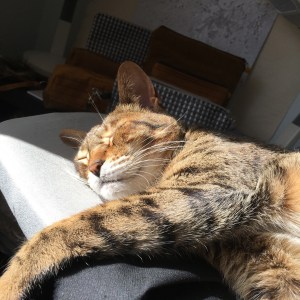
Let the experiment begin! I wanted a red base. I had to add that to the dye bath first. It looks very much like a murder scene, so let me tone it down by inserting a cute photo of my cat Marshmallow next to it.


Since I wanted the red to be soaked up slowly and evenly, I started with cool water and no acid for binding. This will ensure the colour is seeped up gradually and has time to get to the whole garment. I then added the wet cardigan, turned on the heat to medium-low and kept an eye on it.

After 15 minutes, the water was warm and I could see that the red was all over the cardigan. Time to add citric acid gradually. Then turn up the heat, simmer for 10 more minutes, turn it off and wait for the water to clear up and cool completely.

A good sign that you’ve used the right amount of dye and acid is that the water clears up completely once cooled. This is also a great sign of minimal bleeding in future washes, the bane of any dyer.
(If your water isn’t clear, try adding more acid and simmering for another 15 minutes. Let the water cool completely and see if things aren’t better.)

I really liked this colour, but a rule of thumb is, if it looks perfect under water, it’s too light when dry. I also wanted a bit more dimension to the red, so some dark grey was needed.
I didn’t want this new colour to soak up evenly, so I didn’t remove the cardigan from the bath water as I added the new dye, and I kept the same acidic, fast-absorption water from before.

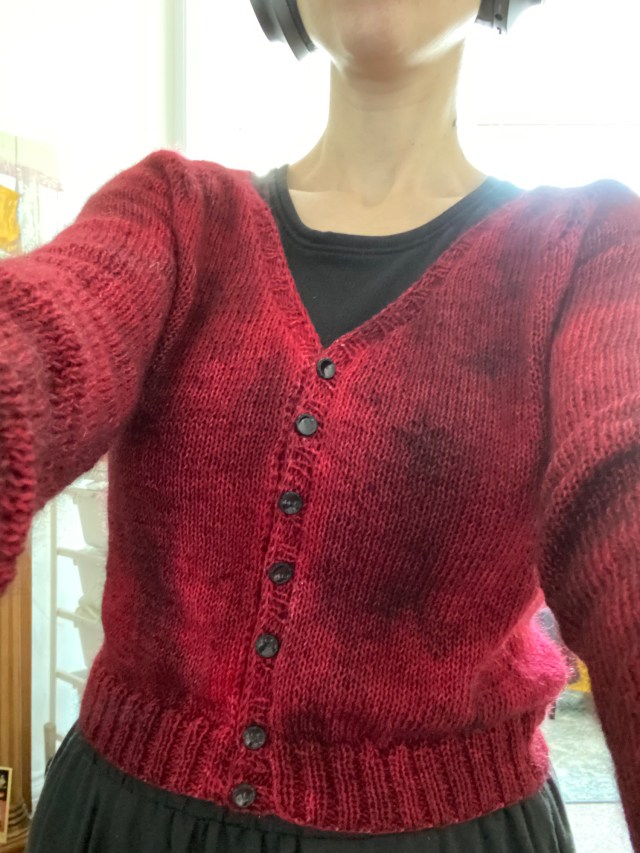
And here she is afterwards in all her glory!

I know the “scruffy look” might not be everyone’s cup of tea but I love it. It looks like a long-worn cardi, something my nan might have passed on to me. The vintage buttons complete the look.

Now, the important question: is the end result the same as dyeing the yarn in the skein? The answer is a resounding No. Depending on how tight you knit, you might end up with a lot of areas that the dye won’t get to because the stitches act as a resist. You can see lighter areas in the photo below, something I fully expected, even though I’m a fairly lose knitter. I actually like this feature because it’s very different from what you normally see.

I had never done anything like this before, and you might be horrified to know that after this, I’ve knit a shawl and now have a second cardigan on the needles, and both will receive the same after-completion dye treatment…

I wore it for the first time yesterday (at the time of writing) and it kept me warm all afternoon indoors.

I hope you enjoyed this experiment. Let me know if you’ve ever tried anything like this before, and what the outcome was! If not, what dyeing shenanigans have you been up to or would like to try?

Stay safe and enjoy the rest of your day.