Browsed by
Category: Tutorials

Busy Making Felting Kits

Busy Making Felting Kits

I have not done much felting lately. Instead I have been working on a Nuno Felt Bracelet Kit. Sounds simple enough. I wrote up the instructions over a few days, going back over everything and adding in more and more detail, making thing more clear. That was the easy part. Next I had to take pictures. I don’t have any way of taking pictures of myself felting by myself so I enlisted my son to do the picture taking. He was very patient as I made a bracelet and took notes on my instructions of things I needed to change and add. It this point I am thinking well that was not so bad.

blurry writting

Next was picking out and  editing the pictures. I do not know how people do photo editing for a living. It takes for ever and it is booooring. I did eventually get that all done so it was time to send it off to the spelling and grammar police. Now normally I am not a big fan of the spelling and grammar police as I am on of the top ten worst spellers in the world. However when you want to sell something to the public it really should be spelled correctly so you don’t look too bad. Than another friend locked my instructions and took all the meta data off my pictures. I had no idea how to do that. Thank heavens for friends.

IMG_1263


Next I think I would like to get the instructions printed. I nearly fainted when I saw the price of colour copies. It was decided that a CD would work very well and cost much less. So next was learning how to burn CDs. It’s not hard but it was time consuming. Good thing there was some good TV to watch while I did that.

CDs


Yesterday I spent the day assembling kits. That took way longer than I thought. I will never do well in a sweatshop, I am much to slow.  In the end I have lots of kits ready for my next show (Twist http://www.festivaltwist.org/en/ ) I am sure I will not sell them all as I made up 50 but they will be ready for other shows later in the year.

Here is what the finished kit looks like:

kit front kit back


Felted Slipper Tutorial Using Ear Shaped Resist by Nada V.

Felted Slipper Tutorial Using Ear Shaped Resist by Nada V.

Our guest post today is by Nada V. She is a forum member and had showed us a different type of resist template to make shoes/slippers. It seemed almost magical so we asked her to do a tutorial to show how the template worked. She kindly agreed and here is her wonderful tutorial.

******

In this tutorial I would like to present a step-by step procedure for making felted slippers. For a pair of slippers you will need approx. 300 gr of wool (coarse wool 31 mic) and two templates.

fiber

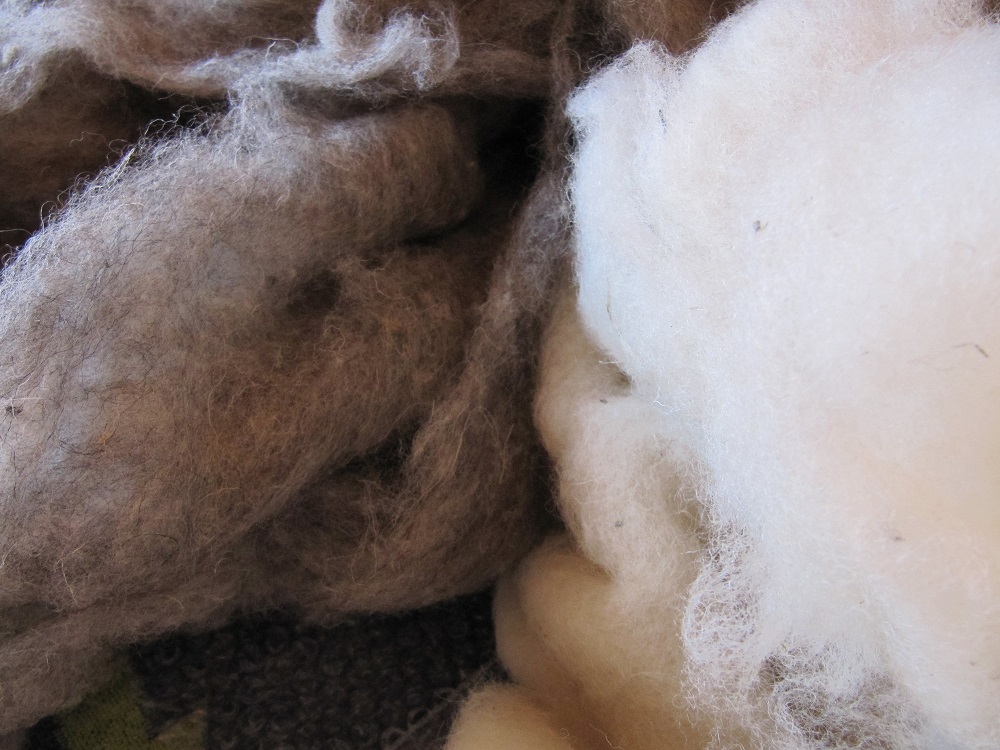
I was using local wool. It is very coarse with some rather wiry fibres.

template


The picture of the template is shown above.  You need to adapt it to your feet. I wear size 40 and this template is 31 cm long and 15 cm wide. As you may notice there are two ears on the template: one is positioned higher than the other one. The ear which is positioned higher on the template represents the inner side of the foot facing the other slipper. The size of the template also depends on the shrinkage rate of your wool. You need to consider this factor before you draw your own template.

Prepare your workplace: a towel, bubble wrap, soapy water (quite hot) which you can put in a ball browser or squeeze bottle. In dealing with coarse fibers and thick layers like in this case. There are many ways of wetting your work. I prefer to use olive oil soap which I simply hold in one hand, and a kitchen sponge in the other. I keep a bowl with hot water on the side , dip the sponge in it and squeeze the water out so that it runs through my fingers while I am rubbing soap and let the water trickle down.

laying wool

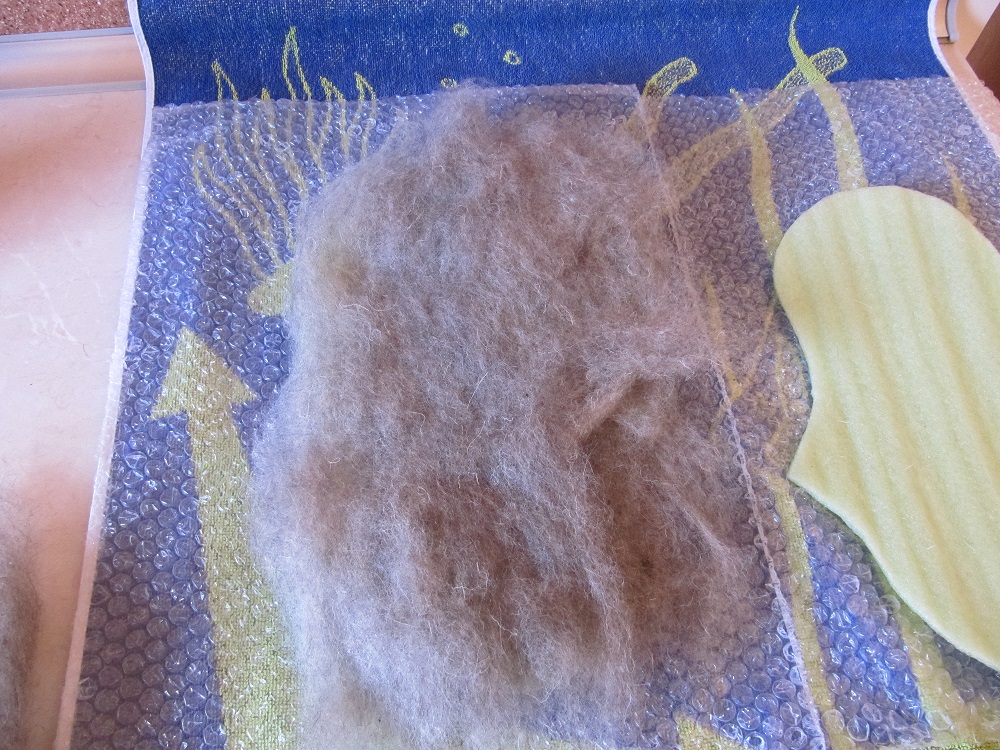
Start laying out wool: make sure that you make a total of minimum six layers, each placed in the opposite directions.

wetting


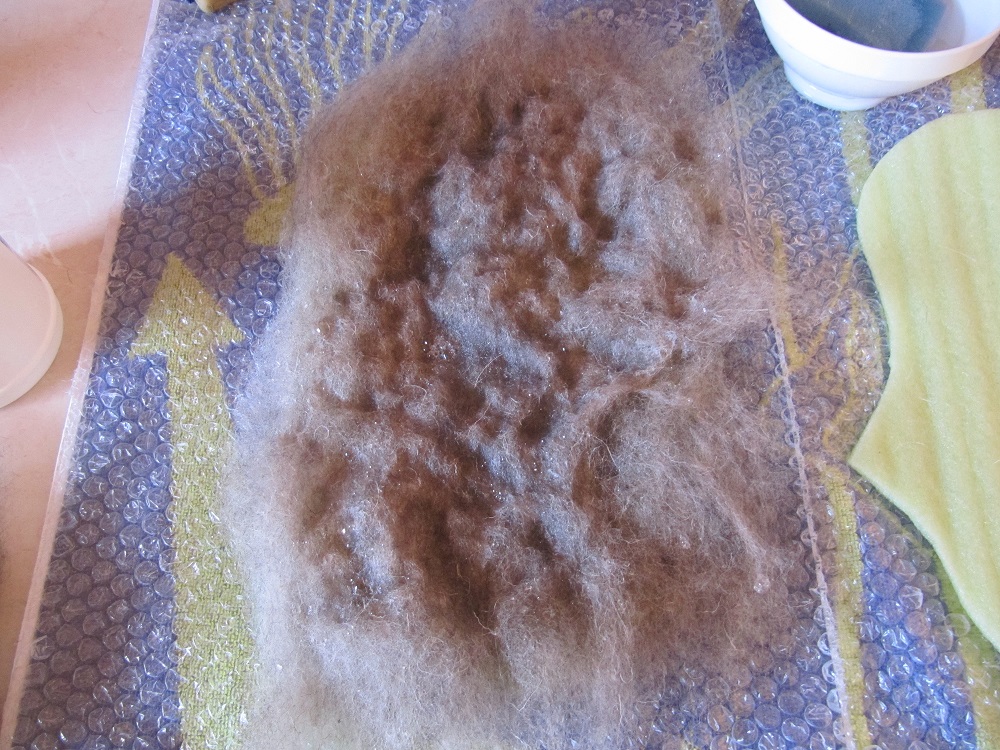
Place the first layer on the template and wet the wool well with soapy water.

pressing

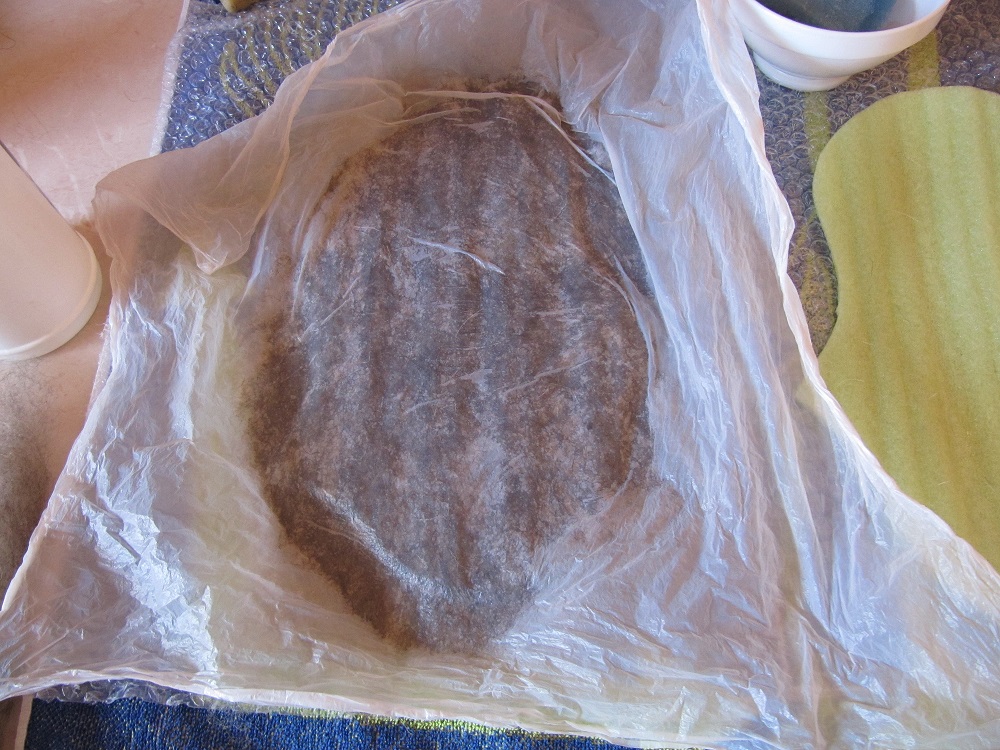
Cover your work with a plastic sheet and press down to spread the water evenly through the fiber. Do not rub, just press. This is important since some types of wool start felting quickly.

folding back1


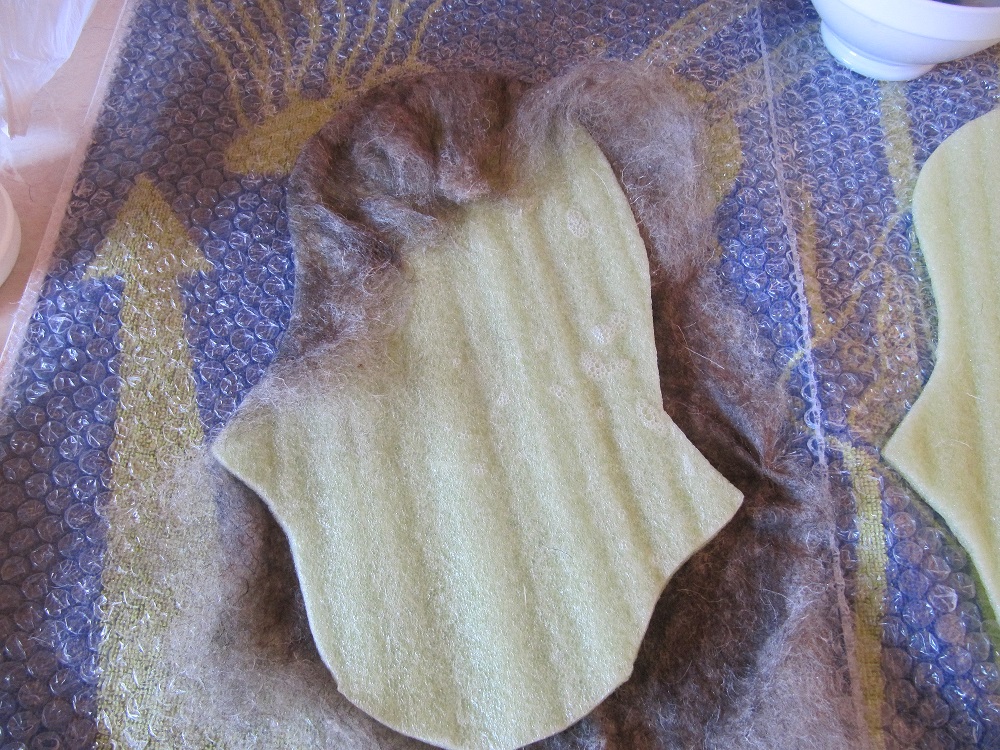
Flip the template carefully over and fold back excess wool (as seen in the picture).

folding back


Do the same with the other slipper and continue until you have formed six layers of wool. During the process of laying wool, do not rub and felt, just wet the fibers and press them down. I try to comb fibers with my fingers working from edges towards the middle and if some folds start forming I just gently rub and straighten them.

folds

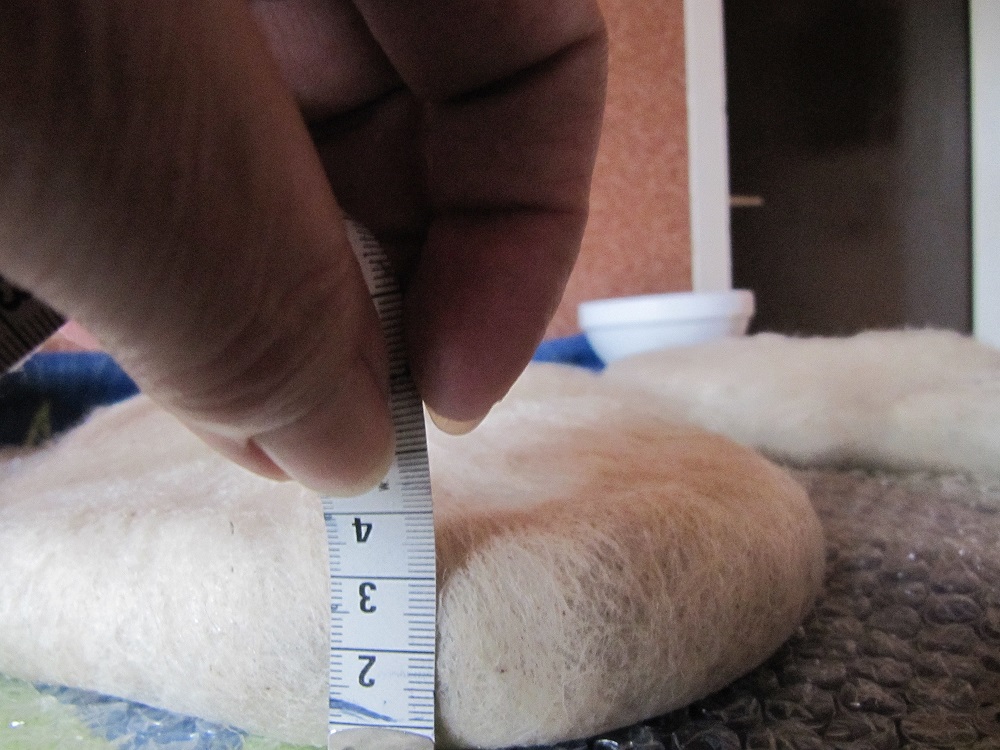
Thickness of layers is a relative thing. For this reason a good rule of thumb is that the final thickness of your work, after wetting and folding should be approx 3-4 cm ( i.e. 1.1 to 1.5 inches).

thickness


In my case I started laying grey wool (4 layers) and continued with white wool ( 2 layers)simply because I didn’t have enough white wool. After wetting you need to make sure that your templates are in the right position. Remember, the ear which is higher should be facing the left slipper from the inside like in the picture below.

embellish

Now you can start applying embellishments. Use your imagination as you wish. I used some black yarn to make branches and red pencil roving for flowers. I wanted to make sure that the flowers do not move and needle felted them into work.

cover net

After the stage of wetting the work you can start felting. During this phase I like to use a tray to catch excess water. Cover your work with a mesh and start rubbing gently the upper side where your embellishments are, making sure that they become fixed enough to the base and will not move when you turn your work over.

excess watter


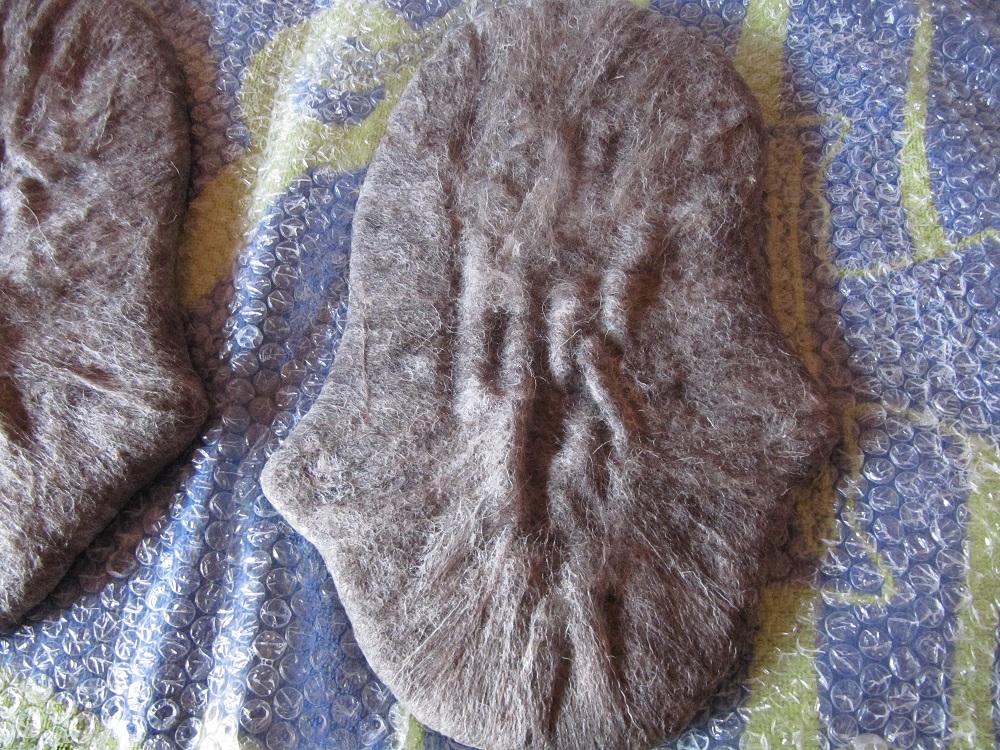
Turn your work and start felting on the opposite side. I start pressing gently, increasing the pressure as I proceed. Be prepared for long felting. Even though my wool felts well, the total time I spent on felting was one hour which is because the layers are very thick. (Those of you who are using a sander may perhaps complete this stage in shorter time, I’m not sure). Always work from the sides towards the middle thus making sure that you don’t lose the shape. If folds start forming in the middle, rub them gently in circular motion and straighten them. During work it may happen that there is too much water, and of course, our slippers must not swim in water. From time to time I lift my work and drain excess water and continue adding hot soapy water for rubbing as necessary.

cutting


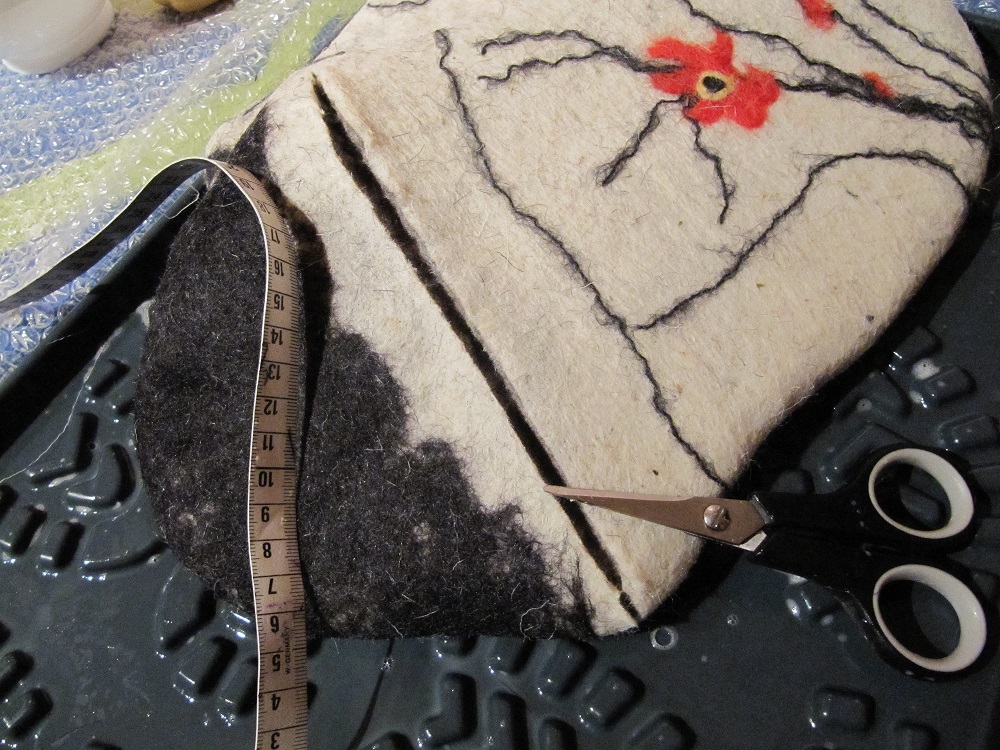
When you have a feeling that no more felting is needed and that your felt is stiff enough take sharp scissors and make a slit across the slipper – from the tip of the ear to the opposite corner, as shown in the picture.

remove resist


Remove the template.

yettishoe


Don’t be frightened when you see that you got a large shoe. In the following stage you need to work on shrinking the slippers.

rub edges


I like to rub the edges of the opening first so as to avoid separation of the layers on the edges.

wash sink


Transfer your work to the sink and soak it in hot water and squeeze the water out. Shock your felt with cold water and squeeze the water out again.

kneadroll


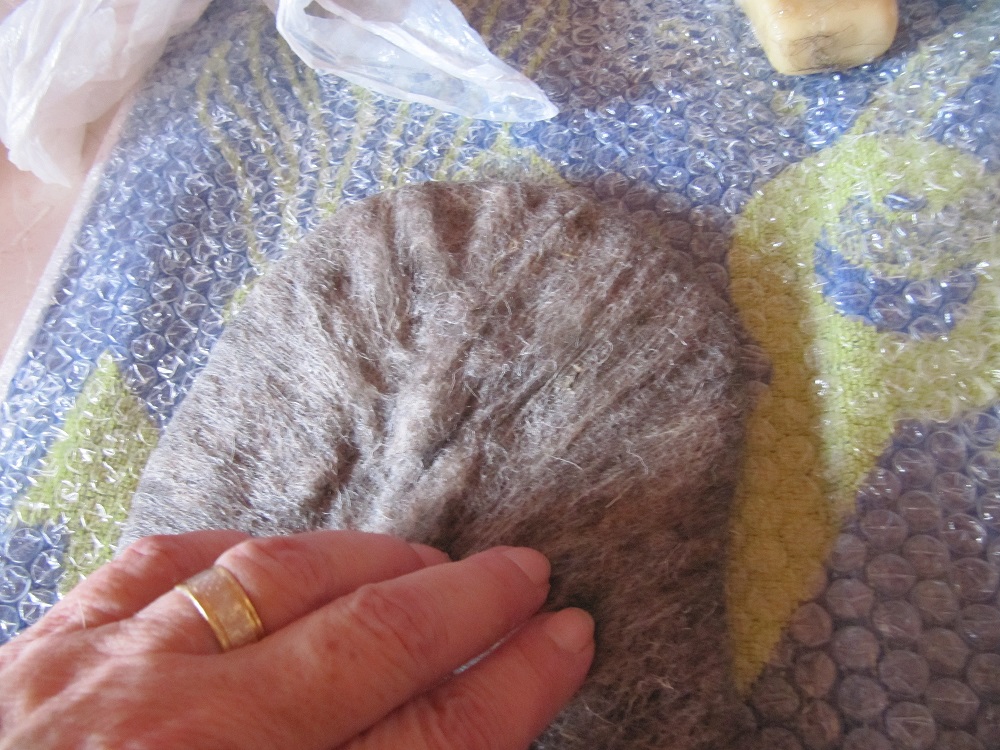
Move your work to your tray. Use more soapy water and start rolling and kneading your slippers so that they start forming a real shape. You don’t need to be gentle at all. Roll and knead them in all directions so that they shrink evenly. This may take you quite some time.

rubinside


Rub them inside and outside.

kneadroll2


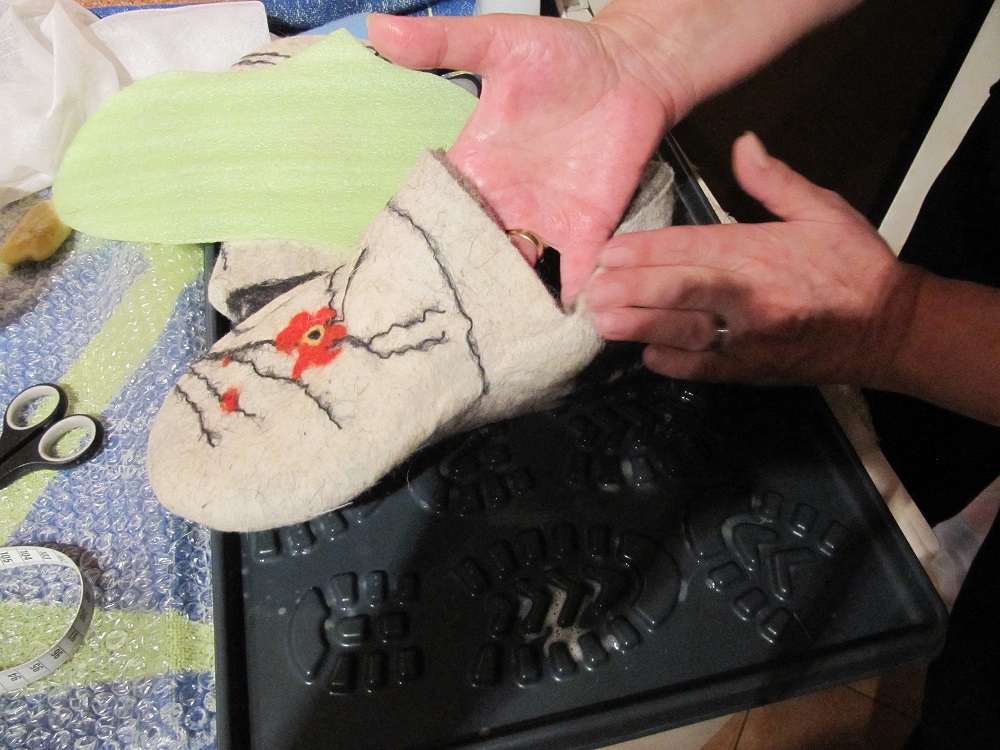
If you think that the felt is not shrinking enough, apply the shock treatment again (hot and cold water). In my case I applied this shock therapy three times. Use your hands for shaping a shoe-like form and only when you feel that you are close to the final shape and size, take a pair of plastic or styrofoam lasts if you have them, otherwise you need to complete the work with your hands.

fitting on last


I bought my lasts from Wollknoll Germany at a reasonable price (8 EUR) and think this was a good investment.

tools


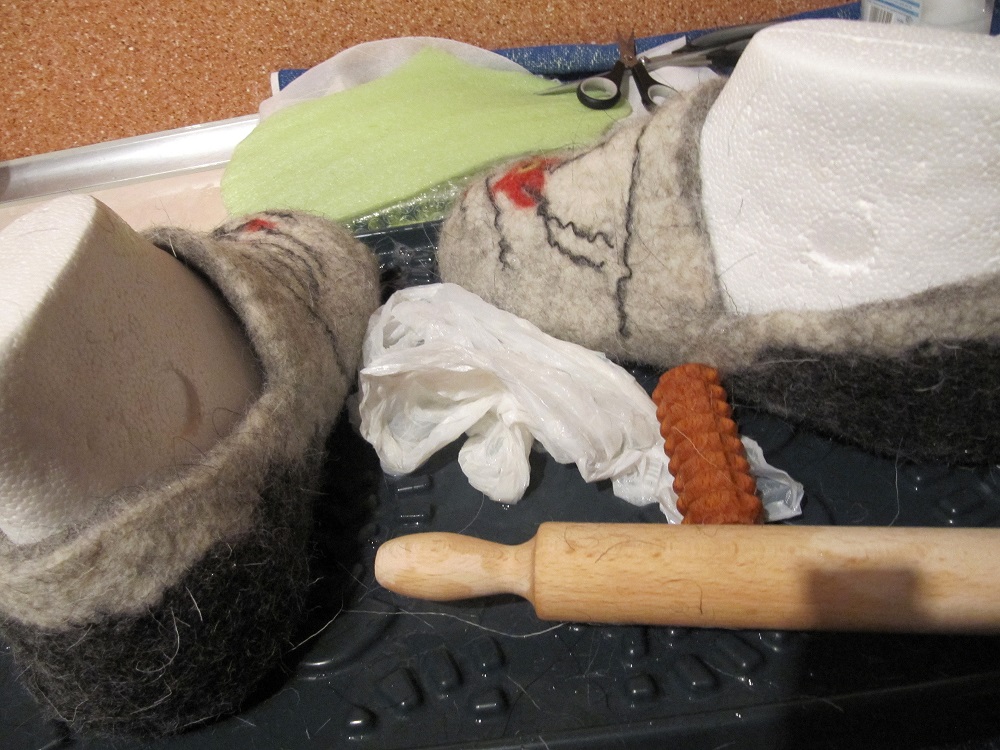
Use any tools that you normally use for fulling. I was using a roller pin for pounding (spanking) and a small roller for rubbing and straightening the surface.

pull sock


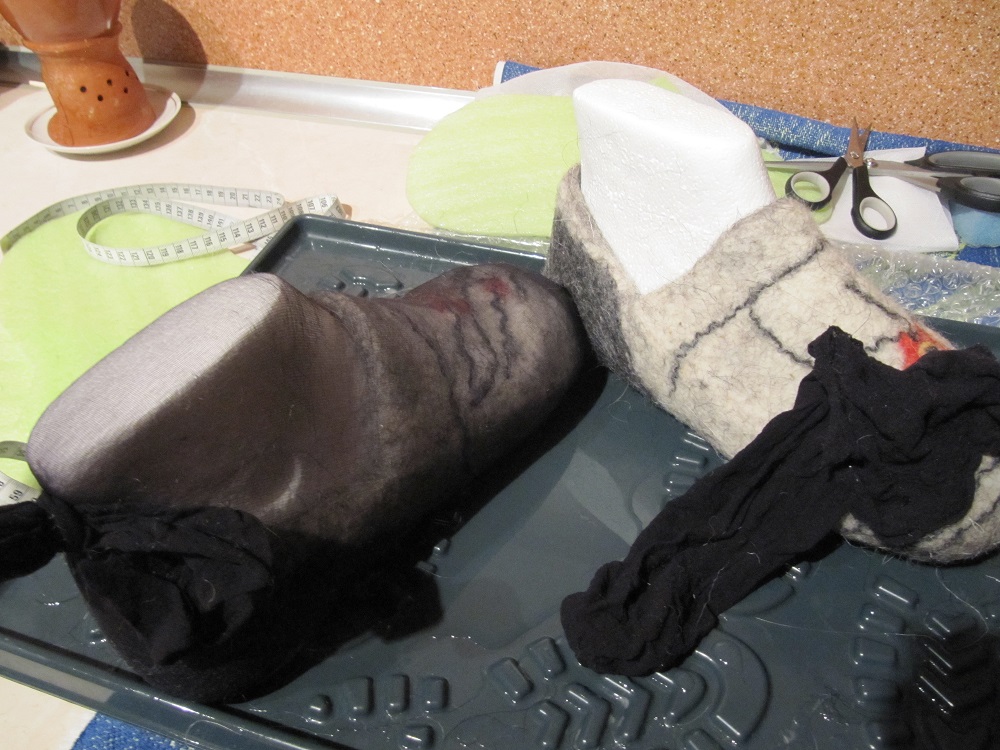
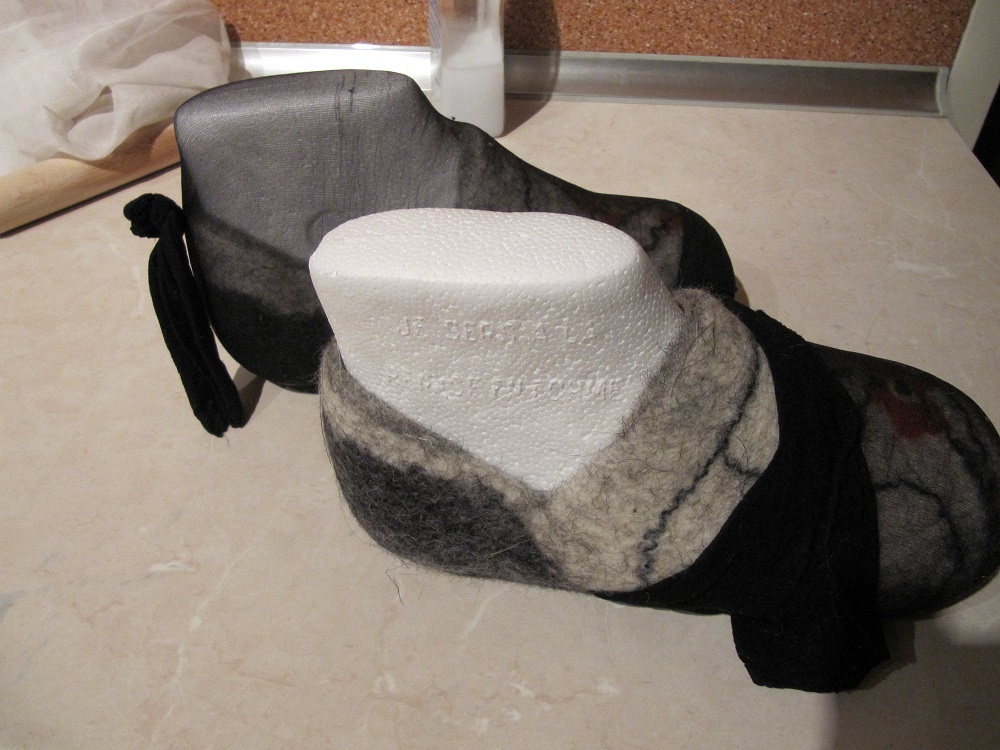
When your slippers completely fit the last, take an old pantyhose and pull it over your slipper and tie a knot so that the slippers cannot move during machine tumbling.

from the machine


Put the slippers into your washing machine (300C if little shrinkage is needed or 400C if you feel that more shrinkage is needed). I use the programme for delicate washing with short spinning. Remove the last and let your slippers dry.

final product


This is what you should get in the end.

final


If you look carefully you’ll see how hairy my slippers are. Our wool is really course and some sharp fibres are sticking out. When the slippers dry up, I’ll simply shave them. To completely finish the slippers, attach a sole (I like to use leather) and voila, your new slippers are ready. This project will take a whole afternoon to complete. It is a lot of work but you will enjoy the result. It took me five hours in total.

Giveaway!

Giveaway!

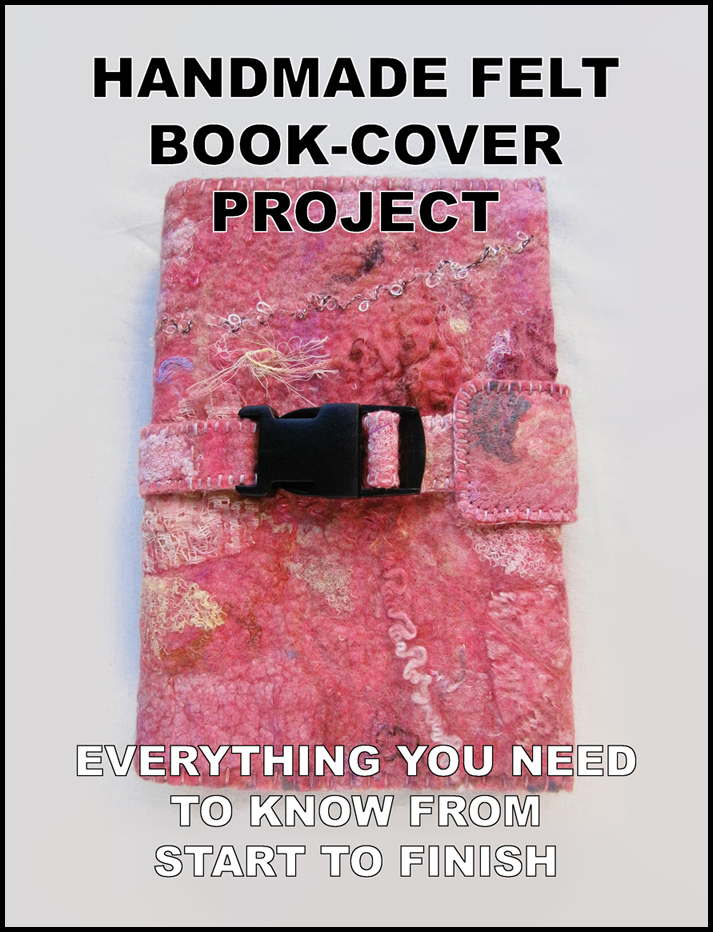
Final CoverI’ve just finished a  tutorial with everything you need to know to make a piece of flat felt and turn it into a book-cover with a flap closure and delrin clip. It took forever because I started toying with the idea of doing workshops and started working on updating and expanding my Wet Felting tutorial, and I also wanted to do the tutorial for making the book cover, and in the end I decided to combine them.
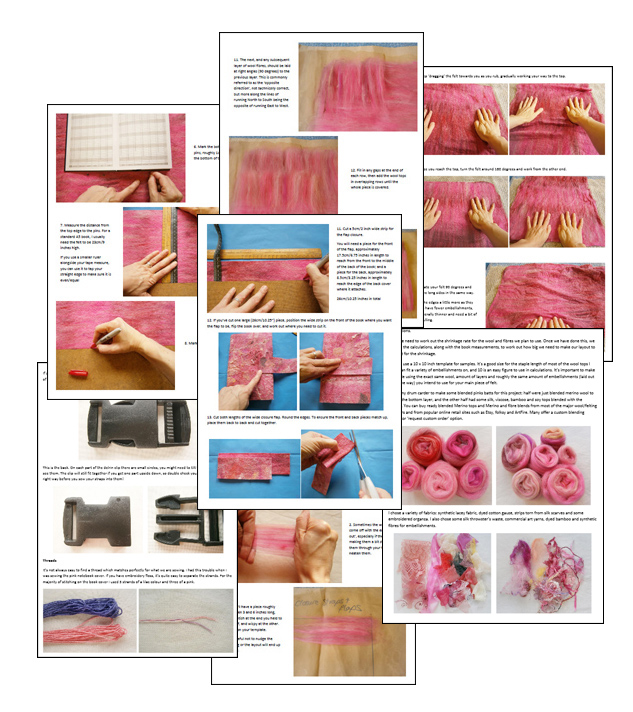
I thought I’d never finish, but I finally got it uploaded to the hosting site yesterday (hopefully, I did it right!) so I’m giving away a copy. It’s a 59 page PDF and has lots of different sections and loads of photos right through the whole process of planning, making a sample, laying out the wool and fibres, wet felting, cutting out the pieces, and sewing it together. For more details you can read the full blurb on my blog.

Compilation 2You don’t need to do anything special to enter, just leave a comment on this post. If you’d like to spread the word through your blog or facebook etc, it would be very much appreciated but it isn’t a requirement. I will randomly draw the winner 6 days from now, on Thursday 27th February 2014, so please check back on the 27th to see if you’ve won, and leave a comment on the announcement post so I can contact you with the download information.

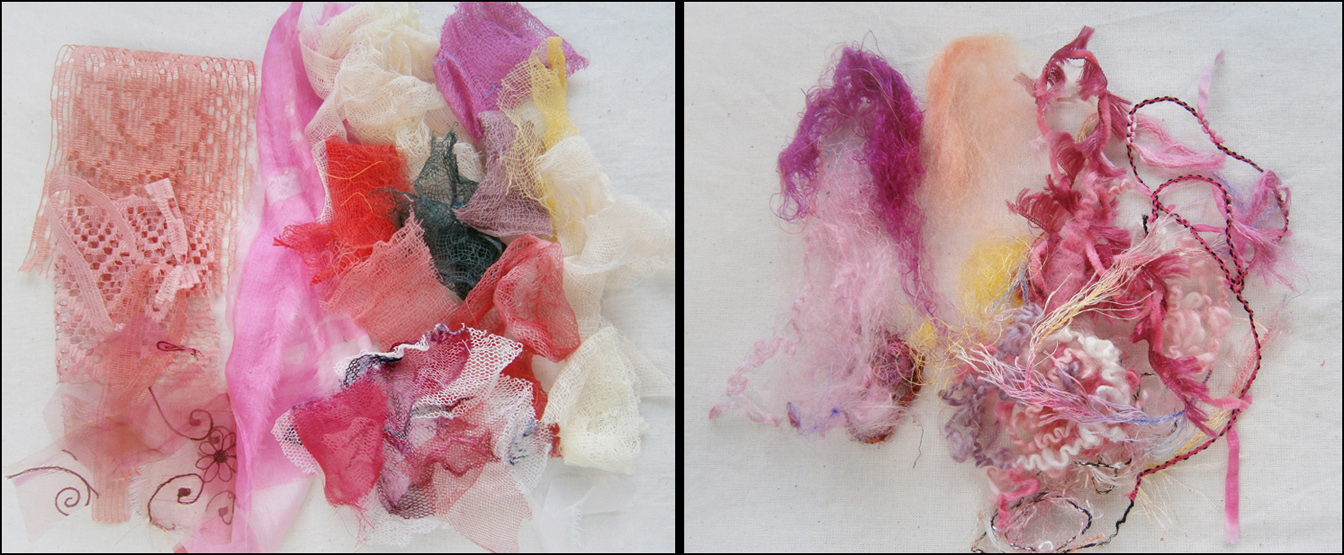
comp picAlso … together with the tutorial, I am giving away a custom ‘Project Pack’: enough wool, fabrics and embellishment fibres to make a sample and piece of felt big enough to make a cover for an A5 notebook ( they’re about 21 x 15cm or 8 x 6″), a delrin clip and embroidery thread. I’ll make up the wool batts to your specifications, whichever colour theme you want, which embellishment fibres to blend in, some texturey wools if you like, etc.

OLYMPUS DIGITAL CAMERAI’ll even do you a pink theme if you like 😉

Felted Cat Toy Tutorial

Felted Cat Toy Tutorial

I had several people who had questions about the cat toys that I make that are felted. So here’s a little tutorial that shows how I make my cat toys. I apologize for the quality of the photos as I did this fairly quickly and didn’t have the proper lighting or any assistance. But you’ll get the idea 🙂

Supplies NeededSupplies Needed: Practice golf balls, old pantyhose, wool roving, plastic beads (sized to fit through holes in golf balls), felting needle and a washing machine.

practice golf ballsI buy the golf balls in bags of 24. You can usually find them in small amounts in stores that sell golfing supplies.

old pantyhose

I buy the cheapest pantyhose I can find and re-use them until they are falling apart.

beadsThe beads are also the cheapest I can find – they are plastic and most come in strands that I just cut apart.

Amount of Wool Needed Per BallBegin with a piece of wool roving and the plastic golf ball and wrap the wool around the golf ball. In the photo above, I have pictured the amount of wool that I generally use to cover the ball.

Wrap BallWrap the wool around the ball holding it tightly so the wool is snug against the ball.

Ball Inside WoolThe ends will look like this after the first wrap.

Needle Wool LightlyUse a felting needle to needle the ends into the wrapped wool just so it will hold together.

Needle Ends ClosedThen push the wool over the ‘end’ of the ball and needle it down until it holds together without any holes.

Insert BeadPut a bead through one of the holes and then needle that “end” of wool over the ball. Generally I needle for about 1-2 minutes at the most. All you want is for the wool to hold together over the ball at this point.

Ready to Tie UpThis is what the ball looks like after I have finished needling. As you can see it isn’t round but that gets taken care of in the wet felting process.

Put Into PantyhoseThe next step is to put the ball into the end of the pantyhose leg. I couldn’t get a photo of myself doing this as I don’t seem to have enough hands.

Tie Up in HoseThen tie off the ball in the pantyhose with a loose knot. Do not pull the knot really tight or you’ll have difficulty getting the knots out later. Continue the steps above until you have filled the pantyhose legs with wool covered balls or until you have made as many as you need. I usually put 9 balls in each leg so that there are 18 in each pantyhose. This last set I made, I did a total of 6 dozen. Now I’m all ready for Christmas sales and lots of happy cats!

The next step is to throw the ball filled pantyhose into the washing machine. I usually just put them in with another load that I am already doing such as towels or jeans. I run them through the regular cycle with the same amount of soap I would normally use in the washing machine. If you are using wool that you aren’t sure whether the color will run, put them in with one of those sheets that absorbs extra dye or wash them separately.

Not Yet Needled

Once the wash cycle is completed, pull them out and hang them to dry. You can remove them from the pantyhose when they are wet but the knots are easier to take out when everything is dry.

after washing machineWhen they come out of the pantyhose, the cat toy still looks a little fuzzy and may have loose ends that got caught in the knot.

needling to finishUse your felting needle to felt in any loose ends and to get rid of the “fuzzies”. Hold the needle at an almost parallel angle to the surface of the wool when you’re needling. Do not needle straight into the plastic golf ball or you may break a needle. Finished Cat Toys

Here’s the bag of cat toys, about half of what I made. Obviously, you could put more decorations on these but I don’t think the extra effort is worth it. This idea can be used to make Christmas ornaments as well. Several years ago, I bought larger baseball sized whiffle balls and decorated them.

I added the swirls and “blobs” afterwards with a felting needle.

To hang these ornaments, I just threaded a large needle with matching yarn and made a loop of yarn at one end.

Here are the ornaments on the tree. I hope you enjoyed the tutorial and do let me know if you have any questions. I’d love to see your efforts if you try out the tutorial.

Polymer Clay E-book

Polymer Clay E-book

Well, it’s taken forever and grown from the ‘few pages’ I thought it’d be to over 80, but I have finally finished my Polymer Clay tutorial, or e-book to be precise 🙂

OLYMPUS DIGITAL CAMERAThere are 81 pages and over 200 photos illustrating clear and simple instructions. The book focuses on my very simple method for producing smooth, even clay and how it can be adaped to suit different techniques for creating gorgeous and unique polymer clay pieces such as brooches, pendants, buttons or tiles for mosaic. And you don’t need any specialist equipment or expensive gadgets. Or a pasta maker.

OLYMPUS DIGITAL CAMERAThe introduction features the tools and products that I find really useful for Polymer Clay work. Most of the things I use are from around the house, and in my everyday craft supplies. There’s also suggestions for cheap and free alternatives.

OLYMPUS DIGITAL CAMERAThere are seven other parts to the e-book with sections showing some easy ways to shape polymer clay without the use of cutters, commonly available products for applying colour to the surface of clay, and using beads and metal as embellishments. Throughout the book, there are complete instructions for 10 different techniques including how to achieve a fake porcelain look; inlaying; applying acrylic paint for an aged look; and using beads to enhance designs. You might remember my previous attempt at that where I dropped the camera on the clay and dented it! In addition, there is also a gallery of polymer clay examples made with combinations of the techniques described for further inspiration.

PAGESThe methods and techniques in the book are suitable for complete beginners, and anyone with no previous experience of polymer clay can create items just like those featured on the front cover in a few minutes with just Polymer Clay and a few commonly available items.

OLYMPUS DIGITAL CAMERAThanks a lot to Kaz, Ruth and Ann for looking at and checking through the first and second drafts for me and making sure it’s understandable 🙂 Thanks a lot to Lyn too, for checking through the drafts as well and checking over my rewrites and extra photos at the last minute, and a big thank you to my girlfriend for putting up with me (again!) over the last couple of months, helping me rewrite difficult parts and coming up with the perfect title yet again 🙂

If anyone is interested, it’s available in PDF format from my blog, I’ve added a new page at the top called Polymer Clay. I’ve been trying to upload it to etsy too, but for some reason it’s stuck on the ‘Preview Listing’ page 🙁

*** Edit

I managed to list on etsy now, there was a problem with using characters such as apostrophes and dashes in the tags. https://www.etsy.com/uk/listing/156604010/polymer-clay-simply-made-tutorial-e-book

Marilyn was asking where I got my rubber stamps, luckily, I saved the envelopes (from 2007!). The main place I got large sheets of unmounted rubber stamps is The Stamping Ground. I bought quite a lot from there, their prices are very good. I also bought a couple of sheets from The Stampsmith. I bought some texture sheets — deep etched rubber in abstract designs, from Creative arts by Obertin. I think I bought a Klimt based stamp from them on ebay too.

Tutorials and E-Books

Tutorials and E-Books

I really haven’t had the time to do anything but work on my Fimo tutorial lately. I didn’t think that would make a very long or interesting post so I thought I’d do one about what goes into writing tutorials or e-books. Looking at a really good one, you’d be forgiven for thinking that it’s pretty much just getting someone to take photos while you go through the stages, or at the most, stopping to take photos if you’re doing it alone. Then just adding some text to the photos in Word. Ah, if only it was that simple  🙂  Sometimes the shorter ones can be straightforward if it all goes well, but even then there is usually lots of photo editing,  cropping, resizing, etc. and rewrites of the text.

So, what does happen? Well we probably all do it a little differently, but usually I start off with a rough idea, a few things jotted down, then write a brief outline of what I want to include.

OLYMPUS DIGITAL CAMERAI’ll type this out onto Wordpad, then start to give it more definition, separate it into sections then add info about the content I want in each section. I usually do a copy of this new outline with a list of all the photos I need to take for it or sets of photos, then print it out and start on the photos.

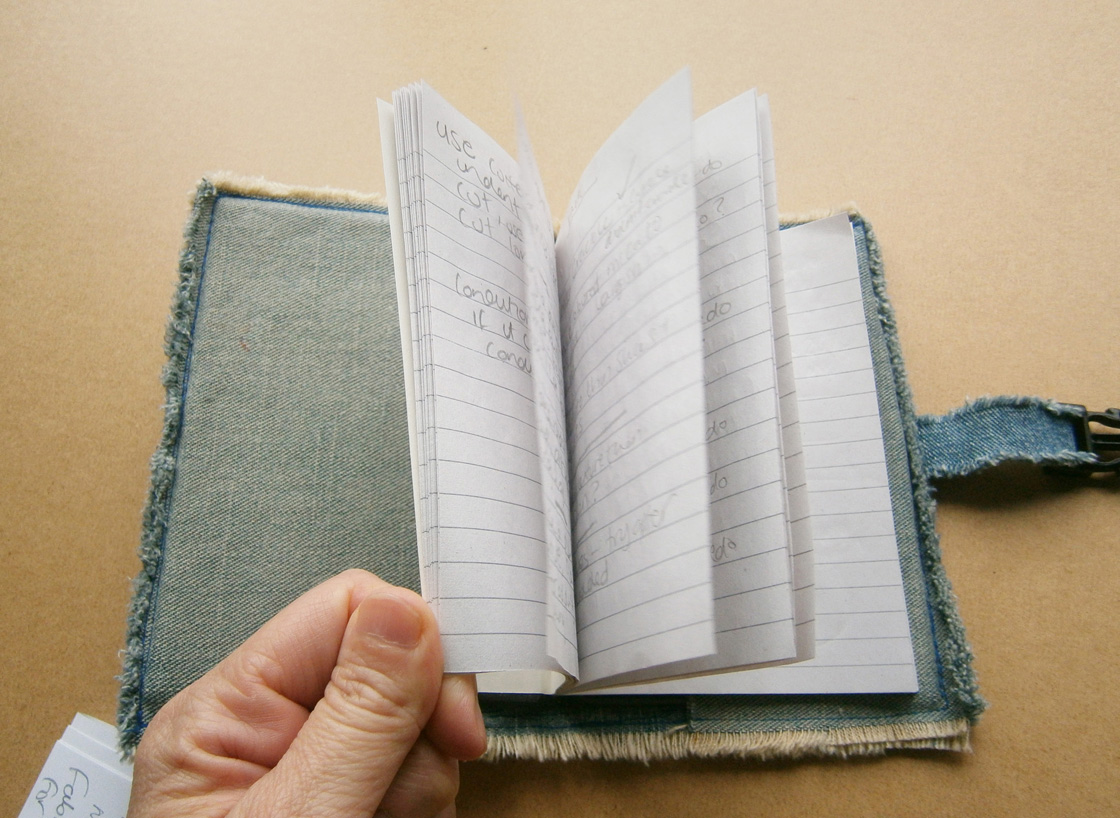
OLYMPUS DIGITAL CAMERAI’ll probably re-print the list quite a few times as I work through it and change my ideas. I like to keep a notebook close by when I take photos because I usually end up with ideas for something else I need to include or an idea that will help make another set work better. Also it’s good to take notes about what you’re doing in the photo and at certain stages because it will help to explain the process more clearly.

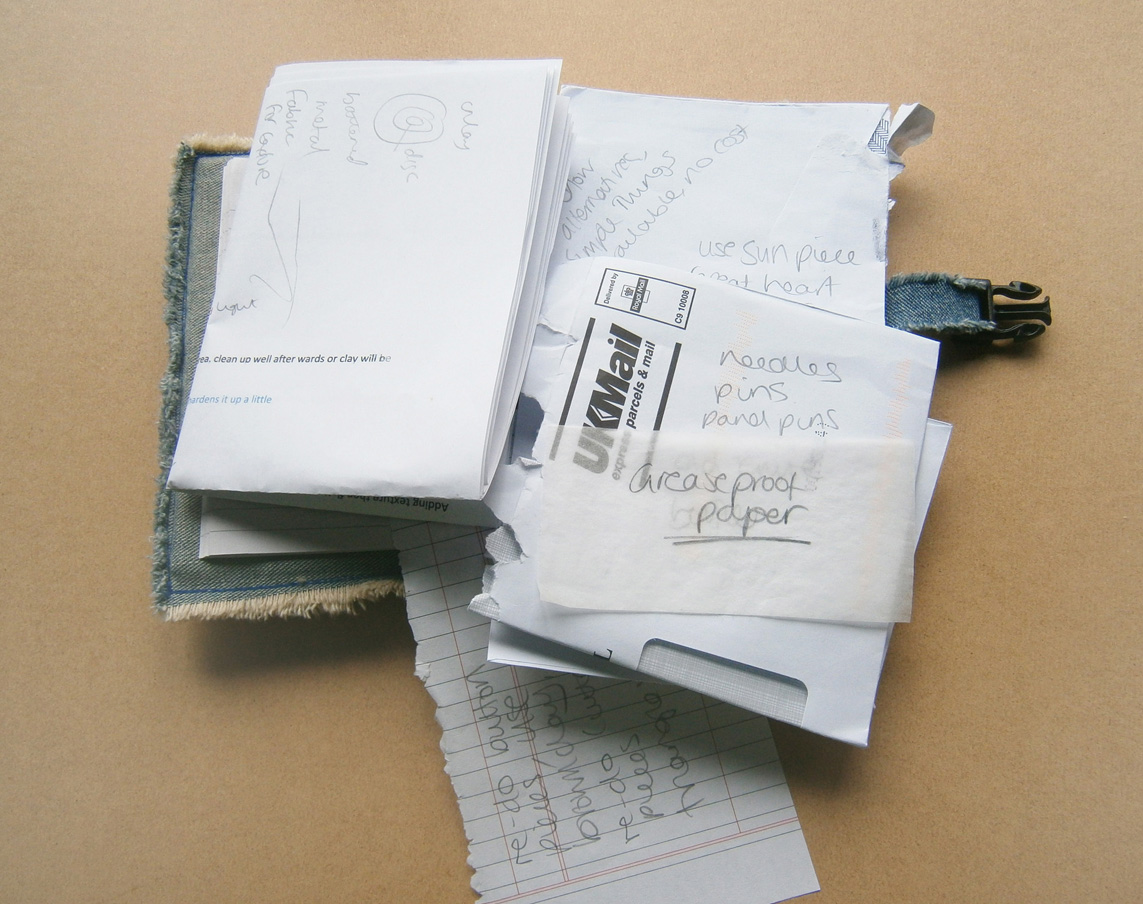
OLYMPUS DIGITAL CAMERAEven when I’m not actually working on the tutorial, something will pop into my head, so I usually end up with lots of loose pieces of paper with little notes on. It’s like one idea inspires others and you can’t see how you can leave something out without it seeming incomplete. I thought from the original idea for my Fimo tutorial it would be several pages long and just take a few days to do with careful planning, but by the time I wrote down my outline it was already turning into a mini e-book!

OLYMPUS DIGITAL CAMERAOnce all the photos have been taken, the most laborious part I find, is going through all the photos…deleting blurry ones first then going back and looking through the rest carefully to choose the final ones. And if you’ve ever taken photos of felt or fibre, you’ll know it usually takes a lot of photos to get the one good shot you need 🙂  I then usually make duplicate folders for resizing. It isn’t unusual for me to have 4 duplicate sets all at different sizes.

Photo foldersWhen it comes to the writing, I usually start by simply describing the process, trying not to overthink it, and use the photos to illustrate this. Then I pester my girlfriend to read it through for me, it’s really good to get the opinion of someone who hasn’t tried what your tutorial is about, they can ask all the questions you need to answer but might have missed. Once the first draft is finished, I’ll probably ask Ann, Ruth and Karen from the studio site and Lyn from the forum to read through too, it’s good to make sure it’s understandable to people all over, and that there aren’t any words or phrases that are unfamiliar, even to English speakers. It’s strange the words we take for granted that are often questioned. Once I’m happy with all the words and pictures, I work on the layout. That’s where the duplicate sets of photos come in, if a photos used in the tutorial only needs to be small and doesn’t show any detail, using photos of smaller dimensions and file size can reduce the overall file size of the document and subsequent PDF.

I’m just past the first draft stage of my Fimo tutorial and ready to start work on fine-tuning the text and working on the layout. I keep getting more ideas for things to include though!

OLYMPUS DIGITAL CAMERA

Computer Problems and Fimo

Computer Problems and Fimo

I mentioned in my last post that I’d started working on a Fimo tutorial. I thought I’d have it finished now, but it hasn’t been as easy as I thought. After all the nice cloudy stormy days that weren’t great for photos we’ve had about 2 weeks of non stop sunshine, and when I say non stop, I mean about 17 very long, hot hours a day 🙁  I never have much luck with photos at this time of year as it is, the light isn’t sharp like in winter, but for some reason it seems even softer than usual. I ended up re-doing my photos about 4 times.
Then my computer died. It temporarily revived for a few days and I managed to copy all my photos onto dvds. I’d started on the editing when it died for good about a week ago. I managed to borrow a computer for a few days, so I did manage to organise the  2,000+ photos into folders and start sorting through them at least. I set my new computer up over the weekend, took about 2 days to find out where things are hidden (Windows 8, I thought Vista was bad!) and made a start on writing the tutorial and lightening and cropping the final photos.
This was the piece I showed part of last time, that I dropped the camera on, it has been baked.
OLYMPUS DIGITAL CAMERA
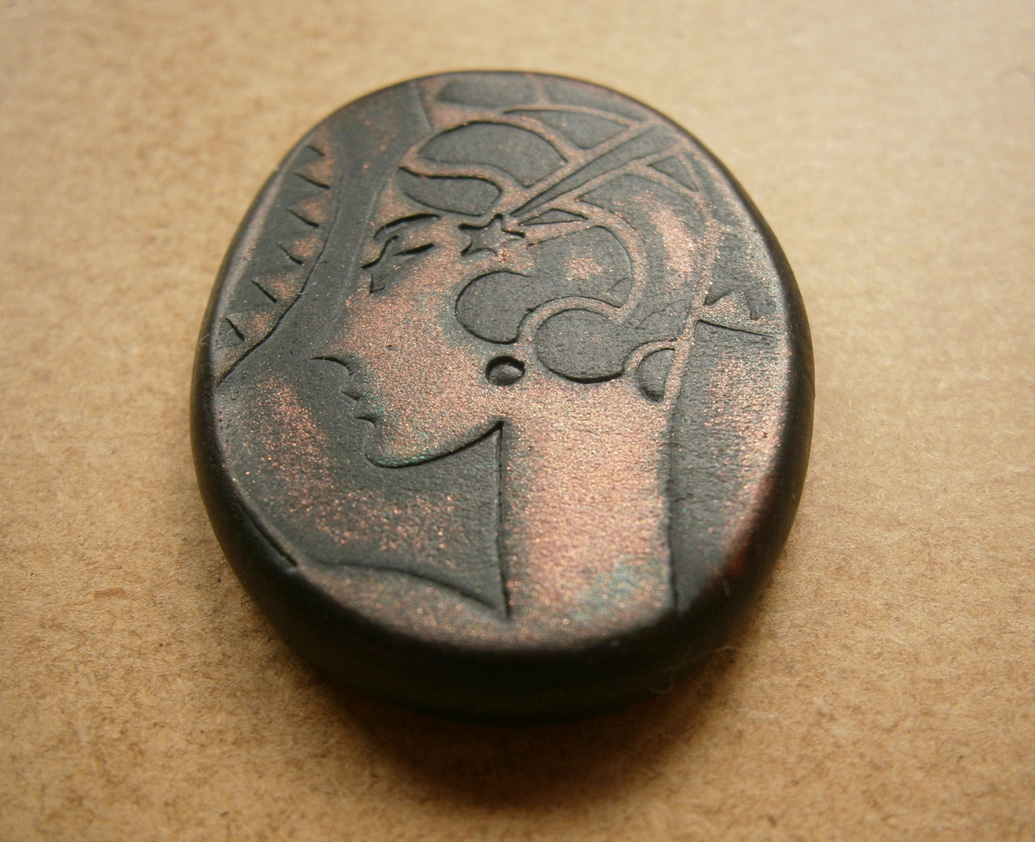
I had some spare pieces of clay left over from the demonstration pieces so I had a play around and made a few things just for myself. This is a pendant, it’s resting on a glass pebble to catch the light.
OLYMPUS DIGITAL CAMERA
I used some of the leftover pieces together to make multi coloured pieces, this is a heart shaped button.

OLYMPUS DIGITAL CAMERA
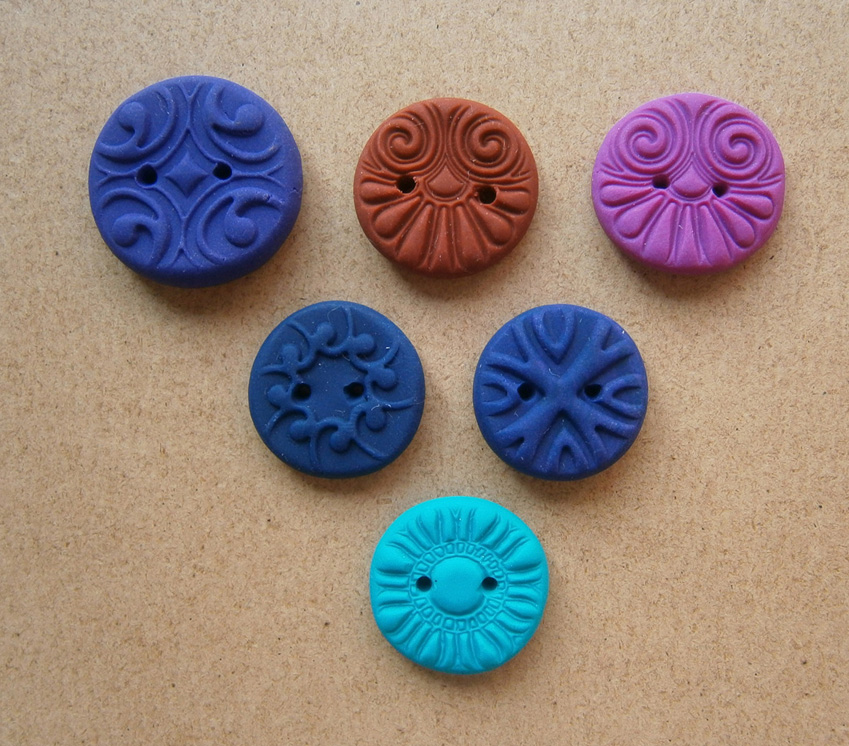
I made quite a few buttons, you never know when you might need one, I might have to do a few more though, I have a pile of purses that would look good with buttons made to match.

OLYMPUS DIGITAL CAMERA
What projects have you been working on lately?

Coppery Felt and Fimo

Coppery Felt and Fimo

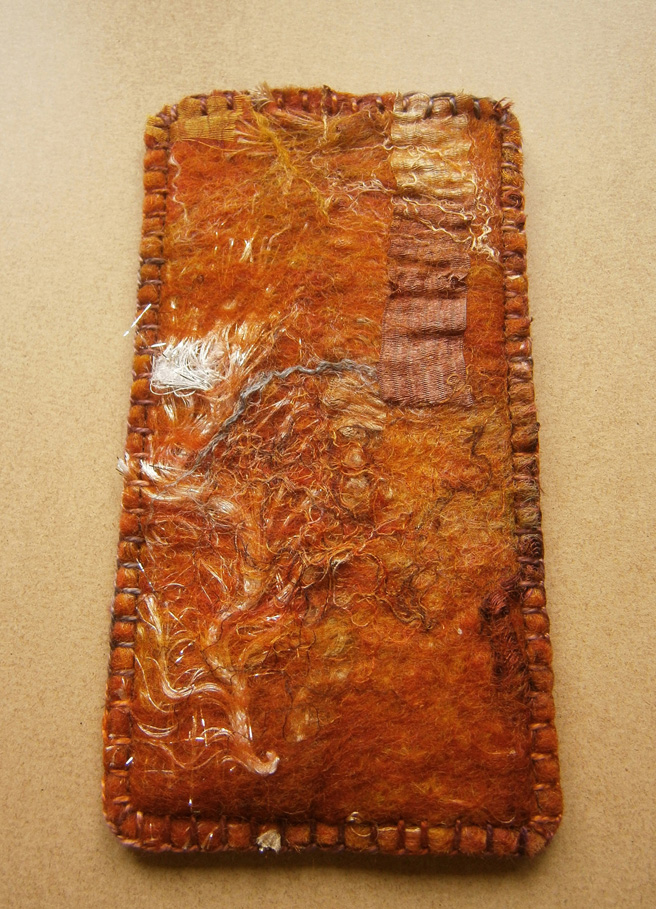
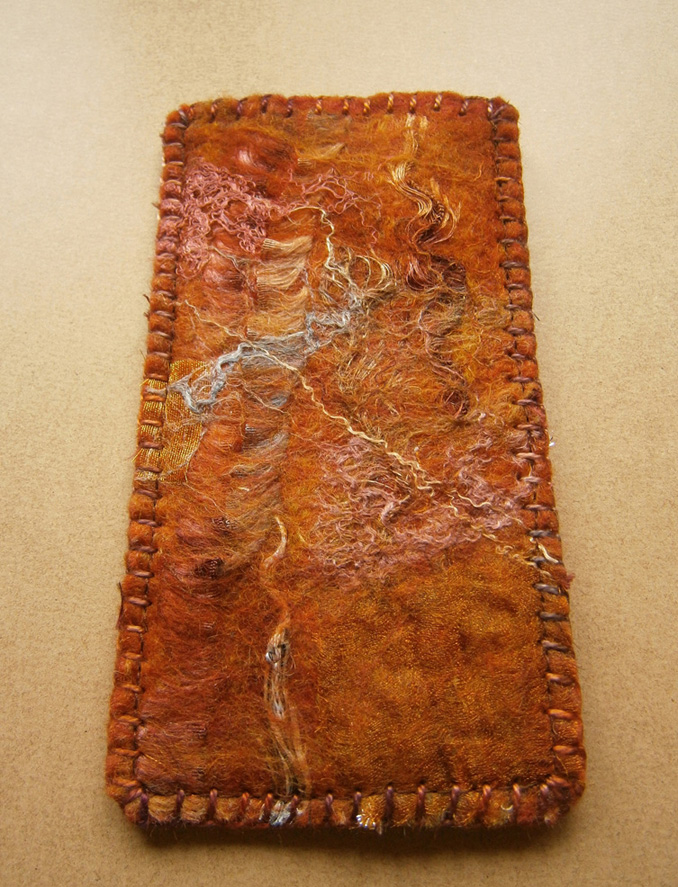
Do you remember the coppery bronzey felt piece I posted about last month? I cut that up recently and started to make a glasses case and purse out of it. I have so many cut out or part made up items at the moment, I think I’ll be working on them all year 🙂  I did actually finish the glasses case though. This is one side of it:

OLYMPUS DIGITAL CAMERAAnd this is the other side:

OLYMPUS DIGITAL CAMERAI used some gorgeous hand dyed cotton perle 5 from Rainbow Girl on etsy. The variegated colours work perfectly. I also managed to do quite a lot on the purse. I managed to sew it all together already.

OLYMPUS DIGITAL CAMERAI still need to choose the right button, which always takes forever, and sew the buttonhole.

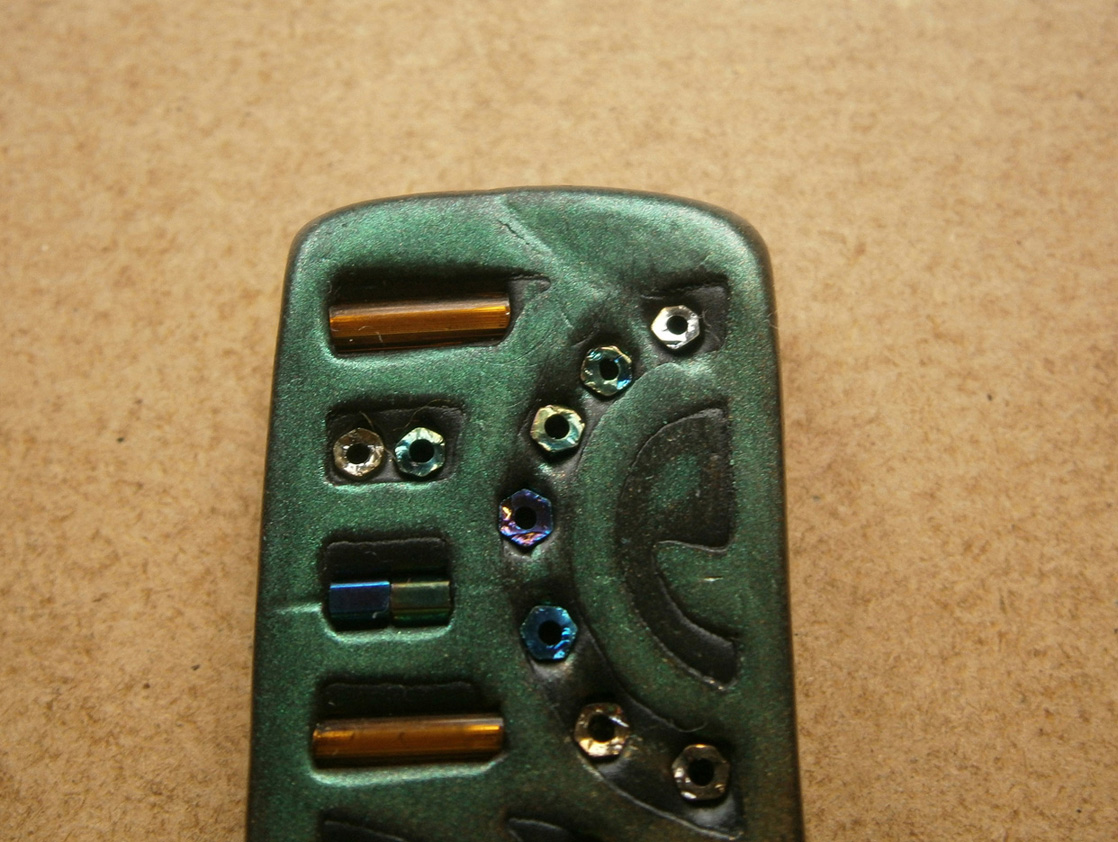
OLYMPUS DIGITAL CAMERAI’ve also been working on a Fimo tutorial the last few weeks. Taking photos has been harder than ever, it’s been really dark, stormy and rainy, which is nice but not great for taking phtotos inside. We did get a few really bright sunny days, so I worked on the opposite side of the house to the sun and managed to get a lot done, or so I thought. When I downloaded the photos, what looked good when I set up a shot, didn’t look good once hands were in the photo! I thought Monday would be perfect for working outside, it was bright but cloudy, but also really windy, so back indoors. I did get quite a few good photos all in all, including this one, which captures perfectly my attempt to get rid of the dent I caused when I released the camera from the tripod without holding it first!

OLYMPUS DIGITAL CAMERAAnd here’s a sneaky peek at one of the other pieces I worked on:

OLYMPUS DIGITAL CAMERAI’m nowhere near finishing it yet, but when I have, I’ll put it for sale on etsy, it won’t be expensive, but I want to put as much in it as possible, so if anyone has any ideas, suggestions or requests, if it’s something I know about, I’ll do my best to include it 🙂

Ice Dyeing – A Quick How To

Ice Dyeing – A Quick How To

My local fiber art group did some ice dyeing yesterday and I thought you might like to try it. It’s a simple process, doesn’t take long and gets great results.

MINOLTA DIGITAL CAMERA


The supplies needed are ice, cotton or silk fabrics, fiber reactive dye powders, soda ash, water, a container for the soda ash liquid, a container about gallon (3785 grams) sized to dye in, dust mask, gloves and a spoon to apply dyes. I have not tried this method with acid dyes but it would probably work. You would just need to steam the fabric before rinsing it out.

The first step is to mix 1 cup of soda ash with a gallon of water, stir until dissolved. Place all your fabric in the soda ash water and soak for at least 30 minutes. Take your gallon container, glass jars work really well for this, and place a layer of ice on the bottom of the jar. Put one piece of fabric on top of the ice and just squash it down into the jar. Put more ice on top of the fabric. With your gloves and dust mask on, sprinkle about 1/4 to 1/2 teaspoon of dye powder over the ice. We used 2-3 colors per layer.

ice dyeing 4


Place another piece of fabric on top of the dye powder layer. Put more ice on top of that fabric and sprinkle more dye powder on top. Keep layering fabric, ice and dye powder until the jar is full. I used reds, blues and blacks in the jar seen in the photo above. You can use any colors that you wish.

ice dyeing 3


You can see Carole layering her fabric, ice and dye powders.

ice dyeing 2


Bunny used a large dye pot to work in and it worked just as well as the glass jars. Plus it holds more fabric so you could do larger pieces easily this way.

ice dyeing 7


Once your jar is filled to the top, do a last layer of ice and dye powder and then close with a lid. If you don’t have a lid, use plastic wrap over the top. Then set the container aside for 24 hours. The ice will melt and the dye powders will mix with the melting ice and dye the fabric with fantastic patterns.

MINOLTA DIGITAL CAMERA


Here are my two jars after melting for 24 hours. The hardest part is not disturbing the fabric. Pour out the excess dye liquid and then rinse the fabric. I rinsed three times in cold water in the sink and then put the fabric in the washing machine with a small amount of Synthropol and washed with a regular wash cycle. Then iron the fabric. 

MINOLTA DIGITAL CAMERA


This is one of the pieces of fabric that was at the very bottom of the red and blue glass jar. It’s very dark but I think it will be really nice with stitching using a light-colored thread on top.

MINOLTA DIGITAL CAMERA


I used a variety of small pieces of cotton of various weights that I had handy. 

MINOLTA DIGITAL CAMERAThis is 90# cheesecloth and this is just a small portion of it. It dyed beautifully. You could also put cotton thread in the dyeing jar but I didn’t have any white thread to try. You can also over dye fabrics this way so if you have a fabric that you don’t particularly like, try over dyeing it with this method.

MINOLTA DIGITAL CAMERA


I loved this one. It was on the very top of the red/blue jar.

MINOLTA DIGITAL CAMERA


This was some cotton muslin that was stitched together prior to dyeing. It reminds me of sunlight through the tree tops.

MINOLTA DIGITAL CAMERA


The ice melting really gets different reactions of the dye with the fabric than you can get in other methods. This works with snow too but for those of you that rarely get snow, ice is simple and gives good results.

MINOLTA DIGITAL CAMERAThe colors will be lighter if you use less dye powder and darker with more dye powder. You can mix a variety of colors or not. The results will always be different and you won’t be able to duplicate your results but that to me is the best thing about this method. Each piece of fabric will be unique. I didn’t have any silk but this will work with silk as well. I think this method would be really good to use on silk that will then be nuno felted. 

If you try out ice dyeing, please post photos on the forum or on our Flickr group, we’d love to see how it worked for you.


Giveaway—Beyond Nuno PDF e-book

Giveaway—Beyond Nuno PDF e-book

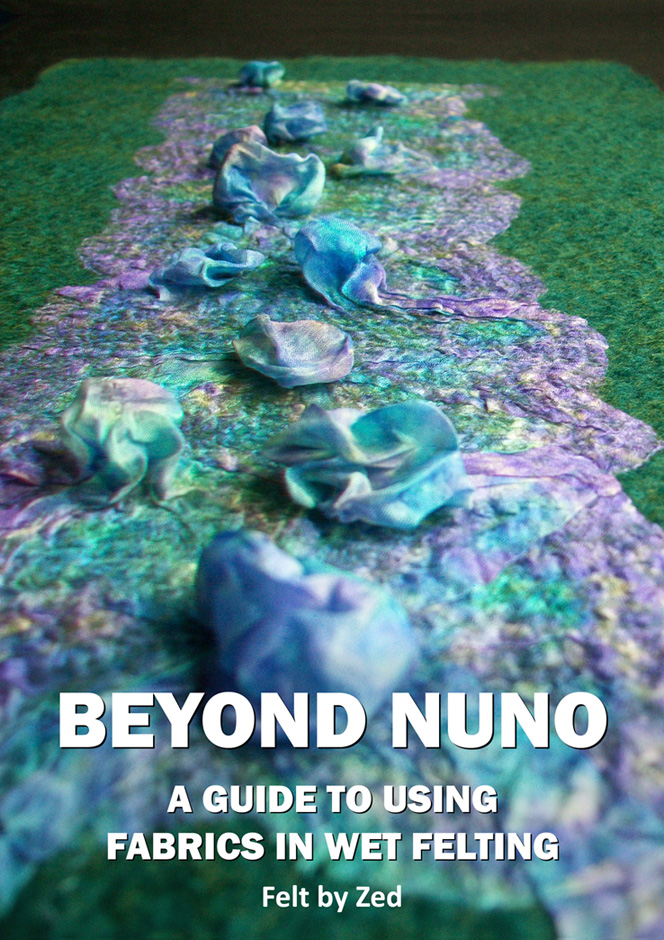
coverAs a big Thank You for all the support I’ve had since I started felting and blogging, I’m giving away a copy of my new PDF e-book called Beyond Nuno. It’s all about using different fabrics in wet felting, why and how they felt the way they do, how different effects are achieved etc. I hope to show that there’s more to nuno felting than just ruffled silk scarves and that it is possible to control the outcome of nuno felting. For more details you can read the full blurb on Craftsy or my blog.

You don’t need to do anything special to enter, just leave a comment on this post. If you’d like to spread the word through your blog or facebook etc, it would be very much appreciated but it isn’t a requirement. I will randomly draw the winner 8 days from now on Monday 4th March 2013, so please check back to see if you’ve won and leave a comment on the announcement post so I can contact you with the download information.

compilation of pagesGood Luck!  🙂

This Giveaway is now closed, to see the winner, please click here.