Browsed by
Category: Tutorials

Batch Editing Photos

Batch Editing Photos

One thing that a lot of us who share photos on the internet have in common, is that we can spend hours editing them. Almost every time I do a blog post, I have around 5 or 6 photos that I need to crop and shrink so they aren’t too big when they’re clicked on, and so they don’t take up all the storage memory.
A lot of the photo editing programs have ‘Batch Editing’, this allows you to open multiple photos and edit them all in exactly the same way very simply with just a few clicks, so you’re not having to sit there and manually alter every single one. It really saves a lot of time and effort. It is particularly useful if you have to shrink a lot of photos or have a batch that all need brightening up, or maybe you want to add a signature or apply an effect to create an abstract design….I found this really useful when working on photos for Ann’s abstract challenge a few months ago.


I’ve written a tutorial showing how to use the Batch Editing feature on Photoshop. I’ve only ever used Photoshop, so I can’t be sure that other programs do it the same way, but this should give you a good idea of what to look for on other programs. I’ve used shrinking as the example on the tutorial, because this is one I use most often. I know a lot of people like to add signatures or watermarks to their photos, batch editing is really good for this as long as you want the text to be exactly the same on each photo.

It’s always a good idea to have a practice first before recording an Action for batch editing. I usually keep notes for each effect applied, type size, or what the brightness and contrast levels were etc, then it’s easier to recreate. One thing that is important to point out, for certain effects, alterations or filters, for the results to be exactly the same, the resolution of the photos must be the same as each other and as the photo you originally worked out the Action on. If not, you could end up with type of different sizes for example.

I hope you find it useful and if you have any ideas for other tutorials, please let us know 🙂

PDF Tutorial: Batch Editing in Photoshop

Changing the Design of a Nuno Felt Shrug

Changing the Design of a Nuno Felt Shrug

In the spring I made some shrug jackets using a pattern I saw in a book about making simple garments with your weaving. I don’t weave but I can felt a rectangle instead of weaving it.  You would think that I would read what to do instead of just going from memory but that would have been too easy. I made some nice looking shrugs.

Orange shrug after over dying

They look nice enough but they didn’t really fit as well as I would have liked. They were to puffy at the back so not very flattering. I think the problem is the rectangle they are made from was to wide making the shrug to long.  I decided to change them. I unpicked them and gave them a wash to get rid of all the thread holes.

I folded the top down about 1/3 to create a kimono sleeve. You end up with something that is more like a shawl that doesn’t fall off as you use you hands and go about your day.

If you would like a larger collar you can wear it the other way up.

You could also just sew a line down the edge or just the other direction to have a larger sleeve opening. I like these much better. I hope other people like them too. I am going to my guild exhibition and sale this weekend and I will have them there.  On that note if you are in Ottawa this weekend  Drop by the Glebe Community Center to see what we are up to.

Hat Making Class

Hat Making Class

I thought a hat making class last saturday. We had a great time and everyone had a wonderful hat at the end. I forgot to take pictures till the end. After a year of blogging you would think I would be used to taking pictures of everything I do. However I do have some pictures from the class I taught last winter. They were given to my by Jan who is in the class. I lost most of my pictures in a computer crash. The hard drive is off hopefully getting my pictures recovered.

Trolley for class materials.

This is my trolley that I use for class. My bins of wool for embellishment and my tub that has the little buckets, pool noodles, bubble wrap, resist material and other odds and sods.

Jan starting to layout of the wool.

Here is Jan starting to cover her resist with wool and the 2 halves of her hat finished and ready to put together.

Laying out the wool for a pill box hat

Here is another student who decided to do a pill box hat in cow print.


This is a red and white hat with a few embellishments to help it not look so Christmasy.

Red and white hat ready to wet.

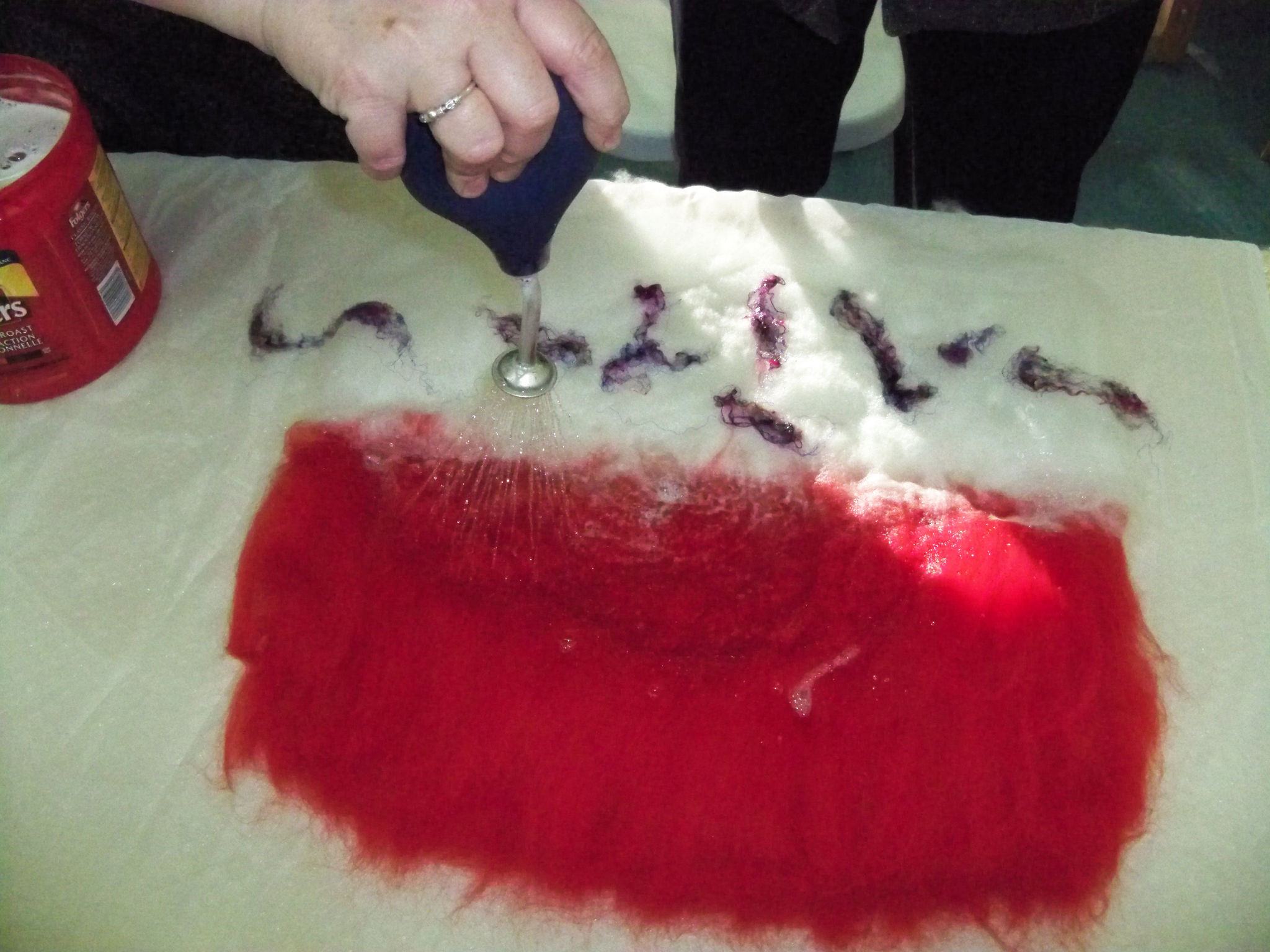
Getting the wool wet using a ball browser. It is a bonsai watering tool that felters are using now. It sprinkles the water just where you need it.


Sorry no pictures of the felting everyone was to busy to take pictures. They did some rubbing and then some rolling then some kneading and throwing.

This is Jan’s hat ready to do some shaping.


The 2 pieces of the cow hat are ready to sew together once they are dry. The sides are a bit floppy with being wet.

Jan modeling her hat form 2 sides. She did more shaping and ended up twisting the tale and inserting inside the brim.

Jan’s hat finished

and now the red and white hat

Red and White hat finished

And last but not least is the picture of my student from last Saturday  wearing their hats

Hat Class Oct. 2012

Everyone had a good time and ended up with a hat that fit them in a style they wanted. Whenever I here someone saying their head is small or large of too round or flat or whatever I always say well come to a class and make a hat tat fits you. The best hat block you have is your own head. So give it a try on your own or in a class make the hat of your dreams.

Making Felted Soap

Making Felted Soap

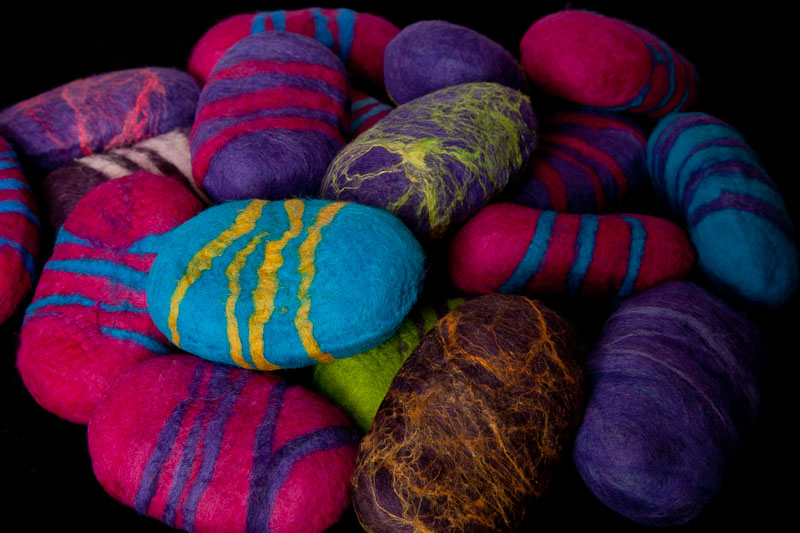
I have a show coming up soon and I am almost out of felted soap. They are always popular at Christmas time.

Here you can see some of my bins of small amounts of different colours, the pieces of nylon stocking I use for felting in and the first soap wrapped up in wool.

first a wrap a thin strip of wool around the edge of the soap then roll it up in a wider strip of roving. Next I pic a complementary or contrasting colour to wrap around the soap. I usually do a spiral from one side to the other.

I use small pieces of nylon stocking to put the wool in for felting. It’s the only thing I use nylons for these days. The reason I put the soap and wool bundle in a stocking is to keep it under control. the first thing that happens when you wet the wool is it gets bigger and its hard to keep it all in place.

Here is a soap with some silk added. this is silk roving that is teased apart. I also us pieces of silk hanky to give it a marble like appearance.

I managed to get this far yesterday but I didn’t manage to get them felted. so here is a picture of a different batch all finished. there are 2 with silk hanky on them.

That’ s the way I do it. If you have any questions or tales of soap making tell us about it.

Felt Bubbles

Felt Bubbles

A while back I went to a felting friends for a few days fun.  She showed me how to make bubbles and cut them  open to great effect. Here are the pictures of what I did.

First of course I laid out some wool to felt. But these are samples so plain felt won’t do . I added silk threads and a silk square and some silk roving and other wools to see how it would all go. This is the underside.

This is what the top side looks like

Then of course there was the usual rolling and fulling.

rolling rolling rolling

Here they are all finished and ready for the marbles.

The next step is to put marbles in while it is still damp. You pull the felt tightly around the marble and secure it with an elastic and now it is a bubble. We used the elastics they use to put braids in horses tails and manes because they are small, stretchy,  strong and cheap.  You put in as many as you like and what ever sizes you like. You can also use felt balls. the felt balls are good if you want to leave them uncut. Marbles are to heavy for that.

Here they are all tied up.

Felt with marbles tied in to make bubbles

Here they are cut.  I cut the tops off , I cut x’s and star patterns and some I tuned inside out. if you cut more off you see more of the inside and you can stretch them flatter too.

Bubbles cut open

You can see how the underside becomes the inside of the bubbles. These samples started out about 6×8 inches and the finished pieces are about 1.5 by 2.5 inches. They take up a lot of room. I only have 2 of them left my friends dog ate one. I think I will glue them to some leather and make broaches out of them. They are lots of fun to do. I made some wrist cuffs with this method and I will blog about them next week.

Dyeing Some Waste

Dyeing Some Waste

Dyeing some waste.  Throwsters waste that is and I suppose it must have been trash at some point or they wouldn’t call it that. Throwing is was they call reeling silk for thread and this is the left over little bits.  I have a batch of white and needed some colours for a project.  The pictures of wet silk an bags did not turn out but I have some nice pictures of the end.

I dyed small amounts in plastic sandwich bags. First I placed each blob of waste  in a bag and added some soapy water to get it wet. I let it sit to soak while I got the dye ready. I used MX dye as it would be the fastest and easiest. I poured of the extra water out then poured in the dye,  just enough to get it all wet. I squished it around in the bag to make sure it all got dye.  No worries about felting the silk, a nice change from dyeing wool.  I did the same for all the colours and let them sit for 10 min. I added a solution of PH up and water. Buying the pool chemical is the cheapest way to buy Sodium Carbonate, especially at the end of the season.

I made a solution and poured in enough to cover the silk. I let it sit for about half an hour then drained and rinsed the silk. Here is what it looks like drying on my front porch.

Throwsters Waste Drying

Not so great looking. I had squeezed all the extra water out of them. However after they were dry I fluffed them up and they look like this.

Fluffed up
Second Half All Fluffed Up

As you can see fluffed up they barely fit on the same drying rack in 2 batches. My project didn’t work out, the waste I used  on the surface sank into the courser wool I was using and disappeared so I have nothing to show you right now. I am planing to use some more on hats so I will do a post with them later.


Handmade Greetings Cards Using Felt

Handmade Greetings Cards Using Felt

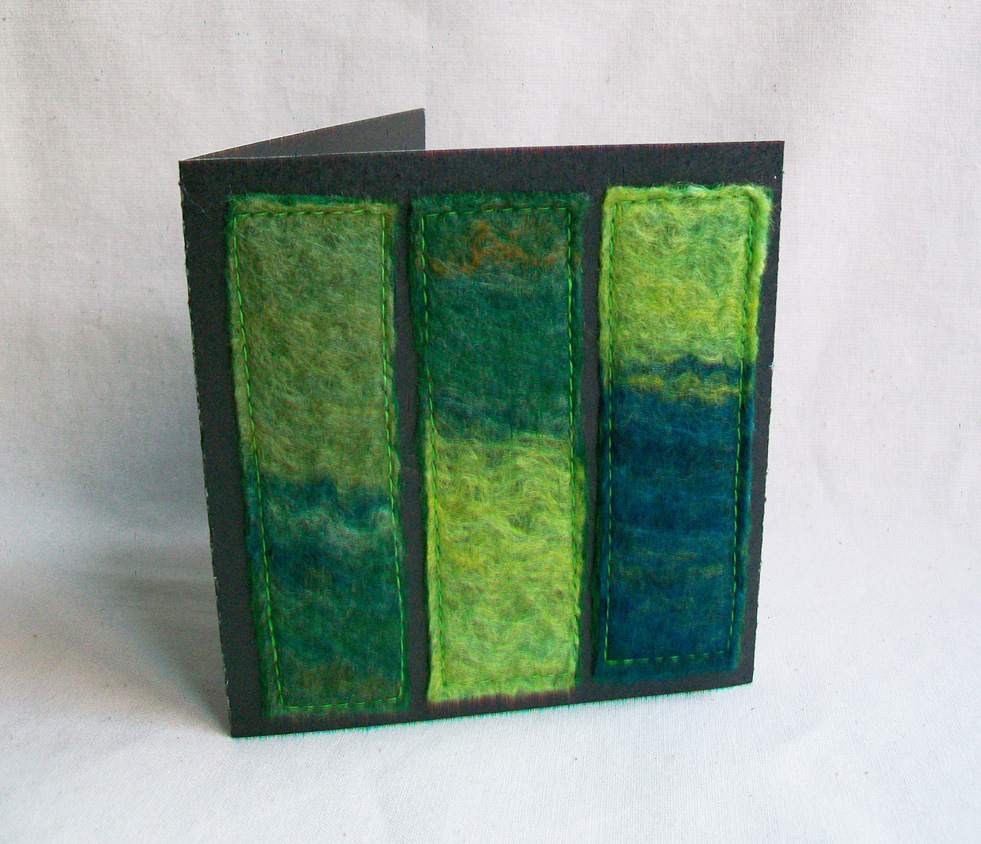
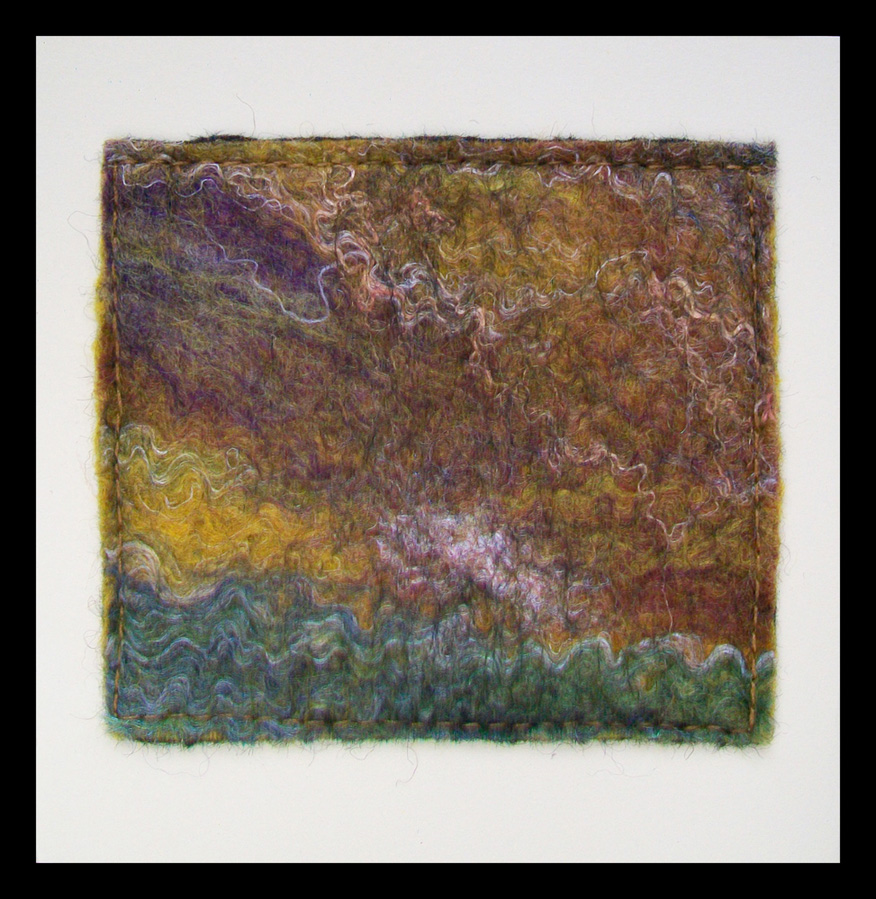
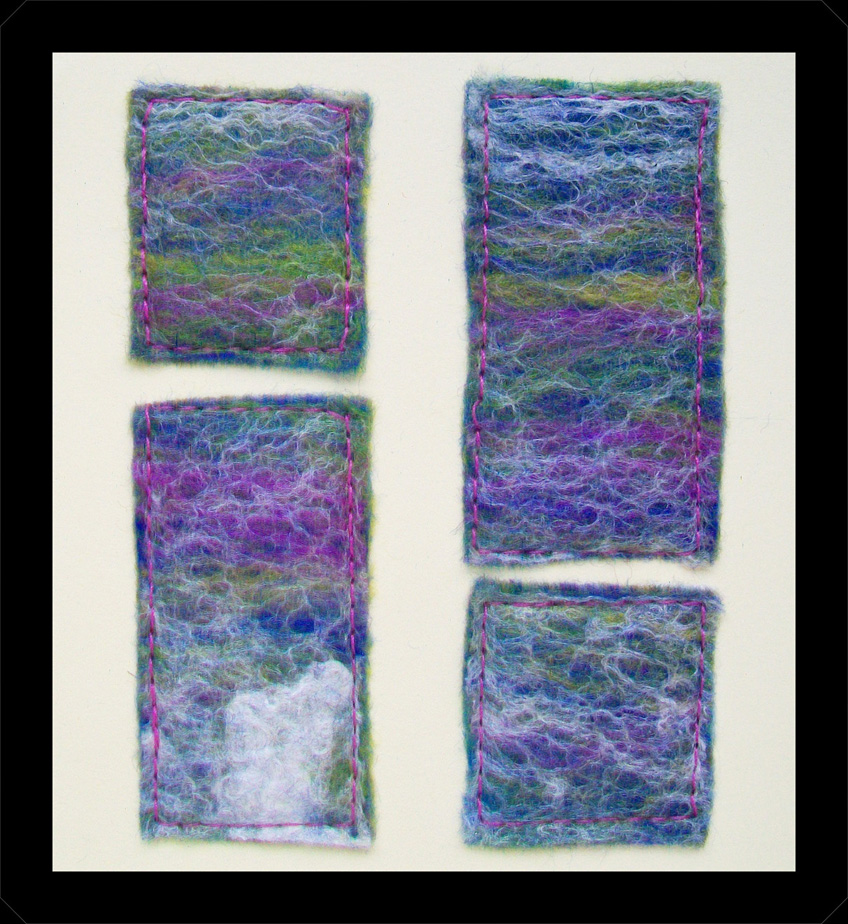
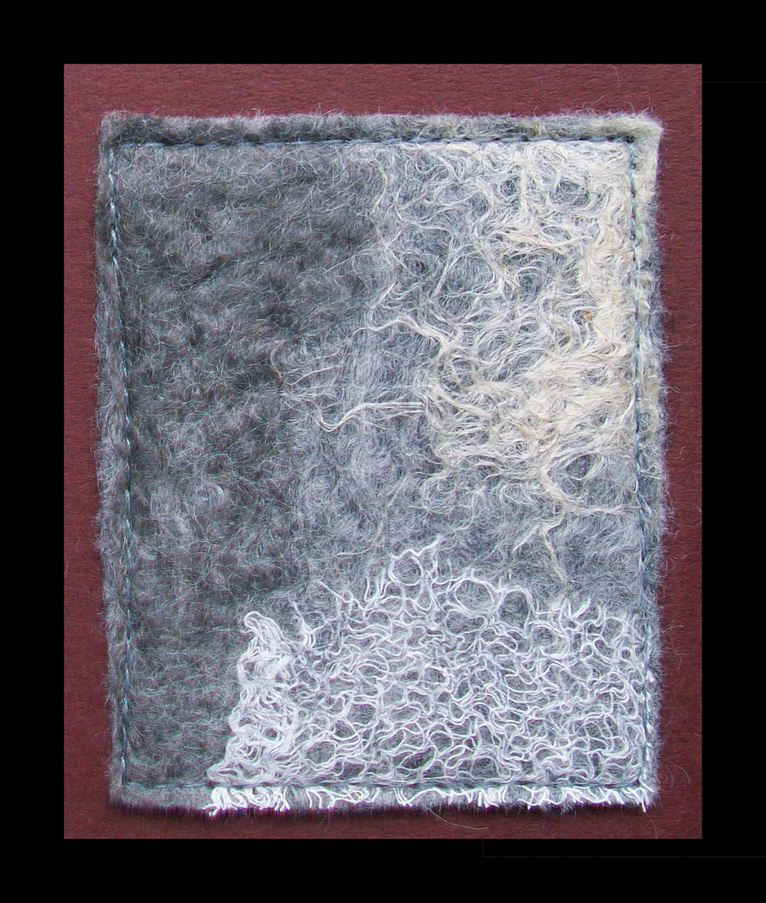
I was talking about making things from spare felt recently. I never throw any pieces of felt away, however ugly or small. Even the tiniest slivers cut from the edges of felt get saved up for re-using, usually between the layers of textured felt. I was looking at some of my smaller pieces and wondered if they’d be any use to my mum who makes her own greetings cards, so I asked on the forum if anyone knew the best way to attach felt or fabrics to card. I got some good advice and when Ruth and Lyn both said the easiest way is to sew them on, I thought I’d give it a go myself.

I spent a good few hours cutting, measuring and scoring card, cutting out felt, choosing colours of thread to use…and then my machine wouldn’t work 🙁 I think I must have done something to it when I tried to sew organza, no amount of cleaning and oiling seemed to help, it just kept making grinding noises and chewing the thread. But, a few days later, it was back to normal! It must have needed the oil to soak in or something.

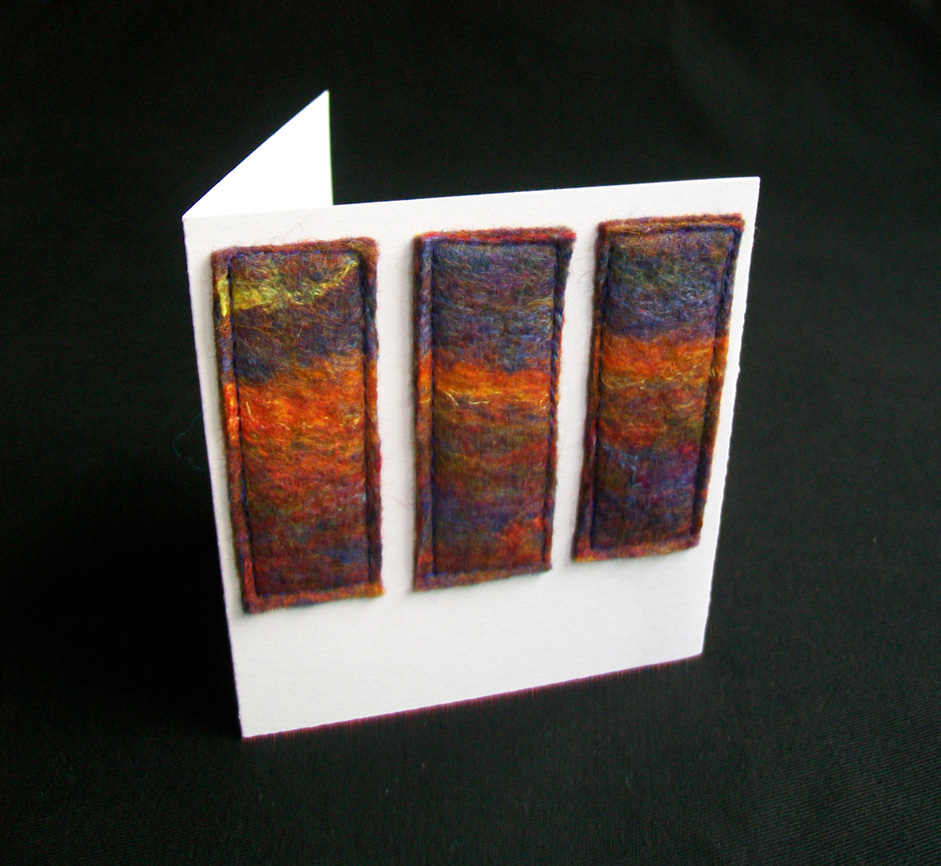
So, I got all my supplies out again and started sewing away. Before long, I had a nice pile of almost finished felt greetings cards.

When I was asking on the forum about attaching the felt, Lyn also suggested using cards with a double fold, so that the sewing on the back could be hidden. I do have some of these, but they have an aperture, so weren’t any use.

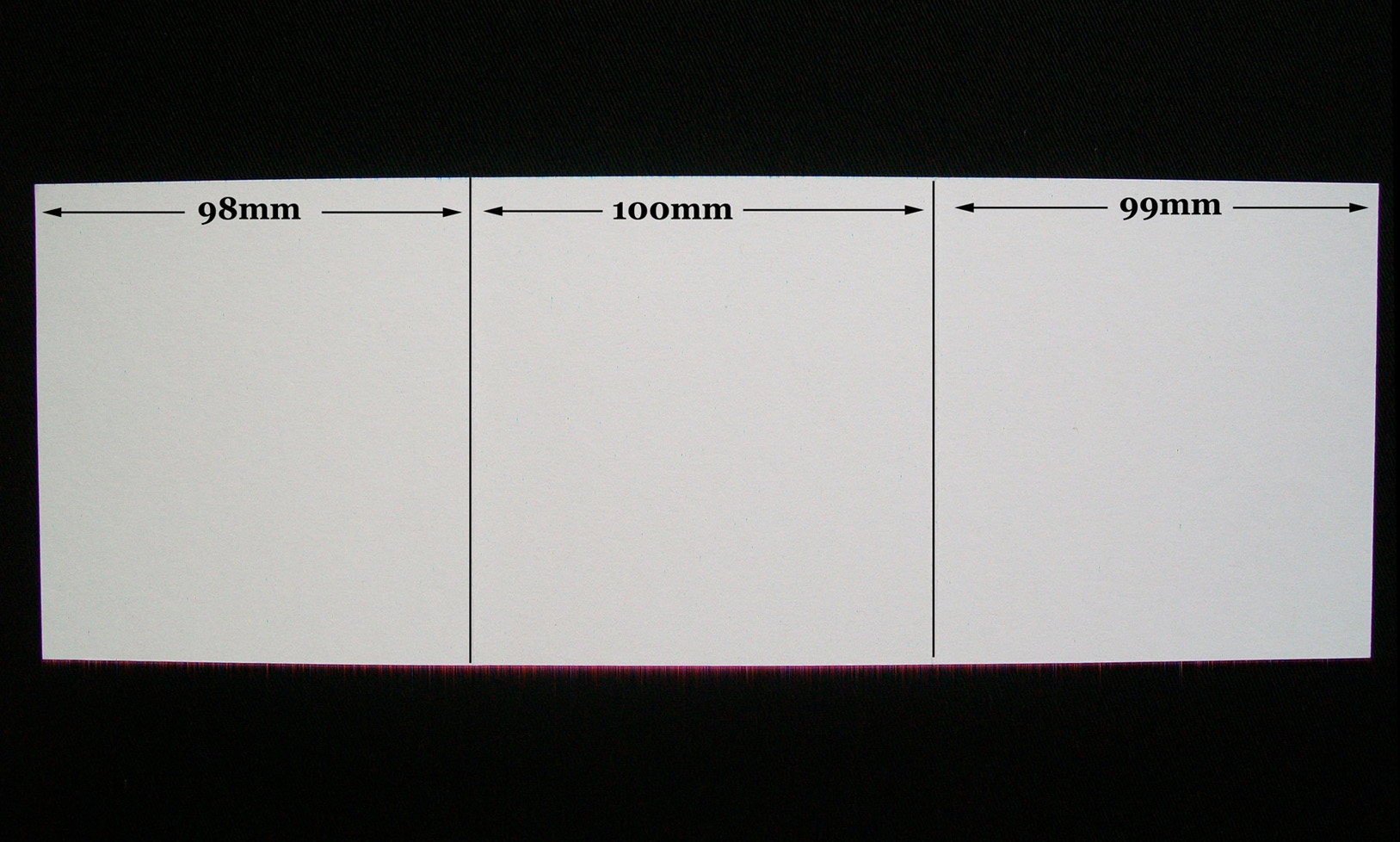
After lots of measuring and dividing and practising, I worked out a good system for scoring the cards so they folded well. I used standard A4 size card, cut in half, so that I had two long strips. On the back side, I measured 98mm in from the left side, and 99mm in from the right, and scored gently. This left the centre panel where the felt would go, approximately 100mm wide.

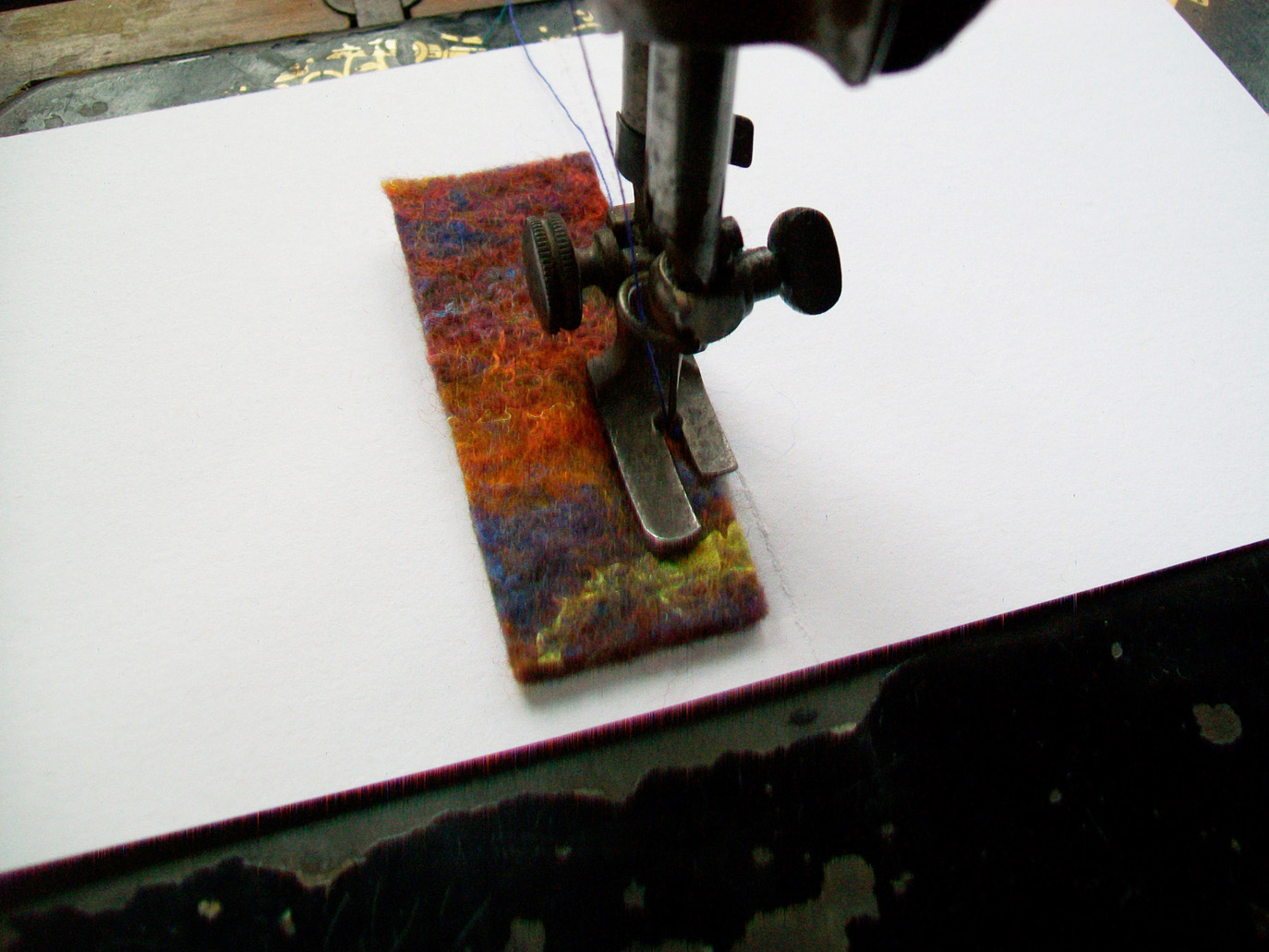
After working out where the felt would go, I then sewed it into place. You don’t need a fancy machine, mine is an old electric Singer without power 🙂

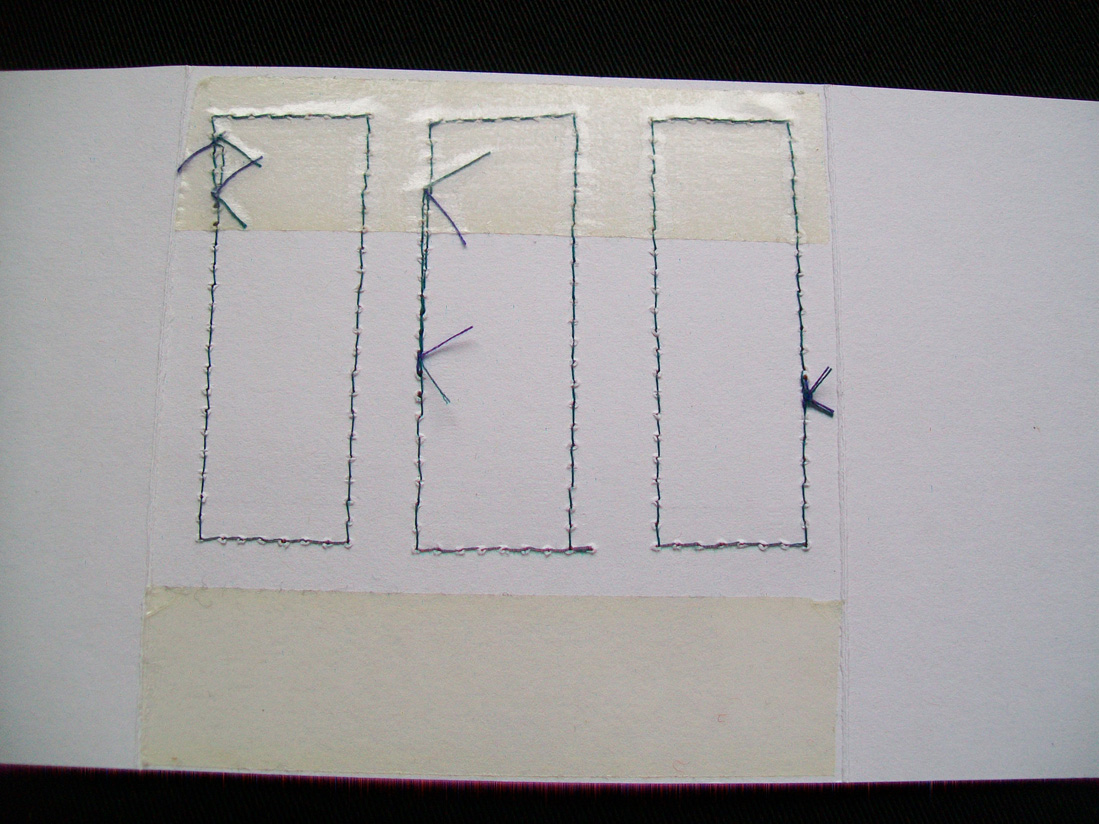
Once all the felt was attached, I turned the card over and added a couple of strips of double sided sticky tape.

Once the flap is folded over to cover the sewing you have a gorgeous, unique greetings card 🙂

I’ve made a PDF file with more photos and more detailed instructions. If you’d like more info on how to make your own cards, just click the link below

Handmade Greetings cards Using Felt

Do you use fabric, felt or fibres for greetings cards? Do you have any photos or tips you’d like to share?

Making a Small Travel Journal

Making a Small Travel Journal

By the time you read this post, I will be in New York City. My mom and dad kindly let us use their timeshare condo in downtown Manhattan. My sister and her husband are joining us there and we’ll be there for a week. In preparation for our trip, I thought it would be fun to make a small travel journal to keep memories of the trip in. Since I was making one for me, I thought I’d make one for each of us. I thought it would be interesting to see what each person chose to remember in their book. I’ve made a mini-tutorial of how I put the books together.

The covers were made with some hand-made paper that I made about a month ago with my local surface design group. I didn’t really have plans for the paper when I made it but it was the perfect size for a small book cover. It’s about half the size of an 8 1/2″ x 11” sheet of paper. You could use a piece of hand-made felt, a couple of layers of heavier cotton fused together or a piece of cotton canvas to use as a cover. It needs to have a little weight to it but not be completely stiff.

I then painted some paper with a light wash of acrylic paint and cut the sheets in half. This paper is slightly heavier than computer paper but not by much. I painted some in green, blue and orange. You can choose any color scheme to match your cover.

I painted enough sheets so that I would have 12 half pages per book. I then took three sheets and folded them in half, one inside the other to make the signatures for the book. That’s just a fancy word for the sheets of paper that go together in a group to be sewn into the book. Oops, I forgot one step. Before I folded the signature, I made a fancy center page of the New York City sky line.

Here is the pattern that I drew. I found a photo of the NYC sky line and sketched it out. I then used a ruler to make the lines a little straighter and then used a felt tip marker to make the lines a little darker.

I then traced the pattern on to a piece of freezer paper and ironed the freezer paper to one of the blue pages to use as a stencil. I then sprayed the paper with black spray paint. This is the stencil after it’s been used several times. It worked to use the same stencil four times. The last use didn’t give as clear an edge so if you want a really clear edge each time, make a new freezer paper stencil each time. But I was being lazy and it really didn’t make that much difference in the end result.

Here’s the painted sky line. I did draw in the pointy part of the top of the Empire State Building later with a black Sharpie. Looks more like a castle to me but I guess it looks somewhat like a city skyline.

I just got this new Pfaff sewing machine. My old machine was a cheap Brother machine and it just wasn’t working like I needed for machine embroidery. This machine is really fancy but I really like how it sews so far. I used it to sew my little books.

Previously, I had searched online for maps and photos to use in the books. I thought it would be good to get everyone started and give the books a feeling of being in New York City. I used Google maps for the front covers.

I used a piece of double stick tape to apply the map to the front cover to hold it in place while I was stitching. When you stitch through paper with a sewing machine, you should increase your stitch length. If you put your stitches too close together it tends to tear the paper. I used orange thread and stitched around the outside of the map. This book is put together with all straight seams so you only need basic sewing machine skills. Remember to put the map in the correct position so that when the book is closed, that the map ends up on the front of your book and right side up.

This is the trickiest part. Open one of your signatures and place it on the inside of your book cover. You can see the seam where you stitched the map on the front. Line up the fold with that inside seam about 1/2″ to the right of it. Carefully stitch along the folded line. You can tie the ends of the thread either on the inside or outside. You could leave them long to tie beads or other decorative fibers on the outside if so desired. I tied mine on the inside and cut them short. Keep lining up your signatures alongside the previous one about 1/4″ apart and stitching them into place.

This photo shows the outside cover of the book after two signatures had been sewn. I tried to take a photo of the spine of the book after all the signatures had been sewn but couldn’t get a photo in focus. Sorry.

Here are the four books after having all four signatures sewn in place. I really had fun with these books. I’m not sure if it was because I like making books or if it was finishing a project. I’ve been making so many samples for my class that I never feel like I’ve really made a project. It was nice to have a finished piece.

I then found some painted paper that kind of matched and glued it into the front cover to hide the stitching from the map on the front. I also glued in some of the photos I had found online. This is graffiti on the right hand page.

I also sewed two pieces of paper together to make a pocket. I then glued it into the back cover. We can put tickets or other memorabilia in the pocket.

This photo shows the hosts of The Chew. It’s a cooking show that’s filmed in NYC. My sister got us tickets to be in the studio audience. I’ve never even seen the show but I like cooking shows so it should be fun. I’ll let you know if we’ll be on TV!

A friend of ours got us tickets to go to a Mets baseball game while we’re there. My husband is excited about this. So now we’ll all have a little book that we can journal in, draw sketches, paste photos, tickets and other ephemera about our trip. I’ll post some photos of the completed journal when I get back.

Do you use a journal? Have you made a travel journal before? I’d love to see yours if you have any samples.

Tutorial – Using a Handheld Sander for Wet Felting

Tutorial – Using a Handheld Sander for Wet Felting

This is a tutorial that I did for my personal blog and because it is so popular, I thought I would re-post it here in case some of you don’t follow my blog. If you already know how to wet felt and would like to speed up the process, you should try out the sander method. If you are just learning to wet felt, I would suggest holding off using the sander until you have practiced felting by hand. It’s better to learn the basics first before you try to go faster. If you don’t like loud noise, this method won’t be for you. But you can use ear plugs and it really does speed up the felting. (Warning – This is a very long post with lots of photos.)

I have had numerous requests to make a tutorial for using a hand-held palm sander to wet felt. This is the way that I do it. There are many ways to felt and I’m sure there are many ways to use a sander while felting. I will give some other options as I go along. You should try following the tutorial and see how you like using the sander. If you don’t have the specific type of plastic or equipment that I use, don’t let that stop you. Use what you have and give it a go. This is the equipment that I use. I will talk about each piece of equipment as it comes into use in the tutorial.

 This is the sander that I use. Any palm type sander will work or you can use a bigger sander as long as it doesn’t have rotating or spinning parts that do the sanding.

You don’t need to use any sandpaper. I have heard that some people have a plastic piece that they put on the bottom of their sander. I haven’t tried that. I have tried using a plastic bag wrapped around the sander but the bag keeps moving and has a tendency to rip. Also, it covers the exhaust on the sander and the sander then gets too hot if you’re not careful.

 Just a word about water and electricity. You need to be careful. Plug into a grounded plug when you’re using your sander. This is what ours look like. They are usually found in the kitchen and the bathroom in the USA. My sander never touches water but you should still be careful.

I work on the kitchen table usually. I put down a piece of plastic just to keep any water off the table. You can see that I have painted etc. on this plastic. But it never touches the wool so it doesn’t matter.

I then put down this small braided rug. It is made with a natural fiber but I don’t remember exactly what it was called. Anything with some texture would do. I haven’t tried bubble wrap but it might work if it is the really stiff kind with thick plastic.

This is the foam layer that I use. It is a type of packing foam and I recycle it from my store as some things I receive are packed in it. It is very thin. You could use any kind of plastic that you wanted to use. (This was written several years ago, I now just use a thin layer of painter’s plastic.)

o I put down a layer of foam on the rug. Today I am making a flat piece of felt that I will use to make some book covers. I will be cutting the felt out of the flat piece but I still need to make sure that I make enough felt to be the right size for two book covers. I need at least 6 inches wide by 18″ long. I usually  make much more than I need and I can always use the leftovers for something else. I am planning on making a piece almost as big as my foam so the layout will be 19″ wide by 26″ long. This will assure that I have plenty of felt with a shrinkage rate of about 40% with the Falkland wool I am using. I tested a sample of my wool before to figure out the shrinkage rate.

 This is how you pull pieces of wool off for layout. Make sure that you have your hands far enough apart so that you’re not trying to pull on the same fibers. Notice how I have my right hand? That is the easiest way to hold the wool you are pulling away from the roving. If you use prefelt or batting, you would just lay out the wool as usually do.

 Here is a piece of wool pulled off. You then lay the wool down on the foam. You can see a row I’ve already laid out. To get an even piece of felt, you need to be careful with your layout and take time to place your wool evenly. Try to pull off about the same amount each time.

 Here is my first layer of wool laid out. I am using natural wool but will dye this later for my book covers. Notice how all the fibers are going in the same direction?

 Now, take your hand and put it down on the wool. Move your hand from place to place. Close your eyes and feel the thickness. If you feel thin spots, put a little more wool on that area.

 Next, layout another layer of wool going in the opposite direction as your first layer. Here, I have laid about half of the second layer.

Keep in mind the size you need for layout. I just keep my yardstick handy so I know what size I am laying out.

 Here’s the two layers. If you were doing a thicker piece you may need to add more layers. Most people do three layers of wool at least. I am only doing two layers as I need it to be thin enough to put under the sewing machine and to add a backing for stiffness. So I am only doing two layers. But you can do as many layers as you would like. The more layers, the stiffer and thicker your finished felt will be.

Again, take your hand and feel for the thin spots. This is the easiest way to prevent holes and thin spots. Check all over your wool and add where it feels thin. I also like to get a little bit of air out at this point. I take both hands and gently press down on the wool to try to flatten it a bit and get rid of some of the air. This helps later when you’re adding water.Just press down all over the laid out wool.

I am adding silk noil to the top of my felt. It is to give more texture for my book cover. If you were adding a design or extra embellishments to your felt, this is the step that you would add those.

This silk noil has a lot of vegetable matter (VM) in it. I am going to leave it in. Normally I would take it out but these book covers are supposed to resemble bark so I don’t think it will matter if the VM stays. It will just add more texture. I split apart the silk noil like the photo above shows.

 Then I lay it out over the top of the laid out wool.

Here I am finished laying out the silk noil. If you use a lot of silk or any other embellishment that doesn’t felt, you’ll need to add another very thin layer of wool over top.

Just little wisps of wool is all it takes.

This is about how much I put down in one spot. I spread it very thin and just lay it on the silk noil all over the piece. I then press out the air again.

 When I finished laying out, I noticed that my wool was going over the edge of the bottom layer of foam, so I added a bit more to prevent my felt touching the rug directly.

Fill a spray bottle or ball brauser sprayer with cool water and soap. I usually use dish soap but you can use any kind of soap. Olive oil soap is good as it isn’t so hard on your hands. Now, take your spray bottle and spray down the wool. I actually no longer use this kind of sprayer as it tends to shift the wool layout. An empty vitamin bottle with holes cut in the lid works really well.

Here is the wool after being sprayed. See the soap bubbles?

 I then spray a little soapy water on my hand and then start pressing down. Many people use a baggy over their hand or netting over the wool to do this part. It just bugs me so I just use my hand. If you press with one hand and spray water with the other, I find that works well. Just keep moving along your wool, spraying and pressing to get all the air out and get the wool wet.

If water is starting to run off the edge, just use a towel to mop it up. You really don’t need a whole lot of water when you felt. You can lift the edge of the foam/plastic to let the water drain on down further into the wool. You can keep doing this as you move along wetting down your felt.

 I also take my hands and work from the wetted down side towards the dry to force water over to the dry side.

Sometimes, if you move your hands into different directions when pressing down the wool, you’ll get a wrinkle. Just use your fingers to smooth it out. If you go in one direction, this isn’t as much of an issue.

Here is the wool after is has been wet down completely.

 At this point, you need to assess your edges. If you want a smooth edge, this is the time to work on that.  You can fold under a tiny bit to get a straight edge.  Since I will be cutting out my book covers, the edges don’t matter. I also like the look of a natural edge so you can make a straight edge or not, it’s your choice.

At this point, I try to soak up a bit of the water in the felt. You will find that it is already starting to felt. Carefully place your towel on the felt and push down to soak up some water. Move over the felt soaking up water, just lift your towel and place down carefully each time you move it. If the upper layer starts pulling up then stop.

Now put another piece of foam on top of the felt. Or if you’re using plastic, put another piece of plastic on top. You should have a sandwich of foam/plastic, felt and foam/plastic.

Now plug your sander into a grounded plug, turn it on and place it gently on one corner of your sandwich over the felt. You don’t need to push down to start. Just move the sander from place to place by picking it up each time.

 See? I have it picked all the way up off the foam. You don’t have to lift this high but don’t drag it across the foam.

Then put it back down and hold it there for a few seconds. I usually work in rows starting from one end of the felt and moving to the other end systematically so that I don’t miss “sanding” any portion. Keep lifting and placing it down each time. This keeps your design from moving and migrating. Once you’ve finished the bottom row, move the sander up a bit but overlap the row you were one and do the same along the next row. Keep doing each row, overlapping the last row so you cover all your felt. I usually do this several times over the whole felt.

Here it is after I’ve sanded over it several passes. you can see the grooves from the foam.  When you pull back the foam/plastic, use your towel to get excess water off the foam/plastic.

Now grip all layers of the sandwich with both hands (one at each end) and turn your sandwich over.
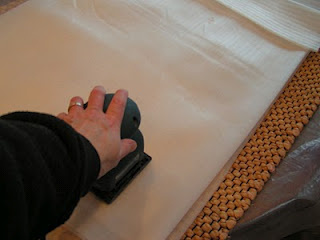
Now sand the other side just as you did the first. Remember to pick up and move the sander, placing it back down each time. After you have sanded this side going over it at least twice, you can start moving your sander over the foam/plastic as you would if you were sanding wood. I usually turn the piece two more times and sand for a total of about 15-20 minutes. Or until I get tired.

Then you need to do the pinch test. Pinch your felt and see if the fibers pull apart. If they hold together, you are finished sanding. If they pull apart, sand some more.

Here is the felt after sanding. This is pre-felt. Now you can full the felt however you would like. I will show you how I full mine.

The first thing I do is get more dish soap and get the felt a bit wetter with warm water. Your felt is fragile at this stage so don’t be too rough with it. Then I do what is called palming. I put the felt between my hands and vibrate and push my hands together. I do this over the entire surface of the felt.

After I finished palming, I put it under very hot water and “knead” it in my hands. I keep going with the hot water until it is too hot on my hands and then I switch to cold water. This shocks the wool and causes it to really start shrinking down. You can feel it happening. I keep switching between the cold and hot water. If you have water conservation issues, use two buckets to hold your hot and cold water.

 Then I throw the felt into the sink. You’ll want to get a little of the water out first unless you like a face full of water.

Here it is after I’ve thrown it. Just pick it back up and throw it again. Throw it hard! Get out all your frustrations. You can also keep putting it in cold and hot water as you’d like.

Another way to full is to use a washboard. This is an old glass one that I have. I don’t usually use it for flat pieces of felt. Usually I use it for slippers, bags or vases. It helps with the shaping process. If you have embellishments, be careful that you don’t catch an edge and pull anything off.  You just push it back and forth across the ridges. If you want to shrink it one way more than the other, than rub in the direction you want to shrink.

Your felt is finished when it starts to get nubby looking on the surface. You don’t have to felt it this hard but pieces that will be used such as bags or shoes should be fulled to a very hard felt. So how did I do on my shrinkage? The piece now measures 13″ x 19″ (if you’ve already forgotten, it started out as 19″ x 26″

Next you need to get some white vinegar.  Put some water in the sink or a bucket. Add some vinegar. I don’t measure, I just pour some in. Put in your felt and let it soak for about 5 minutes. This is bringing the wool back to a more natural acidic pH. The soap changed the pH of the wool so this returns it to normal. Then rinse it out. Wring out the water or roll it in a dry towel.

 I pop mine into a lingerie bag. Throw it in the washing machine. Put the washer on Drain/Spin. This takes nearly all the water out of the felt and it dries much more quickly. If it’s a small piece you can use a salad spinner for the same effect.

Here’s the finished piece of felt. If you wanted it completely flat and even, you could block it. That means to stretch it and pin it into place in the shape that you want. If you try using your sander, let me know how it goes. I’d love to hear how you did and see your felt. You can use a sander for almost any type of wet felting. I have used it with nuno felting, using a resist, thicker felt etc. When you nuno felt with a sander, sand first from the silk side as opposed to the wool side. That helps the wool to migrate through the silk instead of felting to itself. Once the wool starts to migrate through, then you can turn over and sand the wool side. Any questions, please feel free to leave a comment and I’ll answer your question.

Felt Scrap Christmas Tree Ornaments

Felt Scrap Christmas Tree Ornaments

These ornaments are made with the same technique that I used for the Felt Scrap Bowl Tutorial . This was much quicker though because these are only about 3″ x 6″. I had the scraps left over from a prior project and I didn’t change the shape of the scraps at all. I just placed them so they looked like branches. I did cut the trunk pieces out of left over brown felt.

I then sandwiched the scraps in two pieces of water-soluble stabilizer and free motion stitched with dark green thread.

Here’s one of the trees after the stabilizer was dissolved.

I was just going to glue the sequins on the trees as it would be faster. I tried one but the sequins were already falling off and I really didn’t like how it looked.

So I ended up sewing on the sequins with a bead to hold it in place.

I finished two trees. I did add a loop of ribbon to the top so they can be hung.  It was fairly quick for one of my “last-minute Christmas projects”. I always vow I won’t make anything this Christmas but I never seem to keep that promise.

Happy Holidays to everyone and thanks for stopping by!