Browsed by
Tag: dyeing

Dyeing Cotton Fabrics

Dyeing Cotton Fabrics

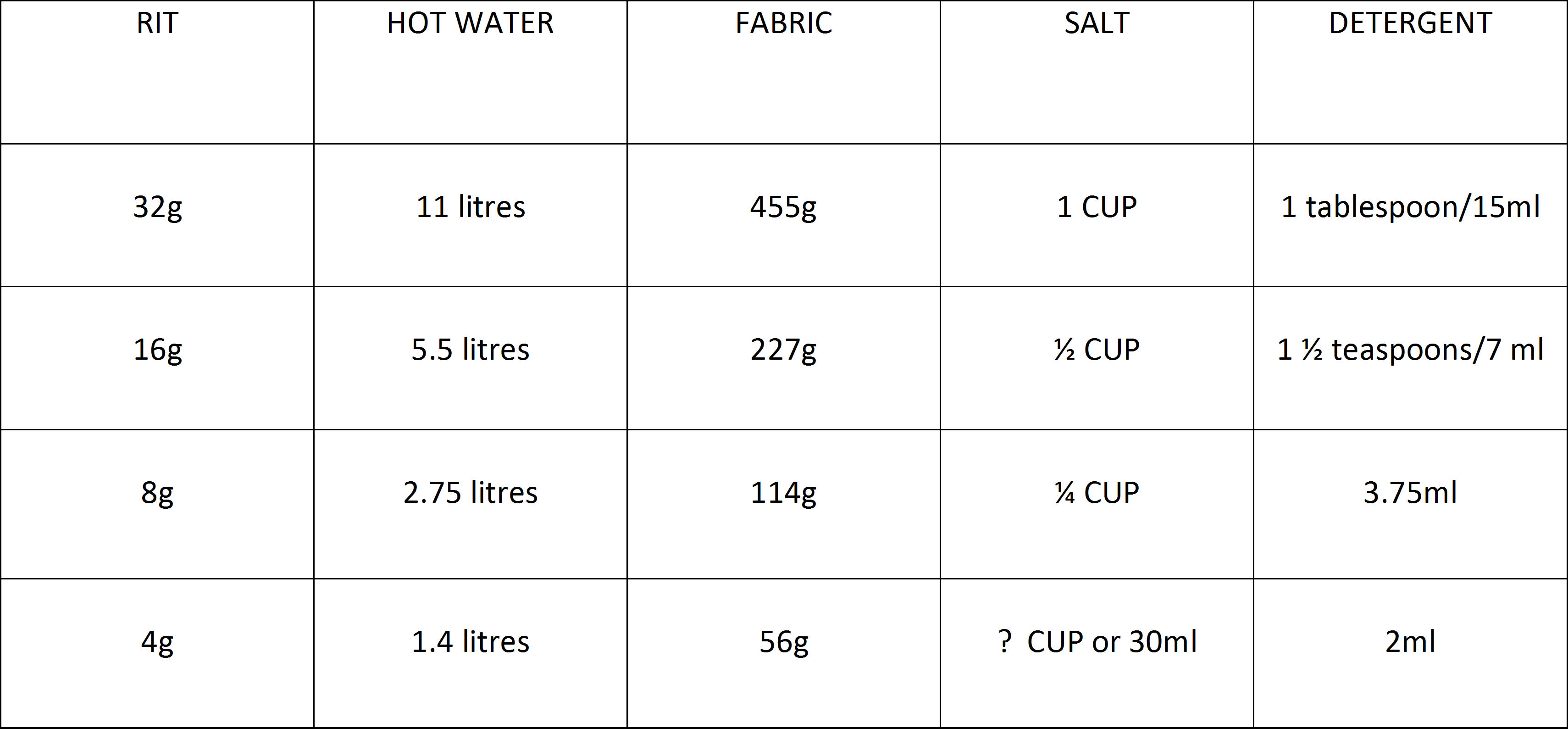
A few weeks ago I decided to dye some of the cotton fabrics I was using in felting: Cotton Gauze, Cheesecloth, Muslin, a few lightweight cottons and some cotton/synthetic mixes. I started out using some Scarlet RIT dye and I was really pleased with how easy it was to use and how well the colours turned out. I used the ‘Hot Water in a bucket’ method. I weighed the amount of fabric I had and then ran some really hot water into a bucket and measured out how much I needed. I poured this into the dyeing bucket, saving a little in a jug to add to the dye I’d measured out  into an old glass jar. I added salt to the dyeing bucket, then poured the dye solution in, and gave it a stir around. The instructions had said to wet the fabric before adding to the dye bath, so I’d put the fabrics in the other bucket while I prepared the dye bath. The instructions said to stir constantly for about 30 minutes until the desired colour is reached, but I just stirred occasionally. I also added fabric at different stages or tied/scrunched to get different shades/effects. Using the instructions on the RIT packet, I made some calculations for dyeing smaller amounts of fabrics and used this as a guide for dyeing the fabric a medium shade.
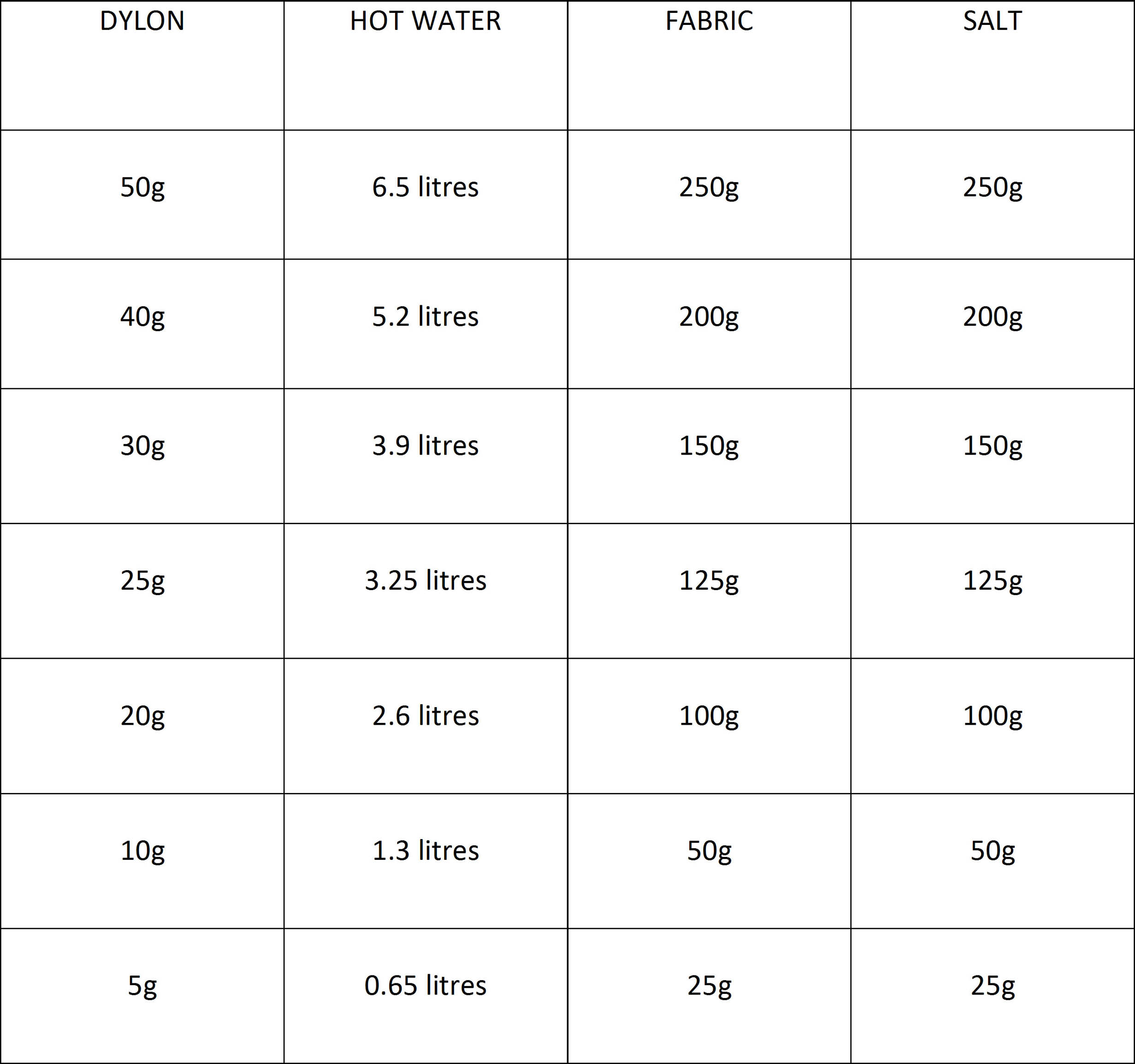
The second dye brand I tried was Dylon, I bought the 50g hand dyeing pack. I used to buy the Dylon Multi purpose dyes years ago, they were meant for using in a pan on the stove, but gave excellent results just using hot water in a bucket, so I expected these Hand Dyes to be really good. The instructions were pretty much the same as for RIT except no laundry detergent was used. I bought a dark brown so that I could add fabrics at different stages and get lots of gorgeous natural looking shades. What I actually got was a load of fabrics all very much the same pale shade of beige 🙁  I think I would have got richer colours using tea or coffee. I made some calculations for dyeing smaller amounts of fabric for the Dylon too, though I’m not sure I’ll use it again.
The next time I dyed some cottons, I used a RIT dye again, Navy Blue. I was really pleased with the way those fabrics turned out too. I even dyed some egyptian cotton top, which turned out nice, the photos didn’t though 🙂

Do you have a favourite dye for cottons or maybe a favourite method? Do you have any hints or tips to share with us? We’d love to hear your opinions. Click on the pictures for bigger images.

Felting Around the Web

Felting Around the Web

http://historic-crafts.com/felting

http://www.moymackay.com/2012/05/stirling-art-morningside-gallery-edinburgh-.html

Flextile’s Felt Snail Shells and her exhibition

Jane LaFazio’s “Sedona” in Felt

Felted Chicken Footstools

Deborah’s Penguin Tea Cosies

Mattie’s Green Man

G Felt’s Shibori Neck Piece

http://filzkram.blogspot.ca/

http://judycooper.blogspot.ca/2012/05/needle-felting.html

Create your own Glass Eyeballs

My Studio Challenge Contribution and Excuse

My Studio Challenge Contribution and Excuse

The second quarter is almost done and I finally have one of my planned pieces done. It is the simpler of the two but I  know I will not get the more complicated one done. This one was done like a line drawing with just a few bits of colour. It didn’t turn out as nice as I would have liked.

I make myself a piece of prefelt. Prefelt is just barely felted wool. You stop the process when everything is just holding together. I used Briggs and Little country roving. It comes as 5 strands of very thin roving ready to be put through a spinning machine. The only colour I had was red. It bleeds. I thought it might give the piece an interesting look. Here is the first strand on the prefelt.

roving on prefelt

Next I drew the picture and added some coloured felt from my left overs bin. Before cutting out the shapes and placing it, I brushed the back side with a dog brush to make it fuzzy.

all the elements added

I covered it with netting and rolled it up in a straw mat and rolled in all directions. I didn’t do any heavy fulling to shrink it because it does not need to be really strong.

I did start my second piece. I made the felt for the base. I used some cotton gauze for strength so I wouldn’t have to use much wool. I plan to cover the whole base with more wool  in several layers using my embellisher so wanted to start out fairly thin.

wool folded over to make neat edges
second base ready

While we are talking a little about technique people ask me why I use a star burst Tupperware lit to do my rubbing. I do it because when I rub directly on the sheer no mater how lightly I rub the I pull would right through the sheer and out. I’ve found about 1/3 of the people who come for classes have the same problem. I don’t know if our hands are just to rough or what.  Here are 2 pictures of what happens.

wool pulled through

And lastly my excuse. Besides waiting to long to start I have been getting ready to sell at our local medieval fair. One of the things that has taken time is my costume. Here is the under dress drying on the line after tea dying so it is not bright white.  There is a lot of material in it and I haven’t hemmed it yet. I have a little over a week to go and I have to make the top dress yet. I have a busy week ahead.

underdress dyed with tea
Dyeing Silk with MX Dye

Dyeing Silk with MX Dye

I dye my own silk and one of the ways I do that is with MX dye. MX Dye is a fiber reactive dye and works on cellulose or plant fibers like cotton , linen and hemp. It also works on silk. As far as I know silk is the only fiber that you can use both weak acid dyes that are for protein fibers and the MX dyes on.

Scarves blowing in the wind.

I like to use the low water dye method. With this method you use a jar and just a little water. What I do is scrunch or twist or pleat up my silk to be dyed. In this case they are all about 2 feet wide and 8 feet long. Then you pack it into the bottom of a jar that is big enough to hold the silk and the dye (1/2 a cup) and the fixative (1/4-1/2 cup).  It is important that it be a snug fit for this method to work.

I mix up 2 colours of MX dye in 1/4 cup of room temperature water. Pour them over the silk in the jar one at a time making sure they silk is covers with liquid. If it floats as you can see a couple of my jars did you need to carefully weight them down with something non metal. Metal will effect the dye. Once the dye is in the jar you don’t want to disturb them. You don’t want the dyes to mix completely and give you a solid colour.

dye in jars

I am very impatient. So I usually go do something else for 20 min to an hour then I come back and add the fixative. With MX dye you have to raise the PH to get the dye to stick. The cheapest thing for this is PH up from the pool store.  You can use washing soda( not bicarbonate of soda) or order it from your dye supplier but pool chemical is cheap especially at the end of the season. I add a tablespoon for each cup of water including the mix water. Stir to dissolve and then pour it into the jar.  You should leave it for an hour to react but I am impatient as I said and usually dump everything out after about 20 min. Rinse the silk in cold water then hot soapy water then one more cold. Here are some results.

I am sorry the pictures aren’t better but the wind wouldn’t cooperate.  They were dry in about 10 min. If you want really good detailed instructions I would read about it on Paula Burch’s site. http://www.pburch.net/dyeing/lowwaterimmersion.shtml

Over Dyeing a Shrug Jacket

Over Dyeing a Shrug Jacket

I’ve been dying some shrug jackets this week. I made all the fabric white then sewed them with silk thread before dying. this way the thread will get dyed with the fabric and it will match.

This one I did spiced pumpkin. I would say it came out of the dye pot pumpkin without any spice at all. So, it needs to be over dyed.

Orange shrug before over dying

I decided to add my own spice. i found a reddish brown to use. I mixed it up and poured it on in stripes across the wet jacket.

Orange shrug with dye poured on.

Then I rolled it up and popped it the microwave for a few min to get it started. I wanted some of the striping to remain and not have the dye just disperse into the water and dye the whole thing. for plastic I used half a cheap plastic drop sheet. the are nice and thin but huge.

Orange shrug ready for the microwave.

Here it is after cooking and drying. It’s not a great picture because it is a really bright sunny day.

Orange shrug after over dying

You can see some of the stripe but it’s not a rigid line and the orange has gone  a little spiced and not quite as blinding orange.

Felting Around the Web

Felting Around the Web

Felt Alongs Lamp/Vessel

Deborah’s March Doorstops

“Ordinary” Face by Mattie van den Heuvel

Felted Hand Puppets by Frauke Walder

Felted cords/ropes

http://anajskreativestagebuch.blogspot.com/2012/04/sowohlalsauch.html

Flextile’s Shibori Dragonfly

Deborah Schlegel’s Post of Kelsey V. Wiskirchen’s Thread Sketching Exhibit

Kay Susan’s Slow Cloth with TAST stitches and a second post about it

Louise Saxton’s Reclaimed Needlework

Paper Sculpture by Anna-wili Highfield

Fabric and button flower brooch tutorial

How to make an owl from felt pieces

Whitney Matalone’s Time Lapsed Video of the IKAT weaving process

Felting Around the Web

Felting Around the Web

The Trouble With Crafting’s Post about Embroidery Basics

Making a Beaded Tassel by Shawkl

RosiePink’s Repurposed Felt

http://anajskreativestagebuch.blogspot.com/2012/03/willkommen.html

Ruth O’Leary’s Stitched Nautilus Shell

http://ohohstitcher.blogspot.ca/

http://www.strongfelt.com/

http://sharit.posterous.com/

More of Jana’s felted notebook/calendar covers

Rainbow Acorn Color Wheel by lilfishstudios

Deborah’s Petroglyph Wall Hanging

Arlene’s Blue Nuno Felt Wall Hanging

Loco Lindy’s High Tech/Low Tech I-pad Cover

How to Make a Stealth Witch Hat by Frances Barker

Flextile’s Indigo Dyeing

Jana’s Egg Dyeing

Direct Dyeing Felt Samples

Direct Dyeing Felt Samples

A few days ago, on the Direct Dyeing post, Shana was asking whether the same method could be used to dye felt pieces. I hadn’t tried it, but I had a couple of white sample pieces of felt that I thought would be good to try it with, so I did that yesterday. The first piece I tried it with was a sample made from two layers of 23 micron merino with wisps of egyptian cotton top between the layers and on the top. It started out roughly 9 x 12.5 inches, and after steaming for 30 minutes, it was 7.5 x 11.5 inches. The interesting thing with this piece was how the cotton took the dye, in some parts where I’d used a colour made from two shades of dye, the cotton took just ones of the shades

The second sample piece was made from two layers of 18.5 micron merino with milk protein fibre tops between the layers and on top. This piece started out 7 x 14.5 inches and ended up 6.5 x 13 inches. Both pieces were soaked in water and vinegar before dyeing.

I probably should have rolled the pieces instead of folding, from the photos of the backs, it’s easy to see where they have been folded. They didn’t take the dyes as well as wool tops or silk does, and there was still dye in both pieces that had to be rinsed out. The results were interesting though, both pieces felt the same afterwards, they didn’t feel extra fulled or less soft. Thanks for the idea, Shana 🙂

Click ‘Permalink’ under each photo in the carousel to see larger pictures.

Food color dying

Food color dying


Because we’ve been talking about all sorts of different dying methods and different dyes i thought i’d show you how i usually dye my wool. this pdf shows dying fibre with food coloring and a steamer which is an inexpensive way to create lots of different colors. If you dont have a free standing electric steamer then just use your stove top with a pot and steam basket. It is a lot of fun to do this,  its quick and easy and the dye does hold up to wet felting but sometimes the red will run. If your dying fibre to use in needle felting then this technique is perfect.

food color dying   

Stock Solutions for Accurate Dyeing

Stock Solutions for Accurate Dyeing

There is another way to do small or large amounts and get the same results each time.  The easiest and safest way is to make a stock solution.  It’s safest because dyes are most dangerous in there powder form, when the powder can fly around and land incredibly far from where you are measuring it.  It’s best to use a mask when measuring the powder. You don’t want to inhale the powder. You need to keep records so you know what you did. What I do for acid dyes is measure 10 grams of acid dye powder into 1 litre of boiling water.  This solution will be good for up to 6 months in sealed jars. Remember to labels your containers very well so everyone knows what they are. It’s best if you keep them separate and away from any food so there are no mistakes. This gives you a 1% solution so you can use 1cc (measured in a syringe for ease) of die solution for every gram of dry dye stuff (wool roving for instance) I want to dye to a medium shade. If I was pale shades I use half as much and for dark shades up to 4 times as much. This is the most accurate method. This can be hard if you don’t have a scale that measures very small amounts. Now if you’re not that precise that’s ok. As long as you use the same amounts every time you make your solution so if you use 2 teaspoons of dye in 1 quart of water and use a syringe to measure you will be fine. When you dye something write down how much wool you had then how many cc’s of each dye you used to make the colour. I used to keep a small sample of each batch on a card with the amounts of dye used so I could reproduce it when I wanted too.

A weekend of dying