Browsed by
Month: March 2014

Drawstring Bag and Not a Jackson Pollock

Drawstring Bag and Not a Jackson Pollock

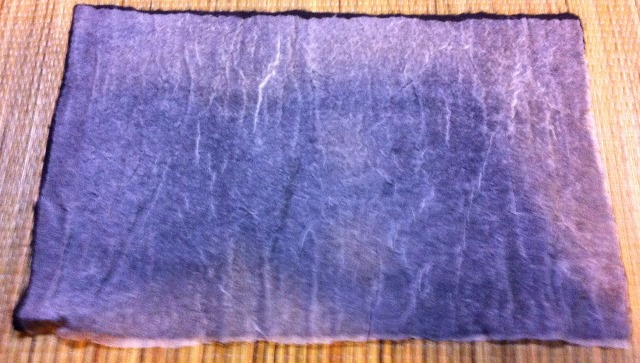
My girlfriend bought me a bike a couple of months ago and a big sturdy lock for it. There’s nowhere to attach the lock to the bike though, so I thought I’d make myself a drawstring bag just big enough for carrying the lock and a few tools. The first bag I made turned out a little too small and a bit thin on the bottom so I’ve put that to the side for now. I used a bigger template for the next one. I started working inside out and laid out some pieces of silk and cotton gauze in shades of black and white for the front. I was just going to use black Merino for the top layer, but compared to the black, the silk looked blueish so I used some dark ‘midnight’ blue Merino as well. This is how the front turned out after felting:

OLYMPUS DIGITAL CAMERAOn the back I started with a piece of black silk chiffon, I thought it’d help reduce pilling (bobbles) if the bag rubbed on my back while riding. It really sunk in and isn’t really visible unless you look really hard! I used some grey merino with the black for the back.

OLYMPUS DIGITAL CAMERAI wanted to keep the natural top edges, but it seemed simpler to cut it straight across for adding the webbing I wanted to use as a channel for the cord. I cut the bag at the top at each side, slightly smaller than the width of the webbing I was using, then I sewed the webbing on with the machine, leaving each end open. You can see from this photo that I used some scrim for a lining on the bag.

OLYMPUS DIGITAL CAMERAI blanket stitched along the top edge to make it look nice.

OLYMPUS DIGITAL CAMERAI’d originally planned to use eyelets at the bottom for the cord to go through, but after looking online I had a choice of spending a small amount of money for a few eyelets and a little plastic kit, or a large amount of a money for a really sturdy metal looking kit and about 400 eyelets. I’m not planning on making that many bags, so I decided to just cut the holes I needed and blanket stitch around them 🙂

OLYMPUS DIGITAL CAMERAI attached the cords so that the shoulder straps were also the drawstring closure. I used spring toggles so that I can shorten the straps too in case the bag hangs low while riding.

OLYMPUS DIGITAL CAMERAAnd this is what it looks like closed. I must admit, I was surprised how well it turned out!

OLYMPUS DIGITAL CAMERAI’m just in time for Ruth’s Jackson Pollock studio challenge. I thought of many things to do for this, one idea was to do wool and wire sculptures based on some sculptures Jackson Pollock dabbled with. I thought about ‘action painting’ some silk, but in the end, I thought I’d do something based on some works of his that weren’t action paintings. They had large areas of coloured shapes, this is a good example. I thought I’d ‘modernise’ it a bit though and use brighter colours and silk and gauze pieces. And since I was enjoying making bags, I thought I’d use my idea and make a bag at the same time. The bag turned out great! The design though, was a little bit bright, and really, not in the slightest like a Jackson Pollock painting!

OLYMPUS DIGITAL CAMERAOLYMPUS DIGITAL CAMERAI need to get some nice webbing or braiding for the cord channel, but I’ll show the full bag when it’s finished.

Felting with friends Weekend- Hats

Felting with friends Weekend- Hats

More on my felting weekend.  We all meat at Maureen’s ( http://www.dreamspinfibres.ca/ ) A great place, she has so much fiber to choose from.

Three of us made hats based on a hat in Judit Pocs video. It seems to be gone from the internet. It was mostly about making a rug.  This is Diane and Susan( http://www.suzannetowns.ca/ ) sizing up a template.

Diane and Susan

They made their hats on the first day. They like a really firm hat so their scaled up the template and added more layers than I do.

laying out fiber laying out fiber 2

more colour and embelishments 3 dianes hat half done 2

Susan added come great colour  and Dian used some resists to reveal some fabric on the layer underneath.

Diane and Susan finnished hats 2

Diane added a string of small felted yarn balls to her hat. The parts that stick down were up to high so the pulled them down and twisted them to get them in a better position.

On the second day I did my hat. I adjusted the pointy parts so they would be lower. and left the pointy top smaller.

my hat ready to felt my hat finished my hat finnished 2

I should have used a different colour yarn for the embellishments. The colour was much to close the hat colour.

Dian made another hat on the second day. I didn’t get any pictures of it in progress. the template was like witches hat.

dianes seconed hat 3 dianes seconed hat 4

I have to give one of these a try. I like the way it is folded in on itself.


When Do You Give Up on a Design?

When Do You Give Up on a Design?

I have been taking an online class Designing with Circles 1 and 2 by Gail Harker and wrote a post a while ago showing some samples from my sketchbook. Of course, I just showed you the pages that I liked. As part of the course, I and other students had an online discussion with Gail going over questions we had sent in and showing pages from student work. It was a very interesting discussion and I learned that you shouldn’t give up on a design if you don’t like it, you should see if there are ways to change, crop or enhance your design to improve it.

Ugliest Doodle

One of the class assignments is to doodle. I have a very hard time doodling and the photo above shows what I called “The Ugliest Doodle Ever”. The background was done with breakdown screen printing and the doodle was done with colored markers. I sent a copy to Gail and said she could use it as an example of what not to do. But Gail saw something in the doodle that I hadn’t even noticed. She saw a prehistoric bird in a cave drawing. I never saw the bird before she pointed it out. During the class discussion, she showed how she had put the image into Photoshop and made some changes making the drawing a considerably better design. So I was inspired to take this really ugly design and improve it.

Ugliest Doodle 2

The first thing I did was erase the big “femur” in the middle of the design going over the bird’s legs. That made a huge difference for me because that part really bugged me. But the design was done in ink and I had given up because I didn’t know how I could make it any better unless I just painted over the whole page.

Ugliest Doodle 4

Then in Photoshop, I filled in the background pattern and redrew the green legs. Now I was ready to play with filters, lighting and color.

Ugliest Doodle 5

This is using the “posterize” filter. It highlights the edges with black. Another thing Gail pointed out was the “alligator” on the right side of the design. She suggested that the design could be cropped in different areas to take certain parts and use them as a separate design.

Ugliest Doodle 6

I don’t remember all the filters and steps I did in Photoshop but just played around and saved the ones that I thought had potential.

Ugliest Doodle 7

As you can see, it really changes the look of the design and gives you thoughts about how you could use the design differently.

Ugliest Doodle 8

I think this one is neon glow.

Ugliest Doodle 10

Or how about purple and black?

Ugliest Doodle 12Or orange anybody?

Ugliest Doodle 14

This is my favorite one. I can actually think of how I could use this in a textile context. It was really an eye opening experience. I think that we might all have a tendency to give up too soon on certain designs that don’t work out the way we intended. What do you think?


Ruffled Nuno Felted Silk Scarf

Ruffled Nuno Felted Silk Scarf

I personally like the feel of silk.  So, I decided to learn to make a silk ruffled edge on a scarf.  This was an experiment for the ruffle and using a few other techniques with different fabrics and yarns. While I’m not a pink person, I thought if this turned out well I’d give it as a gift or sell it.

Before starting, I decided to make the scarf two-sided. So, I had to use flipping boards which I marked off with two colors of tape.  Blue to show the outside lines of the ruffle and regular masking tape for the place to join the edge of the silk ruffle and the inside design area.

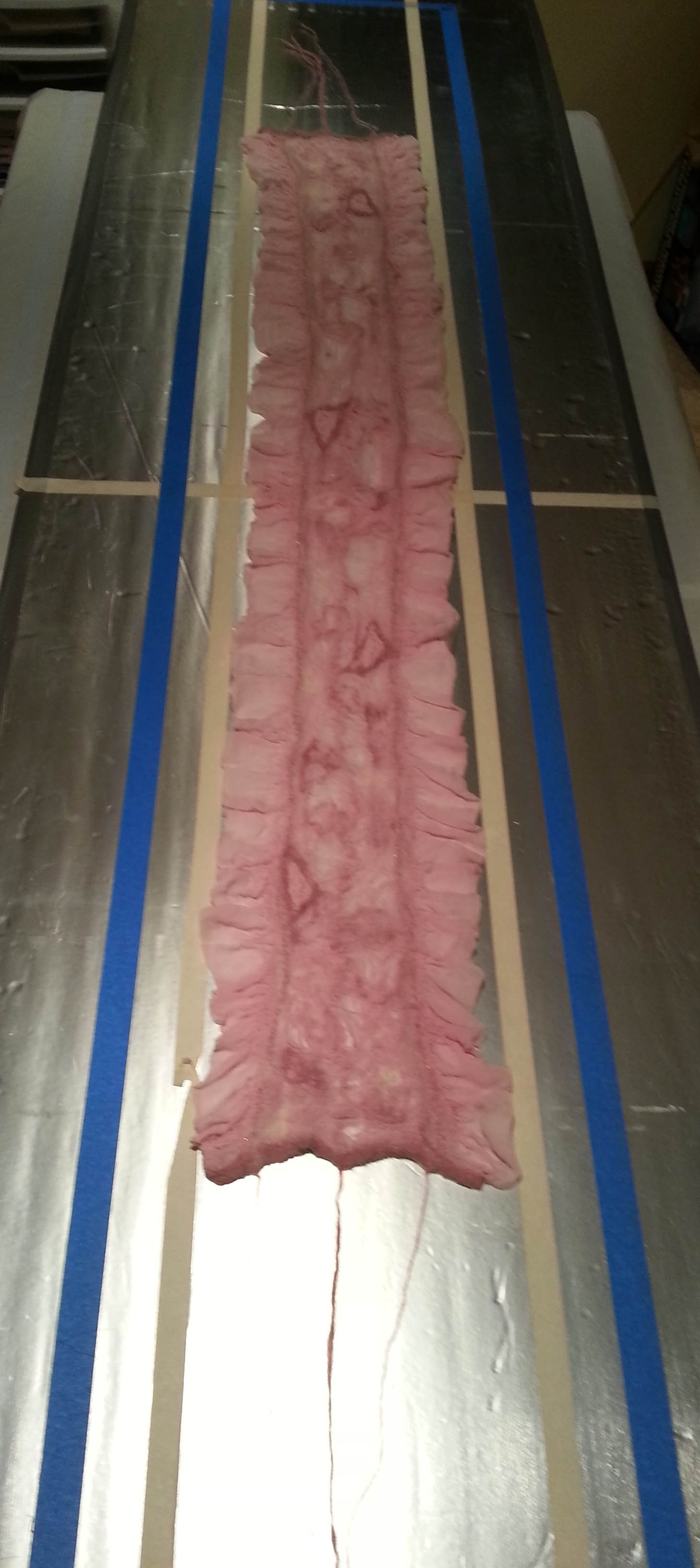
I used a piece of hand dyed pink chiffon.  The chiffon shrank a little with the dyeing process, so I allowed for some more during felting.  The piece measured 20 1/2′ by 86″ (52 cm x 218.44 cm) to start with before folding over 2″ (5.08 cm) on each side for the ruffle.  I used a ruler and iron as I went along .  To make sure the silk edge stayed down, I used fabric glue along the edge.  This dissolved during the felting.

2014-03-17 14.47.45

The flipping boards are from insulation board I bought from the local hardware store.  They were kind enough to cut it in half lengthwise for me.   I covered the edges in duct tape to protect them from water damage.

I carefully laid the silk open edge up following the lines on the board.  I put wisps of pink and white roving lengthwise along the ruffle edges careful to have a little over each side of the raw edge.  Because the wool will shrink lengthwise it gathers up the material on both sides creating the ruffle.  I used some pink mohair yarn in a design down the middle and left fringe hanging on both ends.  I covered the raw edges with wisps of wool.

I used some tencel in addition to random wisps of wool for ruching and two different yarns to decorate the first side.

pink scarf materialsWhen the first side was done, I very carefully rolled plastic wrap (out of the box) over the first side.  I cut it off with a scissors a little longer than the design.  Since the wrap as not as wide as the design, I had to overlap a second layer in the center to cover the width.  Rolling the wrap helps keep the design in place and creates less static than trying to pull a piece off and laying it over the design.  Using my hands, I gently pressed down along the design to remove any air bubbles.  You could also use a rolling pin or foam noodle.

I covered the plastic with bubble wrap bubbles down.  Then I placed the second board on top being careful not to disturb the design. I secured the boards with panty hose tied tightly in three places along the board. Then I carefully flipped the boards.  It’s best to do if you have help, but not necessary if you have enough room to do so without juggling it around. Any kind of ties would work as long as you can secure them tightly without disturbing the design.  I just had an abundance of old pantyhose.

2014-03-17 14.56.43My table is shorter than the boards, so I made sure the boards were centered over the table.  The last thing I wanted was for the scarf to go sliding to the floor.  After removing the ties,  I used a chop stick to gently lift it slightly to make sure the design hadn’t been disturbed and lifted up slowly. Any static can cause the silk, wool and decorations to shift.

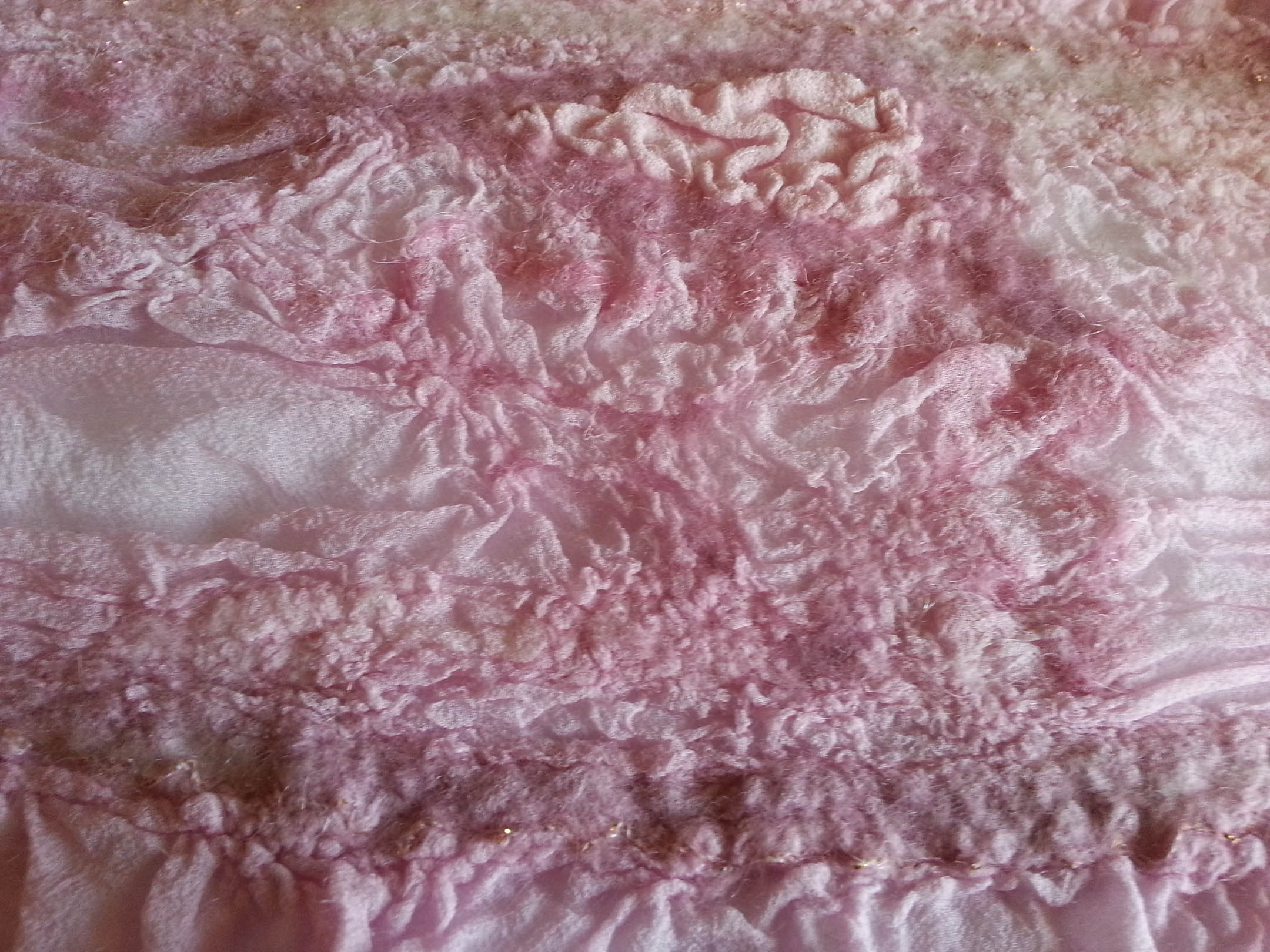
On the second side, I used pieces of silk gauze and a sparkly open weave fabric (different shapes with wool under and along the edges) and a pin/gold mohair yarn along the center of the ruffle seam on each side leaving fringes on each end.  I covered the raw edges of the ends with wool and used some of the pink/gold yarn across.

SAMSUNGWhen I was satisfied with the design, I covered this side with netting and began wetting it down with room temperature soapy water (for me this usually turns cold quickly since I work in a cold basement.) For this project, I used a sprayer with a few drops of Dawn dish soap being careful not to over wet it.  Then I used a foam roller and rolled over the scarf to help disperse the water more evenly.  I checked for dry and overly wet spots. I used a sponge to pick up excess water and applied more water to dry areas.

Then I began rolling, starting at one end using a foam pool noodle cut to size.  I rolled for ten minutes, unwrapped and started the roll from the opposite end.  I did this several more times check to see how well the fibers were starting to felt on both sides and everything was evenly wet.  I started with light pressure and increased a little more with each roll. When I thought the fibers were starting to felt, I flipped it over, removed the plastic wrap and started again alternating the direction of the rolling and increasing pressure.

There were a few spots of the dark pink yarn in the center that weren’t sticking, so I re-wet those areas with soapier water and continued to roll.  Now, I would just run the soap bar over the netting and rub.

After I finished rolling, I used hot slightly soapy water to full on the glass bead board rubbing in all directions, but particularly lengthwise along the ruffle lines.  I flipped it over and repeated the process.  Then I took it to the sink and ran it under hot then cold water while scrunching it up and throwing the wet scarf in the sink.  (I can’t help myself, I love that part.)  I let it sit in a vinegar water bath for 15 minutes, then rinsed and laid it out on towels to dry.

ps length side two ps front

The next day I measured the scarf.  It was 9″ x 55″ (22.86 cm x 139.7 cm) without the fringe.  The shrinkage was approximately 36-38% in each direction.  There were a couple of spots that needed  attention so I needle felted them down.

ps side 2
Side 1
Side 2
Side 2

I learned several things with this project.  The more wool you use along the ruffle line, the more ruffles you’ll get.  The ruffle didn’t shrink much, so the next one I made used a narrower ruffle and more wool along the ruffle seam and I got a much better ruffle. I didn’t use that as an example because it was black and it would have been hard to see.  The pink was good to use for a first time because I could see where I had the design on the back side.  While I was satisfied with the ruffles and ruching, I wasn’t in love with the scarf.  But it was an excellent learning experience. I hope this process will help those of you who would like to try a ruffled silk scarf.

Closeup

Closeup


My First Felted Hat

My First Felted Hat

Last time I posted, I’d been working on a hat template. A couple of days later I got a chance to work on it. I made a resist out of a large piece of dense plasticy foam stuff I had, probably some kind of packing material.

OLYMPUS DIGITAL CAMERAI made a batt from some browns, greens and rusty orange Merino for the first couple of layers. I laid the first layer on the resist, wet it down, flipped it over then folded the wool in and finished the first layer on the other side. I repeated this colour on the second layer, but laid the wool at 90 degrees. For the third and fourth layers, I used more greeny shades, then I added some torn silk pieces (bottom right photo)

hat comp 1I felted it until it was holding together, then removed the resist. I knew it would be hard work, but hadn’t realised just how hard! I seemed to rubbing and shaping for ages. I thought a bowl I had would be good for fulling and shaping, but it was only good for a while, so I finished fulling and shaping it on my head. I didn’t consider that it would shrink some more so it ended up a bit too small. Using my head made it more of a cloche hat than a bucket hat too. But, not bad for a first go, I think.

OLYMPUS DIGITAL CAMERAThe brim wasn’t very even, though it did feel good being smaller at the back.

OLYMPUS DIGITAL CAMERAI don’t think the brim was wide enough, at the front either. Some of the silk pieces came off and I realised I should have worked inside out.

OLYMPUS DIGITAL CAMERAAnd, upside down it does look a bit like those moulded cardboard bed-pans 🙂

OLYMPUS DIGITAL CAMERAI might rework the template and try again. Maybe 🙂

A felting Weekend

A felting Weekend

Last week end a friend Dianne Lemire and I went down to our friends Maureen Harding’s place for a felters weekend. Another friend Susan came on Friday to felt with us. It is so much fun to spend a week end with other people that love to felt.

I wanted to make a new little purse to use at shows. First I did a black one with a nice blue silk inside and a pocket. For the design on the flap I balled up some peices of orange silk and wound them up with thread to keep them in a ball.

silk balls on bag

I used a piece of black prefelt to cover them.  Then some silk roving to make them look more like a swirl. I used a scrap of commercial prefelt but you could make a piece of your own. Once it was dry I cut the tops off the raised  peices to reveal the bright colour underneath.

black bag finnished

This is the inside with the pocket and you can see I added an orange nuno swirl that is hidden by the front flap.

black bag finnished inside

Black is great but I decided I needed something brighter as well so I went with a multi coloured roving in orange.

orange bag layout

I added a pocket to this one too. Here you can see I forgot to add soap to the water and  it sits on the wool in beads. I think its a cool picture.

water on bag pocket

I used the flat glass “marbles” that they sell for decorating instead of silk balls this time. You can really see the out line of the marbles on the inside of the flap

orange bag inside orange bag finished uncut

I made a long snake to use as a strap. It is long enough to wrap around my waist or use as a shoulder bad depending on what I am wearing. I will put some grommets in the ends and 2 on the back to thread the rope through.

orange bag with snake  The holes I cut to reveal the marbles are not very big. I think I will probably enlarge them.  I will post a picture when the grommets are in and the holes are bigger.

I will show you more form our felting weekend in my next post.

Finishing and Framing

Finishing and Framing

Many times after people begin felting and make several flat pieces that are to be wall hangings, they start wondering how to hang or frame their pieces. There are as many ways to hang and frame a piece as there are to felt a piece. So these are just a few ideas of how I have framed pieces in the past. I have found that if you are making a piece specifically to hang on the wall, that it is a good practice to think about how you are going to hang it before you start. That way, if you want a specific size or need an edge that is different in some way, you can plan that in advance. Of course, if I followed this advice more often, I wouldn’t be making up new ways to finish or frame a piece 🙂

One way to hang a piece without a frame is to use a stick or branch to hang the fiber art piece. I think this works best with pieces that are not square and have an organic edge to them. I usually just stitch around the branch and then stitch into the back of the felt piece, making sure that I am not stitching all the way through the felt.

MINOLTA DIGITAL CAMERAIn this piece which is quite large, I made a frame of sticks lashed together and then used leather cording to attach the felt to the frame.
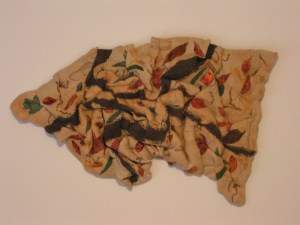
Rhythm of AutumnThis is another large piece called the Rhythm of Autumn. It is also fairly heavy for felt as it is very wrinkled and multi-layered. Plus, I couldn’t decide whether I liked it to hang horizontally as it is shown or vertically.

Stitched Felt BackingSo I cut a piece of commercial felt to fit the back, stitched two sleeves on it and then hand stitched the entire piece by hand to the back of the felt. You can see that I added a label. This was a slightly heavier paper that I printed and then fused to the commercial felt before stitching it on. I use a dowel rod with two D rings on each end to hang this piece on the wall.

Two Quilt SleevesHere you can see the dowel rod and the D ring and that you can hang this in either direction because of the two sleeves.
Framed with Photo Matting

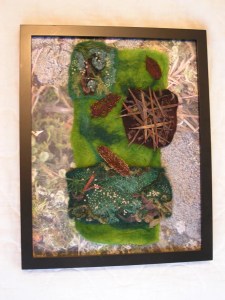
When I frame a piece, usually I use a matte board behind the felt piece, put a couple of holes in the matte board behind each corner of the felt so that the holes won’t show. Then I stitch the piece to the matte board making sure that I don’t stitch through the front of the felt. For this piece, I decided to use photos as the matte. I don’t particularly like the result because it seemed much too busy.

Framed Iris‘Iris’ was framed the same way with a white matte behind it. Much better in my opinion.

Small Stitched SampleIf you have a very small piece, this embroidery is only 2″ x 4″, you can make your own matte with a piece of card stock. You cut the hole out of the center (measuring carefully) and then this was sprayed with spray paints to match the thread colors. Then this could be framed to give it more presence.

Stitched BearTo have this grizzly “float” on the wall, I used a piece of board across the back at the top. I drilled holes in the board and stitched the felt to the board.

Wooden Bar with HangerIt hangs very well and the board helps to keep the piece flat without drooping.

Tree StoriesThis piece also “floats” on the wall but is hung with a quilt sleeve.

Quilt SleeveIf you have made many quilts to hang on the wall, you’ve probably made a quilt sleeve. There are lots of tutorials on the web as to how to make them. But it’s easy if you’re using felt. Just stitch the edges of a strip of felt to the back and you can run a rod through for hanging. You can cut a hole in the center of the felt sleeve so you only need to use one nail to hang or you can hang from both ends of the rod. Here I used a piece of heavy wire and bent the end into a ring.

Sixties QuiltAnother way to hang light pieces that won’t sag is to use little plastic rings on each top corner. I don’t particularly like this method but it works and it’s easy.

Plastic RingYou can find these little rings at craft stores and you just hand stitch them on. If the piece is wide you may need more than two and that makes it a little difficult to hang easily.

All of these pieces are embroidered either by hand or machine and they have been laced to matte board. This method would also work with a felt piece. But you need to remember to make the felt piece about 4″ bigger around so that there will be enough felt to stretch around the matte board and lace to hold tight. I find this method really effective for embroidery because it generally needs the stretching to keep it from sagging. Then once the piece has been laced, you can easily put a matte board behind it and frame it.

Needle Felted Yeti in FrameThis needle felted Yeti was actually laced to the background and then put in the frame. He is so exuberant you can barely see the frame.

Glued to BoardThese pieces I planned the finishing from the start. I wanted to make mixed media stitched work to adhere to the boards. After stitching, I painted gel medium on the fabric so it became stiff and then glued them on to the boards with more gel medium.

Canvas with Felt - Off Center

One way of “framing” that is fairly simple is to paint a canvas to complement the fiber art and stitch the fiber art to the painted canvas. You will need to poke holes in the canvas so you can stitch the piece to the canvas. Larger pieces will need more holes and more stitching to prevent sagging. As you can see in this felted river rock piece, you don’t have to place the artwork right in the center of the canvas.

Felt on CanvasI did a mottled paint on the background but even just plain black is great for a lot of artwork.

Ice FlowersAnother way to finish a piece is how I did Ice Flowers above. I stitched the red flower center to a background heavy fabric that has been dyed and then wrapped the green fabric around stretcher bars. Stretcher bars are not really expensive and come in a variety of sizes. But pre-planning helps to give you a nice border that looks like matting.

Stretcher Bars on Ice FlowersYou put the stretcher bars together. The center bars are extra support to keep the rectangle squared up.

Ice Flowers Stapled to Stretcher BarsThen you wrap the stretcher bars and staple the fabric down to the bars. I found several good tutorials on how to do this on YouTube. I am going to cover the back with a piece of commercial black felt and apply a hanging device like you use for most pictures.

Stitched LabelInstead of using a label, I just stitched my signature and the name of the piece on the lower right corner of the backing felt.

Book CoverAnd if nothing else comes to mind, you can always turn a flat piece of felt into a notebook cover, right Zed? 🙂

How do you finish your pieces? We’d love to hear your favorite way to frame or finish your fiber art.

What is Marketing?

What is Marketing?

Every artist who wants to sell their work needs to understand what marketing is and isn’t.  Judging from the questions I’ve received, it is a total mystery to most people.  I hope to be able to dispel some myths and ideas and help you to understand the basics to so you can devise a plan for your business without losing some of the mystery that marketing offers.

Marketing is not easily defined, because it is multifaceted and is used differently by many companies.  The simplest explanation I can give you:

Marketing is an effort to discover, create, arouse and satisfy customer needs.   It is a process of creating and communicating value, understanding your customers and their needs, teaching the customer what the differences are between your product and your competitors, and developing a demand for your products.

My intent is to not overwhelm you.  It is a huge subject.  I will try to keep discussion to those simple concepts that apply to artists.

sale tagSo, what about selling?

Selling is the effort to devise tricks and techniques to get people to buy a product. 

Marketing supports sales by providing communication, creative work, research, product development, and marketing strategies to name a few services.

There are no formulas or right way to create a marketing plan. Most of you work alone or have a partner.   So, marketing and selling must go hand in hand.  Yet, they are two separate sets of strategies.

Marketing pie

This graphic depicts the different aspects of marketing.  It is close to a traditional marketing model. However, as the individual business person you will be wearing all these hats and make decisions about how much time, effort and/or money you will put into each segment.  I will address each one of these along our marketing journey.

Marketing is dynamic and changes as customer needs, wants and the marketplace changes.  When I first started in marketing  there were the four Ps of marketing– Product, Price, Promotion and Place.  Today there are at least six.

psProduct – the items you make to sell

Price– the price you determine based on materials, time, distribution and other costs plus desired profit margin

Promotion – What methods you use to promote your work and the places you will feature it.  This has been called the “face” of marketing because it determines how your potential customers will perceive you and your products.

Placement – Where and when you will present your work for sale

Positioning – Each artist should have a unique selling position for their products to distinguish them from competitors.  It is a promise to the consumer to provide a particular benefit.  For example, M&Ms — Melt in your mouth not in your hands.

PR/Publicity – How you tell people about you and your work using public media

People –For artists, it is your network of friends, family, colleagues, customers and you as a person and artist. This is particularly important when using social media.

Customers are key.  Marketers spend a lot of time getting to know their customers– who they are, their age, where they live, what type of lifestyles they have, how they behave in the marketplace, what they like or dislike, the avenues of communication they use, the places they shop, how they shop and their buying preferences.  They use this information to formulate their strategies on how to approach the customer. This is obvious in the commercials on TV, magazine and newspaper ads or radio commercials.  Or even the ads on social media.  Information is constantly being collected to be able to target the consumer. This is another big subject we’ll address later.

 fashionista woman w dogsocialitehipster

Who is your customer?

While these pictures represent stereotypes, they are meant to get you to think more about who your customers are.  It may be a combination of types of people depending on what you are selling.  For example, fingerless mitts will likely appeal to a younger person who likes to text.  For someone who spends a lot of time outdoors in the cold, but enjoys handmade articles a nice heavy woolen scarf may be what they want.  An art scarf may be purchased by a socialite or fashionista.

Food for thought:  While you are pondering your customers, think about yourself and how you relate to your customers.

We’ll continue our marketing journey soon.  I’m looking forward to your comments and  insights.

Folder Cover and Hat Template

Folder Cover and Hat Template

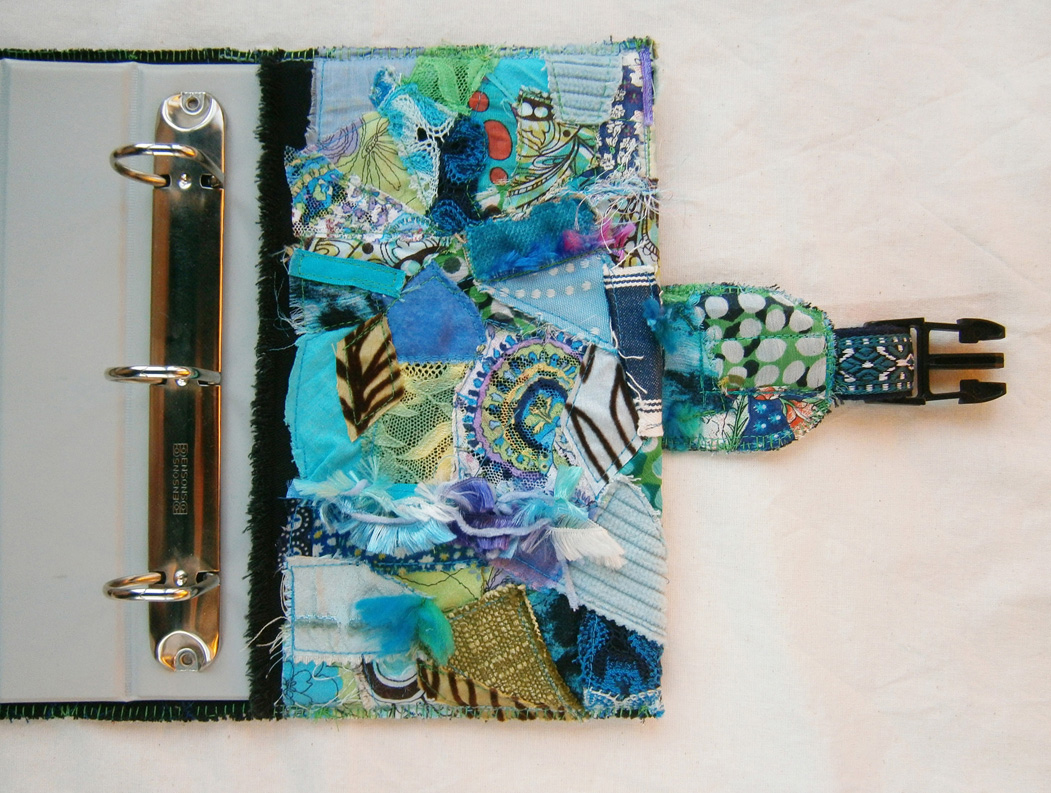
A few years ago, I made some fabric collages. I didn’t do anything with them for a long time, but eventually they all became notebook covers. I had one left, a large blue one:

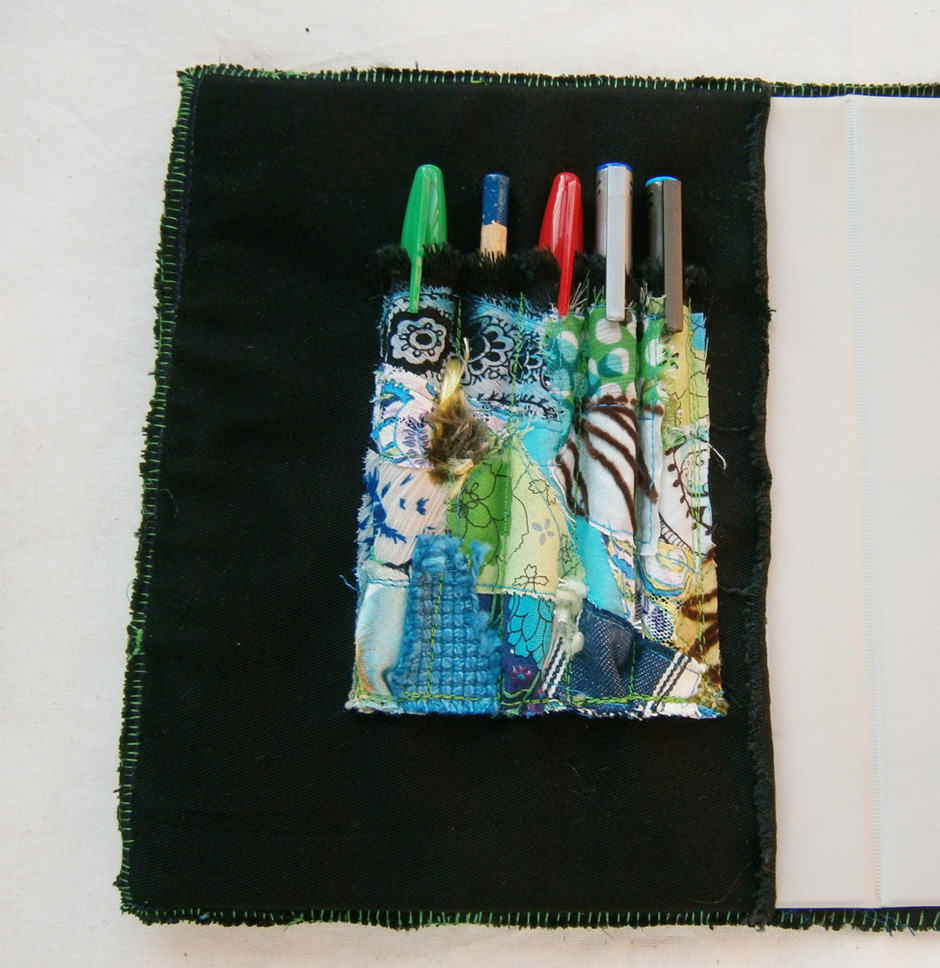
fabric collageOn a whim, a few days ago I decided to make a cover for a ring-binder out of it. It wasn’t quite big enough, but luckily after a bit of a search, I found some of the backing fabric I’d sewn the collage onto. I used this to make the front sleeve. But first, I used a spare piece of the collage to make a little pen holder.

OLYMPUS DIGITAL CAMERAI used an offcut for the back sleeve

OLYMPUS DIGITAL CAMERAI used some nice braiding I got a while ago for the straps, and hand stitched the edges with regular sewing thread, and little blanket stitches.

OLYMPUS DIGITAL CAMERAThe other thing I worked on this week was making a hat template. I had the same one for years, but when I cut my hair, it was too big, I have another, but I’ve worn that in the garden, so I used it to make a template. It was a bit like tracing around a lampshade or coffee cup to make a template, I had to roll it…and then squash it, and  bend it 🙂 Eventually I had what looked like my hat. Using Photoshop, I went over the curves with the circular selection tool and drew lines between the edge to where the top curves intersected. Just to make sure it was even, I copied one half, flipped it over and joined the two halves.

hat template actual size geometric outlinesNow, all I have to do is find the time to make it 🙂

Jackson Pollock Piece Finally Finished.

Jackson Pollock Piece Finally Finished.

I started my first quarter challenge back at the beginning of February. I made a piece of nuno felt using black wool prefelt and white silk to make a canvas.

beginning beginning felted

Finally the other day I decided to try out my idea on how to paint the canvas. I thickened some die with arrowroot powder. I was aiming for a paint like texture. I had never thickened dye before and I didn’t want to spend any money ordering something special. I looked up thickeners and arrowroot was the one recommended for acidic things.  It is a very fine powder.

thickened dye

I added a little to each small batch of acid dye and heated it a little. The first one I heated too much and it was like vulcanised rubber in the bottom of the cup. lesson learned less powder and less heat.

I started with yellow.It wasn’t dribbling how I wanted so I thinned it down. I didn’t like that either it  spread out too much. For the next 3 colours I poured it from the cups and moved them across the canvas quickly. That worked really well. Then I heated it in the microwave.

dye applied 1 into the microwave 1

While I was doing this I realised I had not put any vinegar in the dye. I heated up some water and put it in a basin and when the canvas come out of the microwave I put it into the acidified water and heated it in the microwave a bit and let it cool. having to put it in the water bath blurred the lines a bit but the arrowroot made it stay put for the most part. as you can see the thickened yellow is what moved in to the water the most.

after microwave vinigar bath 1

When I rinsed it and it felt really slimy. I thought I rinsed it well but it was harsh and stiff feeling when dry so I gave it a good wash with some shampoo. This is the finished piece. I think its very Pollock like.

finished pollock

I haven’t ironed it yet but I think I will and use the heat and steam to square it up.