Browsed by
Month: September 2012

Demo at the Fair

Demo at the Fair

I belong to the Ottawa Valley Weavers and Spinners Guild. Every year we do demos at various fairs and events. This last week end we where at the Carp fair, http://carpfair.ca/ It is a typical fair with rides and concerts but it is in the country so there are horse shows, both western and english, as well as competitions for cattle, pigs and sheep. There are the quilt competitions and other domestic arts and the best corn, squash and forage contests. After you’ve seen all of that and you make it to the back on the fair there is the antique section with old cars and farm machinery on display and being demonstrated. That’s where we are, in a tent with the antiques. We don’t mind, the men who run the machinery are a great bunch. The only other woman we see demonstrating is the blacksmith.

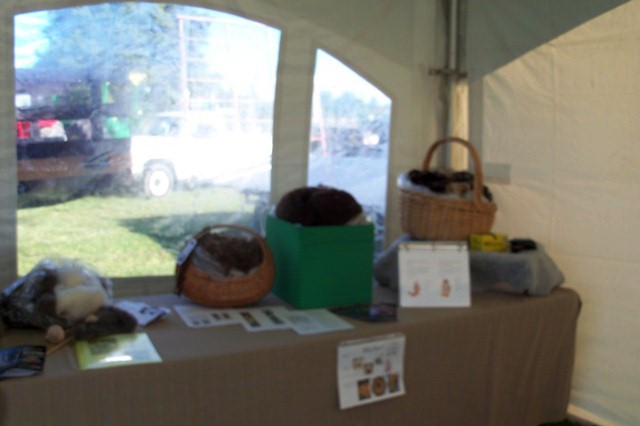
Here are our display tables. You can see tractors through the windows.
 

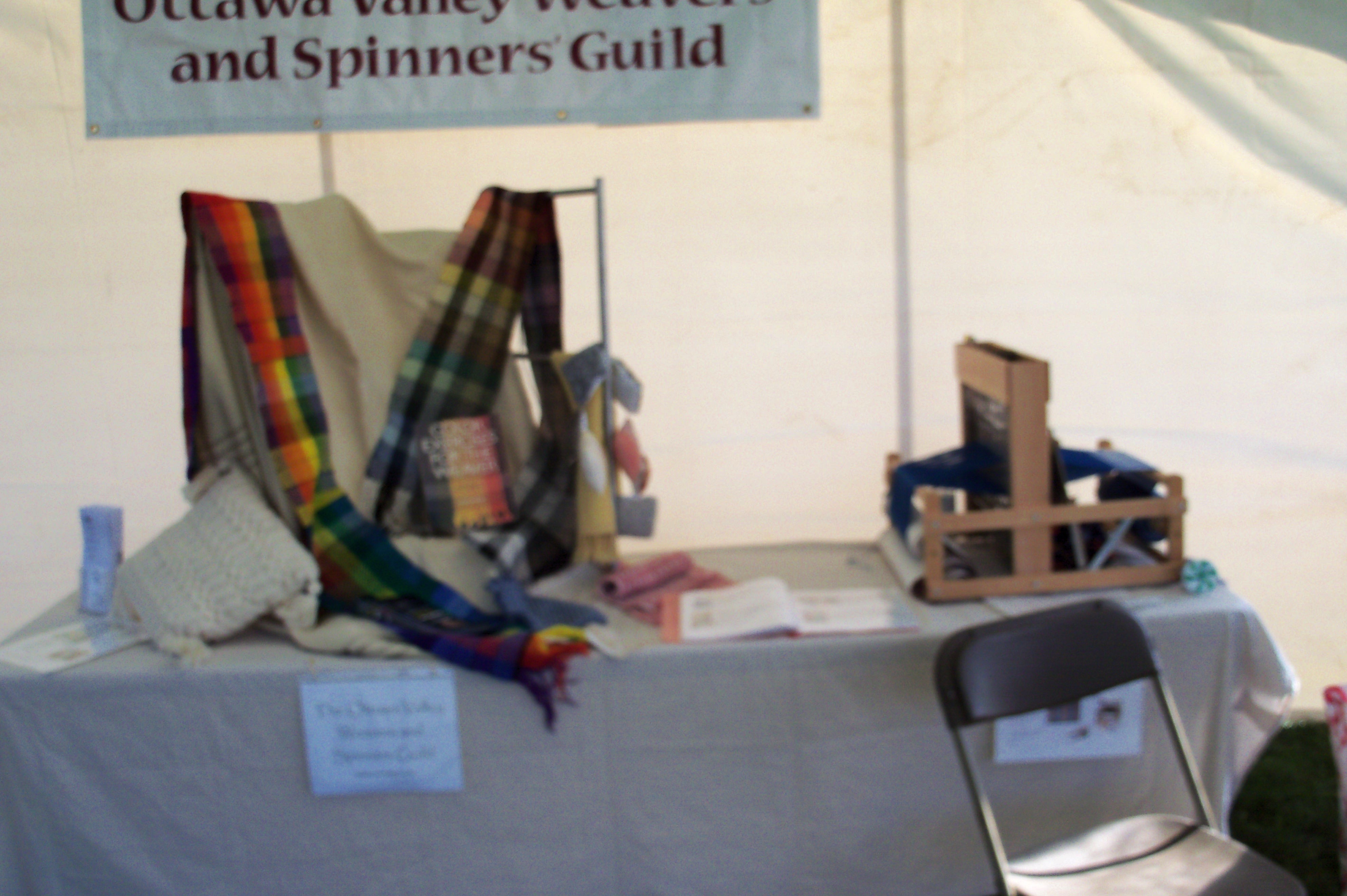
 That’s our demo loom on the end. Lots of people give it a try. It has some very interesting patterns on it.

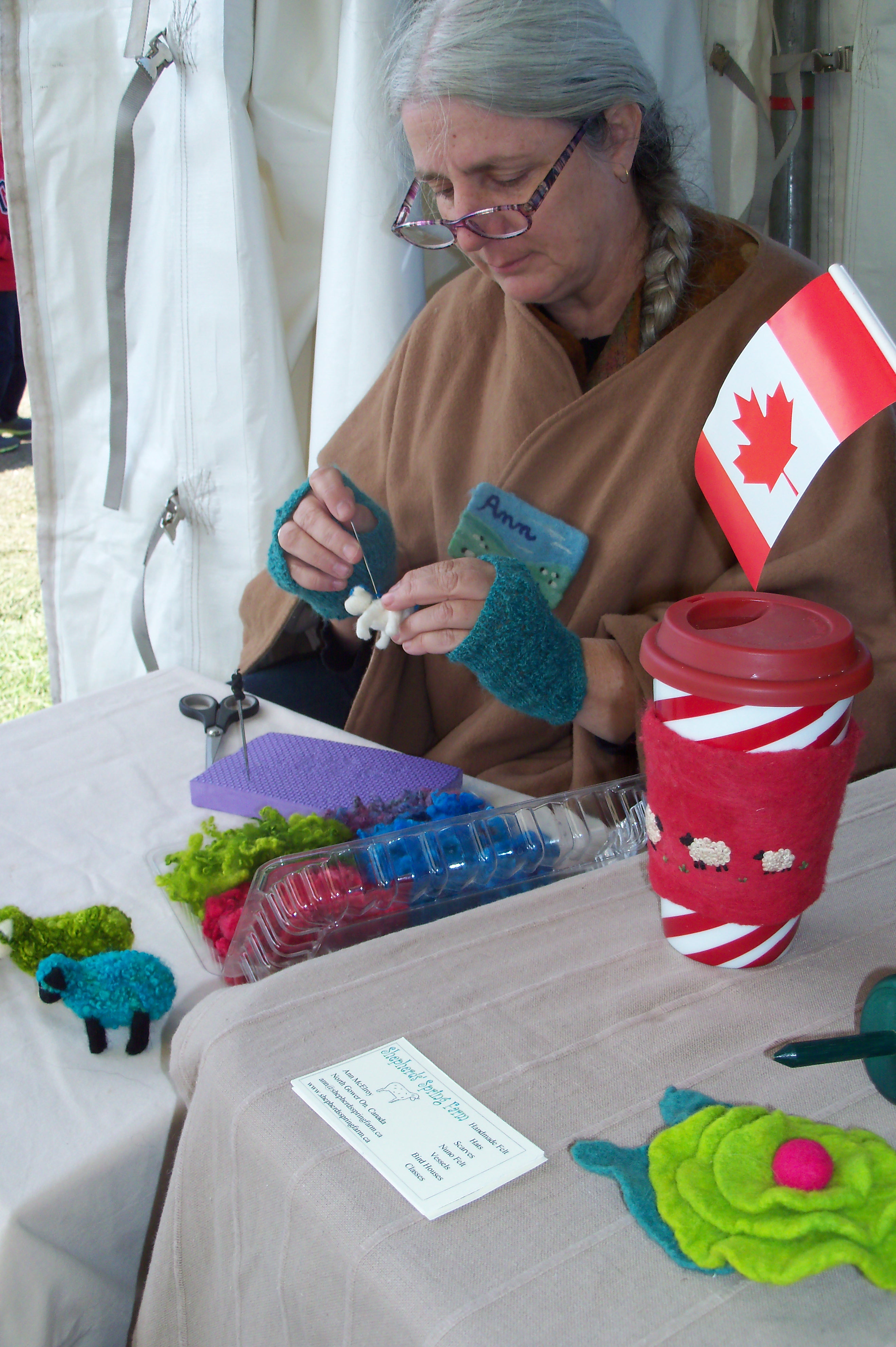
Here I am demonstrating  how to make a needle felted sheep. That’s my coffee in the foreground with its wool felt cozy. You will notice I am wearing long sleeves, my felt vest, my wool cape and some fingerless gloves. When we set up in the morning it was about 10 degrees celsius, or 50 fahrenheit. Once the sun came around to shine on me I started to warm up and shed layers. You can just see the tip on my drop spindle on the table. That’s the other thing I demonstrate.
Here are the ladies spinning.

Jan is out guild librarian and she handles the demo loom and is spinning on a road bug spinning wheel. It is designed to fit on the floor in the front of a van so you can spin while your driver whisks you down the highway.

Here is Linda first carding and then spinning from the rolags she made. She has  a Louet copy she bought second hand.


Last but not least is Bernadette who has a very pretty wheel but I don’t know what type it is.

We had a great day together. We met lots of new people , we handed out lots of bookmarks about the guilds up coming exhibition and sale.  We answered lots of questions and got a few people interested in joining the guild and learning more about fiber arts. Do any of you belong to a guild or go our demonstrating to promote fiber? I think next  year we should yarn bomb a tractor what do you think?

Join in on our Holiday Fiber Art Exchange

Join in on our Holiday Fiber Art Exchange

I know it is way too early to start thinking about the winter holidays or Christmas or whatever it is that you celebrate at that time of year, but believe it or not, it’s almost October. We are planning a fiber art exchange on the forum and wanted to invite everyone to join in.

If you’re a member of the forum, just go sign up in the “Challenges” section under ‘other challenges’. If you’re not a member of the forum, why the heck not?? Come join us in our various discussions and show us what you like to do in the fiber arts. Anyway, it’s easy to join. Just click on the Forum button in the right hand column and it will take you to a screen to sign up. Then we approve you and you’re ready to go.
This year, instead of just ornaments, we decided that you could make anything that you wanted out of some kind of fiber that related to the winter holidays. You could still make an ornament or you could make something for the person to wear during the holiday season or something for their table or something for their dog or whatever! We’d love for you to join in on the fun. Think how delightful it will be to open your mail box and find a fiber art holiday gift waiting for you. We’ll match you up with another person and you’ll swap gifts with your partner.

So what are you waiting for?? Get on over to the forum and sign up!

Getting there slowly

Getting there slowly

Well i’m slowly getting everything back to normal after emptying out the whole downstairs of our house for new flooring , i know most of you have seen how they came out (sorry ) but  i absolutely love it, this is my favorite floor in my craft room and who cares about spilling water anymore lol

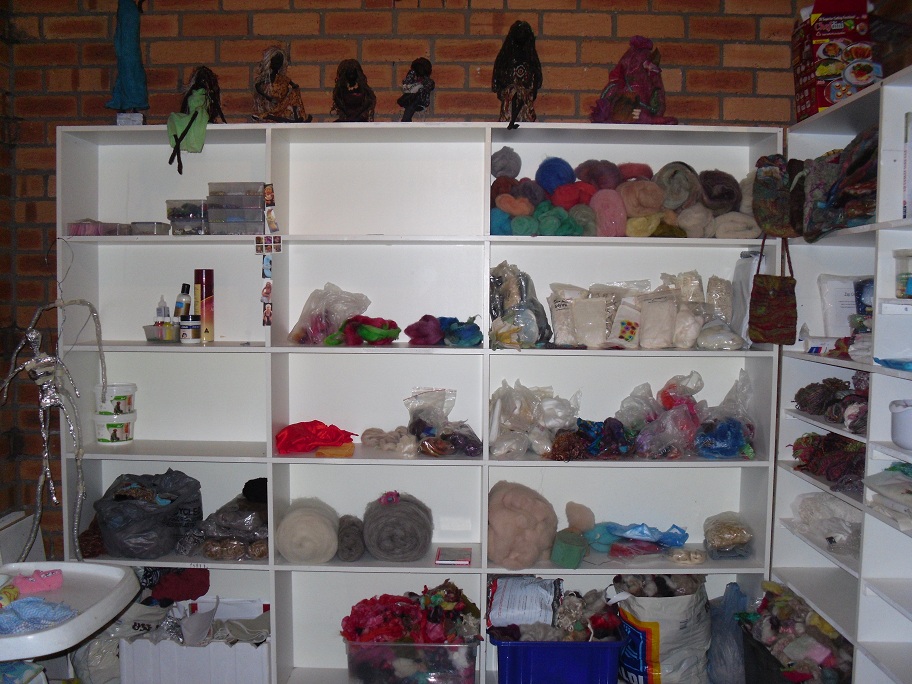
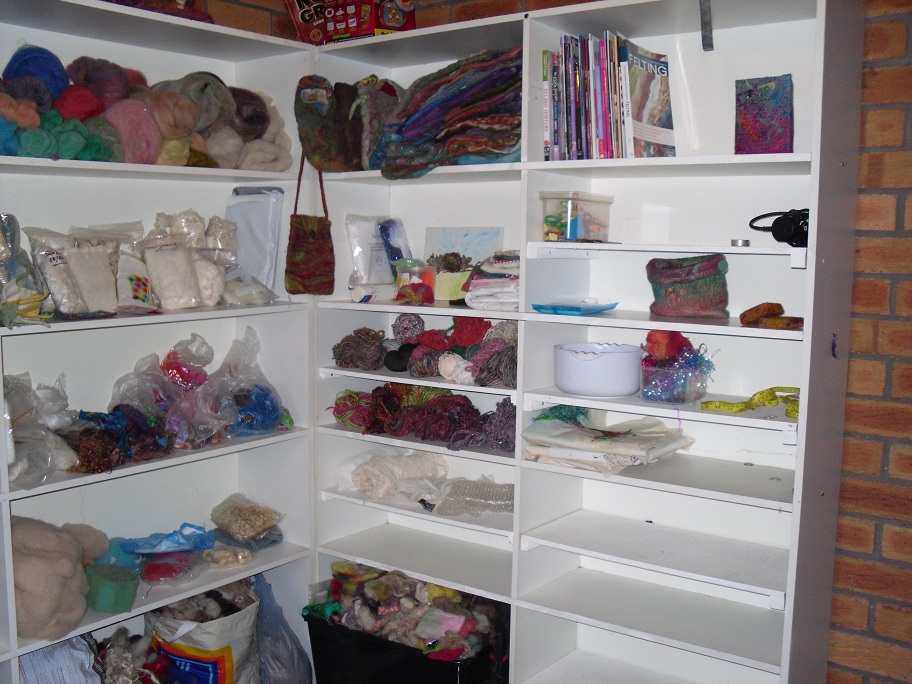
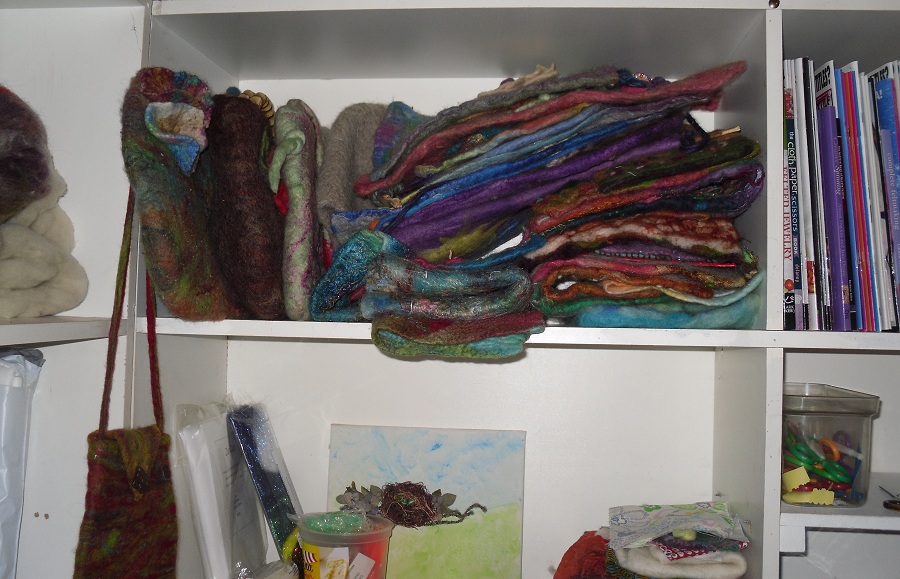
I’m getting my shelves back in order but i’ve culled a lot of stuff i really dont need in here so now its bets on with how long i can keep it nice and tidy 🙂  or bring more stuff in 🙂 I dont have my table in yet as its being used as a make shift kitchen bench right now but i’ll be bringing it in soon ( i hope)

I seem to be collecting ufo’s to and i really dont know what to do with them, a few of my first bags and a pile of wall hangings, also another pile of stuff that i’m not bringing back in here,  i really dont have the confidence yet to make something to sell and i really dont know how to over come that ,  i’ll just keep practising though and having fun anyway, it just seems a waste to make something and then shelve it or box it up !!  OOOO One day 🙂

So anyway i thought i’d just give an update and say we are getting there slowly but surely.

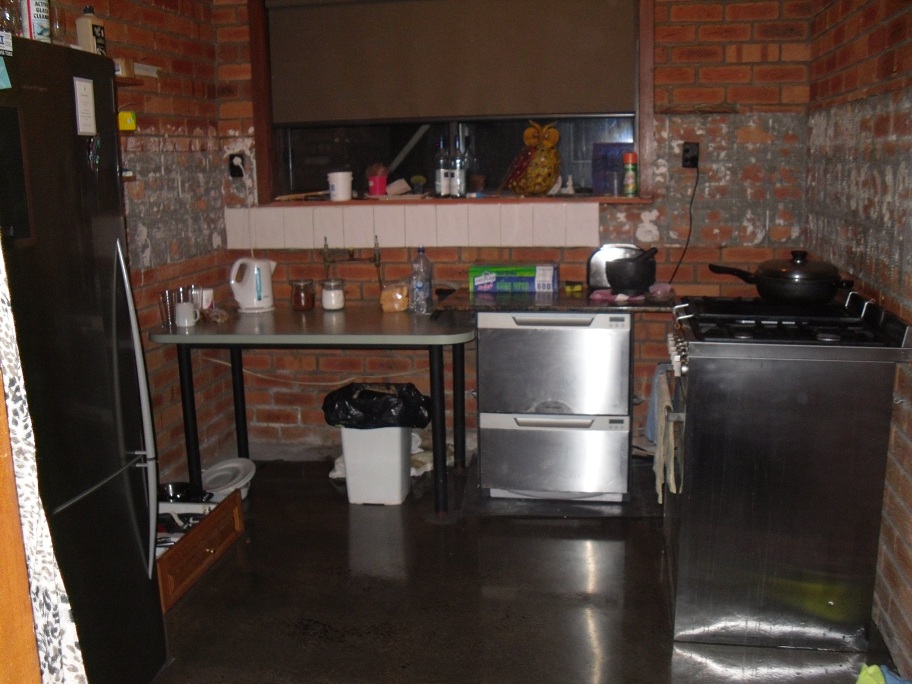
This is also the kitchen i’m dealing with, having gutted it out and now waiting for the new one to go in, no sink but at least we hooked the dishwasher up 🙂  Unfortunately my felting table found its use in here to hold the kettle ect.  Hopefully it wont be to much longer before my new whizz bang kitchen is in, pleeeeeease hurry up !!!  Beautiful isnt it lol


So whats everyone else working on at the moment, i’m itching to get this all finished so i can get back into some fun times with you 🙂

Australia Challenge

Australia Challenge

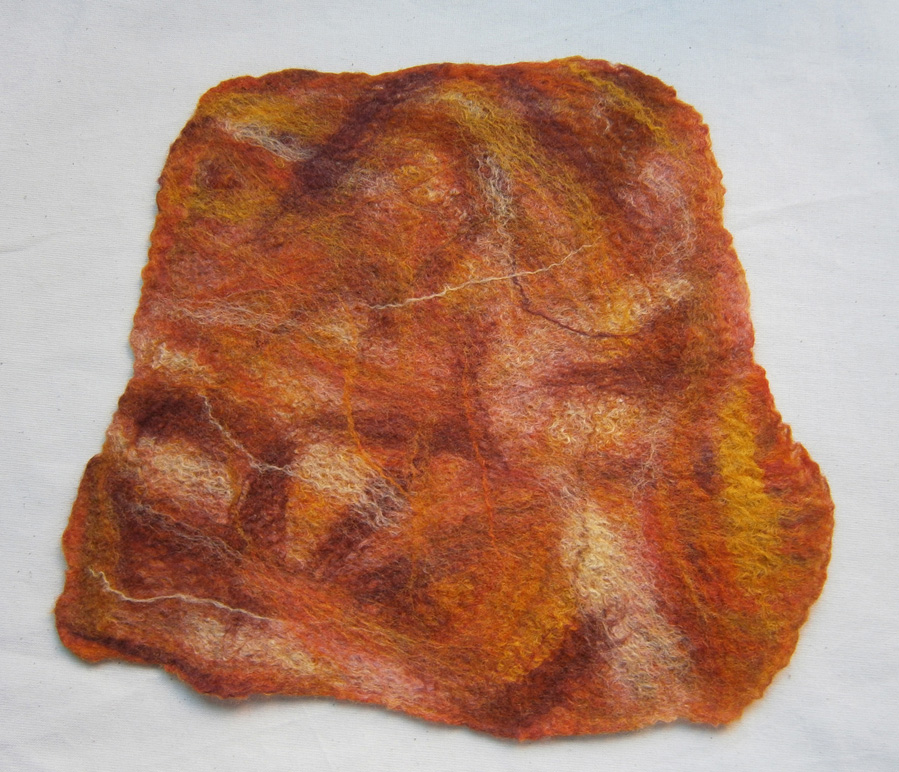
I recently spent a few days working on the Australia Challenge. There are so many gorgeous photos on flickr that it’s possible to lose quite a bit of time on there 🙂 I finally settled on a couple of photo sets from Arnhem Land and Kakadu for my inspiration. For this first piece, I was inspired by the photos with orange and red tones-the rock art, sunset, fire.

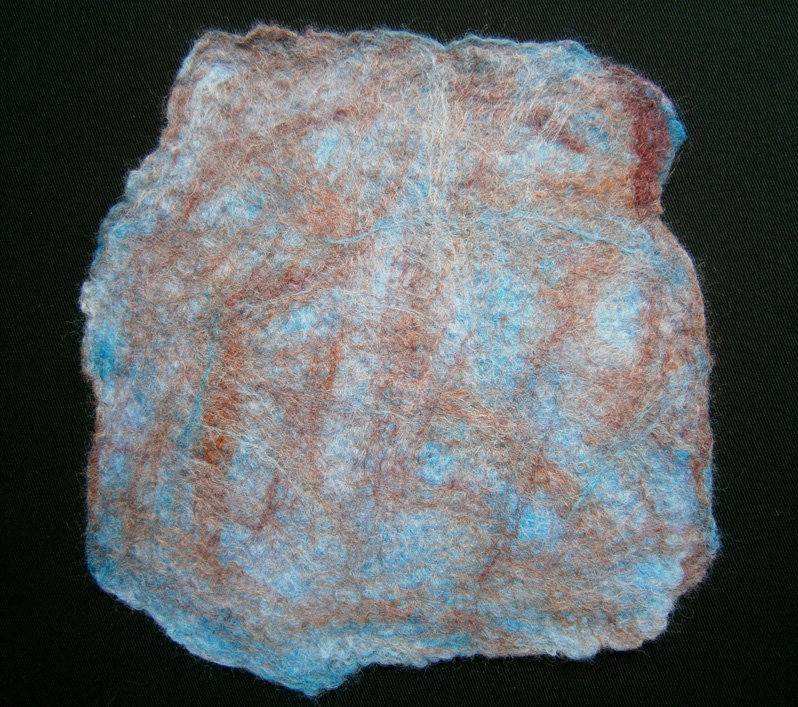
For this second piece I was inspired by a couple of photos from the Arnhem Land set with pale blue and red colours, particularly this photo of rock art.

The photographer, Jon Connell has lots of great photos from Australia on his photostream, if you get chance, do check them out.

My last piece was inspired by the Aboriginal Flag designed by artist Harold Thomas.

Harold Thomas was one of the Stolen Generations, taken from his parents at the age of 7. He won a scholarship to the South Australian School of Art and later worked at the South Australian Museum, the first aboriginal to be employed by a museum in Australia. He has been a campaigner for Aboriginal civil rights and land rights. If you don’t know about the stolen generations, Wikipedia has some information, and Doris Pilkington Garimara’s book ‘Follow The Rabbit Proof Fence’ is excellent. I should warn you that it’s heartbreaking.

Have you made anything for our Australia Challenge? If you have, we’d love to see it, join our Felting and Fiber forum or our flickr group to share it and anything else you’ve been working on. This is Lyn’s excellent piece.

Machine Embroidery History

Machine Embroidery History

I recently studied a bit about the history of machine embroidery for my stitch class. I found an instruction book from the Singer Sewing Machine Company published in 1911 for doing “Art Embroidery”. It was amazing to see what was being done 100 years ago on a treadle sewing machine.

Recently, Mary Corbet of Needle ‘n Thread wrote a blog post about old embroidery books online because she’s had lots of questions about where to find antique embroidery patterns. So I thought perhaps there might be some interest in the history of machine embroidery. Do read Mary’s post, as she has some excellent links.

This is the book that I made with my local surface design group. Jan showed us several book making techniques and I used some fabric that I had screen printed quite a while ago.

Since I already had the book made, I thought I’d put it to use while researching machine embroidery history. I looked up the origin of the sewing machine and then went searching for other early resources.

Amazingly (to me anyways), I found a Singer manual for “Art Embroidery” that looked very similar to techniques I was learning in class. I found the manual through Internet Archive. It is a digital library with tons of old books that have been scanned and made into PDF files. And it’s free. You can go and search to find many old goodies. Here’s the Singer manual PDF link. If you do any type of machine embroidery, it is worth a look. You will be amazed at what was being stitched in 1911. The instructions are pretty funny to read and vague, but it is quite interesting.

I can’t imagine doing machine embroidery on a treadle machine. The coordination is hard enough with a foot pedal much less having to pump your foot up and down on the treadle at the same time you’re stitching.

We were given three names to research as these were well-known machine embroiderers in England in the early nineteenth century. The first was Rebecca Crompton who started with hand embroidery but then moved on to machine and a combination of both. She was very much into teaching design and moving embroidery away from “craft” towards “art”.

Next was Dorothy Benson. She worked for Singer Sewing Company and made many machine embroidery samples. She wrote a book about machine embroidery and sewed many of Rebecca Crompton’s designs.

Here are a couple of examples of Dorothy’s work that were stitched in the 1940’s. I think these would fit right in with what people are stitching today, don’t you?

The last name I researched was Constance Howard. She was a well known instructor in the UK. She lived to be 90 years old and dyed her hair green long before the trend became popular. She established the department of Embroidery in the Art School at Goldsmith’s College, London when embroidery was completely out of vogue. She was the author of several books including the mammoth task of “Twentieth Century Embroidery” which chronicles the history of embroidery in the UK from mid 19th century to the mid 1980’s.

So even if you aren’t into machine embroidery, take a look at the Internet Archive. I did find “A Treatise on Hat-Making and Felting” published in 1868 that was interesting. There are many books and pamphlets about hand embroidery and other topics that I haven’t explored. It has an easy to use search feature. Do let me know if you find anything fun!

Just For Fun

Just For Fun

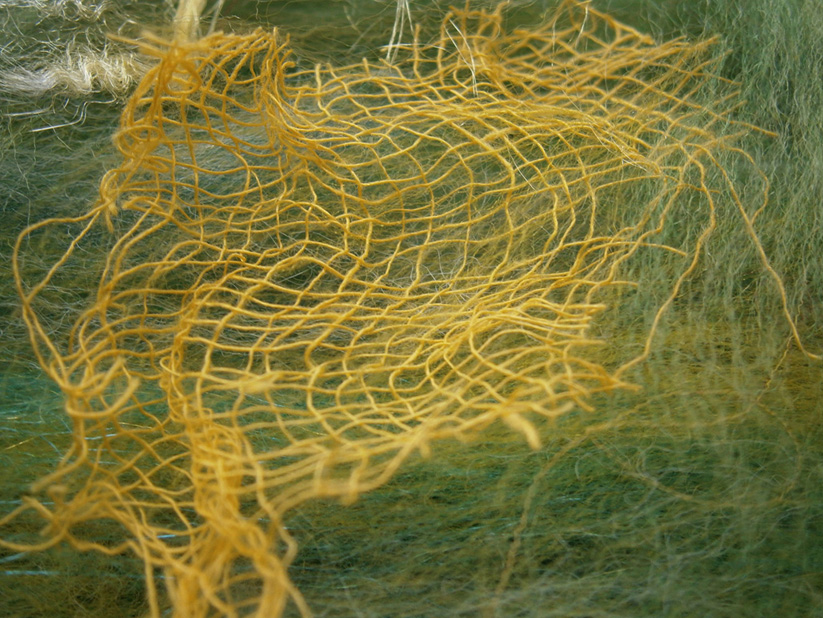
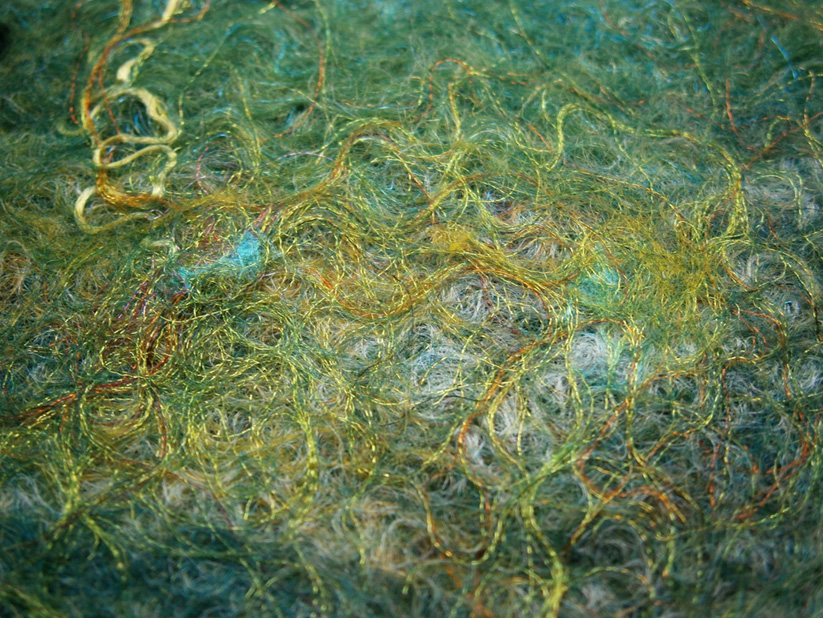
It’s been quite a while since I made a piece of felt just for the fun of it. And quite a while since I made a piece of felt without worrying about even layers, straight edges, nice corners etc 🙂  So it was a lot of fun making this piece of green felt. I got out all my greeny shades of wool, fabric and fibres and started laying it out.

I started with two plain layers of merino tops, then added a third layer of lots of different greeny shades of merino blended with fibres like plastic, viscose, silk, banana and bamboo. Then I started adding all the other fibres, fabrics and yarns. I unravelled some fancy fibres I had in green, yellow and blue shades.

I used fabrics like organza, silk, tulle and a few shades of cotton gauze

There were a few sparkly bits

And lots of shiny bits too 🙂

What have you been working on just for fun lately?

One of a Kind Artwork Sold Wholesale?

One of a Kind Artwork Sold Wholesale?

I had a question about selling one of a kind artwork on a wholesale basis several weeks ago.      When I first heard the question, I thought “No”. But I’ve given it some thought and I think the answer is different depending on what you categorize as “one of a kind”.

“One of a kind” means different things to different people. Perhaps you make small felted snowmen ornaments. They are each different because they have varying facial expressions, different embellishments and colors. These could be classified as “one of a kind” but could easily be sold on a wholesale basis. You could figure out the time it takes to make one and price accordingly. Then these ornaments could be sold by the dozen or whatever worked for you.

Now consider “one of a kind” felted scarves.  If the same methods were used to make all the scarves but they perhaps used differing fibers or colorways, each would be unique.  You could make multiple scarves at once and perhaps use a rolling machine to decrease your time spent to make them be affordable enough that they would sell at wholesale.

But what if you make wool “paintings” or complex fiber art sculptures? As these types of work usually take an extended time to make and there isn’t a way to produce them in multiples, it will be much more difficult selling them on a wholesale basis. For example, an oil painter doesn’t usually sell his/her artwork on a wholesale basis. Paintings or fine art are usually sold on consignment in galleries. I have seen a few artists that make production work and sell on a wholesale basis try to sell their “one of a kind” sculptural pieces as well. It just doesn’t seem to work very well. Stores and fine craft galleries are looking for items they can buy in multiples.

If you want to sell your work on a wholesale basis, you need to be able to produce enough work to sell in multiples and fill large orders. If you aren’t able to do this with your work, then you need to develop relationships with galleries and sell your work on consignment. Even though you don’t get paid up front for your work, you will generally receive more money for your work on a consignment basis. As long as you work with reputable galleries, selling complex one of a kind artwork on consignment is the better option.

Felt Cuffs and Hats

Felt Cuffs and Hats

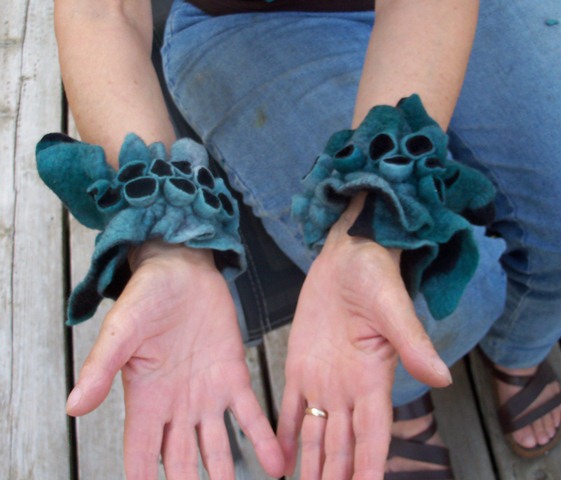
My last post showed you some bubble samples I made when visiting my friend Maureen. This time I will show you what we did with them. The first thing we did was try some wrist cuffs. We both used the same colours. They were two scrap pieces of pre felt that Maureen had. We felted them together and down to 22 inches long. The bubbles will bring them to a good length for around your wrist.


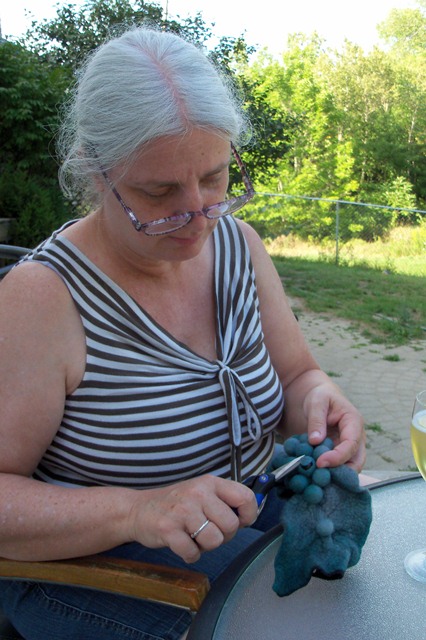
I won’t show you all the steps of felting and putting the marbles in but as you can see it was done in the sun on the patio with a glass of wine. We are not all work and no play. In the right hand picture you can see the marble inside the bubble I just cut open.


Here they are on and in the right hand picture you can see we left one bubble uncut. It acts as the button to fasten the cuff around your wrist. We put a felt ball in that one.  That was a success so we decided to do hats.


Here you can see the resist and the size of the finished hat with the marbles in it. On the right is Maureen with hers on. They are still wet at this point. We ran them through her laundry spinner and they were dry in the sun in an hour.


By then we had eaten dinner and it was back out the deck for a glass of wine and cutting. Here we are wearing them and a close up of mine so you can see the cut bubbles better. I stretched the large bubble after I cut it open to really show off the contrasting colours.

We had a great couple of days together felting and enjoying the weather. I have to say her husband was great he did most of the cooking and all of the clean up.

Starting Over

Starting Over

It’s okay to start over again

knowing what you know and what you don’t know.

Moving on imperfectly,

and being at peace with that decision.

You don’t need a brand new book

 to begin writing a brand new story,

And although it marks a significant point in time,

You don’t need a brand new year to begin living

if you simply make the choice and begin

from the place where you are right now.

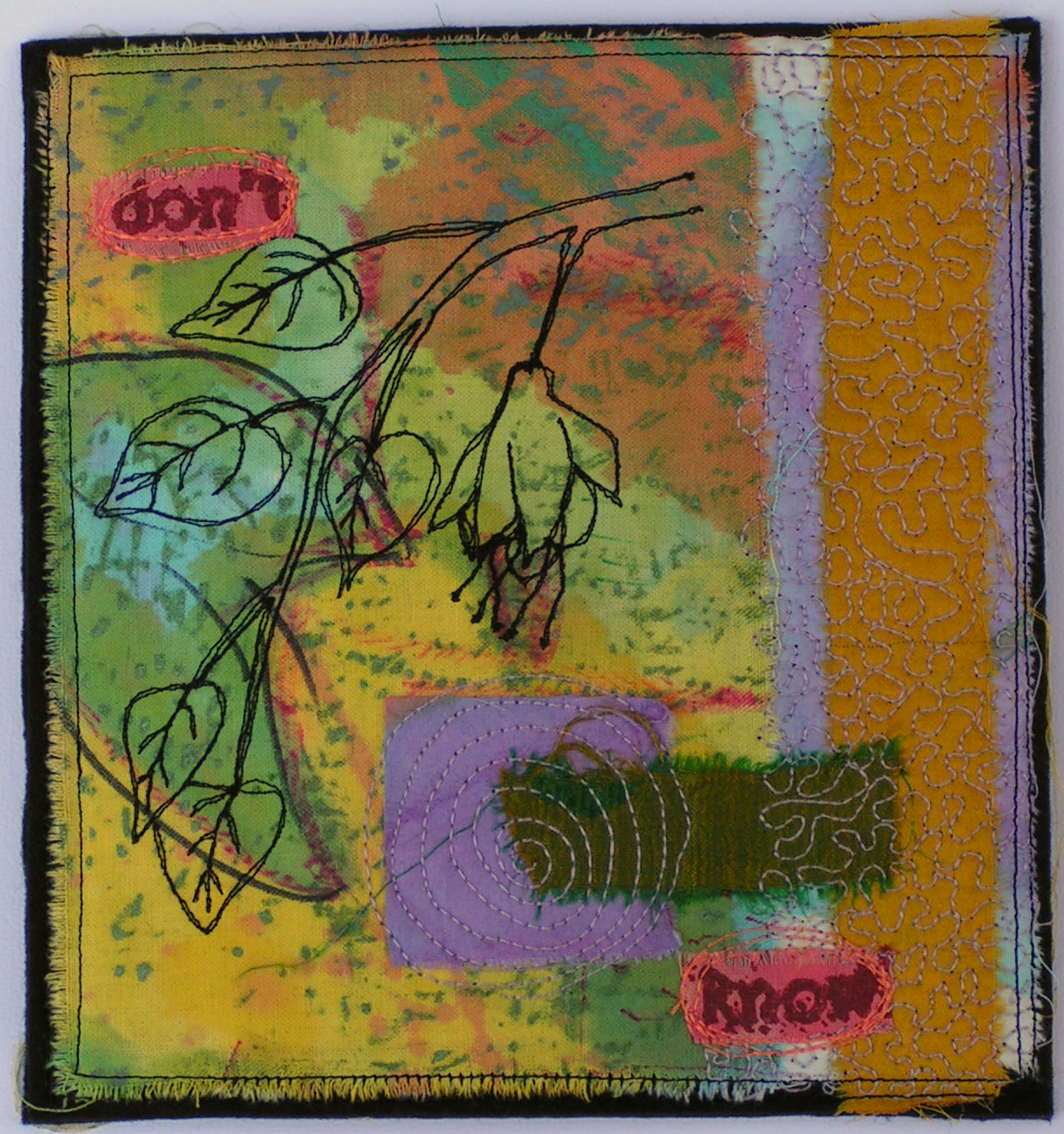
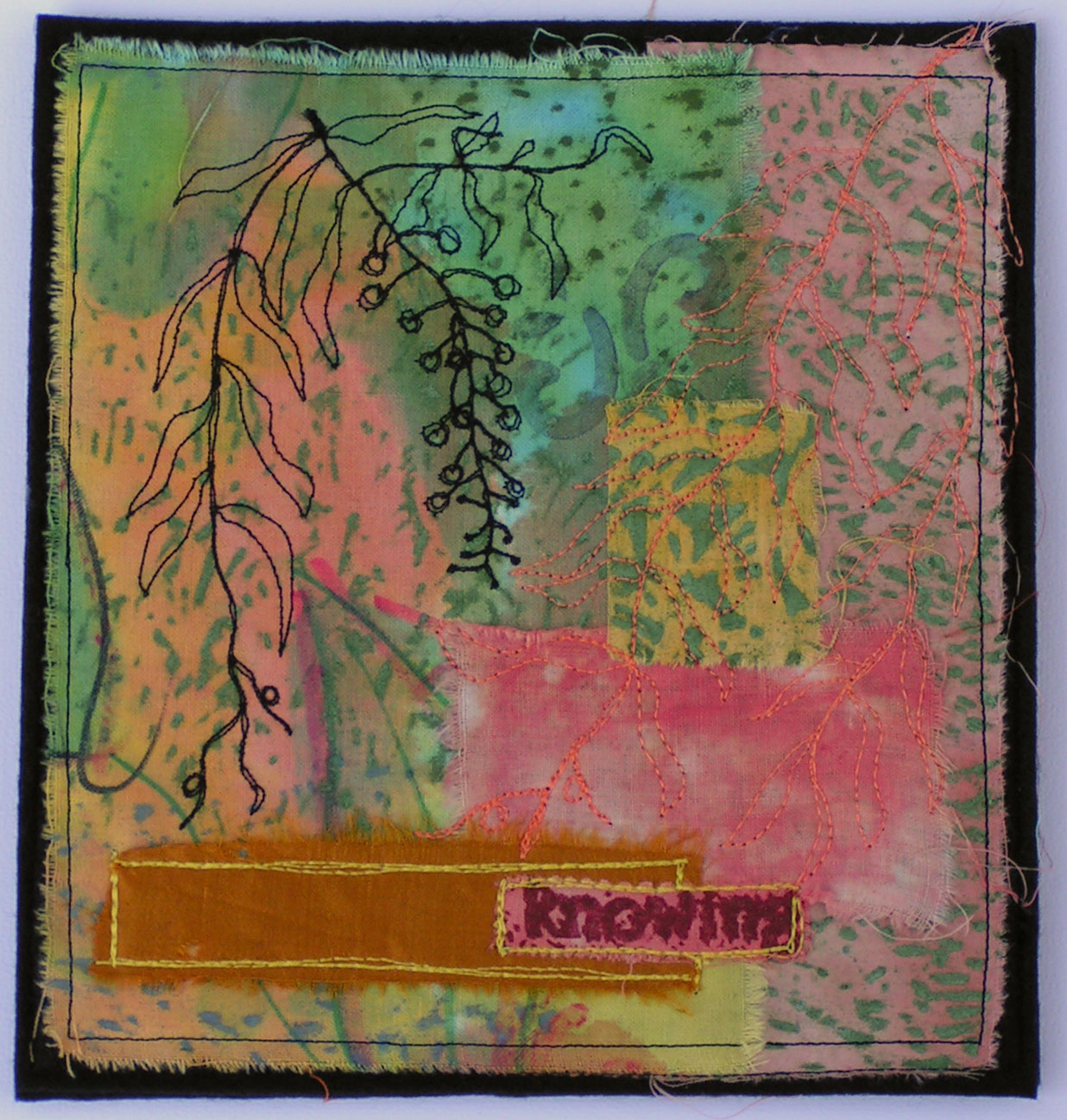
This is a book that I made for my stitch class homework. We were supposed to look at others who do contemporary machine embroidery work and this book is based on Cas Holmes work. She uses a variety of repurposed fabrics and layers with machine stitch. I was going to cover a small notebook that a friend challenged me to “re-do” but it didn’t quite work out that way.

I started off with the orange-colored fabric rectangles that I already had cut out to make cards. I backed them with Stitch N Tear and stitched flowers, leaves and bugs with black thread. I free motion machine stitched and didn’t draw ahead of time, just did it by eye.

Then the notebook I was covering was just a bit bigger than the stitched rectangles. So I had to add more fabric. All of the fabric came out of my stash. Some of the lovely bits of silk ribbon came from Karen (thanks kaz!).

The poem was from my friend Carole. She had made a silk screen with the poem and I had tried it out on a scrap piece. It was imperfect letters with some very obscured, to match the poem. I don’t know who the poem is written by but would love to give credit if someone knows. I looked online but couldn’t find it.

Once I had the collaged pieces together, I decided that if I was going to stitch over them to hold them down, I would need a backing fabric. I picked black felt to emphasize the black stitching and to calm down the overall random color scheme.

I was trying to be a bit looser in my design and not try to  make everything perfect. This flower was particularly ugly so I thought the word “imperfectly” fit it perfectly 🙂

I then added a variety of stitching to the background. This is really not my style but it was fun.

I then stitched around the edges of the page with black to hold everything down that hadn’t yet been stitched and to give a more finished look.

Then I went back to cover the spiral notebook and the pages were too thick to fit. But I decided that didn’t really matter too much as the pages were beautiful and I could do a hand sewn binding.

So then I sewed the pages back to back.

Each of the left edges of the book pages then needed to be marked at 1/4″ intervals so that the blanket stitch would come out evenly. If the stitches don’t line up, the binding doesn’t work very well.

Once all the pages are marked, then the left edges were sewn with knotted blanket stitch. The knot is added to increase the strength of the bars on the edge of the page formed by the blanket stitch.

After I stitched all the knotted blanket stitch edges, then I lined up the pages and connected them together with big safety pins.

The binding is then formed by doing raised chain band stitch over the bars of the blanket stitch. If you look back at the first photo you can see the binding.

The first time I did this type of binding, I found it a bit cumbersome but this time went much more quickly and smoothly. I guess my mother was right, “Practice makes perfect”.

Oh but I wasn’t supposed to be perfect!! Note to self, don’t listen to that voice in your head that sounds like your mother.

Australia Challenge

Australia Challenge

I have been busy trying to get all my stitch homework done but was able to combine stitch homework with this quarter’s challenge. We are working on machine embroidery and are looking at others work who do machine embroidery. Then we are supposed to try to work in their style. I have always admired Annemeike Mein’s sculptural textiles and since she’s from Australia, I thought it would be a good match. I haven’t been able to find a website for her but there is information here about her work. If you scroll down to the bottom of the page, there are several links that show photos of her work. Or just google images under her name.

I decided that I would try developing a three-dimensional stitched bottle brush. So I found some photos online and looked at the various parts of the flower.

I did a bit of sketching and wished that I had a live plant to look at. It’s much harder to really see what something looks like and how the structure is formed from a photo. But since we don’t have bottle brush in Montana, I had to go with what I had.

I then started thinking about how I could stitch the various parts, what color fabrics and threads I would need and how it would all be put together. So in the bottom right of this page are a couple of stitched samples. There are two little buds and then a flower stem. It didn’t turn out very three-dimensional and would need some additional parts to work. I was happy with the buds though.

Next came thinking about how to do the leaves. I started with a heavy cotton and then spent a long, frustrating ten minutes trying to turn the leaf right side out. I failed. So then I tried a piece of felt. It worked fine but looked artificial and didn’t give the flexibility that I was trying to achieve. So then I tried lighter weight fabrics. Those worked much better and I ended up liking the “turban cloth” cotton the best.

Next, it was time to think about a stem. I could do a long tube of fabric, turn it right side out and then stuff it. But after the leaf experience, I wanted to see if there was a different way. I have made a lot of machined cords and thought that might work. What if I used a pipe cleaner and stitched over it like a cord? I didn’t have any green pipe cleaners so I used a red one. It did work to stitch over it and the stem would be flexible, positionable and sturdy. However, it is really hard. I’m not sure I would be able to hand sew on all the little buds and flowers. So the next step will be to try the long tube of fabric and see how that will work as the stem.

Believe it or not, this process has already taken me about four hours of work. Having not done much three-dimensional stitching, I have to figure out what works and want doesn’t. I have learned a lot already and I’m going to keep plugging along with the process.

Have you made anything for our Australia challenge? We’d love to see it if you have.