Browsed by
Tag: felting tools

Ooops! i got another felting tool. It’s A “Hey Truool”

Ooops! i got another felting tool. It’s A “Hey Truool”

Oops, I did it again. I was browsing for something else and accidentally saw something that caught my eye. Even worse, it was on sale for New Year’s!!!! Oddly, the same item had four different listings priced from $117.00 (Canadian) with only Chinese instruction in photos to $137.00 (Canadian) the only 1 of 4 that had some English instructions in the associated photos.  Since all listings were from the same seller, I started a long….. series of questions both technical and why the variation in prices. Was there a difference in motor strength? I was assured that all were the same and that it was just that there was a sale for New Year’s.

After looking carefully at all the pictures, with lovely but unreadable text, I had figured out some of my questions, then being pointed to the 4th listing with the English diagrams I was able to figure out most of the rest.

I showed Glenn what I had found and decided to order one. I suppose I should not hold you in suspense and show you this interesting addition to my collection.

smallish cardboard box with Chinese writing on it1) Mysterious Cardboard box arrived in the mail

I am sure this helps a lot and you know exactly what I got! No?

Ok, how about a peek at the end of the box that has some letter shapes that look more familiar?

the end of the same box says Hey Truool which is not too illuminating as to what is inside2) the end of the same box says Hey Truool which is not too illuminating as to what is inside

Yes, it’s a “Hey Truool”!!! (something to do with a sheep with eyes closed tight?) no? ok, let’s cut the tape very carefully, not to frighten the concentrating ram and look inside the box….

the box inside the outer box, has a line drawing of an electric felting machine3) the box inside the outer box,

Well, that looks intriguing, don’t you think? (Nice technical illustration line drawing but maybe you would like a bit more information?)

the inner box has irridesent ink for the diagram. its very cool graphic design and technical illustration.4) the inner box has iridescent ink for the diagram. It has a very cool graphic design and technical illustration.

OOOH love the interesting colour shift in the printing! Very nice graphics. Ok, I like the outside of the inside box but maybe I should stop admiring it and look further inside.

inside the inside box showing instructions and the end of the macheen

5) inside the inside box showing instructions and the end of the machine

ah yes, I see the problem…. I am likely just as dyslexic in Chinese as I am in English because this is as understandable as grade 1 English was when I was in grade 1. Maybe I will be lucky and there will be subtitles further in?

a close up of the open instructions absolutly no English instructions! but there is a lot of fine print so im sure it would have been helpfull if i could read it.6) a close-up of the open instructions, there is a lot of fine print so I’m sure it would have been helpful if I could read it.

No,….. this Chinese is all Greek to me. Well, let’s not get held back by a lack of reading skills, and continue on to looking at the implement!

the tool wraped in a translucent paper with more instructions7) the tool held gently in a protective surround of black foam.

Oh My, the excellent graphics and very nice packaging continue (sorry I really, really like technical illustration and when I bump into good graphic design and packaging I am very happy)

ok, what I am impressed with is the slightly translucent paper-like cover protecting the tool. It has helpful graphics and labels. Unfortunately not in English, but still what a nice placement and it would have worked fabulously if I could have read it. Maybe the most expensive version has English graphics?

turning the tool over to show the back of the protective wrapper has a predesigned tair away spot.8) the back of the tool showing the other side of the protective paper sleeve

There is a handy tear strip on the back, which I have refrained from tearing. (Instead, I have been slipping it off and on between uses.)

Now what is the little box to the side of the foam packing?

This slideshow requires JavaScript.

9.1-9.2) the little box at the side of the black foam packing holds the Accessories

Ahhh, Accessories!!! 2 large enough to fit my finger’s leather finger cotts! (some of the ones from China have some very odd notions as to the size of my fingers…. They think I am some delicate thing with tiny elegant skinny fingers….. Nope, that is not me.) The USB charging cord (a bit short but it works!) and the vile of needles.  ok, the last isn’t as important for me since I still have the remains of 7 different boxes originally holding 500 needles each.

At this point, I admitted I needed a bit more info. So, I messaged Ann about translation Apps for phones. I remember her saying something about, “Just take a picture of it, and the phone will translate it into English”.  She thought my phone probably came with one installed. After much rummaging into corners of my phone I had not visited, I decided it was still not as smart as it said it was… I told it to go online and find an app which it eventually did, then after more rude words I convinced it that yes, I did want to download it and use it. Unfortunately, my phone proved it was not as smart as the average camera and refused to copy or save the text. So I used my real camera and took bad pictures of the sections of translated text!! I may be a Luddite but I am a sneaky Luddite that knows how to use a camera.

translated text photographed from my not so smart phone. text on gray background highlighed in white, it is not a grate shot becouse of screen distortion which will also occor in next shot.10) translated text photographed from my not so smart phone.

I painfully read the text, which mostly made reasonable sense. The first part being generic, power tool safety instructions, and then we got to the part I wanted to know about.

more text from my not too bright phone, translated from Chinese to English still has screen distorion11) more text from my not-too-bright phone, translated from Chinese to English

First-time use: Do not charge more than 4 hours. It is charged when all the lights are on. If the lights by the power switch dwindle it’s time to recharge.  Recharge every 2-3 months if not in use. I also translated the other long instruction card which was quite helpful and checked back to the online info and compared it to the translations. (From previous experience with Microsoft’s spellchecking inability to handle something as simple as my spelling, I may be unfairly leery of Google’s ability with others’ spelling)

I read about the on / off button, and extended hold to power it off and on, while a light tap will pause and start it once it is powered on.  It has 5 speeds of operation, (one of the online info photos had the motor speeds for each).

I checked the stats for the machine and found more interesting info

last phone shot i promise!this gives technical stats for machine12) last phone shot I promise!

One of my original questions was about run time and rest time. The Orange Fly from Ukraine and the Silver Mettle felting machine from China both had run and rest times suggested so you didn’t offend your motor and have it die on you out of spite.

The person I was typing with suggested;

“20 minutes use, 10 minutes rest is suggested” Alibaba Translation

“the machine can run 1 hour after fully charged” Alibaba Translation

“it can be used during charging as well” Alibaba Translation”

The technical details say full battery time is 30 to 50 minutes, with a bit more reading I found it was due to which speed you are running it at. I suspect also, how many needles you are running since more needles will give more resistance to the motor.

Now, let’s move on to the part of the machine that had originally intrigued me. I am sure you remember the mechanics of the clover tool (Green) and the fake clover tool (Blue) with its protective sleeve, which retracts when used. The new felting machine also has a sleeve guard. This one retracts and can be set at different levels, which sets the depth of the needle penetrations. (This gives you the ability to set a constant working depth.) if you are wanting to work at a shallow depth make sure you are engaging at least the barb closest to the tip of the needle, without barb engagement you are not going to get very far with your felting.

This diagram is from the English sale posting;

Manufacters diagram showing adjusting depth gauge of machine13) Manufacturers diagram showing  adjusting depth gauge of machine

That is not the only interesting feature of this machine. Let’s look at how each machine deals with needle exchanges. With the other two, the orange fly is a bit tricky to change needles (it gets better with practice but it is not “Easy”) and the other mettle one from China requires the needles to have the top crank removed (cut or sawed off). This new one (also from China) has an easy needle-changing setup, no cutting or fighting with needles required). You can choose to run it with 1 to 5 needles, depending on what you are doing. I have tried it with three T-38 333 needles.

14.1-14.2)

This slideshow requires JavaScript.

14.1-14.2) Manufacturers diagram

The one warning I would suggest is carefully looking at image 2 above. I opened the needle holder while the machine was in a horizontal position. Oops, I almost lost the little mettle square you can see in image 3 above. Not to worry I found it and got everything back together.

Once I had it charged, (USB cord charging off my computer) I tried on the butt of Moose #3. It did felt a bit but Moose’s gluteals are extremely firm already so it was unfair to ask it to compact an already well-compacted surface.

I brought it with me to the social on Monday and got a few minutes after guild stuff, library and photography to try it out with a felt picture on my soft 1.5-inch thick wool mat. As we found with the other electric felting machines, the faster speeds were more effective. The tool is lighter and has less kick-back, than the mettle one from China, I was showing you last year. (Oh! Time is doing that spontaneous jump forward again…was that a year ago?) I had hoped to bring the 3 machines to the social and have Ann help me show you the features and go over how they compare. Unfortunately, she had been feeling ill on the weekend and although better was not feeling up to drive into the guild.

Hey Truool felting machine sitting on just started chickadee picture on top of 1.5 inch thick light grey wool felt mat.15) Hey Truool felting machine sitting on just started the chickadee picture

I will add this one to the chart I had with the others and will give you more info when Ann and I  can get together and compare them.  In case you were making a chart for yourself, I can give you this data to add to it. The “Hey Truool” is winning on ease of needle change and the ability to set the working depth is very appreciated. The Orang Fly with only one needle seems to run faster and is of a similar weight.  The Mettle one from China has the most kick back but I will admit it is working a bit better on a brush work surface.

So far, I am very pleased with this addition to my collection of felting tools. I am looking forward to showing Ann and getting her opinion too. It can be used with both 2D and 3D projects. For 3-D, I am still likely to work with single or double, hand-held needles, but it is always good to have options. I can see using this to build up and sculpt the underlayers (I may have to hand felt the layers closest to the armature but if it can speed up the understructure it will allow me to tackle more projects since I keep coming up with more things I want to felt!)

Hey Truool felting machine white box sitting in front of coffy machine at local guild social.16)  Hey Truool felting machine sitting on the counter as it attends the local Guild Social

If you would like to read the info from the manufacturer, the more expensive English instructions are with this machine’s listing. Scroll down to see them;

https://vi.aliexpress.com/item/1005006303168768.html?spm=a2g0s.imconversation.0.0.25b43e5fsgJIEw&gatewayAdapt=glo2vnm

The cheaper but less textually illuminating version is here, again click on “View More” to see all the pictures:

https://vi.aliexpress.com/item/1005006117756592.html?spm=a2g0o.order_list.order_list_main.11.793f1802E6SDAR&gatewayAdapt=glo2vnm

For both listings, you can ask questions in the “Message” button. (I am sure your questions will not be as difficult as mine were!! Their representative was very helpful and did try their best to help with my inability to read Chinese.)

I am not suggesting rushing over and buying one instantly, but if you are investigating an electric needle felting tool then this one should definitely be added to your list of considerations.  (I would give it bonus points for ease of needle changing and work depth adjustability. oh, and you can run it without the safety covers if you really want to. Good hunting for felting tools and Keep Felting!!

PS, there is a new version from the manufacturers of other felting machines from China. for the new version they are selling a replacement motor and an adapter that allows you to use regular needles. Unfortunately, from chatting with there contact person, the old version that i have will not work with the new adapter (DRAT!).

PSS, I have now seen a Moose project bag with a woven scarf and red yarn in his antlers! Once there are a few more augmented Moose project bags, I will do a post to show you them.


Tools for Wet Felting

Tools for Wet Felting

A few months ago, Mr TB treated himself a new toy, a rather expensive 3D printer….

The look on my face when I discovered what he had done probably wasn’t one of overjoyed enthusiasm. He had spent thousands of dollars on a toy he would probably only use a handful of times….

I suspect he was trying to appease my disappointment when he asked if there is anything I would like him to print for me but at the time I couldn’t think of anything remotely useful he could make.

A few weeks later I was fulling and shaping a felt pod with a tiny opening, the opening was so small I could barely get one finger inside, it dawned on me that a 3D printed tool with a ridged surface at the end would be a huge help.

I sketched out what I thought it should look like and described the dimensions to Mr TB who dutifully translated it in his CAD software and sent it to the 3D printer.

pencil sketch of a felt fulling tool

Ooops – fail! The tool detached from the print bed resulting in a scruffy bird’s nest of filament like this:

a scribbly mess of 3D printing filament from a print that went very wrong

In fact there were lots of fails…. this is just a fraction of the tools that didn’t quite print as they should have.

A colourful group of partially printed and broken felt fulling tools

Try as we might, we could not get this tool to print successfully.

We changed tack, and tried making another design. This new shape I mostly use for shaping the bottoms of bags, but it is also really useful for fulling large, flat pieces of felt (wall hangings, rugs…) and vessels.

a pair of scallopini shape felt fulling tools
Scallopini Tool

I also know at least one felt maker who uses a larger version for wetting out her large felt rugs. She wets out the wool, covers with plastic and uses the tool to “push” the soapy water from the centre to the edges so the water is even distributed.

a larger scallopini fulling tool

For my bags, I like to scrub the inside of the bag while it sits flat on the table, this tightens the felt on the base of the bag and creates a nice flat bottom so the bag doesn’t fall over when it is set down. Tipping the bag on it side while rubbing allows you to full all sides of the bag and give you straight sides too.

In this video I am using a slightly smaller tool because the bag is too small for the scallopini tool but the principle is the same. Just a few of minutes of rubbing shapes the bottom of the bag and 5-10 minutes of rubbing with soap and hot water gives a nice, firm felt, that is hardwearing enough for a bag.

I took my new scallopini tool to a felting retreat and discovered there is a lot of interest in 3D-printed felting tools, this surprised me as I know a lot of felt-makers are faithfully wedded to their favourite Tupperware lids and massage blocks but from chatting with them, most think the handles on their re-purposed tools aren’t all that comfortable.

Buoyed up by the overwhelmingly positive response at the retreat, Mr TB and I set about translating this wooden tool I commissioned from a wood turner several years ago.

a wooden version of the wand tool

This design also proved problematic for the printer, the first half would print well but almost invariably, the partially printed tool would get knocked by the printing nozzle and we would end up with a big squiggly bird’s nest again.

a failed 3D print of the wand tool

After multiple failed attempts, trying different heat and speed settings Mr TB had the genius idea to make the tool in 2 parts. We didn’t realise it at the time, but the interchangeable felting tool had just been born!

We have designed the tools so that all of the heads can be used with any of the handles.

This is the Wand tool in action, shaping a felted flower. These tools are good for getting into narrow spaces, such as inside horns or tubes, shaping and stiffening the feet and handles on vessels etc

I am working the base of each petal to stiffen it and make it stand upright.

2 sculptural felt flowers

Six months on from the initial, failed tool, the family of tools has grown to include 5 different heads and 3 options for the handles. I think it is safe to say I am using his 3D printer far more than Mr TB is! 🙂

The whole family of interchangeable felting tools together

In this last video I am using the medium ball tool and the scallopini to shape and full a child’s slipper. The video is sped up but it took me about 7 minutes to completely full and shape each slipper.

The moral of this story? Keep a lid on your irritation if your other half spends a large chunk of your savings on a new toy, redirect your energy into figuring out how you can turn their frivolous spending to your advantage… 🙂

These tools are available in my Etsy shop, if you cannot see them, please let me know where you live (they are currently only set up for shipping to a handful of countries).

I won’t get the chance to post again next week so will take this opportunity to wish you a very Happy Matariki (Maori / NZ New Year) for next Friday (July 14th) and a joyful year ahead.

a star filled night sky with the words, Celebrating Matariki, Maori New Year


This and That

This and That

My plan was to show you the needle felted sheep class I taught a few weeks ago but it seems I took a lot of pictures of my hand and only ended up with two group pictures at the end. So here they are:

That doesn’t seem like much so I though I would show you what my house looked like on Sunday morning. It was so pretty and I may do a felt picture of using one of the pictures for inspiration. It was only -2c and all the snow is gone now.

I have a couple of new felting tools. The first I am told is for sitting on to help with some hip problem but I found 2 of them (cheap) at the second hand store. Value Village for those who live in the USA or Canada. I will attach a strap of some sort and give it a try.

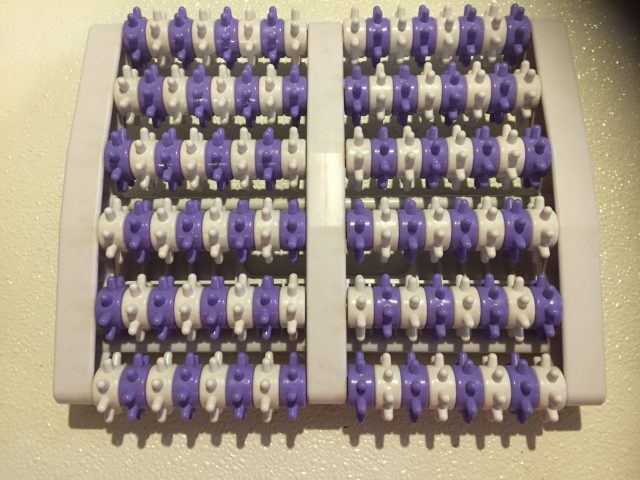
Jan Found this great foot massager for me. It should be interesting to try out.

Lastly If you signed up for the Holiday card exchange the partner names are now up on the forum holiday-exchange-2018

As you Read this I will be at my Guild Exhibitions and Sale. It’s in Ottawa Ontario Canada if you are in the area drop by and say hello. facebook.com/events/

Also, I would like to encourage anyone who would like to learn how to make felt bags to sign up for Teri Berry’s online class. Registration is now open and class begins November 22. For more information and to register, please click on the link to the Felted Bags online class.

Who could resist learning to make a cute bag like this?


Felting Tools Part 2

Felting Tools Part 2

Here is part 2 of Jan Scott’s felting tool post. It was much prettier in the word doc format but I don’t seem to be able to transfer that to the blog.

I have a large selection (24 years of collecting) of Massage related implements that may have potential for Felting.   One of which are the I.T. Band rollers. They were once veryexpensive and rather limited to acquire. A few weeks ago I found a number of variations of surfaces on rollers at Dollerama for 4.00 each.

So I got a few and gave one to Ann. She tried it out at the Felt in using a pool noodle to mimic a rolling pin (a really big Rolling pin!)

Another massage tool you might like to consider would be the Bar, it is used on large muscles to work out knots.
It is similar to a rolling pin but has groves.

There are also foot rollers and trigger point balls. Not only are they excellent for getting tension out of Levator scapula or the plantar arch, they also work quite nicely to felt with.  They come in various stiffness’s for the knobby bits. There are similar balls with knobby bits at the dollerama for much less money. Check the pet toys and the kid’s toys. The tall purple cylindrical roller was from Walmart in the exercise section and was still cheaper than the massage supply stores.

If you find a theraband roller in a second hand store you might want to grab it. Not only is it wonderful for treating both Golfers and tennis elbow (a common felter’s complaint) it also is a cylinder with grooves so again good for felting. They come in different firmness in case you were wanting to use it to stretch your medial or lateral Epicondilitis.

I have been keeping an eye out for Fondant rollers with groves and patterns, they are a Kitchen implement which may also be useful in felting. I have also seen pictures of a regular wooden rolling pin with a bamboo place mat elasticed to it. It looks like it would work too.

Ann has been tracking down wooden facial massagers and foot rollers from Ali express out of china. It’s a very interesting site but be very attentive to the size of items some look much bigger in the picture than what they are when they arrive. They are good for getting into small corners but some of them have a bit of a squeak when rolling.

For needle felting too there are tools not originally designed for felting. I only started to try Cookie cutters for needle felting templates recently. I am not sure if I will investigate further since I really have enjoyed the sculptural aspect of felting but for a production felter it may be helpful to start with a standardized base shape.

I have a number of different sizes of dowels, Meet skewers and wooden scraper for rapping wool around. Most were acquired at the Dollar store in the art or cooking sections.

I have been wanting to try wax on felt to crate claw tips, beaks and noses. I have a suspicion that melted crayons may work. If I need more stiffness I can add paraffin wax.  If I need more flexibility I can add more Bees wax. To melt the crayons, I have been cruising the second hand stores looking for a melting device.  This is what I have found and am looking forward to trying it out.  I will let you know how it goes!

I have found the Extra-large Zipper Bags at Dollerama to be extremely helpful. The Foam pad I used for making the 3D pictures fits in it perfectly. The Foam is a chair pad I bot at Walmart. The 3” thickness I found to be safer than the smaller 12×12 by 2” deep pad I have also been using. I have been leaving the thin plastic over the foam, finding it gave me good separation from the wool and the foam.  As I continue to work in one aria the plastic eventually will deteriorate. I have just kept moving to a new section but eventually will add another layer of plastic over the foam.   The Foam I chose has no memory foam content. (I have heard rumors of needle felting and memory foam are not compatible.)

Have you noticed at Dollerama, the test tubes with screw tops? They have decretive erasers in them, but you can empty them out, add a bit of wool at the bottom and then they hold felting needles very nicely.  I have been keeping the needles I’m working with stuck in the side of my foam but the test tubes are grate to store extra needles. I have labeled each tube with the needle type size and source. I will add a label to the lid once I find a good storage box for all 16 reasonably available needle types. I am still tracking down spirals in a coarser size.

Now that I have most of the needles that are available it will be easier to determine what the Chinese supplier are labeling as small medium and large, or fine medium and coarse.

There is one last thing I think would be important to any art and craft person which is a comfortable table height. I was lucky to find a small adjustable table at Walmart. The top is 30”x19” so hold a table loom or all my needle felting stuff. It adjusts from 21 to 28 inches so has worked well for seated work.

16.jpgI also have a printer table that was not the height I had hoped for. So added leg extensions of PVC piping to raze it up.  I think Ann is using the same technique on her table to make it a good height to stand and work at. With a bit of height adjustment, you can have the table slope just enough to drip water off one corner and into a bucket or drain.

Ergonomics, in body position, comfort of tools and working height is important if you want to keep doing what you are enjoy for your entire lifetime.

I hope that I found something that was new to you and that you will share some of your best finds with me!

Felting tools (most of which were not originally meant for felting) Part 1

Felting tools (most of which were not originally meant for felting) Part 1

This is a guest post from Jan Scott. It is in 2 parts as she has many felting tools now. She is great at thinking out of the box.

One of the problems with delving into Felting is that there are very few tools that were originally created for the purpose of felting. I am starting to suspect a lot of felters have a similar form of dyslexic distraction as I have. Do you find while wandering through Dollarama or Walmart your brain will look at some odd item and declare “WOW that would be grate to felt with!” Sometimes it’s the boot tray or a van rubber mat (that lives over at Ann’s since I don’t have a big enough table for it) or it may be a cylindrical plastic dog toy with knobby bits on it. The person who made the item definitely didn’t have felting in mind as the end use but we can see its potential.

I have been collecting “Odd” felting tools for a while now. And thought you might be interested to see what I have found. You may already have a wooden scraper and a package of skewers for Needle felting and car mats for working surfaces. But you may have missed the Iliotibial band roller (massage tool) so let’s compare and see if we can inspire each other.

My first felting tools were a lid from a Tupperware Juice pitcher, some bubble rap and a piece of curtain sheer. I have expanded a bit since then.

Tupperware Juice lid – source Garage sales, second hand stores.

I have made quite a few hats with this and a pool noodle. Pool noodles can be found in many types of stores. Improvements in pool noodle technology has led to a variety of sizes and shapes which can either give a more aggressive felting experience or used to shape around when the felt is drying. The smaller noodles come in 3 sizes and were found at Dollarama in the craft area.

I added bamboo place matts but trying to replace them as the warp threads start to rot has been a bit more challenging. Dollerama has not been carrying them at the moment. If they don’t restock them I will have to watch the second hand stores for matchstick window blinds and more placemats. I have tried non-slip matting which comes in a couple sizes and longer lengths (and doesn’t seem to rot out). I found that it worked but was not quite as quick as the matchstick placemats.


I also found a Ball Brause Sprinkler originally used to water bonsai. I recently had one of those odd thoughts that occur rather frequently while shopping as I spotted a garden sprayer with a compression pump (4.00 at Dollarama). It has a much larger capacity than the Ball Brause and adjusts from a strong stream of water to a fine mist. Ann tried it out for me at the Felt In. She is very brave around water.

I am not that fond of getting unnecessarily wet, much to Ann’s amusement. I have been trying to perfect wet felting without getting wet myself. In this endeavor I have found boot trays effective. They come in many sizes, depths and various patterns on their boot surface. I have one that is extra-long with a trellis pattern and a much shorter tray with ridges. In the spring, Giant tiger stores often have their end of season sale on boot trays. Other spots I would check would be Walmart, Home Depot, Costco and Dollarama. They have worked quite well to contain the water and keep me dry.


Mainstays Manor Lattice Boot Tray Mat, 17” x 35” Walmart

Costco Deal: Bird Rock Home Rubber Boot Tray 34″ L x 14″ W x 2″ D

Winter car mats have the same usefulness to work over as the boot trays but don’t contain the water as well as they do. If you are lucky you might also find a van winter mat reduced for quick sale. Even the regular car mats have textures that may be to your liking.

I have also found that plastic gloves are helpful for keeping my fingers dry while wet felting! I have some from work and found some in the automotive section of Dollarama (they’re black but work great). I have tried the dish gloves but find they have poor palpation through the thicker gloves.

Part 2 next time.


Trying to Get Organized

Trying to Get Organized

The first two years I was felting I used the shoe storage method to store my fiber.  But as a fiber enthusiast and one to try new things my inventory and tool collection kept growing.   So, it became quite unruly. The picture doesn’t show the overflow and piles in bins I couldn’t fit in.

2014-03-03 11.30.52I had piles of things everywhere.

2014-03-03 11.18.26

For the past year I’ve been trying to find a system to keep my fiber and tools organized. I tried a wire cube system next.  This was a real test of my patience.

2015-04-07 12.03.072015-04-08 13.42.07 2015-04-08 13.42.19I liked the openness of this system, but didn’t like it was so deep and I’d have to juggle the fibers to see all the colors I had.  I did put my batts in bins on the floor.

2015-04-07 16.47.31

So, I continued to look for another system.  I wanted an open bookcase, but because of the dimensions I was limited to, I couldn’t find something that worked.

Then we had a big discussion on the forum about fiber and bugs, so I decided to try plastic drawers.

20150907_162939Now I have drawers organized by color.  Here’s just a few.  I also have one for alpaca, one for merino and silk mixes.

20150907_162808 20150907_162852 20150907_162842 20150907_162835 20150907_162824But I wasn’t finished.  I organized my embellishments in two separate units.

20150907_162952

This one is under my table.

20150907_163229

I also used the furnace room door for coarser fibers and to hang my scarves and hand dyed yarns.

20150907_162923

Here is my table with my tool drawer and a bin full of WOW fibers, some foam for needle felting and other useful tools all close at hand.

20150907_165233

20150907_16320520150907_163736

20150907_163601

More fiber and bubble wrap marked.

20150907_164909

Behind my table is my felting machine with more tools close at hand.

20150907_165005And my drum carder set off to the side next to another table.

20150907_164853The cube system is temporarily holding some folders until I figure out what to do with it.

20150907_163223

Then there is the daybed covered with samples, bins of yarn, ribbon, scraps, etc.  This still needs a bit of work.  And my “paper” room which is now my dyeing room.  That will also have to wait.

20150907_165046

This system works for me right now.  Its by no means perfect.  I’m fortunate to have two water sources close at hand and extra space.  I don’t think we intended it to be a studio but that’s what it is for me right now.

What works for you?