Browsed by
Category: sewing

Diamonds and Dolls

Diamonds and Dolls

The title of this post is misleading: although there are several diamonds in this story (in shape, not in value!) there is only one doll. Apologies for this, but “Many Diamonds and Just One Doll” just didn’t sound as good a title to me.

Let’s begin with the first, shall we?

The diamonds

If you use yarn in any way in a crafting project, chances are you end up with leftovers once you’re done. What to do with the lovely remnants of woolly, colourful string? If you’re anything like me you won’t bear discarding them willy-nilly, but keeping them in a bag without a plan also seems like a waste… Enter the Diamond Miner’s Quilt by Lucky Fox Knits.

A set of diamond-shaped knits, stuffed and sewn together to create a puffy quilt
Photo by Valya Boutenko

This project is not one to be made in a jiffy, rather it is meant to be an ongoing thing, to be added to as the years pass and one is presented with more little bits of yarn that are too precious to not make the most of. It’s a no-fuss, small outdoors knitting project, or simply a quick in-front-of-the-telly-knit when the brain is too tired but the hands are restless.

I currently have two full ziplock bags of diamonds, not nearly enough for a proper quilt, but slowly their numbers have increased and soon I shall have to start sewing some together to show myself I’m not simply hoarding teeny tiny pillows…

A sample of my own knitted diamond-shaped puffs on a wooden surface.

What I most enjoy about these is, I can look at them and remember which project they came from. It’s a way to reminisce about a past knit that I find comforting.
The best part? My knitter friends who know about this now have taken to gifting me their own remnants, so now I get to remember them in my future quilt as well. To me, that’s the definition of cosy.

The doll

Now to my latest fun project, Billie the Sheep. I forget how I came across this cute pattern, but it was before Christmas 2023 and I decided to buy it as a present to myself. Of course, this cute sheep would need some clothes and luckily the creator Gabrielle Vézina would provide the dress and cardigan to go with it.

Billie the Sheep doll, dressed with a knitter dress and a cardigan, next to a printed page of the pattern to make the clothing

Want to know the best part? This dress comes in a children’s size as well, so if you have a little girl in your life who needs a sheep doll and wants to match with it, you can make it happen! It’s simply too adorable.

All of this project is also made from remnants, the calico fabric I used previously as mock-ups for my own clothing, the threads on her face were gifted by a friend who no longer embroiders, the yarn was leftovers I hadn’t made into diamonds yet. The woolly part of her head is a bouclé yarn I used to knit a friend a cosy jumper and stabilised with some pre-felt (see, there’s felting in this post!). If this isn’t the cutest way to enjoy “leftover” project materials, I don’t know what is.

Billie the Sheep flat lay on a wooden surface.

Have you made anything with remnant materials that you care to share? It doesn’t have to be fabric or fibre, anything goes! I love a good upcycle story, so feel free to share it with me below.


A card for Christmas!

A card for Christmas!

This year we all decided to do a Christmas card exchange within the Felting and Fibre Studio group. It is just so lovely to make for another creative! It’s a bit frightening too as I wanted to give it my all. I also thought it might be a nice time to try something new and experiment – no personal pressure at all!  I was so excited to be partnered with Leonor who I know has received her card at this point.

So, I put my thinking cap on.  My first attempt was, and I am being perfectly honest here, an unmitigated disaster and the memory is probably best confined to the bin in which it quickly landed.  So it was time to move on and put the thinking cap back on.

Okay so, by way of background.  I had a poinsettia plant which I managed by some miracle to keep alive for about 5 years.  I will quickly add that this had nothing to do with green fingers, it just liked its position in my sun room with my orchids as companions (again the orchids like the room).  This summer the poinsettia developed a honey fungal disease which is a total disaster if it hits orchids so we had to part ways.  I managed to stem the spread of the disease and the orchids are safe for now.

As a tribute to that most beautiful poinsettia, I thought it could be my focus for the card exchange.  I wanted mixed media so I felted each petal, then I did some free motion embroidery on each one.  I hand sewed it onto a felted backing and added hand dyed stamens to the centre.  It was then mounted on the Christmas card.  It was a little too big for the card so I decided to mount it in a frame before posting it off.  The postal service can be a bit dodgy but I am pleased it worked on this occasion.  From Leonor’s message to me, I think she likes her card and  I have made more since.

Here is a little slide show of the highlights of my process.  Sorry, I forgot to photograph the hand sewing so you will have to use your imagination for that part.  Some of the photos are slightly distorted so apologies for that too.

This was a fun make with a bit of learning thrown in for good measure. You might like to make some too. If you do, I would love to see it! Also if you have any questions on the making just pop them in the comments section and I will be glad to answer them!

Wishing you peace, love good health and happiness and, of course lots of creativity over the Festive Season and for 2024!

Helene x

Bags of Inspiration

Bags of Inspiration

Having just read Kiki’s tutorial  https://feltingandfiberstudio.com/2023/11/19/left-overs-yessss/ on using up prefelt scraps, it occurs to me that I may not have mentioned something we used to do at our Guild (Dorset Guild of Weavers Spinners & Dyers) mainly to raise funds for the Guild but also for fun.

When I attended the Stitch and Creative Crafts Show at the Bath and West Showground in Shepton Mallet (Somerset, UK) back in 2010  – I saw a stand selling (for £8.00 each) bags containing 35gr of silk fibres, yarns, fabrics scraps, carrier rods and cocoons in various colours, left over from old projects which, when put together, made a fascinating collection for future projects.  So fascinating that I bought three of them.

They must have made quite a bit of profit on them because they appeared mainly to be the “waste” from artwork.

At that time (when I was part of the sub-committee organising the Guild’s Exhibition and Sale of Work) we were looking for a Guild Project which could be part of the exhibition or something hopefully to help raise some funds.  Well, I thought, our weavers must have lots of off-cuts of hand woven fabric, not to mention warp ends.  Then there were the spinners who would have odd bits of spun and unspun fibres of all types and colours.  We also had members who were dressmakers, beaders and embroiderers, and a soft furnisher, who were bound to have the odd bits and pieces that they didn’t really need.  So, with the blessing of the committee,  I put it to the members in the next newsletter that if they would donate to the Guild any odd bits of fibres, yarns, threads, warp ends, bits of fabric, beads, button, feathers, felt, cords, braids, tassels, sequins, sequin waste, ribbons, silk flowers and any other bits and pieces they could think of, we could make up some “Bags of Inspiration” and sell them to members of the public at our open days and outside demonstrations.  (I don’t know about in the rest of the world, but in the UK the word “bags” means “lots of” as well as “containers”, so the punning name “Bags of Inspiration” seemed apt.)

We used A4 sized polythene bags (which I was able to buy quite cheaply from our local green grocer) with an A4 sheet of card inside for stiffening, and I made up some stickers with the Guild’s logo on and a brief description of the contents, and posters also giving details of the contents.

Image of a poster detailing contents of a Bag of Inspiration
Bag of Inspiration Poster

We arranged a few bag making days at a pub in the village where our then President lived.  She had persuaded them to let us use their skittle alley at no charge, and we had a great deal of fun making up the bags and tucking in to “refreshments” from the bar and kitchen.

The members who came to these, brought with them all sorts of goodies which we spread out on tables, so that we could make collections of pieces which seemed to go with each other.  Those who didn’t think that their colour theory was good enough, could pick out a picture from a selection of magazines and have a go at matching colours from this  It was amazing how compulsive making the bags became.  You could pick up a piece of fabric that looked so dull and dreary and be amazed how it perked up and positively shone with life when paired with different fabrics, yarns, trimmings etc.  You just couldn’t stop picking up likely bits.  The difficulty was keeping the weight of each bag between 80gr and 100gr, so we quite often ended up making up at least 2 bags with similar contents.

image of tools and accessories for making up Bags
Equipment & Extra “Bits” for making up Bags

Prospective contents of a Bag of Inspiration - fabrics, yarns, fibres etc.
Prospective contents of at least one Bag of Inspiration

We put a price of £3.50 on each bag and they went like hot cakes – we sold out on their first appearance at our exhibition and sale of work.  Embroiderers and mixed media artists in particular liked them.

After a couple of years, we didn’t get so many volunteers to make up bags but we still had mountains of “stuff”.  So we added another string for our open days – Pick and Mix Your Own.  I had remembered that Woolworths (now there’s a blast from the past) used to have a counter full of different sweets and you could take a bowl and pick and mix what you wanted, and in the process buying a lot more than you would have if just buying a ready filled bag.

Boxes of different sweets to be picked and mixed
Pick and Mix Sweets.

It worked with our stuff too.  We gave the visitors the polythene bags and they could wade through all the bits and pieces picking what they needed, and we weighed them when they’d finished, charging £3.50 for 100gr.

We had had a lot of fibres donated so we started making up what are now called Art Batts and selling them as “Batts of Inspirations”, but because we were mainly selling these to Guild spinners and felt makers, they didn’t do quite so well as they were mainly able to make their own.

In all we made around £1000.00 for the Guild in the four years we were doing this.  Eventually though the members got fed up with spending time on making up the bags and the whole thing was shelved, as the Guild seemed to be relatively well off at the time.

Some time after that I took the idea back to myself and I was making up Batts to sell at Guild meetings, using luxury fibres as well as merino and synthetic fibres.  I made up some bands to fix around the Batts detailing the various fibres included in each.

This slideshow requires JavaScript.

I was also making up and selling Bags, mainly at a Needlework Festival in Dorset where most of the vendors were selling materials and equipment for crafters, as well as various craft fairs and so on.

This slideshow requires JavaScript.

I was getting the odd question like “they’re lovely but what do you do with them?” and  “can you make a bag out of what’s in here?”  So I made a sign from images of items that I’d made myself over the years and that helped.

Image of items made with contents of Bags of Inspiration
Some of the things I’ve made with the contents of BoI over the years

However, once Covid started causing problems, my selling opportunities dried up.  I had been intending to try selling Bags and Batts via my website, but it was very difficult and too time consuming to photograph the Bags so that the contents were visible, because of reflections on the polythene bags.  So that sort of died a death too and I’ve now shelved that project, and am using the bits and pieces I’ve collected over the years on theatrical costumes and props.

Perhaps some of our readers’ organisations, like Ann & Jan’s OVWSG, might use this idea to raise funds?

Craft Basket Makeovers – part 1

Craft Basket Makeovers – part 1

A good few years ago now, after I had acquired and learned how to use my spinning wheel, I was casting around for some means of storing the associated equipment in a reasonably respectable way.  The wheel and associated bits lived with us in our living room and needed to be tidy.

Quite by chance I came across a shop selling off cheaply a large deep cane laundry (I think) basket.  It was only going cheap because one of the handles was broken and it had no lid.  The much reduced price compensated for something which was no problem as far as I was concerned.

I used to work in Maidstone (Kent) and nearby there was a lovely shop called C&H Fabrics (sadly no more) which sold both dressmaking and curtain fabrics and haberdashery.  I could never bypass their remnant section – they almost always had something good and large enough to be really useful.  I managed to purchase several large pieces of curtain fabric of a design which was really “with it” at the time (most rarely  for me, I am usually following several years behind fashion fads).  This was during the time when Macramé made it’s first appearance and I was very “into” this.  So I removed the remaining cane handle and instead added two twisted cord macramé handles.

laundry basket without lid, with macramé handles, filled with spinning equipment


Then I set to and lined the whole of the basket using the curtain material, making sure that there were pockets around the sides of sufficient size to take threading hook, spare bobbins; flyer; carders; ball winder and my Neatsfoot oil – my wheel had a leather connection between the treadle and the footman – the bits that actually drive the wheel, and the neatsfoot oil is a good natural conditioner for leather and ok for oiling the metal parts.  The rest of the associated bits – fleece, box of carded rolags, tea towel used as a lap cover, cord for tying skeins and niddy noddy would just sit in the middle.

Now I needed a lid for the basket to keep the dust out (our bungalow was very dusty because part of it was still a building site).  So I cut two circles of the fabric and a circle of wadding.  I attached the wadding to the wrong side of one of the circles, by machine quilting around the pattern/motifs printed on the fabric. On the other circle, which would be the underside of the lid, I added a zipped pocket.  I then finished the lid by stitching the circles right sides together with another length of macraméd cord attached to one side.  Then, after turning the circles the right side out, and hand stitching the turning gap, I attached the other end of the cord to the basket. The lid sat on top of the basket with everything safely inside; well except for the niddy noddy which was too tall and had to stick out of the side, so it made do with a length of cord to attach it to the basket.  My brother in law had made the niddy noddy for me, having already made one for my sister.  It is purposely on the large side because each circle of a skein wound on it would be 1 yard long.  This made it easy to calculate the skein’s length.

Lined spinning basket with lid folded open to shop equipment in pockets
Finished basket open

Finished basket with closed lid to show quilting, with niddy noddy poking out of top.
Finished basket, closed.

The fitted out basket sat comfortably by my chair and spinning wheel while I was working at home, but was a bit big to take with me when I went to my spinning group each week. Luckily my sister, having visited the Willows and Wetland Centre on the Somerset Levels, gave me a large basket which she had bought there.  The Levels is a large flat low lying area where Withy Willows have been commercially grown for basket making for at least the last 200 years.  In fact willow baskets and other items have been made there since pre-Roman times.  If you are interested there is more information on the area here: Somerset Levels (As an aside, Glastonbury Abbey, also referred to in the link, used to own much of Sturminster Newton where I now live, despite Shaftesbury Abbey being much nearer to us and owning most of the rest of the surrounding land.)

But I digress.  The basket which my sister gave me was intended as a picnic basket.  It was short and wide and it’s carrying handles positioned so that it was carried flat.

picnic basket on lawn with handles up
See how the handles work to carry the basket flat?

It was just what I needed to carry tops (roving?) and spinning equipment when I was away from home.  Of course it needed to be fitted out with pockets to keep everything tidy and safe.  I had sufficient fabric left of the remnants used for the large basket to make them match.  I lined the base of the basket adding pockets at one end for flyer and bobbin, lap cover and oil.  I didn’t want to spoil the look by using the plastic box for my rolags and by then I had learned basket making courtesy of the WI.  So I made a basket to fit, lined it and made a lid with more of the fabric.  The lid of this little basket was quilted in the same way as the lid of the large basket, and also attached with macramé cords made from fine crochet cotton, with a wooden toggle closure.

small handmade cane basket with fabric lid attached by macramé cord with macramé and wooden bead closure
Rolag basket in the sun

By this time I was also “into” Tunisian Crochet. I had been making ordinary crochet items for as long as I could remember but fell for this new (to me) technique. So in addition to storage for threading hook, personal bits, glasses etc., I needed storage for at least one Tunisian crochet hook – this looks like a knitting needle, but instead of a point it has a hook. I also needed somewhere safe to put large sheets of paper patterns, as I tend to use diagram type patterns and they take up a lot of room. So I set-to to line the lid of the basket with just one layer of the fabric, but with pockets, short & fat and long & thin attached. I sewed this onto the inside of the lid but left one of the shorter ends unattached so that I could tuck paperwork etc., inside.

Open lined picnic basket showing lid lined and with pockets, and with rolag basket and other equipment in the basket.
All my equipment (almost) in the basket.

Incidentally, the sharp eyed amongst you may have noticed that odd bit of hooked wire tucked away in the longer tube/pocket and be wondering what it is.  It’s a do-it-yourself lazy kate – a device for assisting with plying yarns from one, two or more separate bobbins.  An old shoe box (or a basket) and this bit of wire are all you need, poke the wire through one end of the box, slot the bobbin(s) on and poke the wire through the other end of the box.  It’s not the best way to do it, but if you put some tension on the yarn by passing it from the bobbin around the wire once before taking it to the wheel for plying, it works.

Oh and a quick boast – can you see the handle of the threading hook poking out of one of the lid pockets?  The handle was actually a light pull which I had made while having a go at wood turning some years earlier, and the hook is only an unbent paperclip – but it works ok too.

So that was my basket set up and ready for journeys.  Oh yes, the niddy noddy.  That was too big again, so it had to sit on top.

Closed picnic basket with niddy noddy on top attached by cords but with handles down.
Basket with niddy noddy (but the handles are down so I’ll have to remove the niddy noddy, put the handles up and replace it because the right handle won’t go over the end of the niddy noddy – then I can pick up the basket.)

Eventually the cane hinges of the lid, and the cane closure wore out so they were replaced with macramé cords.

Some time before I moved from Kent to Dorset in 1999, I wrote an article about these baskets and submitted it, with photographs, to the Journal for Weavers Spinners & Dyers as I thought it might be of interest to them.  Apparently not though; I eventually received a letter returning the photos (but not the article, so I’ve had to rewrite it!) and saying “… the Editorial Committee … felt that the article was rather too indirectly concerned with weaving, spinning and dyeing ….”   Oh well!

Covers for Carders

Covers for Carders

New Carders need new covers

In a recent post, I was asked about carder covers. I made mine quite a few years ago, ok at least 20 years ago, but had not got around to making ones for the other hand carders I own. (it’s just the others didn’t get out much and I got distracted, you know how that can happen I am sure!)  I had picked up 3 pairs second hand I think as part of a box lot at an auction.  They were ones with curved backs and not as old as some hand carders I have seen. These probably come from the 1970s. I have no guess as to the manufacturer. The only clue is a mysterious symbol on the back of each set.   “A”, “B”. “C”, I am afraid that these mystic symbols are not illuminating as to their origins. Luckily these strange symbols have not affected their ability to card wool.

Last week I picked up another hand carder, this one with significantly stiffer teeth than my present collection. I have also found that my safety carders have been coming with the Mers and will also need some safety covers (but not today). I have used a thin packing foam for the pet combs until I can make them covers too.

First, let’s have a look at the new carders;

My latest acquisition is made from a soft wood that is ruff on the end grain. I suspect it is probably pine.  The handles, although the same colour, seems to be made of a slightly firmer wood. The teeth are embedded in a canvas fabric, then glued and tacked to the wooden carder. Bernadette said she had a similar pair and that the stiff teeth are excellent for courser wool.

As I said the teeth are very stiff and have little flexibility. This doesn’t mean I don’t want to protect them.

second hand carders, wood is ruff on edges and teeth are very stiff handle of second hand carder, ruff with small dents (needs sanding)1-2 The new to me, carders before sanding

3 close up of Foam drying pad cut to cover carder teeth3 close up of Foam drying pad cut to cover the carder teeth

What you will need to make these carder covers

fome and microfiber dish drying mat elastic and velcro straps Quilt squares with sheep alpaca and mice foam sanding block (sandpaper would work too)4-7 Items used to make the carder’s covers

  • 1 Dish drying foam mat
  • 2 Elastic and velcro straps
  • Interesting fabric
  • (you may need a sanding block or sandpaper if your carder is a bit ruff)
  • A ruler, pen and sewing machine are also helpful.

When I made my first cover, I wanted to have something a bit softer than just the fabric cover to protect the teeth.  I found a bathroom soft scrubby pad, it said polyurethane foam covered by a “new” microfiber top. They were available at Walmart and then Dollarama, so picked a few up. Silly me I did not reserve all I had purchased for the hand carder protection as planned but used some for their original purpose of cleaning!!! they were available for about 3 years and then mysteriously disappeared from both my sources. They were replaced by a much larger, but similar, product called a “microfiber dish drying mat”. Its tag says Polyurothatin foam and 100% polyester cover. It is very much like the original pad but huge at 15” X19.5”! (I  could cover a large drum carder rather than just small hand cards with it!  ….HUM………NO! NO! That will have to be a later project!!) Luckily it is easy to cut to the correct size to fit the little carders with my cheap paper scissors. Ok, now I have the foam pads to protect the teeth.

For my newest set of carders, because the end grain is ruff, I will also need a sanding block to smooth it and prevent splinters. (Splinters are never good, they wind up in either your fingers or the wool.) I found a two-pack of foam sanding blocks at Dollarama. The local hardware store will have them or some old fashion sandpaper and a block of wood. In a pinch, a foam nail file will work as sandpaper too

  8 sanding the back of the hand carder taking out chips at edges ad little scratches and punctures8 sanding the back of the hand carder taking out chips at the edges and little scratches and punctures

half the hand carder handle is sanded the other half is still ruff 9 half the handle is sanded(lower half)

working at smothing the end grain of the carder, the wood is likly a soft pine10 working at smoothing the end grain

Now that I have the worst of the roughness smoothed and have pieces of foam to protect the teeth. now I can get the fabric and measure it out to make the covers.  The overall pattern is simply, a rectangle with long tabs attached at one end.  Depending on the shape of the fabric you have, changes where you will put your seams.  If you don’t have much of the fabric you like (say one with sheep), you can use a different fabric on the inside. luckily I have just enough!!

To make the cover closure you have a few options, sew-on Velcro is easy to use and seems to be common.  If you haven’t quite got around to sewing on the Velcro, you can try what I have been using  “Stretch utility straps” (elastic with Velcro on the ends.)I wrap the elastic over the tabs and connect the velcro to hold it closed.  I remember seeing closers made from ties, and even buttons, but I like the Velcro and strap closer the best.

Shark Boy has offered to help show you the old carder cover so we can make a pattern.

11 Sharkboy volunteers (his parents are cuddling in their project bag)11 Sharkboy volunteers (his parents are cuddling in their project bag so he offered to help)

This slideshow requires JavaScript.

12-21 Shark boy removing the cover and foam pads off my old carders

Now that Sharkboy has opened the carder cover,  we can look at the shape and make measurements.

This slideshow requires JavaScript.

22-28 measuring the original carder cover

29 size I am going with yours may be a bit different depending on your carders size29 This is the size I am going with, yours may be a bit different depending on your carders size

We should also notice you have three main options as to how you orient your carders for storage.  (the variations are more dramatic when viewing the curved cards than the flat ones but it’s still worth considering the options available for both styles.)

30 teeth to teeth (the handles now spread away from eachother)30 teeth to teeth

Option 1 stored teeth together – this leaves the teeth inter-meshing, while it may keep the teeth from snagging on any nearby object it is not great for the teeth. It also causes the handles to point outward if you have a curvature to the paddle part of the carders. This is the way most naked carders are stored.

31 Back to back/ teeth out (the teeth face out and are unprotected, the handles tuch at the end but dont ballance well on eachother)31 Back to back/ teeth out

Option 2 stored teeth out – this is a bit silly (but it is a possibility even if it’s silly), it will put the teeth in contact with anything in the vicinity (including your fingers) and give the carding cloth surface no protection. The only advantage is that the handles don’t stick out oddly. (I am trying to be positive.)

like the 3 bears looking for the perfect bed, this brings us to the final configuration.

 32 teeth to back (the handle fit together, so dose the curvature of the carder back. but teeth will be pressiung into the back of one carder) 32 teeth to back

Option 3 stored teeth in the same orientation – Since one carder sits above the other, this would cause the teeth to be stored against the back of the upper carder. Ah, this is where the foam pad comes in. There were masks on the backs of the new second-hand carders which suggested this was one of the ways they had been positioned. This orientation also alines the handles which makes them fit easily into a bag or basket when they need to travel.

Now let’s make the pattern.  There are two main rectangular shapes for carders; a shorter rectangle for wool carders and a longer rectangle for cotton carders. I have now seen “Student” carders which are smaller than the standard wool carders. Both shapes of carder require a very simple pattern so just adjust it to fit your size. If you are not trusting of numbers you can make a pattern using a couple taped together pieces of paper to check the fit.

I had been over at Walmart looking in their craft/sewing department. There was a selection of precut “quilting squares”, which were actually rectangles, that I looked through. They were not the finest of thread counts but they had 3 patterns with sheep, the odd cat/alpacas and one with mice.  The size works out to approximately 16” wide by about 20.5” long, close enough to what I had used last time!!  this is not like sewing an Elizabethan corset so if your fabric is a bit shorter in length it will still work, but with shorter tabs.  As long as you have fabric adequate to cover the width and enough length to wrap around the carders with their foam spacers protecting the teeth, the extra will be the tab length.  Two of my older carders have lived with a stretchy elastic with velcro and the foam pads for many years (they’re the ones that don’t get out much!) so you can fudge it if you are a bit tight on your favourite fabric.

Your other option is to make the cover out of 2 different fabrics if you’re short. This could be a fashion statement, flipping whichever side out that seems to fit your outfit that demo.

Let’s get sewing

 33 End and side seem in, laing the old cover over the new fabric for locating tab length 33 End and side seem in, locating tab length

Since I am folding on the long side, I will have a seam at the end and down the opposite side. (seam is on the left short side and at the top long side)

34 Making wider tab ends34 Making wider tab ends

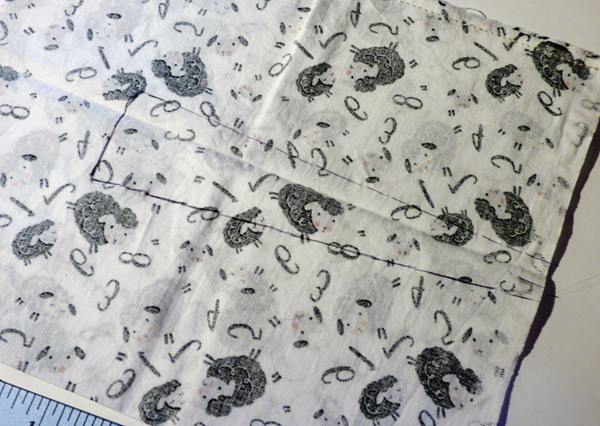
35 Marked in pen on backside of fabric to sew in tabs35 marked for sewing

This time I wanted to try a wider end tab to give a bit more protection for the carder. I found the center on the unsewn end and estimated the seam placement.  I used the edge of the pressure foot to give a thin seam allowance. Remember to leave the center area between the tabs open so you can turn the cover inside out. (I almost didn’t on the first one! It has been a while since I have been sewing, I should practice more.)

 36 NO WRONG WAY!!! (leave the space between the tabs un-sewn) i put the presherfoot down in the rong spot! 36 NO WRONG WAY!!! (leave the space between the tabs un-sewn)

37 extra wide seem allowance along open section, about 1 inch with a diagonal cut into both corners

Trim the area between the tabs to about 1 inch from the end of the sewing line. clip back to the corner  (see the pictures). The flaps will get turned into the opening and the nail pressed down after the cover is turned inside out.
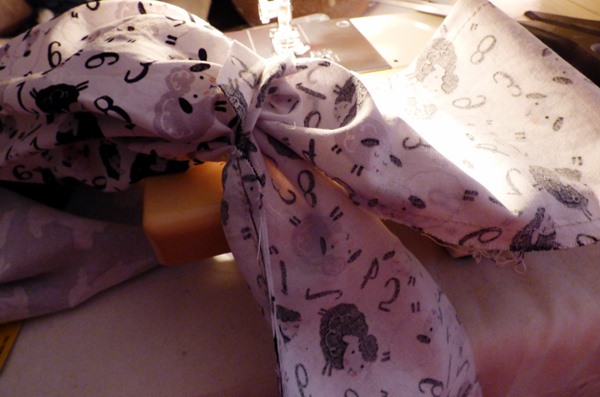
38 turn out body of carder through opening left between tabs38 Turn out the body of the carder through the opening left between tabs

39 turning out tabs39 turning out tabs

Turn the body out through the open space then turn each tab right side out.  Tuck in the extra wide seam allowance at the opening. If your iron is not handy you can nail-press the opening.

40 turn out corners with chopstick

Lastly, take a rounded-end chopstick and get the corners poked out. There are more expensive tools for sewers to get into corners but this works and was in with the felting tools.

The elastic straps with Velcro

41 Sharkboy shows you the two different lengths of velcro (short and long)41 Sharkboy shows you the two different lengths of velcro (short and long)

The elastic straps at Dollarama come in two sizes which are not always the same length. pick one that is not too tight and compressing the foam covers but not so loose it won’t hold the carder cover on. (I know that was obvious but some really are quite different small or large than the previous ones I have purchased.)

If you want to make yours extra fancy, top stitch along all the edges. You can add two strips of sew-on velcro to the tab and the main body of the cover (try it on your carder to get the best position. If you want a fashionable 2-sided carder cover I would go with the elastic and Velcro arrangement my first cover has. (so you can turn it either side up)

For odd-size carders, you need to add teeth protection and stack them as you would like to store them. measure the distance from the base of one handle (at the edge of the carder) going directly across the width of the carder down to the underneath carder, across it stopping when you reach the other handle base. Call that X. Now decide how long you would like your tabs (t). X+T+ seam allowance= the long side of your rectangle. The width plus seam allowance x 2 is your other dimension. When in drought just use a string with knots or make a mock-up in paper. (I have found numbers can be just as tricky as letters!)

I do hope this is somewhat clearer than mud! If you decide that this is all too much work or you can’t remember where you put your sewing machine or your hand sewing needles there are a number of people selling premade covers on etsey.

Lastly, Sharkboy got all the new covers on the carders and staked them up for me. He has been working very hard and needs a treat to reward him.

Sharkboy is trying to stack the carders he has wraped 43 he is determand to get the 4 newly covered carders neatly gathered

42-43 Sharkboy is determined to organize the newly covered carders

This weekend (back willing) Mrs. Mer and her son Sharkboy will be going to a fibre festival south of Ottawa in search of hair. I will let you know how all our shopping goes.

Sharkboy says goodnight he is standing on his tail-fin and leaning on a carder he has been trying to move.44 Sharkboy has had a busy day helping with this project and says goodnight

Hand sewing some rabbits

Hand sewing some rabbits

Recently, the Chinese celebrated the arrival of the Year of the Rabbit. How very fortunate of me, then, to have a couple of rabbits to hand stitch!

I had initially bough this Briar Bunnies kit for my mum, to keep her entertained during her Christmas stay with us… in 2021. My mother started making them, but lost steam somewhere along us all catching Covid and being flabbergasted by how messy our place was (if only she knew we had tidied up before she arrived!) After she left, the poor duo was stashed somewhere in my studio and completely forgotten, until recently.

Unfinished hand sewn Briar Bunnies, a kit by Cool Crafting

This is how my mother left her bunnies. The blue pen markings were done by me with a heat-erasable Frixion pen. The ink would guide the stitches and would disappear once I ironed the fabric after sewing.

You’ll notice there are two pairs of ears and arms. I had suggested mum make two bunnies at a time to avoid what in the knitting world is called “second sock syndrome” – when you’ve knitted one sock and don’t feel at all motivated to start all over again and repeating the same steps to make another… Once I took over the project, I followed my own advise.

The pattern expects you to machine sew the bunnies, but in my mind that would completely defeat my notion of enjoying the making process to the full. Machine sewing these bunnies would mean I’d be done in a couple of hours, not nearly enough time to be mindful of even having held them! Hand stitching was much better for that.

Two hand stitched bunnies, with striped leggings

My hand stitching skills are mediocre at best, but slowly I saw the rabbits shaping up. One of them has wonky ears and her leggings don’t quite match in the front, and I love that about her. It adds personality!

Two finished hand sewn linen rabbits with coordinating red and floral garments

Here they are all finished. Those dresses took me ages to make! I can’t tell you how long exactly, but a good amount of an audiobook kept me company whilst I slowly stabbed the fabric and, once or twice, my fingers. The bunny on the left was supposed to have a bow made with the same burgundy fabric as her dress, but after almost losing my mind turning the other bow inside out, I decided to go for a red ribbon instead. It’s not cutting corners, it’s being creative…

Have you hand sewn anything lately? Do you love or hate the notion of slow stitching? Let me know your thoughts.


Brooches, bags, booties and other stuff: in search of the elusive bamboo mat.

Brooches, bags, booties and other stuff: in search of the elusive bamboo mat.

I decided to return to basics and take an introduction to wet felting course.  I am hoping to become a training mentor with the International Feltmakers Association and thought that rather than observe the interaction within this course; I would throw myself into it.  Despite felting for the best part of 10 years I will readily admit I am learning loads – happy days!  The course involves sampling various breeds of sheep for, among other attributes shrinkage rate and required finishing the fulling by rolling the sample in a bamboo mat.

I knew I had them somewhere in my workroom – you might be familiar with the process – one puts something away safely for use in the future and then one promptly forgets where it is!  My room was a disaster area after the Christmas holidays as it had become a dumping ground.  It was quite the miracle that I could even find the work table let alone the bamboo mat.  A tidy was on the cards.

As I started tidying, I uncovered a number of unfinished projects which I reckoned would fulfil the criteria of this quarter’s challenge.  Let’s just call it as it is, repurposing something stuck in the back of a closet into something a bit more useful.  Those unfinished projects started with great enthusiasm then put by when I ran out of steam!

First up was the unfinished silk throw which I started in June 2021.  I mentioned in an earlier post that I had inherited lots of fabrics from my husband’s Aunt Kathleen.  In amongst them were small lengths of beautifully coloured wild silk which I had cut into squares and sewn together.  I had gotten as far as putting wadding and a backing on to it so I added a binding and machine stitched (diagonally)  through the layers to complete the throw.  Sorry that I forgot to take a photo of the piece before I attacked it – just one of my work in progress and the finished throw.  I have to say I just love the richness of the colours!  I took the throw out into the garden to photograph but it was so windy it was difficult to catch so this photo does not capture the sheen off it.  You can just about see the pattern from the diagonal machine stitching.


Back to the presses where I discovered a pile of felt that I had made up – not sure for what reason – long forgotten.  Some of it was plain and I had experimented by nuno felting various silks onto another piece.  One piece was a beautiful red and it inspired me to make a heart brooch.  I cut out my shape and then put it through the sewing machine a number of times using a zigzag stitch on the edge.  I then sewed a brooch pin on the back.  Here is the result in time for Valentine’s Day (note the bottles of champagne in the background which still have not been removed from my workroom):

I then cut a rectangular shape from the nuno felted sample and zigzag stitched around this in a similar manner to the heart.

These were quick and easy to make (once the initial felting was done) and they have potential for selling at Christmas fairs or including in cards as small gifts.

I keep my handbags in my workroom.  I have a beautiful black leather bag that I paid a fortune for in the 1990’s and have worn it to death.  The colour of the bag is now nearly grey and it’s scuffed – it is normal wear and tear – I don’t believe in using something I love only on occasion.  I had enquired about having the bag renovated but the quotation from the one place I knew who did this kind of work was way up in the hundreds so I did not want to go there.  Instead the bag greeted me forlornly every time I walked into the room.  It was like it was pleading with me to put it back to work again.  I headed off to our shoe menders who said that there were no guarantees that any leather dye would work on bags (they are apparently specifically for shoes).  I decided to take a chance as I did not want to scrap the bag.  It was time to redeploy it.  I used two coats of spray on the bag and now it is as good as new.  I am so pleased.  Unfortunately I did not take a ‘before’ photo but this is how it turned out.

Back in the day when my daughter was at college, she worked in a high end retail store.  Like her mother she fell in love with a leather bag and spent most of her week’s wages on it.  Within a month it looked worn out as it scuffed easily and the colour came away.  So she talked to the buyer and got a replacement only to find the same thing happened.  Disappointed the bag was discarded as it was not fit to be seen.  She told me to throw it out as she felt she would not insult a charity shop by donating it.  Armed with my new confidence I headed back to the shoe repair shop and purchased another dye.  This time I opted for a paint rather than a spray on dye and got to work painting on two coats.  I left it to dry thoroughly for a couple of days and then presented it for inspection.  I have to admit I fell in love with it and I was hoping she might hate the slightly changed colour so I could keep it.  She loved it (secretly I am delighted as she is a fussy lady) and she is now never without it on her shoulder when she is heading out!


Then I found a cheap carrier bag that I had purchased while on holidays a number of years ago.  I remember that it cost €1 (which is less than £1 and around US$1).  The handle was torn and the zip, which was used to tidy the bag when not in use was broken.

It was a bit of a sorry sight but I liked the plastic coated fabric and the challenge of repurposing it.  First of all I removed the zip to see if there was any life left in it.  When I was examining it I fell in love with the rainbow effect of the colours on the teeth and made up my mind to salvage it if I could.  I then unpicked the outer pocket that housed the folded bag  and dismantled the bag by cutting away the side and bottom seams and the handles.  This left me with two pieces of material and I cut two rectangles from these, using as much of the fabric as I could.  My intention was to double over the material so that the bag was self lined.  In effect, the bag would be half the size of the cut rectangles (less seam allowance) and I would be sewing through four layers.

Next, I removed the broken tag on the zip using a pliers and I opened the little hook on the mechanism as wide as I could so that I could fit in a fabric tag as a replacement.

I hand sewed the top and the bottom of the zip, cut the zip to size and then covered these areas with remnants  of the bag fabric. Here’s a photo of the mended zip:

I drew a line at the centre of the rectangles of fabric  and sewed through the two rectangles using a big stitch in preparation for inserting the zip (as per Teri Berry).  Then it was time to tackle the zip so I did this using the method Teri outlined in her post of 12th January (thanks Teri, it worked a treat).

I then sewed the original outer pocket back on to one side of the rectangle.

I turned the bag inside out (you might recall that the bag is self lined so the material is the same inside and outside.  I used quilters’ clamps and pins to hold the pieces together and sewed through the material rounding the corners.

I then used my sheers to neaten the seams.

So here is the finished odds and ends bag.  I hope I have added value to it and it will sell for more than its original €1 price tag when it hits the charity shop.

Did I ever find that elusive bamboo mat?  Yes I did in the very last box in the room.  It was worth the search.  I am feeling virtuous (or is that a bit smug) with my finished projects, ‘new’ leather bag, happy daughter and completed upcycling project.

Oh yes and tidy workroom.  Bets are on as to how long that lasts!

A little post script which happened since I uploaded the post.  A friend of mine asked if I could help out with a handmade gift for a new arrival.  Something small, so in the end we settled on booties.  I wanted to keep the price as reasonable as I could for her so I searched through my stash of felt samples.  In the middle of it I came across a hat which I made in my early days and which was waaaay too small for my head.  So out came the scissors and I took over the role of shoe elf (part time).  Thankfully I could work during day time when the real elves were asleep.  I found a free pattern on Pattern Bee (https://patternbee.com/_images/free_stuff/FELT%20BABY%20SHOES.pdf) and got to work.  So here is the result.  I hope my friend and the new parents like them.

I will readily admit I spent quite some time out of my comfort zone putting together this post.  Cutting into things does not come easy to me and I have fabrics that I caress every now and again, afraid that if I make that cut I will destroy it.  But it was good to let go on items where I had nothing to lose if things went wrong.  New things created from old things discarded.

Have you anything that you recently repurposed?  Perhaps this post has inspired you to finish off a project that has lingered in the back of the cupboard.  Perhaps you make do and mend.   If so, we would love to see your work.  Here is a link where you can upload a photo and write a brief description of what you have done https://wp.me/P1WEqk-cJX .  The process is quick and simple and it’s just one click away.   I would love for my next post to feature our reader’s work.  Let’s get this conversation going.  We can all inspire each other.

Something for the garden

Something for the garden

With the weather warming up, we have been looking for some garden furniture ever since the most severe lockdown restrictions began to lift in September, but almost all of reasonably priced wooden furniture has sold out and no-one knows when more will be delivered. Living at the bottom of the world has its advantages but access to products and materials while shipping containers are in disarray all over the planet due to the pandemic is not one of them. Most imported items, from cars to sofas, have been subject shipping delays of a year or more.

We ended up settling for a garden lounge set that isn’t as comfortable as some of the display sets we looked at, the seats are a little too long in the base but that is easily fixed with some additional cushions. I spent this weekend making a set of cushions and some matching fabric coasters / “wrist-warmers” for the the chairs.

Cushion covers are very easy to make and a great beginner’s sewing project so I thought I would share my method with you. I hope this isn’t too patronising for the more experienced sewers among you.

  • I started by cutting 2 squares of fabric, the same size as the cushion inserts, plus a 1cm ./ 0.5″ seam allowance on all 4 sides. A 60 cm sqare cushion needs 2 pieces of fabric measuring 62 x 62 cm.
  • Placing right sides of fabric together I stitched along what will become the bottom edge of the cushion cover, leaving a 1 cm seam. If the pattern on your fabric has a right way up, making sure this seam is on the bottom will ensure your zip is out of sight on the finished cushion.
  • Press the seam open with front of the cushion facing towards the table (I was lazy and pressed it open with my fingers rather than getting the iron out, as you can probably tell from the crumpled state of my fabric! 🙂 ):
  • Lay the zip, right side down, so the teeth line up with the line of stitching. Pin into place and using a zipper foot, sew down both sides of the zipper tape. Tip – the zip does not need to be the full width of the cushion, I think the zipper looks more professional if it stops an inch or two before the edge of the cushion. You can cut the nylon zips to make them shorter if you have one the right colour but it is too long.

Sew across the top and bottom of the zip so the zipper will not be able to run as far as the metal staple.

Using a seam ripper, remove the stitching holding the two sides of fabric together, stopping approximately 2 inches before each end (and before the line of stitching you placed across the zip).

Open the zip enough that you can easily pass your hand through the hole.

Fold the 2 squares of fabric so the right sides are together again, pin into place and stitch around the 3 reamining sides, leaving a 1 cm seam allowance from the edge.

Open the zip the whole way and turn the cover the right way out, I like to use a chopstick or pencil to push the corners out so they are nice and square.

Insert your cushion and close the zip! et voila!

I also made some fabric, wrap-around coasters to protect the arms of the new furniture from the condensation cold drinks often shed in our warm, humid climate. I started by making a sheet of felt and cutting it into four rectangles.

Then, using the chairs as a guide, I cut out a rectangle from each end so they would wrap around the arm either side of the upright piece of wood.

I cut a slightly larger rectangle of fabric and trimmed it so it was about a cm wider than the felt shape (see the piece on the left) before using fabric glue to fold over the edge of the fabric and tack into place on the felt.

Once the glue had dried, I stitched around the edge of each shape before attaching a piece of velcro to 2 tabs on each coaster and wrapping around the arm of the chair.

I am looking forward to spending the rest of the summer sitting in our “granny and grandpa” chairs on the veranda now 🙂  Fingers crossed the chickens don’t roost on the chairs and poop all over my new cushions….