Browsed by
Author: ruthlane

When I discovered felting in 2007, I finally found the creative outlet for which I had been searching. I love that the versatility of fiber allows me to “play” with a wide variety of materials including wool, silk, fabrics, yarns and threads. Creating one of a kind fiber art pieces to share with the world fulfills my creative passion.
Learning and Experimentation with Online Classes

Learning and Experimentation with Online Classes

Have you wanted to be a little more experimental in your fiber art practice? Do you want to learn new techniques and add embellishments to felt or other fabric? Why not try an online class all about embellishing felt? Anyone from anywhere in the world can take these courses, no need to show up at a certain time (you can even wear your pajamas) and the classes are 6 weeks long so you have plenty of time to learn a new technique and try out an experimental approach. My online courses are 4 stand alone classes under the title Embellishing Felt with Surface Design Techniques – A Mixed Media Approach.  You can take just one or work through all of them. The classes are only $45 US for 4 weeks of video and written PDF’s plus 2 weeks extra time on the class website with full instructor support. Registration is now open and the class begins on May 16, 2025.

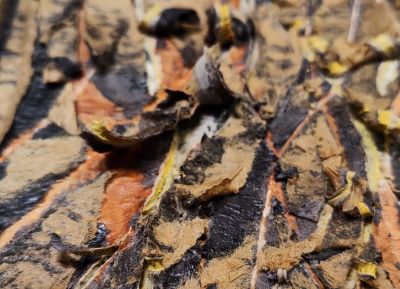
The first module is called Nuno Felting with Paper Fabric Lamination. The bark I created above used this technique.

You will learn the technique of Paper Fabric Lamination and then how to use these pieces in nuno felting. As you can see from the examples above, there are many possibilities with this technique. Click here for more information and to register for the class.

The second module is Experimental Screen Printing on Felt.

You will also be able to use these techniques to screen print fabric such as silk to use in nuno felting. These same techniques can also be used on cotton fabric to use in fabric collage or quilting.

You will learn how to create thickened dye, make your own screens and many ways to use these screens in an experimental approach. Click here for more information about Screen Printing and to register for this class. 

The third module in Embellishing Felt with Surface Design Techniques – A Mixed Media Approach is Printing, Stenciling, and Playing with Thickened Dye on Felt.

This one is really fun and experimental. Learn to make stamps, stencils and how to use a variety of objects from around the house to create your own unique surface design on felt. Develop your own style with designs you have created.

The techniques you learn in this class can be used for felt, other fabric types and even paper. The stamps and stencils can be re-used over and over and applied in different ways to create exciting patterns. Click here for more information about Print, Stencil, and Play with Thickened Dye on Felt and to register for the class.

The last module in the series is Free Motion Machine Stitching on Felt.

In this course, you will learn the basics of free motion machine stitching and how to use this specifically on felted projects. Does the thought of machine stitching seem a bit scary? If so, you should take this course to get a handle on how to use your sewing machine to create wonderful embellishments on felt paintings or other felted items.

We’ll start with how to set up the machine and some great practice techniques that will build your skill level until you feel comfortable with your machine. Then you’ll learn about machine lace, thread sketching and how to incorporate machine stitching into felt paintings. Click here for more about Free Motion Machine Stitching on Felt and to register for the class.

I hope you want to expand your fiber art skills. If so, click on any of the links above to read more about the classes, see the supply lists and to register. I look forward to “seeing” you in class!

And don’t forget, if you are a beginner, our online class Wet Felting for Beginners is always available.

This class teaches you all about wet felting. You’ll learn how to make a piece of felt, how shrinkage works and how to calculate it and the basics of felting, fulling and creating felt from wool fiber. Click here for more information and to sign up. 


Registration Opens for Hanging Felted Spiral Online Class

Registration Opens for Hanging Felted Spiral Online Class

Helene is teaching another session of her Hanging Felted Spiral online class and you can register now. Registration opens today and class begins on May 2nd.

This is a four week online course and you don’t have to be present at any certain time. You will have access to videos and Helene’s support throughout the four weeks and will be able to download the PDF’s for future reference.


Have you wanted to learn more about sculptural felt? This is a great way to learn about how to layout fiber for more elasticity, how to use a book resist with multiple “leaves” and Helene’s ideas on how to further these ideas into future projects.

Here are a few of Helene’s students own spirals. Aren’t they fantastic out in nature?

Jump into spring and learn to make a spiral with Helene. Online class starts on May 2nd. Learn more about the class and register here.

If you are a beginner and want to learn the basics of wet felting, our beginner class is always available and you can sign up here. This course has unlimited access and is a great place to start if you want to know how to wet felt.

Playing with Book Pages

Playing with Book Pages

I have been playing around with different techniques and creating a few book pages for the book I’m repurposing that I showed you here. This is another book that will be added to over a long period of time and these pages may change as I go along or might stay the same. Who knows? I’m going to make a bunch of pages and then put them together at some point. Some might not get used or torn up and used on something else. It is a fluid type process that is ongoing.

Repurposed book pages covered with alcohol ink covered packing tape.

Our play with alcohol ink left me with  pieces of colored tape to use and so I taped them down to a page spread from the repurposed book. You can still see most of the page underneath and it gives an interesting. Very shiny though, which isn’t my favorite look. It seems a bit overwhelming all on one page so this might get cut up into smaller pieces but for now, I left it as is.

Repurposed book pages with collage and natural ink painted background.

I had gotten a free trial from Golden paints of Light Dimensional Ground that I wanted to try. I painted it on the book page first and then added some different natural inks over top of it. The ground is supposed to be used to be a surface for watercolor paints on surfaces that don’t accept watercolor paint well. It is clear when dry and gives a bit rougher surface than regular paper. It worked well with the ink as it didn’t soak into the paper the same way it usually would. Then I added some other pieces of collage and a small painting on a ledger page.

Repurposed book pages with collage, painting and printing.

This is just one page as opposed to a spread. This page is gessoed first then painted with acrylic and ink. Next I printed with a small stamp that reminds me of tree rings and added another small ledger painting.

Repurposed book pages with collage and natural ink painted background.

This last spread has the undercoating of Light Dimensional Ground and then ink. On the right page, I added a couple of layers of painted tissue that was part of our mark making session.

You might notice that I am sticking to a color scheme this time, more neutral than my last book. Sticking to the tree theme though, I can’t seem to help that. It’s my favorite subject if you couldn’t tell.

Paper Mache Bowls

Paper Mache Bowls

Quite a while ago, my local art group made paper mache clay and then created some bowls. They sat drying in my studio for a long time but then I finally decided to decorate them.  If you’re interested in making paper clay, there are numerous videos on YouTube explaining the process. Here’s one that shows how to make it with supplies that most people will have in their own kitchen. 

This video is not actually the one we followed since we used matte medium as the glue. You can use your own homemade paste, wheat paste (that you can buy and doesn’t need to be cooked) or some type of acrylic medium such as PVA or matte medium as the glue. We used egg cartons for the paper but you can use whatever paper you have on hand.

You can shape the clay over a plastic or silicone surface. I used plastic bowls for my mold and covered them with plastic wrap (thin kitchen plastic) before applying the clay. The clay takes quite a while to dry but you can speed the process up by putting them outside in warm weather under the sun. You need to make the paper mache thick enough so that it won’t break easily if you are making a bowl.

Two paper mache bowls in natural egg carton color.


Here are the two bowls after drying. The color comes from the grey egg cartons. These don’t have any extra color added. You can then paint or add painted paper to the bowls to decorate. I decided I didn’t want the shiny surface of acrylic paint so “what to do”? I had some natural inks we had made (again a long time ago). Amazingly, they were still good and not moldy. I had stored them in the refrigerator and we had added a small piece of clove which keeps the mold away.

Two paper mache bowls coated with a dark brown/black ink and brown ink.

Here are the bowls after I painted them with the ink. The bowl on the right is walnut ink. As the ink soaks into the paper, the bowl gets a little mushy until it dries again. I used a heat gun to dry it out so that I could go on to the next step. The bowl on the left is one layer of walnut ink and then one layer of walnut gall with ferous sulfate ink. I really liked the darkness that resulted and I’m thinking about using that bowl to display some 3D felt objects that I made for my Level 4 Stitch class. Hopefully, you will see those in the future when we have our exhibition.

I was left with deciding what paper to add to the outside of the brown bowl. I searched through my huge box of painted papers and right at the very bottom, I found an old “drop cloth” that was originally brown paper but had multiple colors of paint and prints and whatever got on to the paper as I painted other things. I liked that the paper when torn up, would not give any distinguishable patterns. Some people use torn single layers of napkin to decorate bowls but that looked way too commercial for me.

I made up some wheat paste, tore my drop cloth paper into strips and did more paper mache on the outside of the bowl. The process reminded me of my childhood making pinatas over balloons – messy hands but fun!

One paper mache bowl with outside covered with multicolored paper mache.

And here’s the result. I left the inside with just walnut ink.

Paper mache bowl turned upside down showing multicolored outside.

And here’s the bottom view so that you can see more of the paper that I added to the outside. The randomness of the colors and the printing on the brown paper really worked to get the look I wanted.

Grove of Trees – Part Five

Grove of Trees – Part Five

My grove nunofelt landscape is finally complete. I added a bit of ‘grass’ in the foreground to balance all the lines at the top from the stitched branches.

Completed nuno felted landscape with applique and hand stitch.

I didn’t think that it needed a lot, but just some suggestion of the higher grasses. I also stitched down the loose edges around the entire piece. Now to move forward on getting it ready to frame.

Completed nuno felted landscape with applique and hand stitch on tan background.

I didn’t have a lot of fabric to audition to see how the background matte would look. This is on a piece of tan fabric. To my eye, it is too close in value to the piece itself and doesn’t match with the colors.

Completed nuno felted landscape with applique and hand stitch on medium gray background.

Then trying on medium gray. This is slightly darker in value but still feels very similar to the values in the piece. It doesn’t do it for me.

Completed nuno felted landscape with applique and hand stitch on dark gray background.

Next up is a dark grey background. The darker value is definitely better and brings out the light in the piece. I could use this color, it’s okay.

Completed nuno felted landscape with applique and hand stitch on dark red background.

Then I found a piece of dark red maroon/burgundy colored silk fabric. I won’t use the silk for the background but it was in the color scheme so I thought I would try it. The value is good again, making the light from the back of the piece feel more prominent. The color seems to work pretty well.

What do you think? Would you use a different background fabric color? Or do you like one of the ones I tried?

I’m thinking of naming this one “Golden Grove”. Any other name ideas?

Playing with Alcohol Ink

Playing with Alcohol Ink

My local art group got together last week and did some experimentation with alcohol ink. If you haven’t tried alcohol ink before, it is a bit different than standard ink. Alcohol inks are more fluid and are dye based. Alcohol inks dry faster and are reworkable by adding more alcohol after drying. Alcohol inks can be used on non-permeable surfaces such as plastic, resin, glass or ceramic.

Three artists sitting at table with alcohol inks, ready to play!

Here we are just getting started.

Packing tape on freezer paper colored with alcohol inks.

I had decided to use the alcohol ink on packing tape which ends up partially transparent and can be added to other artwork making layers. I started with the tape on freezer paper but then realized the tape wasn’t coming off the paper as I expected. I switched to parchment paper halfway through and that worked better. The photo is of the tape on freezer paper before I pulled it off. I am planning on using these on some of my book pages on the book that I recently started


Artist's hands placing washers on Kraftex and applying alcohol inks.

Here is Sally trying out alcohol ink on Kraftex (a man made fabric type material). The inks didn’t really work all that well on fabric or Kraftex as it was a very porous surface. You can definitely color the fabric but it really ends up with a very blobby look.

Variety of samples of alcohol ink on Kraftex and photo paper.


Here are more of Sally’s creations. The ones at the right and bottom are on photo paper. The photo paper works much better as it is non-porous. The chemicals in the photo paper also react with the ink and can cause some unusual and unexpected results.

Paula was trying applying plastic wrap and bubble wrap to the ink after it’s applied to photo paper. It takes much longer to dry with the plastic wrap and really needs more air or it doesn’t dry properly.

Next up, Paula tried adding sticks and salt to the photo paper first and then adding the inks afterwards. The salt has not been removed yet as these were still a bit wet.

Alcohol ink on photo paper printed with stamp.

I only got one photo of Louise’s pieces. Here she used a base of photo paper and then the bottom half is alcohol ink with some strings of plastic left to dry. Then the stamped motifs were added afterwards.

There are many ways that you can use the alcohol ink but it works best on shiny surfaces such as yupo paper, photo paper or tape. We had fun with our experiments. I will show you my tape on book pages once I get that far.


Grove of Trees – Part Four

Grove of Trees – Part Four

I have been working slowly on my grove of trees landscape. I finished stitching down all the trunks and foreground fabrics.

Nuno felt landscape of a grove of trees, all applique stitched down.

So here’s a photo with it all stitched in place. Next up was adding a bunch of branches and I wanted to see how I could do that.

I took a piece of clear plastic and used paint pens on the plastic to look at various color choices. The photo on the left shows white paint pen and the one on the right shows using grey, peach and brown paint pens. The white definitely felt too stark. So I thought I would use a mixture of colors.

Wool threads choices for branches.

I looked through my stash to see what colors I had that might work. I decided to use wool thread as I wanted the branches to not stand out too much. I thought adding “shiny” cotton thread wouldn’t work well.

Nuno felt tree landscape with grey thread couched down for branches.

So I started with grey thread and this photo doesn’t really show the true colors of the thread. I used the grey on the grey trunks in the background.

Nuno felt tree landscape with grey and peach threads couched down for branches.

Then on to adding peach branches to the peach tree trunks.  I couched the threads down using the same thread for the couching stitches.

Nuno felt tree landscape with grey and peach thread couched down for branches. Auditioning dark red and pink thread for further branches.

Then I needed to decide if I was going to keep going with light colored threads or add some darker branches. I tried a piece of pink thread by laying it down on the right and then a dark maroon thread in the center. I decided the darker branches would work the best. As the light in this piece is coming from the back right, the lighter branches give that feeling of light shining on them. The foreground branches would be darker with less light shining on them.

Nuno felt tree landscape with grey, peach and red threads couched down for branches.

So I added a medium value red thread for the three red trees to the right side. Again, all the branches were couched down.

Nuno felt tree landscape with grey, peach and red and dark maroon threads couched down for branches.

Then I added in the maroon threads for the darker trees on the left side.  I also turned the silk that was loose on the top under to the back. I will hand stitch all of the loose silk around the edge down to the back. The piece is now hanging on the design wall. I think I will add some peach “grass” in the foreground just as I have couched down the threads for the branches. But I am letting it sit for a bit so I can see if it needs anything else. What do you think?

The Red Dress Exhibition at The Pacific Northwest Quilt and Fiber Arts Museum

The Red Dress Exhibition at The Pacific Northwest Quilt and Fiber Arts Museum

While I was in class last week in La Conner, Washington, I was able to see the exhibition of The Red Dress at the Pacific Northwest Quilt and Fiber Arts Museum which runs through March 2nd. I actually hadn’t heard about this project before my fellow students suggested that we go and see it. The project was started by British artist Kirstie Macleod and took over 14 years to complete.

Red Dress displayed at Pacific NW Quilt and Fiber Arts Museum.

According to the Red Dress website:

“The intention of The Red Dress

Initially the project sought to generate a dialogue of identity through embroidery, uniting people around the world across borders and boundaries. However, over the 14 years it was created, The Red Dress also become a platform for self-expression and an opportunity for, often marginalised, voices to be amplified and heard, initiating vital dialogues on important and frequently uncomfortable issues.”

Close up of Red Dress displayed at Pacific NW Quilt and Fiber Arts Museum.

The embroideries were created by 380 people from 51 countries all over the world.

Close up of Red Dress displayed at Pacific NW Quilt and Fiber Arts Museum.

Each contributor was encouraged to create a piece in their own style reflecting traditions of stitching from their own region/country.

Close up of Red Dress displayed at Pacific NW Quilt and Fiber Arts Museum.

It’s amazing to me that the embroidered pieces flow so well together. Imagine the work it took to put all the pieces together as there were 87 panels to combine.

Back View of Red Dress displayed at Pacific NW Quilt and Fiber Arts Museum.

It was wonderful to be able to see this in person and see the embroidery closely.

You can see more of the Red Dress project at their website.

Bodice of Red Dress displayed at Pacific NW Quilt and Fiber Arts Museum.

The Red Dress will be traveling to other locations and if you get the chance, it is well worth seeing in person. Here’s the schedule of the exhibitions. Scroll down to see the upcoming exhibitions.

There are more photos and information on the website. I hope you enjoyed this brief glimpse at a wonderful project.

Deconstructing a Book about Trees

Deconstructing a Book about Trees

My art group has started a new project. We are taking old, unwanted books, deconstructing them and then reconstructing into a new creation. Paula has tons of old books, antique papers, photos and memorabilia that she has shared with us.

She found the perfect book for me. A reference book about trees that came out in 1950. It’s a great start on another tree book.

Hand made mark making tools

We had a session on mark making. These are tools I have made in the past for mark making mainly using turkey feathers. They give some random looking marks which was great for our project. We used different tools on different types of paper to create some random and some not so random marks. None of these are finished “works of art”, but will be used in different ways when creating the book.

These first sheets were a start using different tools and getting some lighter, thinner marks and then thicker, heavier marks.

I then started thinking more about trees, branches and leaves. The bottom right is a Japanese newspaper that my friend Louise gave us.

Then I started playing with spraying water on the pages and then adding ink to create pine trees. This is a bit tricky on figuring how much water to spray first and then draw your trunk through the water and watch the ink spread. You can add little dots of ink where you need more branches.

Mark making on papers

This was my favorite of the trees that I created.

Here’s some leaves with different tools used to create different types of marks and lines.

Mark making on papers

I have also been putting gesso on a lot of pages so that I can either draw or add painting to the pages.

Deconstructed screen print on paper with black background and yellow highlights.

I chose my color scheme from this deconstructed screen print on paper. The colors will be black, burnt siena and yellow ochre. Perhaps there will be touches of green but I haven’t gotten very far yet. This will be another long term project that will be a slow work in progress. I will update you periodically on how it’s going.

Grove of Trees – Part Three

Grove of Trees – Part Three

Slow progress is happening on my new nuno felt landscape. Again, it’s the find the difference in the photos challenge 😉

I had laid out the background trees at the end of my last post. Now I have stitched them down. I haven’t stitched the more foreground trees down yet because I need to work on the forest floor section at the front.

I wanted to play with some shapes of fallen trees on the forest floor. I had some cheesecloth scraps that worked with the colors so far. I added some shadows on the larger fallen tree.

Here I have added more shadows to the fallen tree. I am using another edge of nylon scarf in a dark red violet and a few scraps of blue violet silk organza.

Then I needed to figure out what to do with the rest of the foreground. Here I have added one layer of orange nylon scarf over the top of the fallen logs. Hmmm…

I changed from one big piece of orange nylon scarf and had multiple strips across with fringed edges. I realize you can’t see it very well in the photo. I put the fallen logs on top this time. Hmmm… still needs something. Aha! My usual suspect, it needs value changes.

Here I have added some darker red violet pieces of scarf amongst the orange. I think you will be able to see the changes more easily in the next photo.

Here it is with more of the darker red violet interspersed among the orange. That gives more contrast, so looking better.

I added the fallen logs back into the foreground and another tree. I am planning on adding more trees but now I need to get some of this stuff sewn down. I hope you aren’t getting tired of this project, still a ways to go yet.