Browsed by
Month: July 2012

Supermacro

Supermacro

My camera started to die a few weeks ago, I could hear the focusing mechanism straining and the majority of photos were blurred, even more than I usually get trying to focus on soft fibres 🙂  So, a lot of my time has been taken up with a photography backlog, taking photos, retaking them as I work out my new camera settings, checking and editing photos, and getting distracted a lot with the Supermacro setting! It is so cool, it can see things I can’t see with the naked eye, tiny fibres on fingerprints, tiny cobwebs in the holes of volcanic rock, eyelash roots…. Oh, and the weave of fabrics or a dark guard hair on a piece of white felt, even tiny strands of fibre on the individual threads of a fabric 🙂

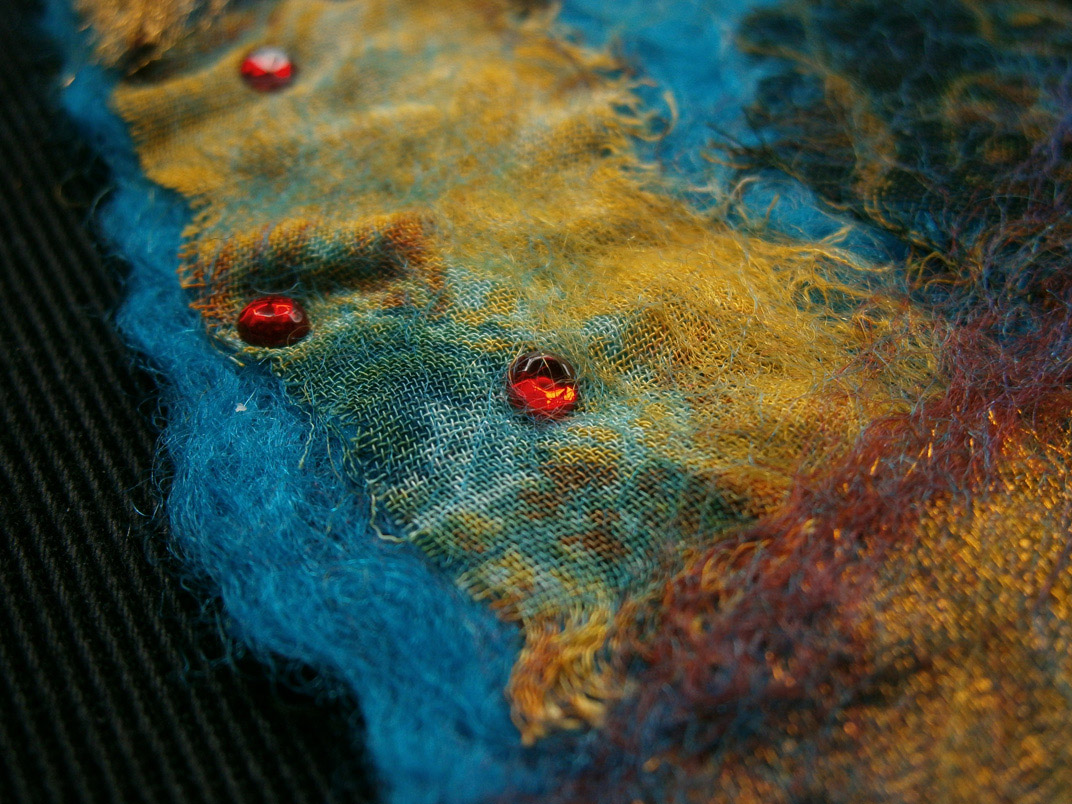
I thought I’d share a few of the fabric and fibre photos I’ve taken recently, I’ll upload them to flickr aswell in case you’d like to click on the full size images to see in even more detail. This first photo is cotton gauze and a chiffon scarf felted with merino prefelt.

This is a photo of just the cotton gauze and blue chiffon.

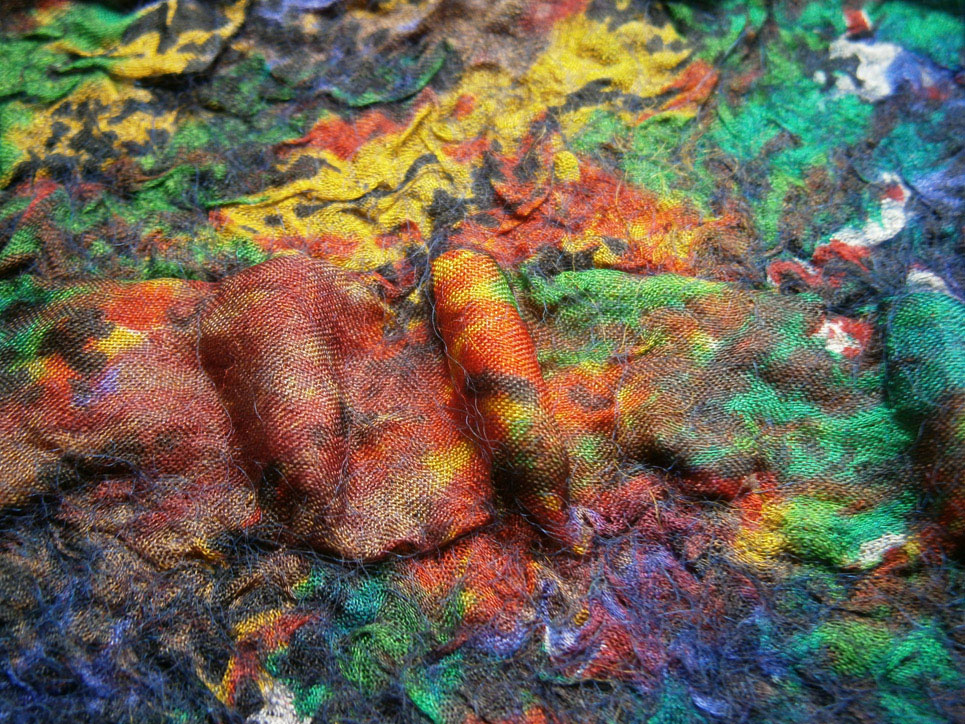
This is part of a pattern on printed cotton, it is about 55mm wide.

This is a synthetic fabric nuno felted, and some organza at the bottom of the photo.

This is one small piece of organza, aproximately 25 mm top to bottom.

 This is one piece of silk paper aproximately 25mm wide. It is taken from this piece of felt, I’ve added a note to show which square it is.

This is nuno felted silk.

This is Bamboo and Teeswater.

This last piece is blue nuno felted fabric.

I hope you enjoyed the photos, I love seeing the detail and texture of fibres, so I’d love to see your photos if you have any to share.

The Final Pear

The Final Pear

I have been busily machine stitching to finish my class homework. We are supposed to try out various methods and techniques of machine embroidery. On my personal blog, I posted the first two pears. One was done with granite stitch with instructions from a 1945 Singer sewing machine book. The second was done with mossing stitch learned from an article by Ken Smith.


This last pear was done using Carol Shinn’s technique from her book Freestyle  Machine EmbroideryShe usually uses a digital photo printed on fabric and then affixes that to a heavy  canvas. The canvas is cut on the bias to prevent excessive distortion. I decided to paint my pear instead of using a photograph. The photo above shows my painted pear. I used acrylic paint for the pear and Dye-Na-Flow paint for the background.


I haven’t used her technique for a while and I always forget how much the piece shrinks in one direction. Because all the stitches are done in the same direction, the piece shrinks in the direction of the stitching. This is the first layer of stitching that I did. I stitched vertically. You can see that the pear is getting shorter already.


Here’s the finished pear. It hardly even looks like a pear shape it shrunk down so much. I guess I should have stitched horizontally since it was already a bit squatty for a pear. Comparing all three techniques was interesting. Carol Shinn’s technique was actually the shortest stitching time. But obviously you must take the shrinkage factor in to consideration. If you want to see the other two pears, check out my post here.

Third Quarter Studio Challenge

Third Quarter Studio Challenge

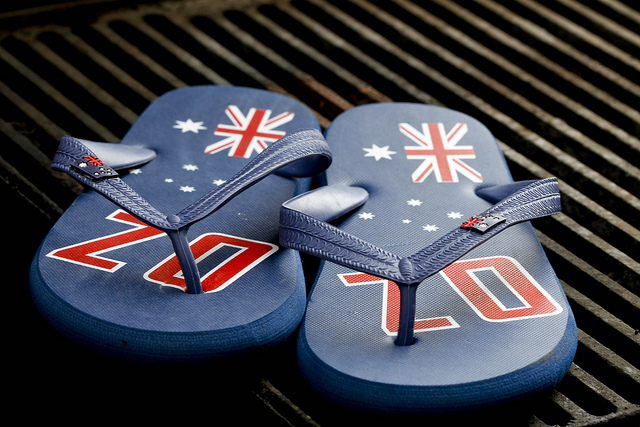
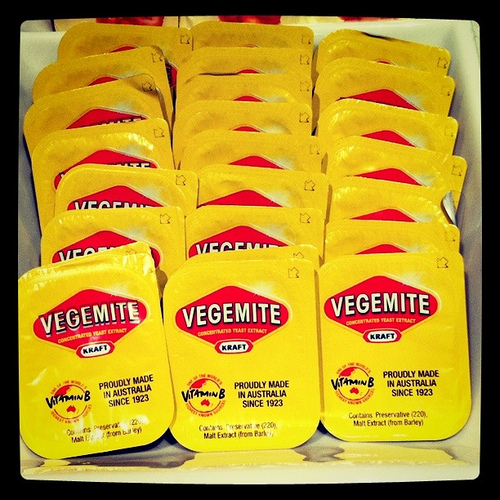
The theme for this quarter’s Studio Challenge is ‘Australia’.

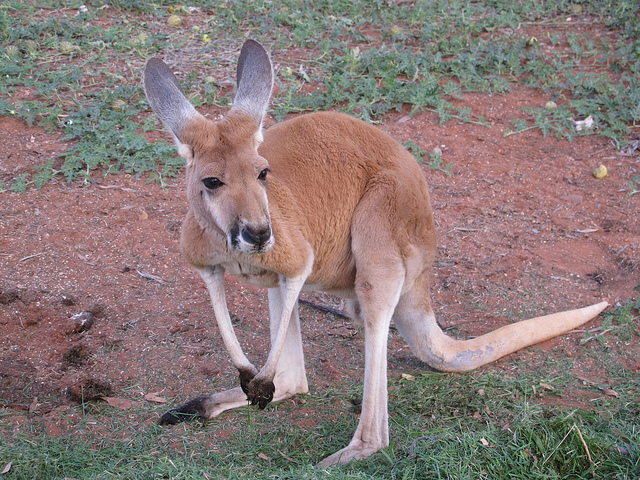
What do you picture when you think of Australia? Is it the unique wildlife like Koalas, Kangaroos or maybe the Duckbilled Platypus?

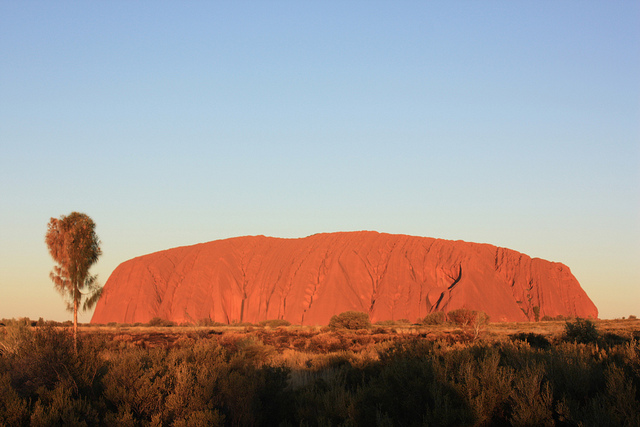
Maybe it’s the red soil and impressive landscapes?

Perhaps it’s something more political like stolen land or the stolen generations.

Or maybe it’s aboriginal art, the dreamtime or their excellent films?

We’re a bit late posting this quarter, so there’s just over two months for this challenge, but that’s plenty of time 🙂 You can use any medium you like as long as it includes fabric, fibres or felt, and it can be any size or shape you like. If you’d like to join in, please join our Flickr group and post your photos there with a tag of “Australia Challenge”. Or if you have your own blog, post about the challenge and then come back here and leave us a comment with a link so we can check out your Australia inspired piece or even just your thoughts and inspirations.

Photo Credits:

Flip Flops by Nina Matthews http://www.flickr.com/photos/21560098@N06/6729009541/

Vegemite Photo Betsy Weber http://www.flickr.com/photos/betsyweber/6091424118/

Kangaroo by Los viajes del Cangrejo http://www.flickr.com/photos/viajescangrejo/5560524886/

Western Australia by Daren CK http://www.flickr.com/photos/65449462@N00/211002531/

Pinnacles Desert Dandaragan by Ian Sanderson http://www.flickr.com/photos/iansand/3971380914/

Uluru by Jan Smith http://www.flickr.com/photos/26085795@N02/7389623936/

Invasion Day by Tali Caspi http://www.flickr.com/photos/pic-chic/6978667405/

Wrist Cuffs

Wrist Cuffs

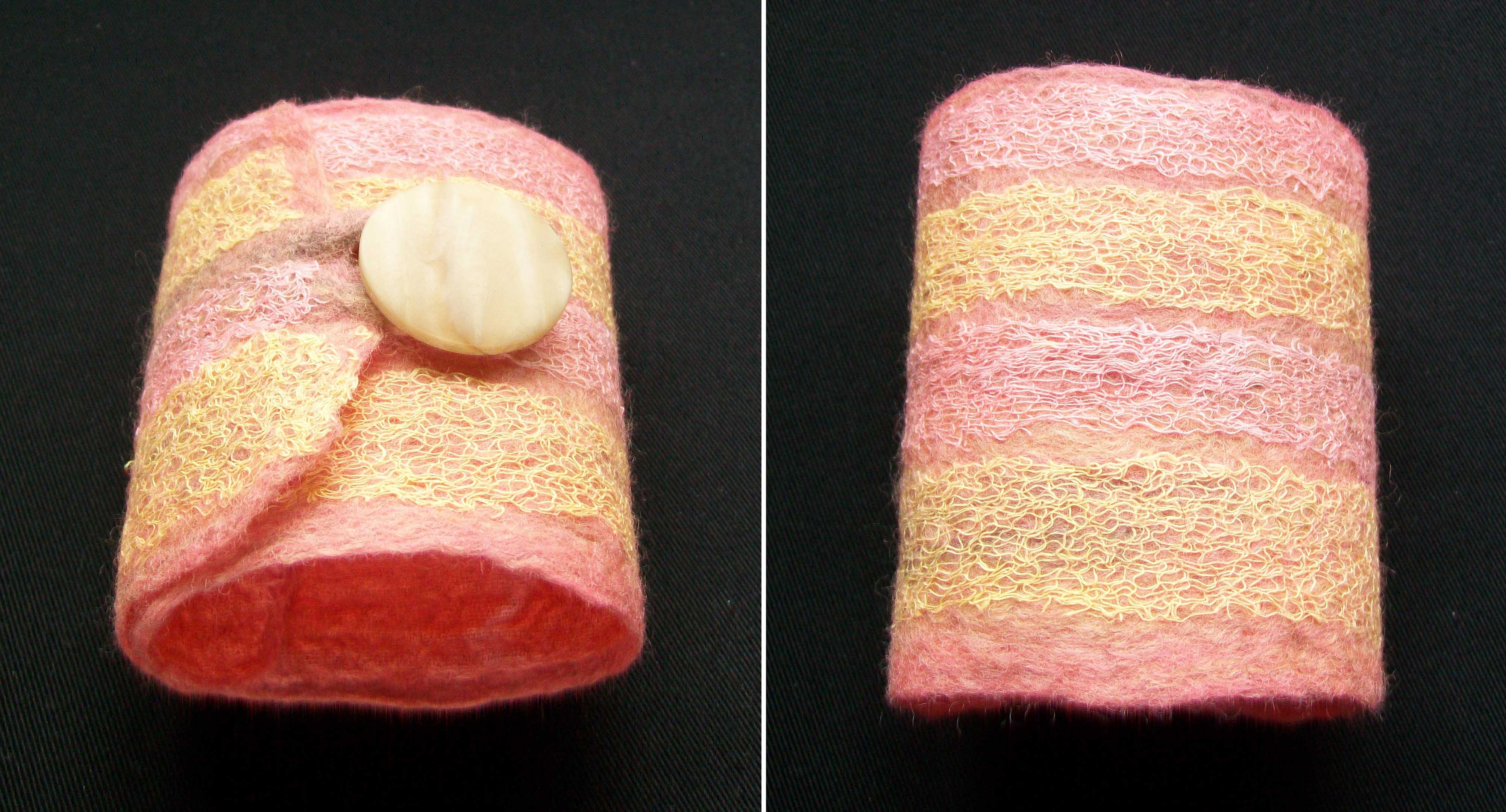
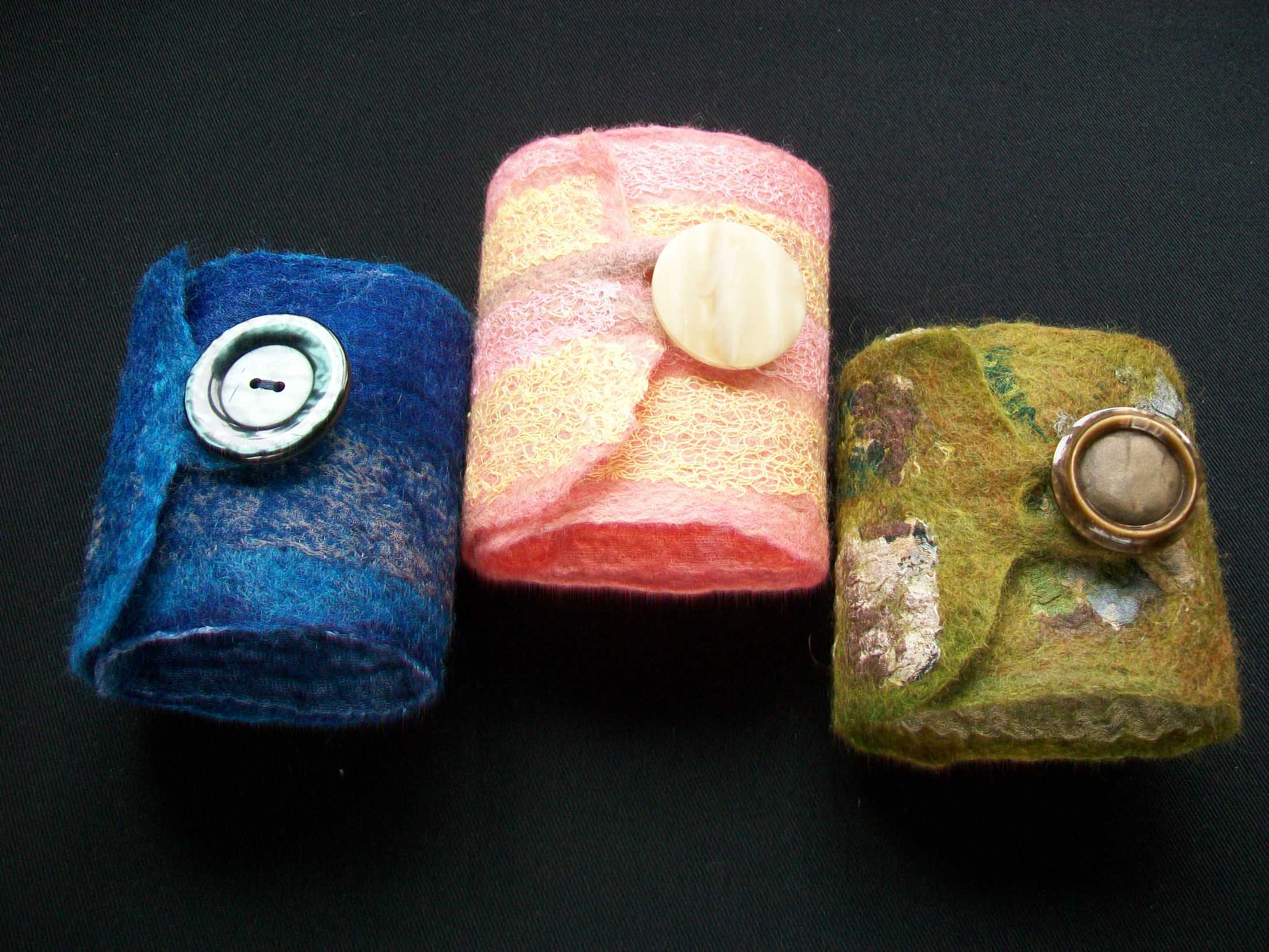
A couple of months ago, I thought I’d have a go at making a wrist cuff and really liked the results. I’ve been using a lot of fabrics in my felting lately and thought I’d try a few more cuffs with some different fabrics. The first one I made was similar to my first attempt, I used some salmon pink and lemon merino wool tops and added some strips of pink and lemon cotton gauze on the top.

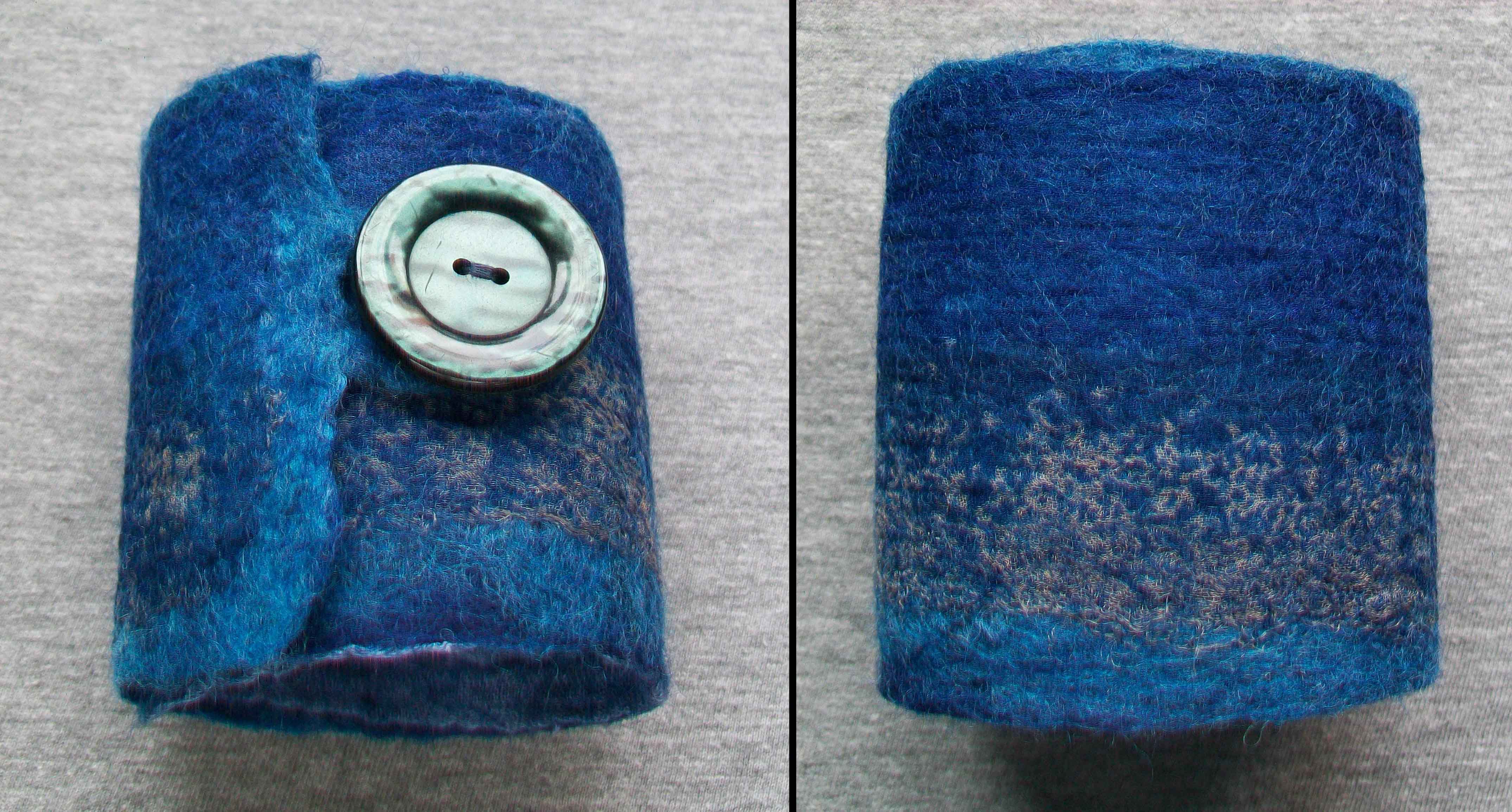
For the second one, I blended some different shades of blue merino tops and cut a strip of blue and pinky grey fabric from an old synthetic scarf.

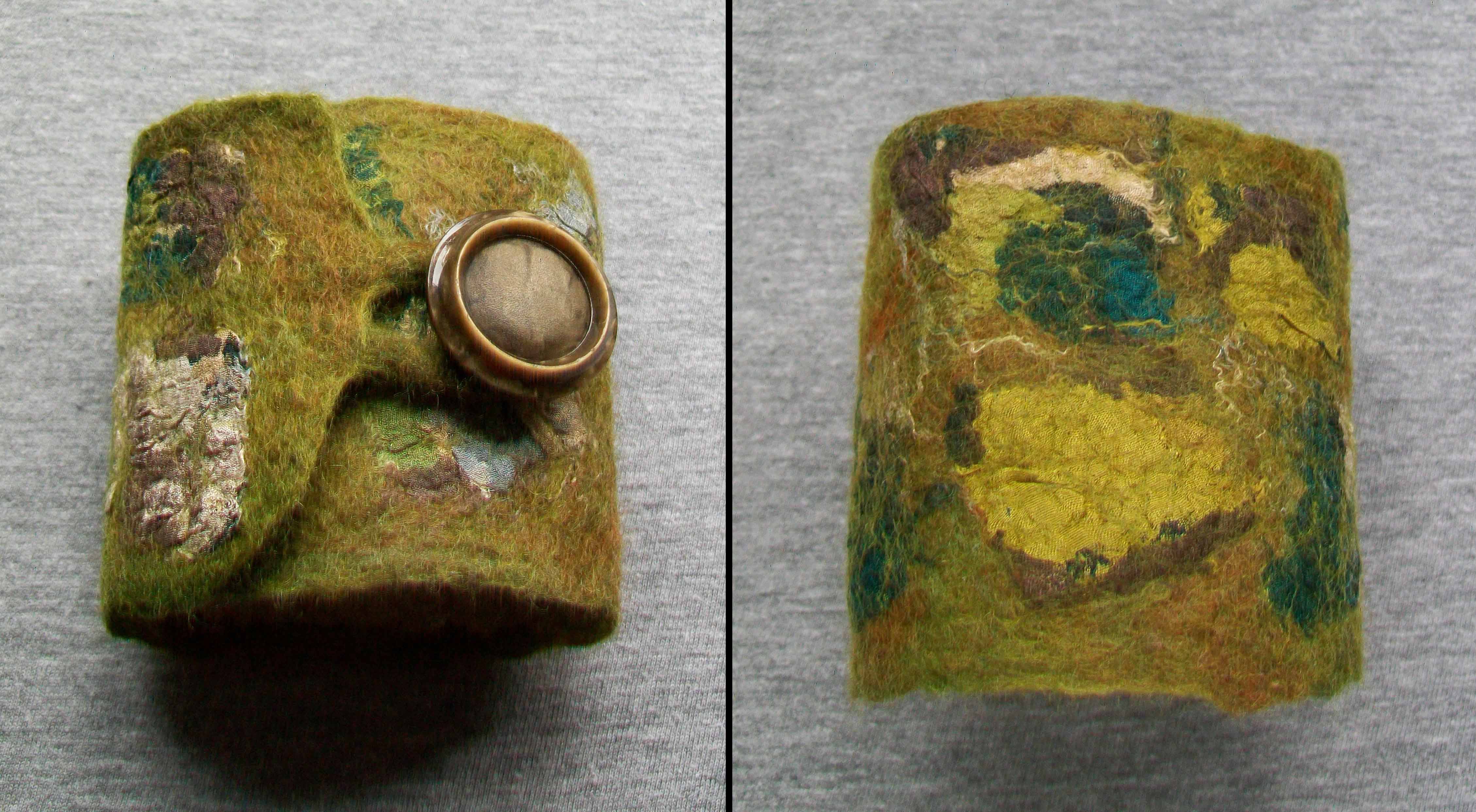
I made my third one in camouflage style by using lots of different shades of green merino and some greeny brown pieces of silk.

I really liked the way this one turned out, so I made a coin pouch to match it. It was made the same way, except I made it a bit sturdier by sewing lines down it, and then edged it with blanket stitching.

All the cuffs have a loop and button closing. I made the loops out of the same colours but just felted the centre part and left the ends fluffy, then sandwiched them between the wool layers. The buttons are all vintage ones from my collection.

What have you been working on lately? Have you tried something new recently? We’d love to hear your comments 🙂

Finding a Venue for Your Work

Finding a Venue for Your Work

There are many options for selling your work available and not all of them are the right place for what you make. It is important to find a venue that fits your particular type of work and the appropriate customers will then be able to find you and buy!

Finding your niche takes a bit of research and sometimes trial and error but if you take the time to investigate the venue, it will save you time and money in the long run. The list of venues is endless including retail shows, farmer’s markets, wholesale shows, galleries, specialty shops and online venues. Think about your best customer and where that customer might visit either personally or online.

Do you make small needle felted dogs? Perhaps you should think of visiting locally owned dog or pet businesses and seeing if you could sell your work there or even just put up a flyer. The pet business in the US is big and continuing to grow. People love to spend money on their pets. Or maybe you could put flyers and samples up at the local humane society or veterinarian offices. There are also dog shows and other dog sporting events that might work as a venue for you.

If you make high end felted clothing and accessories, your local farmer’s market might not be the best venue for you. Find a high end craft show or sell your work in galleries. Trying to sell your work where others are selling pieces for $20 and under doesn’t present your work in a good light. People are expecting low end type items at a farmer’s market. If you sell felted soaps, cat toys or small, inexpensive felted items, the farmer’s market might be the perfect place to sell your work.

Do you make pieces that have a spiritual nature? This could be anything from using symbolism in your work to using spiritual sayings in some way. Think about approaching shops that carry “products for the mind, body and spirit”. There are specific magazines and journals for every type of industry. Advertising in this type of journal might be a more direct approach then advertising in a magazine that is less specialized to your niche. For an example, check out Retailing Insight.

I’ve talked about this before, but always check out each venue carefully before taking the plunge. Go to local craft shows and see what others are selling. Talk to the other artists and vendors and get their opinion of the show.  See what kind of advertising and promotions that you see being done for each show. It is especially important to be prepared before trying a wholesale show. These are usually major investments of time and money and I have heard of newcomers not selling anything at all at their first wholesale show. Do you have that kind of money to invest without any return? I don’t want to scare you away but research and preparation will increase your odds of getting sales if you are in the right venue.

Online venues are an entirely different aspect of selling your work. There are many options and again, the important this is to do your homework. Check with other people who are selling online and see what venues they like the best and why. Putting your work in an online venue doesn’t mean you put up your photographs and buyers come. It takes a lot of work and promotion to get people to see you in that vast sea of sellers on the internet.

So keep working on finding that perfect niche for what you make. If you try a venue and it doesn’t work, what did you learn from the experience? How can you apply that lesson with the next venue? It’s not a failure, just another learning opportunity.

A Peek Into my Homework Sketchbook

A Peek Into my Homework Sketchbook

For my class homework this time, I am working on sketching botanicals and then stitching them on various fabric bases with free motion stitching on the sewing machine. Some are supposed to be black and white and some painted after stitching. I thought you might like a  peek into what I’ve been doing.

This slideshow requires JavaScript.

The Complete Photo Guide to Felting

The Complete Photo Guide to Felting

I just got the news that my book has arrived at the warehouse. (Much hopping up and down and waving of arms in the air going on here.) The publisher is now in the process of filling all pre-orders, so if you pre-ordered yours, it should be arriving soon.

I checked on Amazon but it still says pre-order on their site but if you order the book there, I’m sure you’ll get it soon. I am in the midst of planning promotional activities and a couple of local book signings so if you’re in my area, I’ll be announcing those events soon. I am really pleased with the book and hope you will be too!

If you’d like to order a signed copy of the book, I will soon have a way for you to do that from my blog. So more announcements to come!

Dyeing Cotton Fabrics

Dyeing Cotton Fabrics

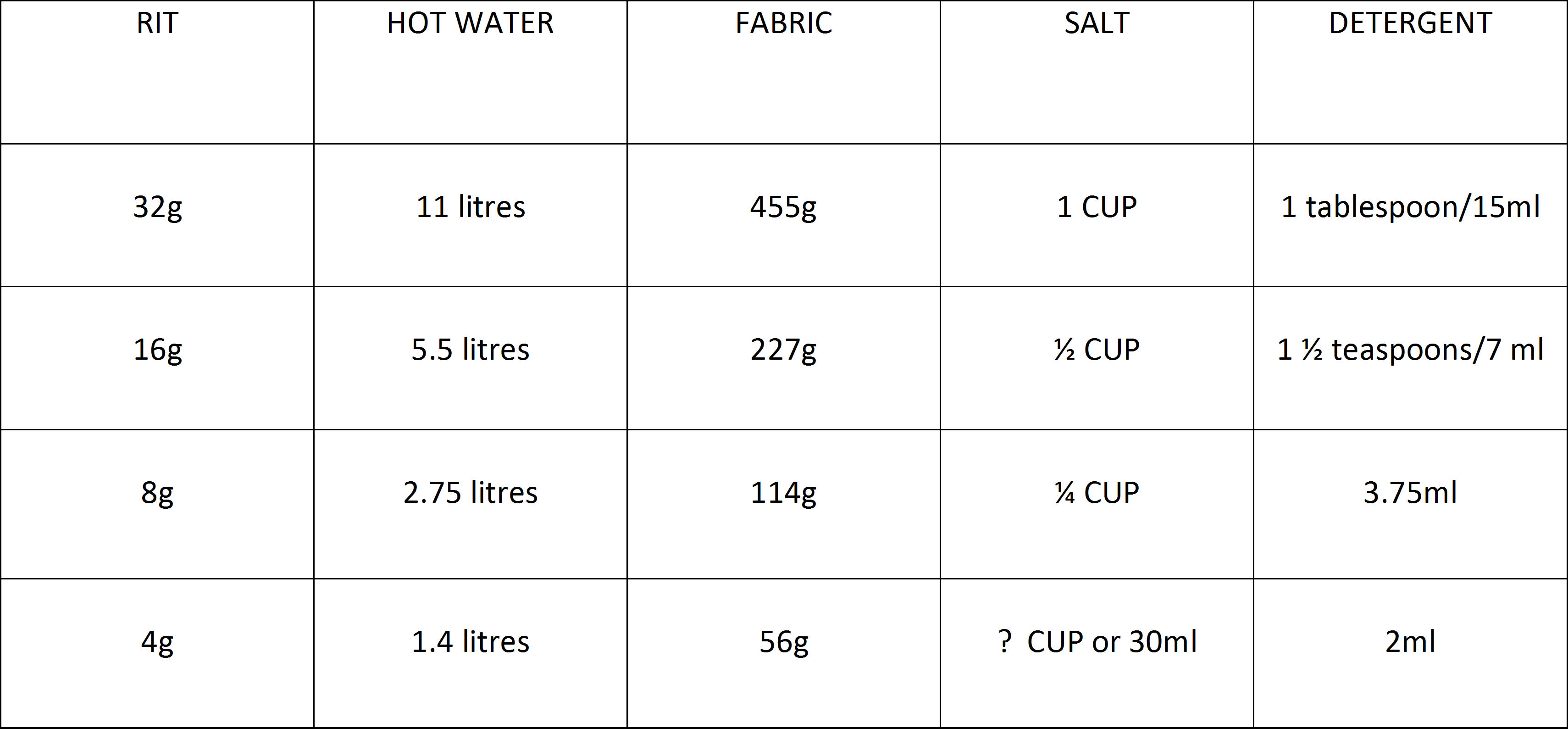
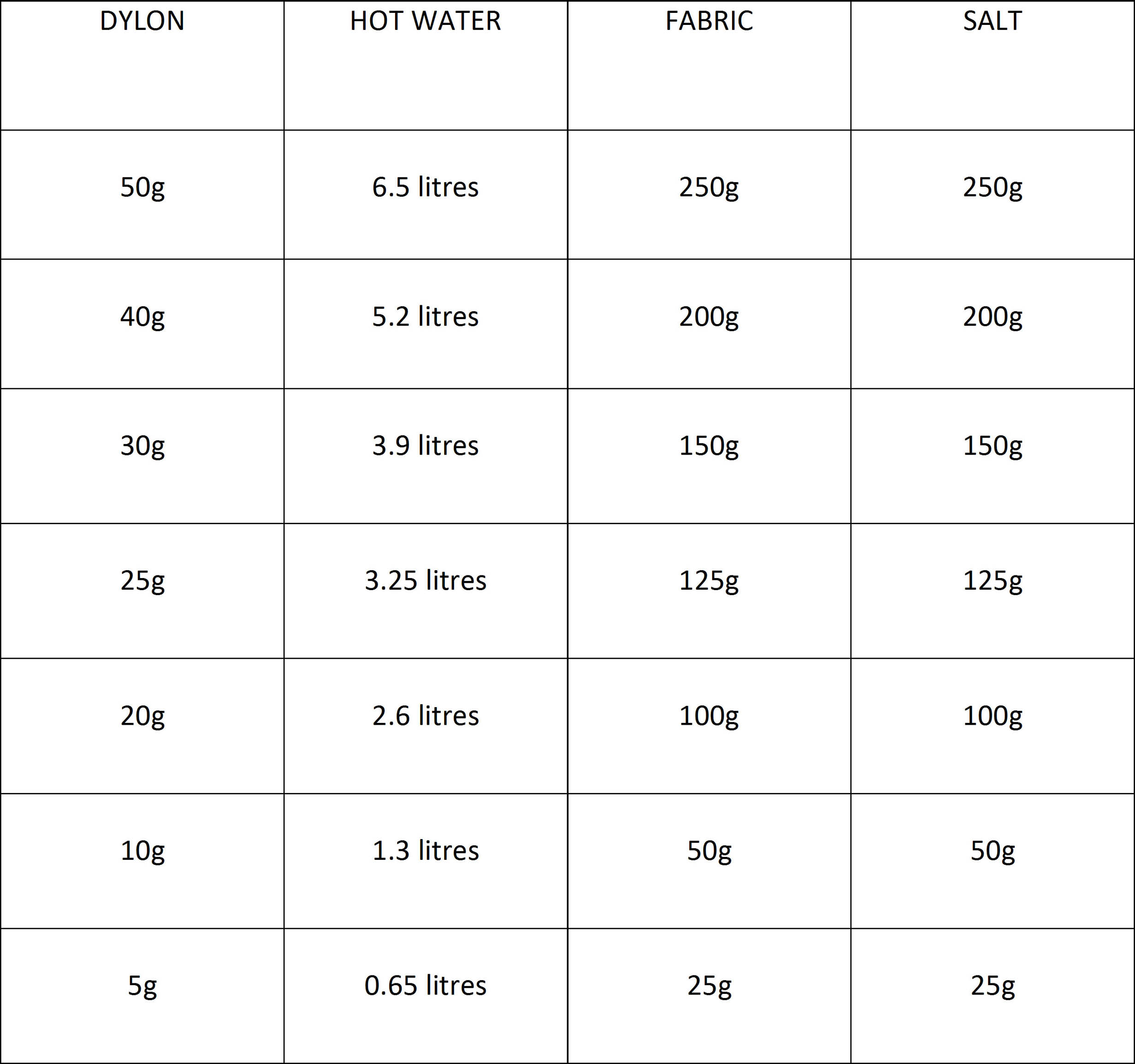
A few weeks ago I decided to dye some of the cotton fabrics I was using in felting: Cotton Gauze, Cheesecloth, Muslin, a few lightweight cottons and some cotton/synthetic mixes. I started out using some Scarlet RIT dye and I was really pleased with how easy it was to use and how well the colours turned out. I used the ‘Hot Water in a bucket’ method. I weighed the amount of fabric I had and then ran some really hot water into a bucket and measured out how much I needed. I poured this into the dyeing bucket, saving a little in a jug to add to the dye I’d measured out  into an old glass jar. I added salt to the dyeing bucket, then poured the dye solution in, and gave it a stir around. The instructions had said to wet the fabric before adding to the dye bath, so I’d put the fabrics in the other bucket while I prepared the dye bath. The instructions said to stir constantly for about 30 minutes until the desired colour is reached, but I just stirred occasionally. I also added fabric at different stages or tied/scrunched to get different shades/effects. Using the instructions on the RIT packet, I made some calculations for dyeing smaller amounts of fabrics and used this as a guide for dyeing the fabric a medium shade.

The second dye brand I tried was Dylon, I bought the 50g hand dyeing pack. I used to buy the Dylon Multi purpose dyes years ago, they were meant for using in a pan on the stove, but gave excellent results just using hot water in a bucket, so I expected these Hand Dyes to be really good. The instructions were pretty much the same as for RIT except no laundry detergent was used. I bought a dark brown so that I could add fabrics at different stages and get lots of gorgeous natural looking shades. What I actually got was a load of fabrics all very much the same pale shade of beige 🙁  I think I would have got richer colours using tea or coffee. I made some calculations for dyeing smaller amounts of fabric for the Dylon too, though I’m not sure I’ll use it again.

The next time I dyed some cottons, I used a RIT dye again, Navy Blue. I was really pleased with the way those fabrics turned out too. I even dyed some egyptian cotton top, which turned out nice, the photos didn’t though 🙂

Do you have a favourite dye for cottons or maybe a favourite method? Do you have any hints or tips to share with us? We’d love to hear your opinions. Click on the pictures for bigger images.

Guest Artist

Guest Artist

Our Second Guest Artist to be featured on the Studio site is Rachelle Gardner, a mixed media artist originally from Kansas City, Missouri, now living in Mission, Kansas, USA

Felting 3, 2, 1
Q-3 Three types of fibre you can’t live without?

Thread, of any kind, which I don’t know counts as a “fiber,” but it’s hard to make lace without it! I also keep a stash of dyed and natural Shetland wool around at all times, as I never know when I’ll need it. The third is admittedly, a toss-up between angora or silk fiber for use in detailing and accents.

Q-2 Two tools you use all the time?

My sewing machine, a new one that was partially funded by the Arts Council in my area, and water soluble stabilizer. I still feel like I’m just scratching the surface of possibilities with this material. 

Q-1 One fibre art technique you love the most? 

I am amazed at what water does to these materials. Both in wet felting and in working with the water soluble stabilizer, the utter transformation that occurs is symbolic to me. It impresses on me vital nature of water; it’s power to sustain us, it’s power to cleanse. It also reminds me of the concept that individual consciousness is like a drop of water in the ocean of universal consciousness. So, in short, I love working with water!

How did you get into fiber arts?

My path to the fibers arts was long, slow, but I think inevitable. When I was in high school, my parents adopted three Shetland sheep, which I, as a teenager, thought was most “uncool.” Eventually, I recognized my mother’s talents as she picked up every bit of the process of raising the animals, shearing, cleaning, dying, spinning, knitting, designing the patterns, over and over again, until it was finally time to say goodbye to the dear creature that provided so much over the years. And I can’t tell you how much time my father spent on fencing! So I eventually began picking up things here and there, and felting was my first interest and attempt at the fiber arts. While I consider myself a mixed media artist, I often work with felt or wool fiber in some way. 

Did you study art at college?

No! My degree is in interior architecture and my first job out of college was working as an apprentice at a small mom-and-pop wood shop building and designing custom furniture. But soon enough, the call of the fine arts drew me back. 

What you working on at the moment?

Right now I am preparing lace samples in preparation for studying at The Anderson Ranch Arts Center in Colorado. There I will learn how to cast large scale fabric sculpture. I’m interested in creating large scale lace sculpture exhibitions in art centers in my city and cities around me. This has been a project long in the making with support from the Anderson Ranch Arts Center, The Arts Council of Metro Kansas City, and hopefully people who love lace as I’m in the last few days of crowd-sourcing project funds through an online fundraising platform. I’d have to say it’s the most involved project I’ve yet to embark on.

What do you like to do when you aren’t creating art?

Yoga is my other main passion and I am a certified and registered yoga teacher. Between my day job, making art, and teaching yoga, whatever time is left is spent with my boyfriend and our 14-year old rescue kitty, Ellie.

Many thanks to Rachelle for taking the time to answer our questions, and share her work and enthusiasm with us 🙂  If you’d like to see more of Rachelle’s work, please visit her website www.rmgardner.com and her blog http://rmgardner.wordpress.com/ .

If you’d like to find out more about Rachelle’s adventurous project turning 2-D lace work into large 3-D sculpture,  visit her Aspen Project website, there’s even the opportunity for you to be involved and help with the costs of the project. Everyone who helps out receives a credit and also a reward of beautiful unique artwork, made individually for each person. But hurry, there’s less than a day left for that.

Fun at the Medieval Fair

Fun at the Medieval Fair

Last weekend I was a vendor, along with a friend at tour local medieval fair. People have asked to see my outfit so here is the only picture I managed to get. It’s not very good I will try to get a better one and post it on the Forum, http://feltandfiberstudio.proboards.com/index.cgi?

Dressed up for the fair

Here is the booth we had. I did take the felt pouches I blogged about earlier and some shawls. We had bloomers and headdresses like I am wearing as well as Mayday style ones.

Booth

There was a camp to show medieval life. They were supposed to be on their way home from a battle.

Grinding wheat for bread

The event isn’t strict about time period or even staying historically correct so we had pirates too

Friends

and for the more adventurous a chain mail bikini.

chain mail

All in all it was a fun weekend. Now I hope to have time to do some experiments with felt.