Naturals and Dyes
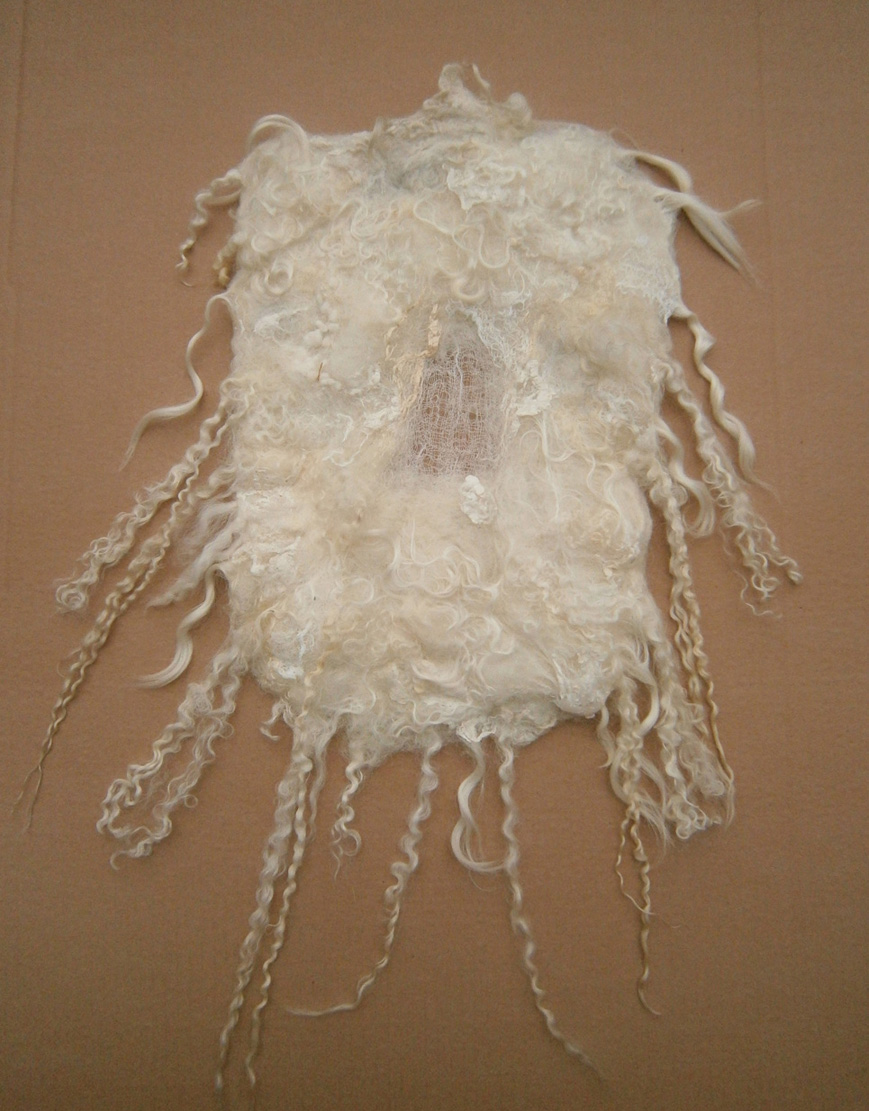
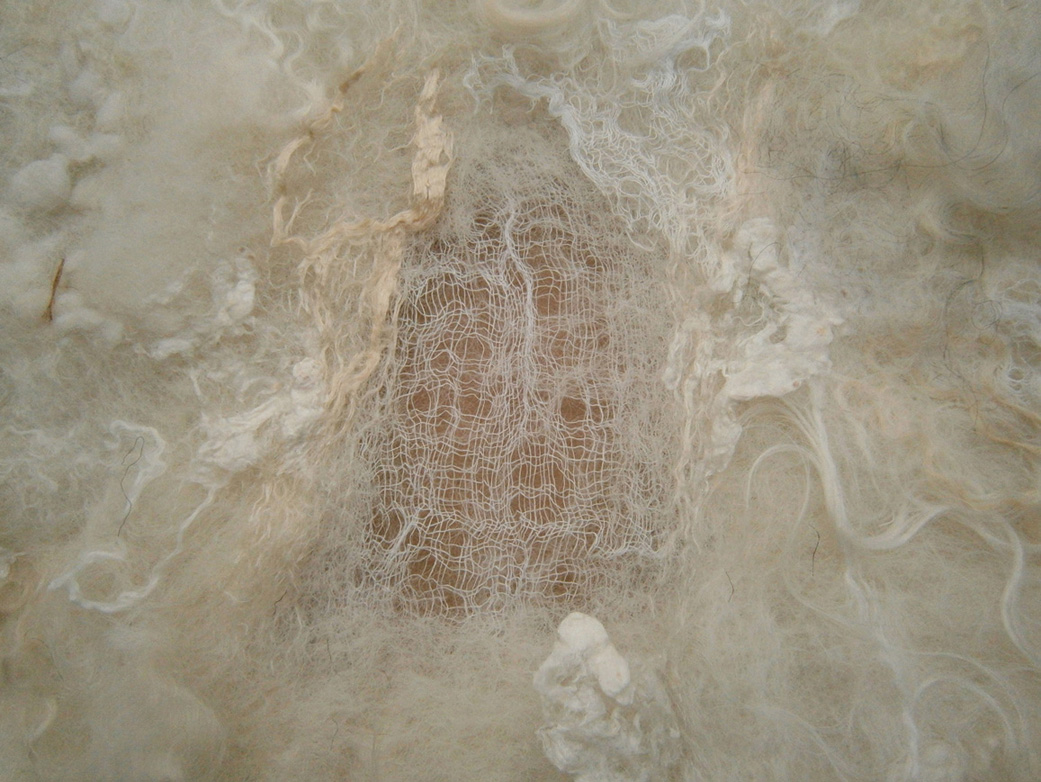
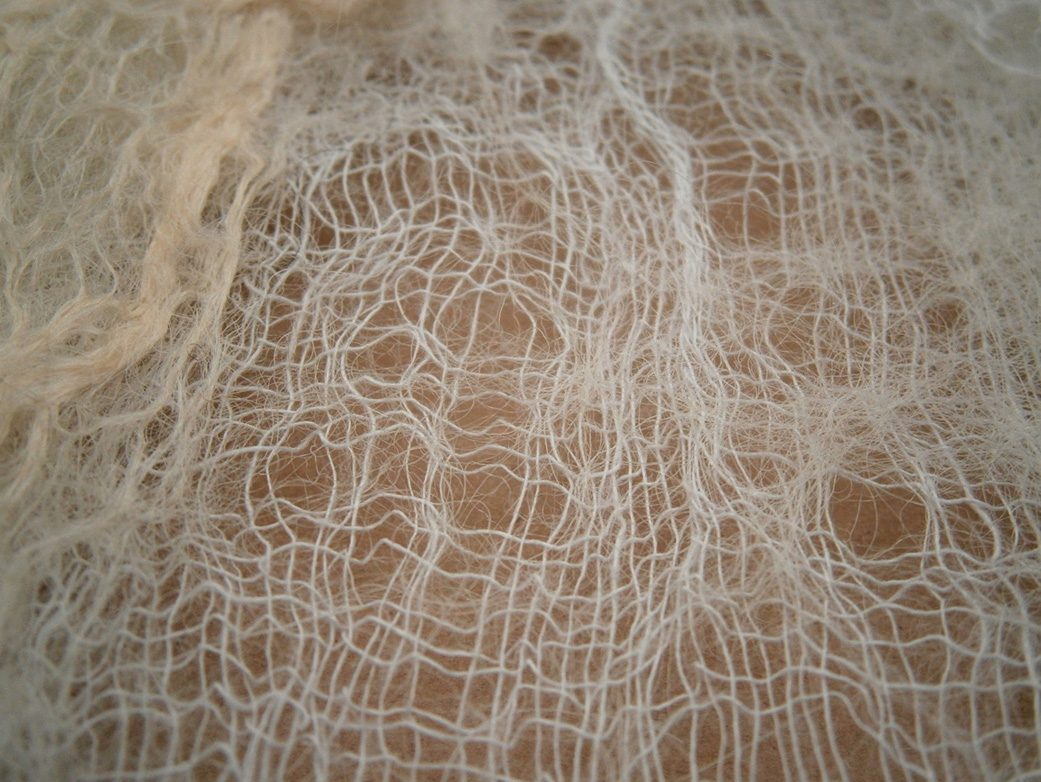
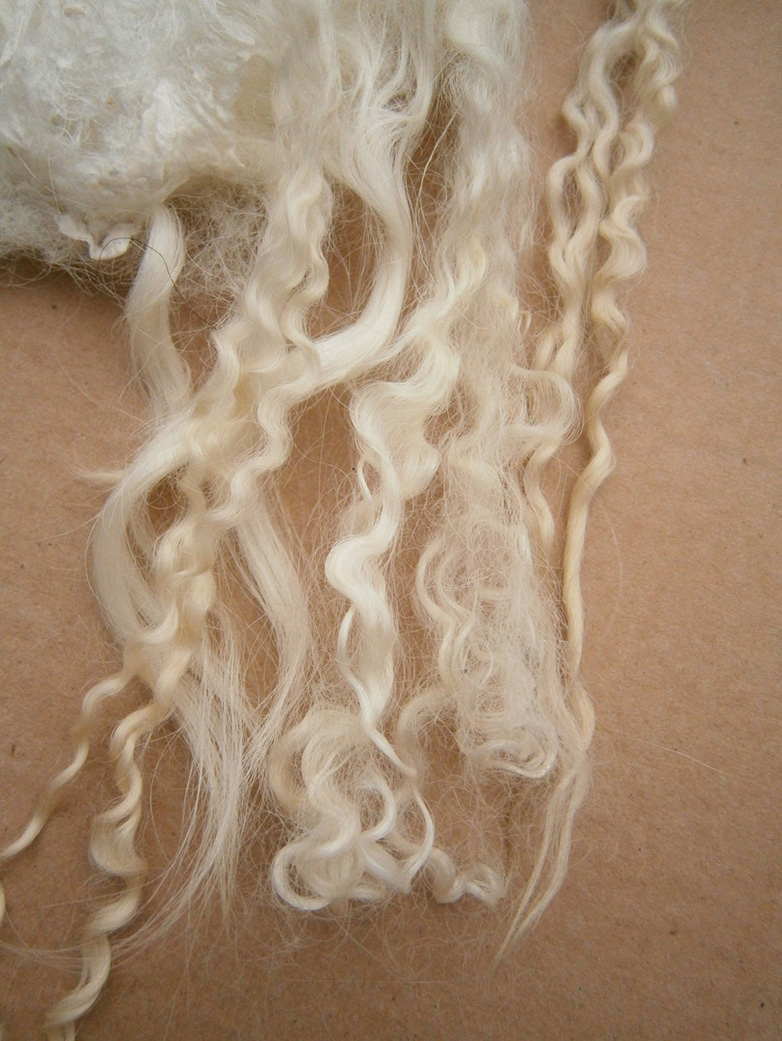
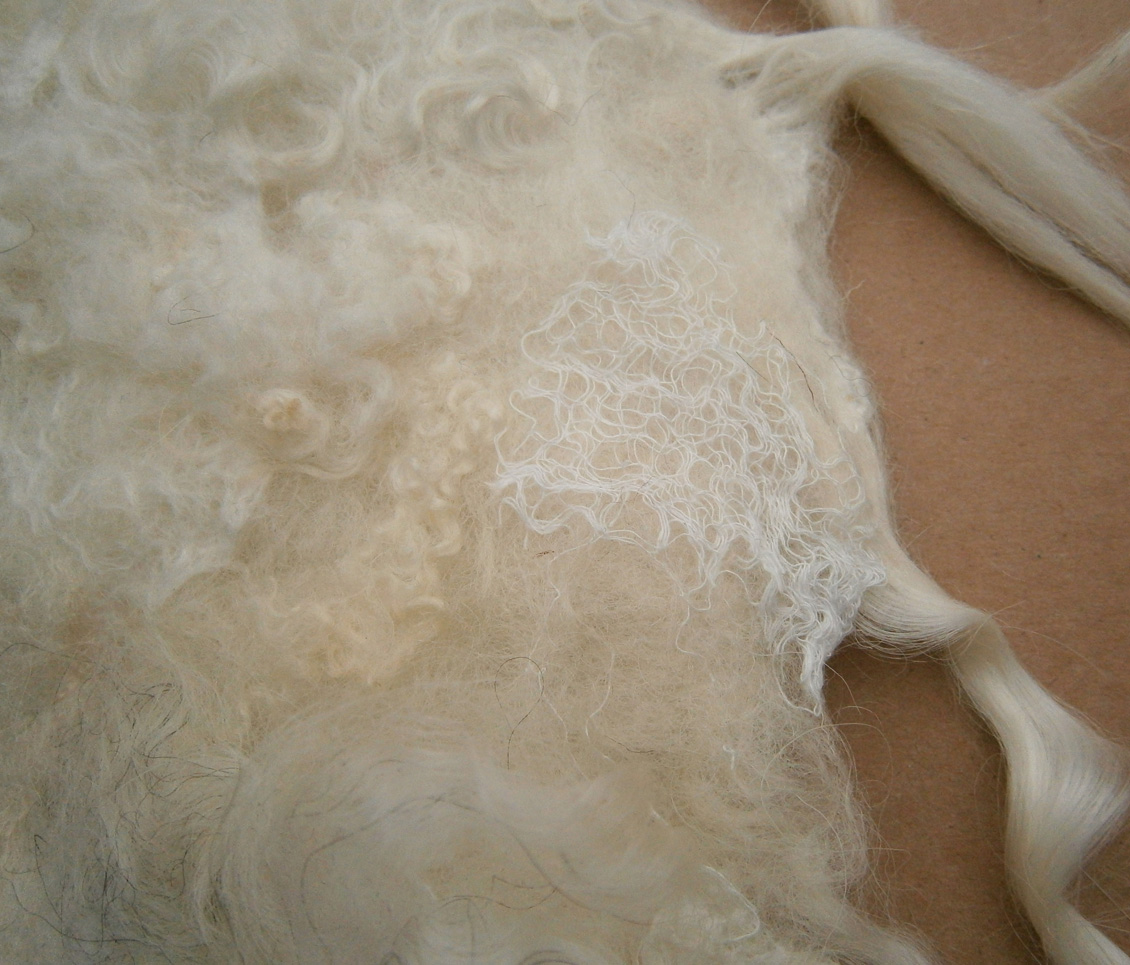
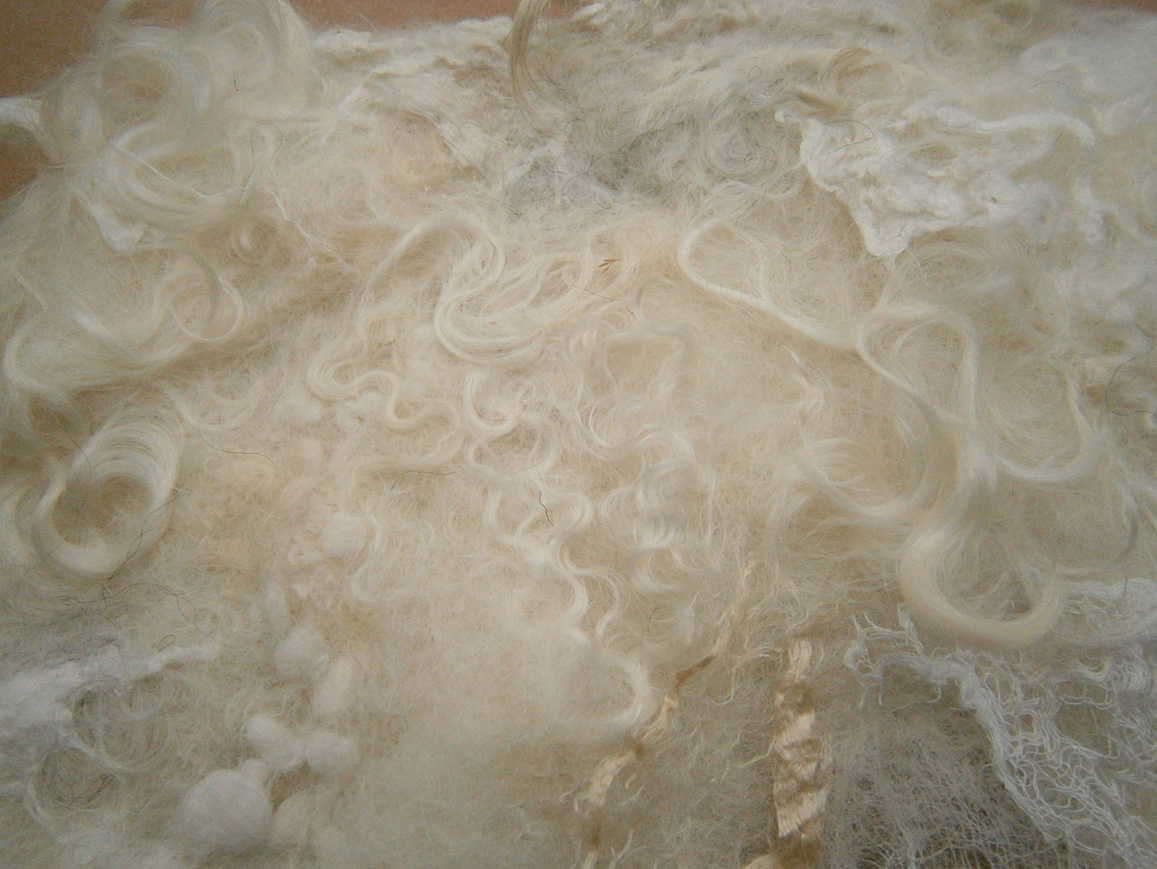
I laid this wall hanging out about a week or so before I got time to felt it, and I think it ended up being ‘upside down’. I wrote down the wools and fibres I used as I laid it out, but I think I forgot a few! Also, I added a few locks to the bottom just before I felted it, but I’m certain that was originally the top:
 I added some pieces of hand-spun yarn I’d made mostly from bits left over from carding, I spun them quite thickly, and didn’t do anything with them after wards, just wound them onto card. This one is on the row of white Chubut, a ‘new’ to me wool I got from wollknoll, which felts so nicely and looks really nice too.
 These are some cotton fibres: cotton top, cotton fibre and cotton nepps on carded Portuguese Merino, with some soy staple and carded Gotland.
 I’ve been dyeing some cellulose fibres recently too for taking to the Makefest at the Science and Industry Museum. I’m getting the hang of it now, but I don’t think my first lot of fibres turned out as nice as I’d like. I did some Viscose fibre recently, and this turned out really nice. These are some of the reds, oranges and yellows:
 And some yellows, greens, blues and purples:
 I don’t like the way dyeing cellulose fibres wastes so much water with the rinsing, but it is easier for me to do large amounts than it is with acid dyes, not that I had much choice, even mixing up just 500ml each of red, yellow, blue and black was more than enough to dye about 200g of fibre and I had to look for other things to dye so as not to waste it 🙂 I tried dyeing Kapok fibre too, that stuff is practically impossible to wet, it seems to form a ‘skin’ around itself, so dyeing gave some interesting results as it behaved the same way, and when the fibre was separated, the centre wasn’t dyed. This is some rose and lilac coloured kapok: