Browsed by
Tag: photographing felt

Tips for Taking Photos of Your Fibre Artwork

Tips for Taking Photos of Your Fibre Artwork

This is a guest post by Dani D. Thanks Dani for your photography expertise!

Part 1 of 3: Telling the story

Hi! I’m Dani and this is my first post here, though 2024 marks my 20th (!!) year of blogging. I started blogging about raising my family, and then about photography. Now that my kids have grown up, I’ve moved my bloggy thoughts to a new home at Curious Crone, so feel free to come visit me there some time. 

Ruth generously invited me to share a few tips about digital photography and I had so many thoughts it turned into a trilogy. Today, we’ll talk about telling the story and basic tips on using your smartphone to take better photos of your fibre projects. In later posts, we’ll talk about the two most important factors that will affect your photos: light and colour.

In many ways, taking photos of your fibre arts projects is easier than photographing humans. The fibre art doesn’t stick out their tongue when mom is not looking (this happens rather a lot in my family photography business) nor do they give that tight-lipped fake smile while stage-whispering out of the corner of their mouth to the other subjects in the photo “if you don’t behave for this photos I will take away your devices for a year!” 

First, a few words about smartphones and apps. For this post, I’m thinking mostly in terms of taking pictures with your phone. There are two terrific free apps for editing photos: Google’s Snapseed and Adobe’s Lightroom. (And yes, you really should edit your images to polish them – it can make all the difference in the world.) I use Snapseed on my iPhone and Lightroom for editing dSLR images on my Mac, but there’s a great version of Lightroom as a mobile app and as an online editor. Both Snapseed and Lightroom mobile apps are available for iOS and Android. Did I mention free? 

As every photography teacher will tell you, getting the image as right as possible before you press the shutter saves you time and effort at the editing stage. So whether you’re taking photos of a wet-felted vessel or your adorable two-year-old nephew, take a second before you click the shutter and think about the following things: 

  • Is the background clear of clutter? 
  • Do other elements in the frame complement or compete with the subject?  
  • What story am I trying to convey?
  • Would a different perspective tell a different story? (Try shooting looking up at the subject, looking down at the subject, zoomed in to fill the frame, zoomed out to show something as small in a large background, shoot down from overhead, shoot at eye level, shoot super close to illustrate a fine point of detail.)

If you start thinking in terms of the story you are telling, your photography will improve immensely. In fact, as a successful licenser of stock photos to Getty Images, I’d argue the story is more important than the technical criteria of the photo. Every successful image should tell a story, whether it’s about the texture of the piece or the shape, the colours or the light. The photo is not just a static thing, it’s an invitation to interact with your creation or your creative process.

Collage of photos showing variety of fiber art tools, artwork and supplies.

How do you begin to tell that story? Don’t just snap the photo as soon as you have your subject trapped in the viewfinder – compose your image deliberately and thoughtfully. For more tips and ideas around how to compose your image, search up ‘rules of composition’ for ideas like leading lines, rule of thirds, etc. 

Here’s an example of me finding the story I wanted to tell. First photo, basic spindle and wool. Not very interesting.
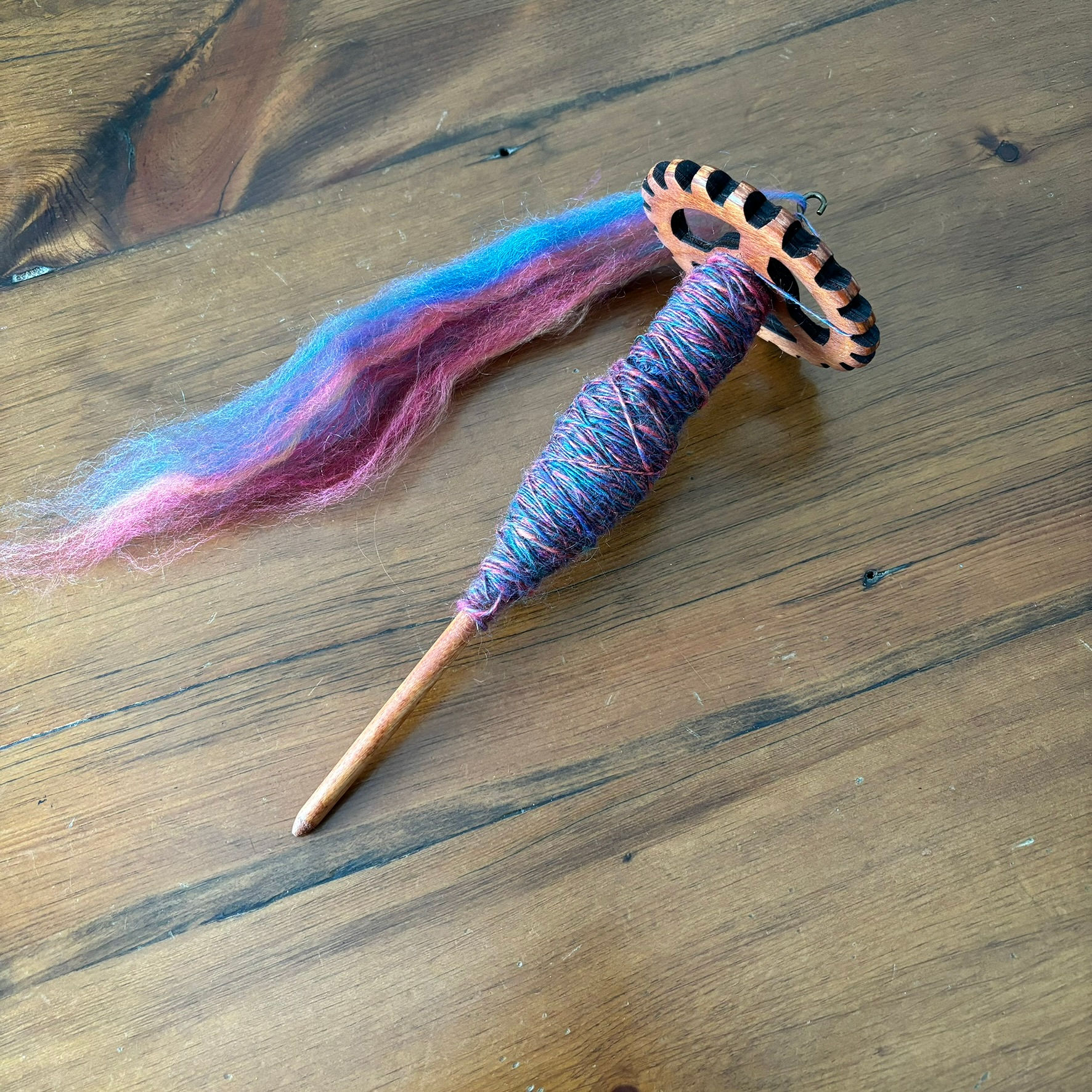
Drop spindle with blue and purple handspun yarn on wood background.

What if I added some fibre to flesh out the photo? Nope, too busy. Background is distracting focus from the subject.
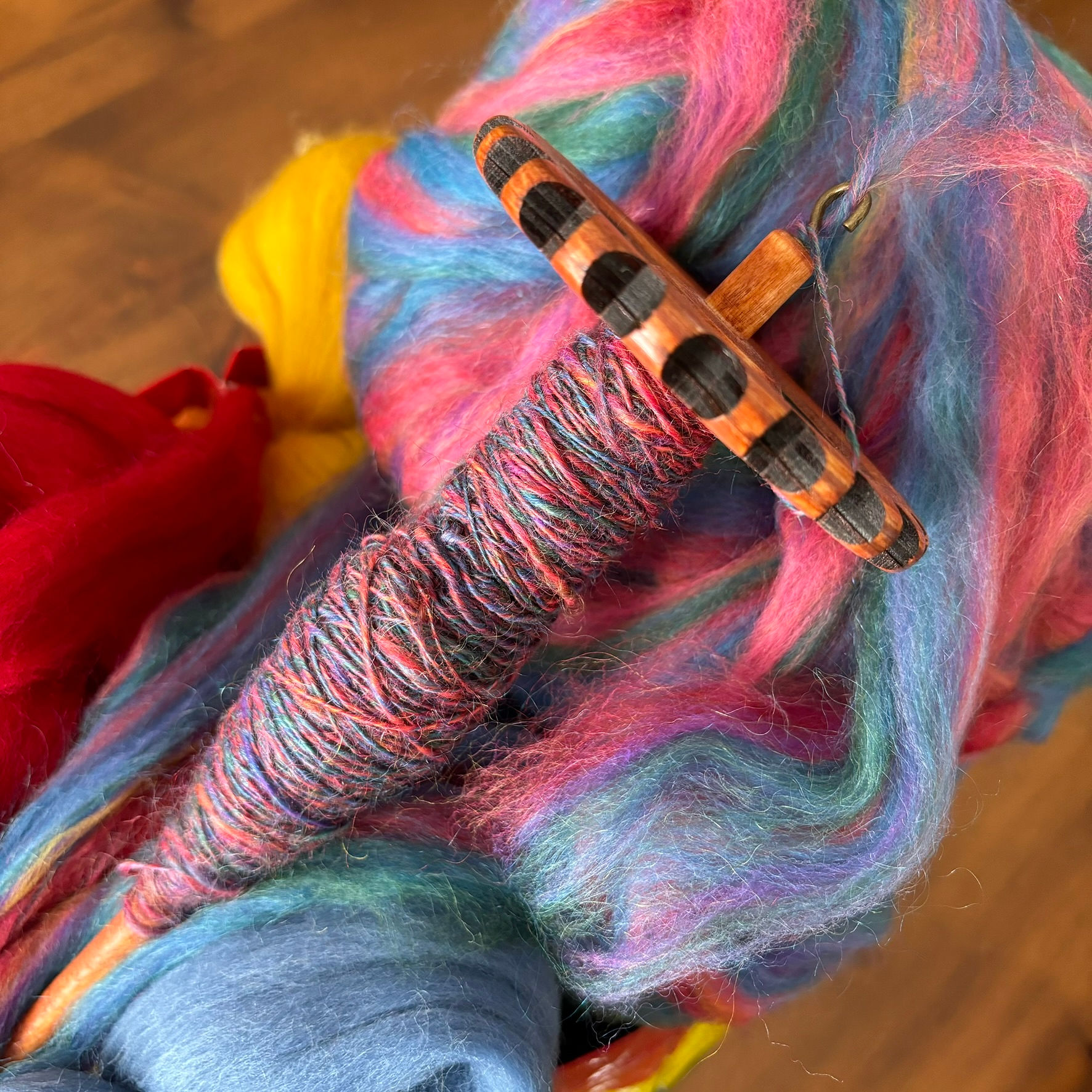
Drop spindle with blue and purple handspun yarn on wood background.

I love this blue mason jar. I could use it to stand the spindle up for a better angle. Except the background is too cluttered.
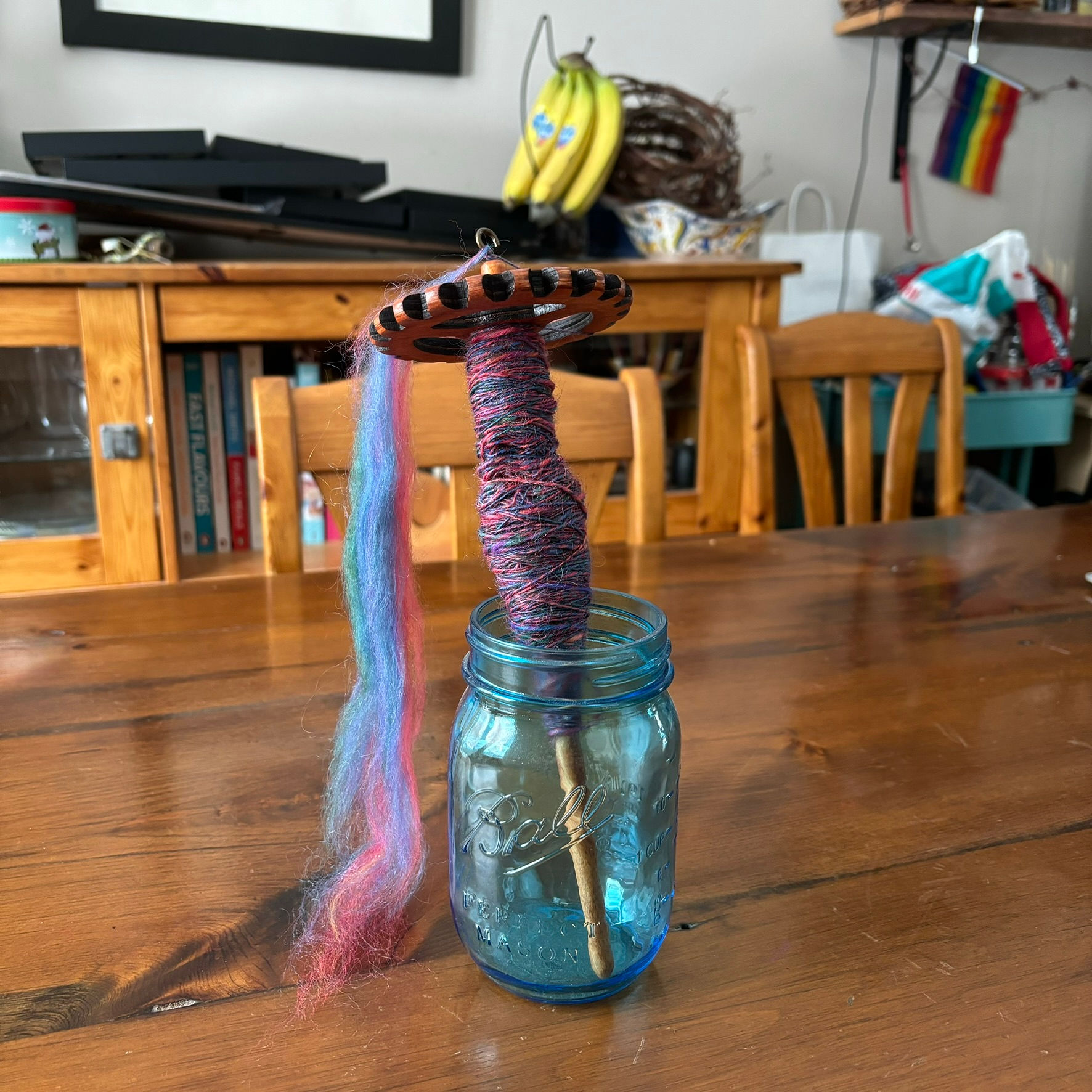
Drop spindle in blue mason jar on wood floor.

I’ve zoomed in and am playing around with the perspective.

If you’re making photos for an Etsy or other online shop, think about setting a mood with props and building a little tableau. An old piece of barn board and some cream linen evokes a sort of farmhouse chic mood, where a cup of coffee and an aloe plant set more of a lifestyle vibe. Just keep in mind that you want accessories to compliment your subject and not compete with it.

This is my kitchen floor, after a quick swipe to remove crumbs and pet hair. The first thing I noticed in the first photo was the seam down the middle of the wreath, which is a distraction. I played with the angles a bit but didn’t love any of these.
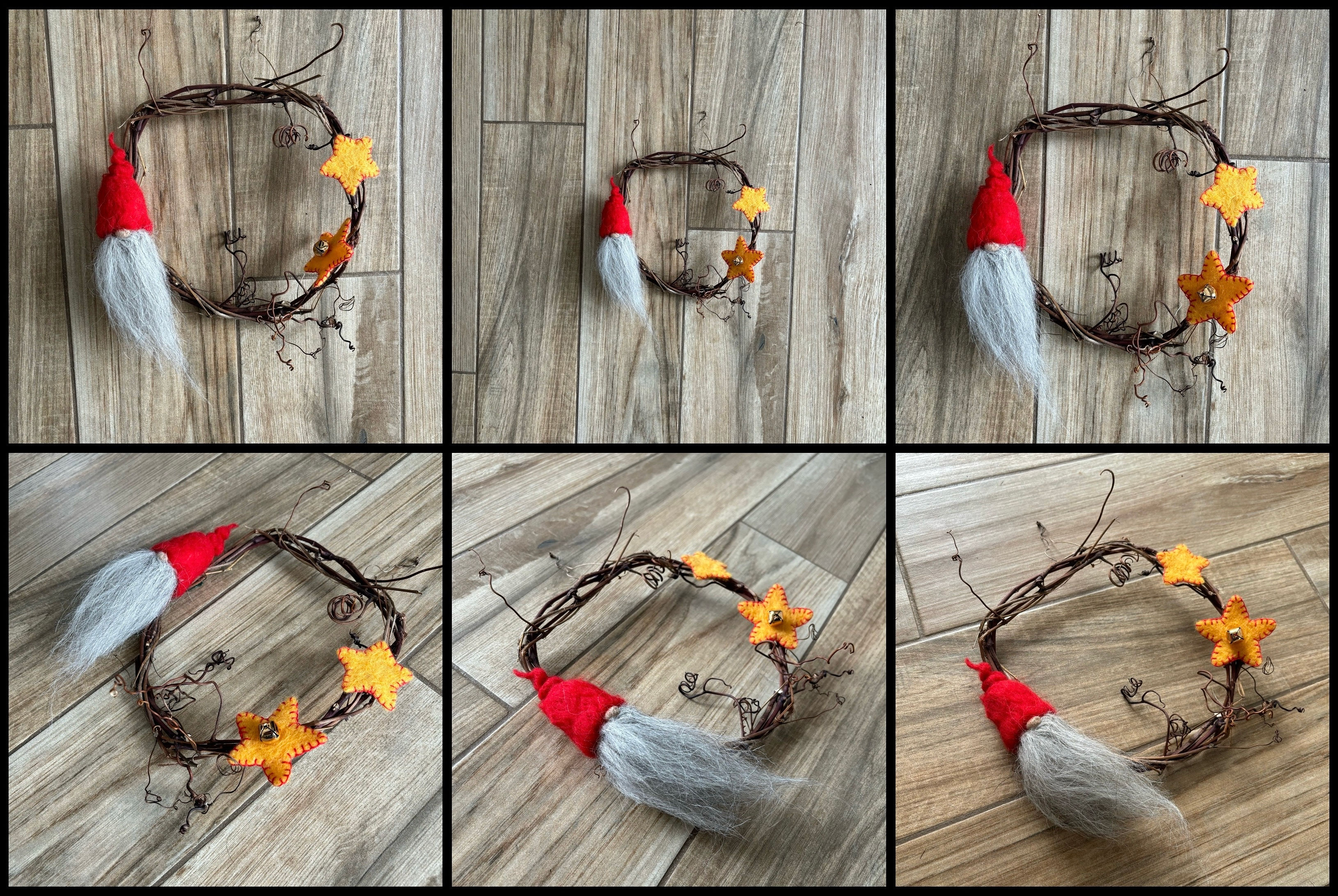
Collage of different photos of Christmas wreath on wood background

I pulled some loose wool and tools in to tell a bit of a how-to story. I liked that much more.

Collage of different photos of Christmas wreath on wood background

These last two photos show the difference editing can make. The first is straight out of the camera.
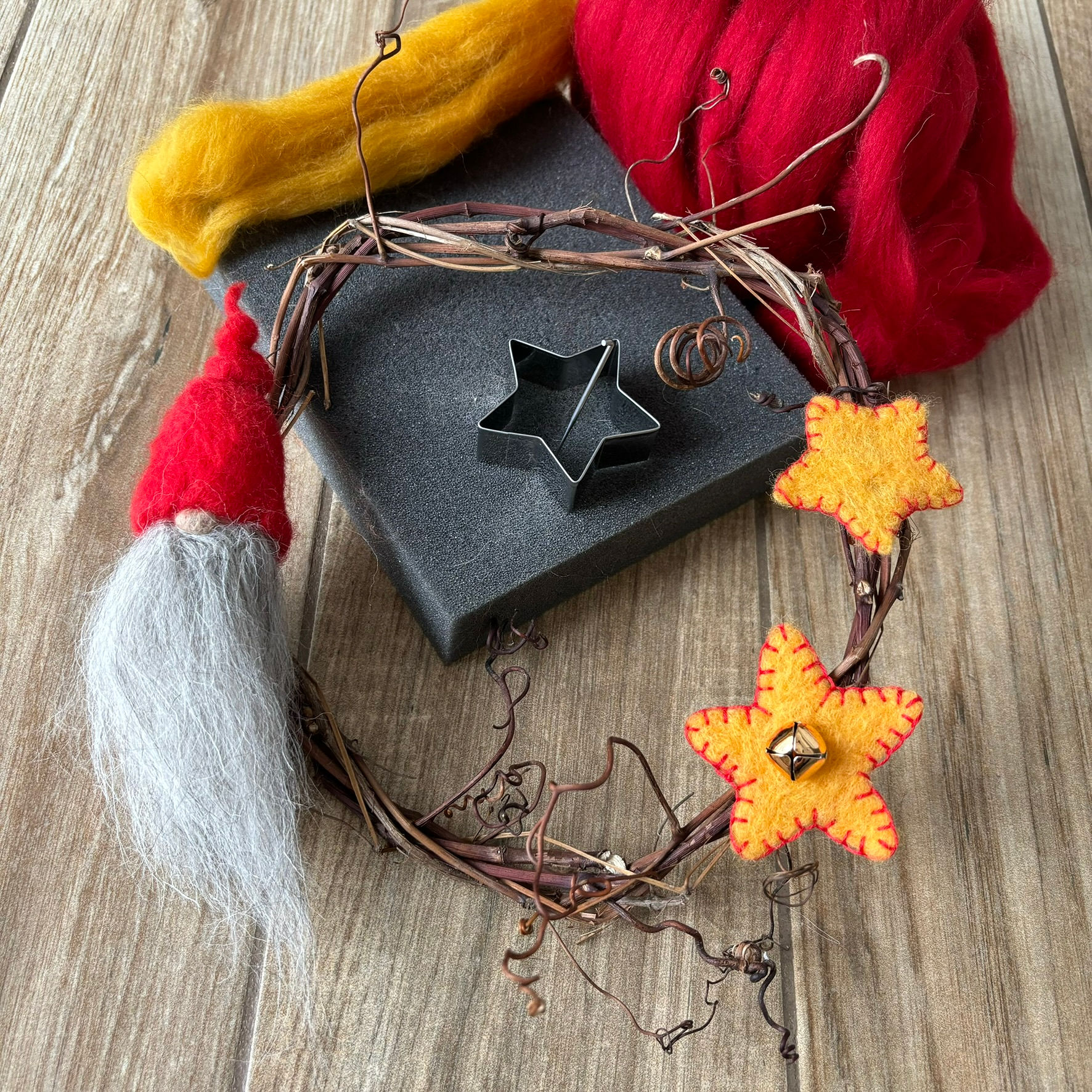
Christmas wreath with gnome and two stars on wood background

The one below has been edited for brightness (more), ambiance (more) and a slight rotation and crop to cut out the bit of gap at the top right to keep the viewer’s eye in the frame. Bright spots and colour will draw viewers’ attention, so use them deliberately.
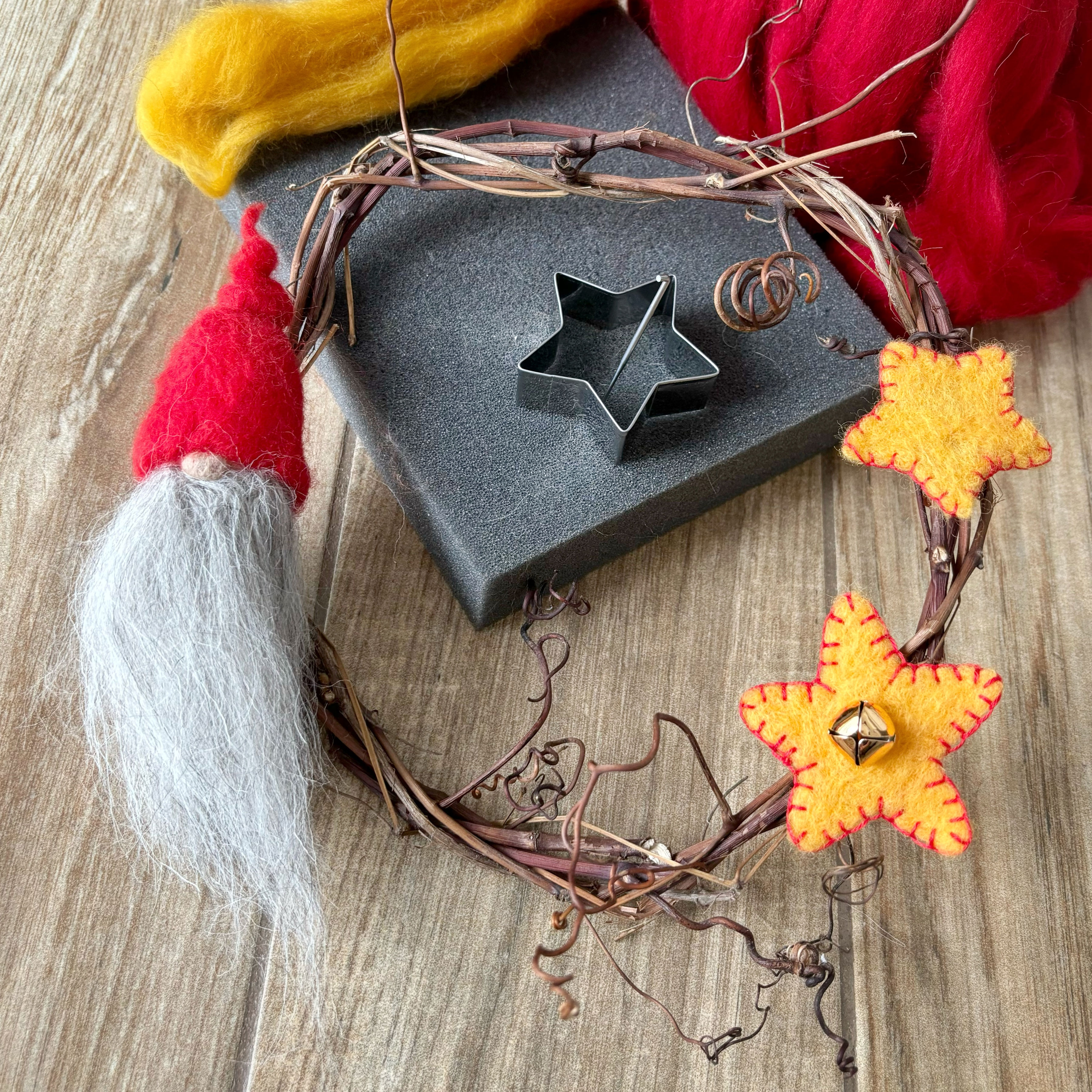
Christmas wreath with gnome and two stars on wood background

I don’t like that I cut out a bit of the tips of the curly bits of grapevine, and I would have liked the gnome closer to the ⅓ line, and that the top of the felting needle doesn’t reach over the cookie cutter. But, if I don’t stop playing with this and get it to Ruth it will never get published!

Digital cameras love averages

A camera’s sensor pulls everything toward average, so it makes a bright scene more dull and a dark scene more light. The more dark the camera senses, the more light it tries to bring in, and vice versa. But on a sunny winter day, we don’t want it to turn all our lovely white snow to grey, and we don’t want it turning the closeup of our lush black felted hat to a murky grey either. Be aware of this and use the Brightness or Exposure setting in your editing app to make your whites bright (but not too bright!) and your darks proper dark.

There are three basic edits that will significantly improve most photos. In Snapseed, all three of them are under “Tools” (at the bottom) then “Tune Image” at the top left. 

Swipe down to find Brightness (I often lift the brightness a bit since I am usually inside where the light is dimmer), Contrast (a touch more contrast is often pleasant), and Ambiance. I love the Ambiance slider. I’m not entirely sure what the special sauce is, but it’s mostly mid-tone contrast, and it makes colours pop. Just a little swipe to the right is often enough to give you a lovely bit of extra magic.

Screen shot of Ambiance under tools in Snapseed

Here’s one of the photos from the series above straight out of the camera (left) and edited (right). I tweaked Shadows (less) , Ambiance (more), Contrast (more) and white balance (warmer). We’ll talk more about white balance in a later post.
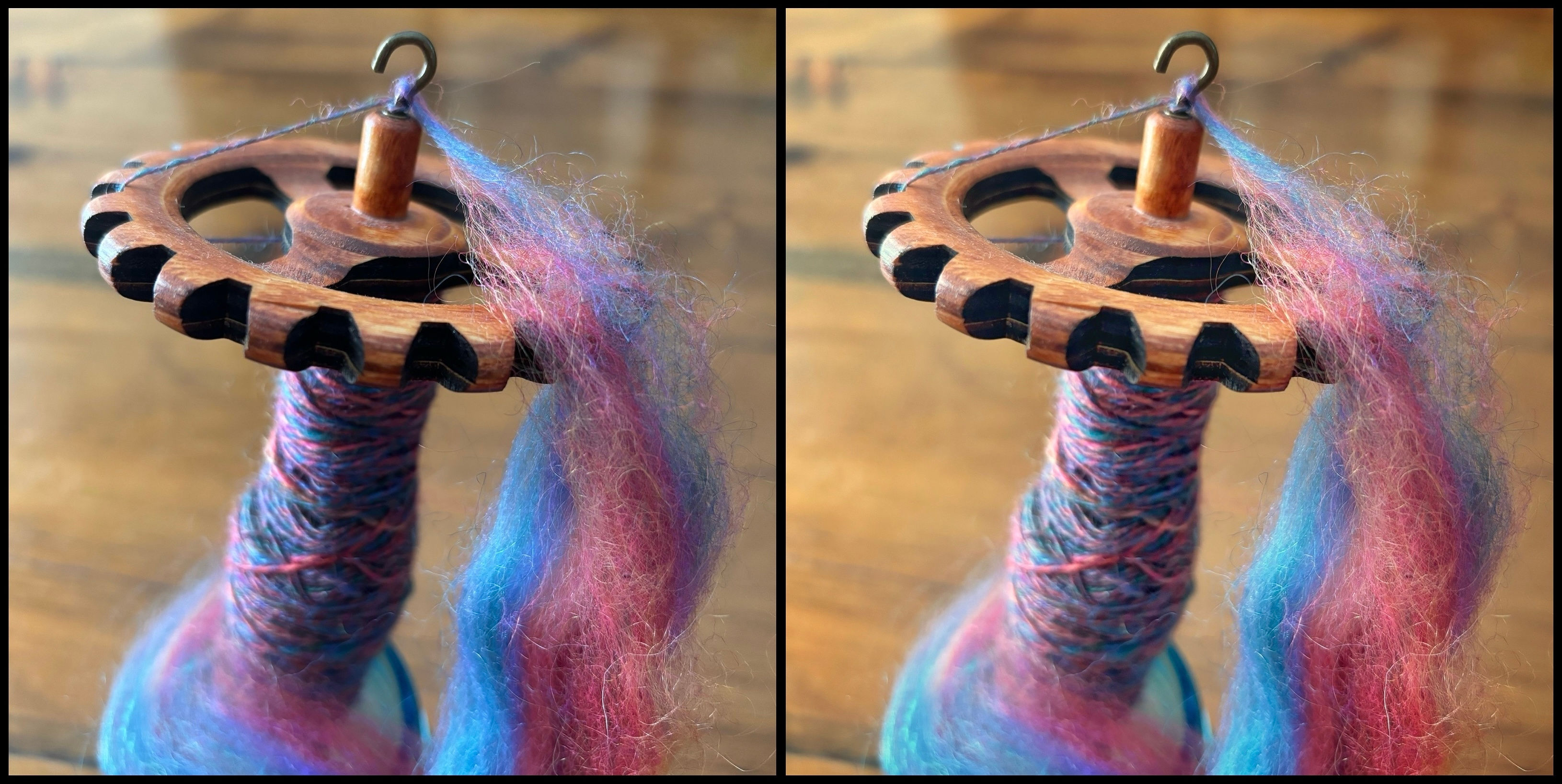
Comparison of photo before and after editing in Snapseed.

So that’s my introduction to making the most of smartphone photography. First, think about the story you want to tell. Next, compose your image thoughtfully, and pay equal attention to what you include and what you exclude. And finally, give it a little polish with a photo editing app. But not too much!

Next time we’ll talk about the number one most important thing that can make or break your photos.

2024 Photo shoot!! New Tools, Ann and Jan get new toys!

2024 Photo shoot!! New Tools, Ann and Jan get new toys!

Just before Christmas, Ann and I were chatting about photo shoots for things we had made from felting.

I had been using my, by now quite old, camera (Lumix DMC-FZ70 by Panasonic) and an older Flannelette half sheet as my backdrop.  The sheet is attached to bulldog clips, which are hooked on S-hooks. This has worked but I can only set it up directly in front of my computer, so conveniently located but not portable. It also is limited in colour, white. I guess I could get another sheet colour…

flanelet sheet held up by bulldog clips attached to S hooks. Ring light sitting in front1) sheet clips and ring light

Close up of bulldog clip2) Close-up of bulldog clip hooked over a large S hook.

moose bag #3 posisioned in front of Flanelet sheet set up3) using this set-up for a photo of Moose bag #3

The sheet is working OK, but I think I can do better.

Ann and I had looked at full-size photo backdrop set-ups, but they require a lot of floor space, which neither of us has extra of. (if you have floor space why are you not adding more wool?) We had looked at the smaller photo boxes but they work for small things, so would not work well with a felt hat or Mer-person.

Then we spotted a tabletop version of the large photo backdrop, which looked like it may work. It has a tripod base with an extendable upright, which supports a crossbar. It came in a few size variations, and after looking both, at those available through Amazon.ca and Aliexpress I selected this one. I ordered it from Amazon and let Ann know when it arrived.

This slideshow requires JavaScript.

4.1-4.3) 2.2ft Wide 2.6ft High (adjustable height from 1.5ft to 2.6ft)

https://www.amazon.ca/Linco-Lincostore-Photography-Backdrop-Background/dp/B072FJR8QW/ref=pd_vtp_h_pd_vtp_h_d_sccl_2/146-5765676-4725532?pd_rd_w=oP80i&content-id=amzn1.sym.54a077ab-41be-4d2b-b691-c4848b60dd3b&pf_rd_p=54a077ab-41be-4d2b-b691-c4848b60dd3b&pf_rd_r=Q1ZVP4V01FF62GNX9MSZ&pd_rd_wg=7N0fP&pd_rd_r=4c28de17-cf4b-4d95-bd52-6a3f2cec3b85&pd_rd_i=B072FJR8QW&psc=1

This is one of the smaller tabletop versions.  It has a sturdy wide base and comes apart to fit in a small bag. There are other models, which are both higher and with a longer cross arm. After considering what projects Ann or I would likely want to photograph, the smaller tabletop version should work for most of the projects.

the stand comes in parts, base, cross pices and clips.5) Un-assembled stand and clips. In the background, you can see the white styrofoam that the backdrops were warped around for shipping.

the bag the stand fits in6) all the parts fit in a bag for easy storage and transport.

I could use the flannelette sheet attached to the crossbar with the clips provided, but I would like more options as a background. The size that seemed to be the best option for backgrounds was 57cm by 87cm. As I investigated the options I found that there are 2-sided options (with different images or colours) as well as lots with the same colour on both sides.

I found some I liked at Aliexpress and ordered two options which arrived much quicker than expected. One was black and white.  The other was two mottled tones of rose and grey, which I suspected would be a more versatile option.

two sided black and white PVC photo back drop 2 sided PVC back drop in mottled grey and rose 7.1-7.2) The first two PVC sheets I ordered cost C$7.24 each.

I had taken Photography as one of the practical art options at university, but it was more focused on experimental composition and darkroom work. I am now working with digital photography, the darkroom work has changed to mostly adjusting the colour balance and a bit of cropping. While I didn’t study studio photography, I have a rough understanding of the concepts.  It will be fun to explore this further.

The local guild Ann and I belong to was having a last social/spin-in of the year on Dec. 30th, from 1-4 pm. We decided to come in early, so she could see the stand and the backgrounds that had arrived.  I brought the two Moose bags and Ann brought the samples for her Valentine’s Day workshop (No peeking, she will be showing you shortly).

The 2 background options had been rolled tightly around a Styrofoam core. then wrapped in packing foam and plastic which did protect them during their travels. It feels like a stiff plasticized paper and is described as “PVC Double sides printing Waterproof Photo Studio Photography”.  Whatever it is, it left them not inclined to stop curling immediately after unwrapping. I think they will stop curling if I can store them flat rather than rolled.  With a bit of sneaky persuasion (some mettle book ends, a clip and a magnet), we were able to proceed with the photo shoot.

mettle bookend and extending handle with magnet8) mettle book end with extendable handled magnet, usually used to pick up fallen needles.

Ann and her phone using the stand and the backdrop 9) Ann and her phone taking pictures she will show you later.

Ann tried both sides with her bags but I only used the mottled grey. I had a bit of trouble with deciding how to display the handles of the moose bag while shooting Moose bag #1, Glenn’s Moose.

This slideshow requires JavaScript.

10.1-10.4) Moose #1, Glenn’s Moose

Moose back #2 black moose with tan legs and blue yarn wrapped in antlers11) Moose #2 Jetta’s Moose

With moose 2, Jetta’s moose, I figured out I could have the handles looped over the top bar wing-nut to keep them out of the way.

As you can see the hole set up is not large, easily fitting on a 6×2 foot fold-up table, but it is large enough to photograph a large project bag. Since the backdrop is only clipped on, if you needed more width, you can position it horizontally rather than vertically. When set up vertically you can use the curve of the PVC to not get a distinct edge as you would find looking at a backsplash and kitchen counter. If you want to have that hard edge change, You can use a second background as a ground to position your subject on.

diagram of hard edge from photo backgrounds12) 2 backgrounds, one is used as the background and one as the surface the item sits on.

The third way to use the PVC photo backdrop paper is as a surface to place your item and shoot directly down. When Ann shows you her photos you will see her doing this.

Since we had fun with this photo shoot, when I got home I continued looking at PVC backdrops and ordered a few more options. I hope you will get to see them for some upcoming blog posts.

This slideshow requires JavaScript.

13.1-13.5) This second group was from a different seller and should arrived Jan 18.  The cost was $6.65each

If you are photographing your felting and fibre arts, having a stand and a few backgrounds would be fun. Consider what size most of your work is, to decide what will work best for you.  I would suggest considering the double-sided PVC sheets since they give you more options than the single-colour options.  If you decide on the  PVC versions, they can be used with wet felting, while it is still wet!  (this would not work out the same with cloth or paper).

That said, You don’t have to invest a lot of money to photograph your work. you can still do a lot with a couple of bulldog clips, a couple of S-hooks, an old sheet and a couple of ring lights or even a couple of flashlights or a window. My last frugal idea was some heavy-weight Christmas wrapping paper. Although it is not as sturdy as the PVC sheets, it will work for a single or a few photo shoots. The wrapping paper comes in lots of interesting patterns. Some are double-sided, so don’t forget to consider the back too. Even better it’s on sale just after Xmas!

christmass wrapping paper rolls in two patterns14) Christmas wrapping paper Moose with hat and copper snowflake

If you are looking for something in between the PVC and wrapping paper for backdrops, I can think of 2 other frugal options. First, as I originally started my fibre journey as a weaver, I have a few rolls of cheap wallpaper stored with the table looms. I went for the ugliest, cheapest, rolls of wallpaper from a second-hand store. You could keep an eye out for the slightly less hideous patterns than I have, as possible backgrounds. And lastly, I have various weights of canvas left over from painting which can be dyed or have washes of paint added to it to make a backdrop. lightweight canvas drop cloths are large and could be cut up into many pieces. Oddly, I still look at something and see that it could be used in some other way. I am not sure I will ever outgrow the frugal “starving art student brain” setting.

I know we haven’t chatted yet about lighting options.  You can see one of my 2 mid-size ring lights in photo #1 (ring light from Dollerama and the stand is an articulating desk stand from amazon.ca). Your lighting choices will depend on what you are photographing, where you are set up and whether you want a diffuses or more raking light source. The topic of lighting options can wander off into a big blog on its own, maybe a chat for another day.

Do you have favourite photo shoot equipment you use or cool tips for photographing your work?