Browsed by
Category: Guest Writer

Wool Experiment

Wool Experiment

Our Guest Artist/Writer is Leonor Calaca from Felt Buddies

A while back, I saw a blog post written by Marilyn, aka Pandagirl, about how some fibres merged (felted) together by using the wet felting process. You can read that post by clicking here.  https://feltingandfiberstudio.com/2014/02/14/sample-fibers/?preview=true&preview_id=7469&preview_nonce=af58dd7ec7&post_format=standard

Being someone who knows only about needle felting (and believes to have much, much more to learn), and who had never before tried some of the fibres mentioned, I was very curious as to how they would perform under the barbed needle. I asked Marilyn about it, and she was generous enough to send me some samples to try myself.

There were nine samples to try, and some of them were fibre blends. I decided to go about this by analysing each sample by touch and sight, then taking a small portion out and needle felting a little ball; a round form would allow me to see whether the fibres would take a 3D format well, and easily (or not).

samples together

I also used The Field Guide to Fleece book, by Deborah Robson and Carol Ekarius, to help me understand a little more about each fibre. This book referred to some fibres being curly (having ‘crimp’), but all my samples were straight, which has to do with the way they were commercially processed (this is the reason so many of our fibres shrink when wet felted).

Yak_Gotland_Navajo

Yak
This sample was a dream to touch and smell! It is so soft and the colour is absolutely lovely, too. The Yak needle felted very easily, and the resulting ball was springy and so very soft. This might be my new favourite fibre!

Gotland
This sample arrived slightly felted in its bag, which tells me Gotland might be one of those fibres that need careful storage and not too much friction or weight on it. It is a soft, shiny fibre.  My ball was a little fuzzy, with a slightly scratchy finish. It smelt wonderfully sheepy!

Navajo Churro
This sample was also a new-to-me fibre, and I was very curious to see how it would behave. It is much coarser than what I’m used to (merino being my main source), but I find coarse fibres to be much nicer for needle felting.
My first thought when looking at this fibre was that it would make great mock bird nests, it mimics the materials and branches really well!  Navajo Churro needle felted really easily, as expected, and I got a fuzzy ball as a result of the coarse nature of the fibres.

Yak_Gotland_Navajo_balls
Organic Polwarth/Silk
This is a very shiny and, obviously, silky blend. I’d say it’s a 50/50 blend. I’ve yet to work with Polwarth wool alone but this blend made both a very nice combo to the touch.  It felted easily, although it took a little for me to get that ball shape, which I suspect is the silk’s doing, being the slippery fibre that it is.

Merino/Silk
Although Merino is possibly one of the most used fibres in felting, and well known for its softness, this blend isn’t as soft as I’d expect, nor as soft as the Polwarth/silk blend I mentioned above. It is, however, very shiny due to the silk content.
Again, due to its long staple length, it’s harder to make a circular shape. The shine ended up a bit muted because the fibres are randomly pulled together when needle felting – I’d say one would keep the shine best with the wet felting technique.  As you can see, the colours came out rather muted due to this type of blending.

Alpaca/Silk
A very soft and shiny blend, possibly a 50/50, it took a bit to felt and the shine was a bit lost with this technique.


Pol_Merino_alpaca_Silkblends


Silk_blends_balls
Blue-Faced Leicester
If you like spinning, chances are, you love BFL. This is a very lofty fibre, although this particular sample wasn’t as soft as alpaca or merino. It needle felted very easily and retained its shine very well.


POY Corriedale

This blend has a long staple, is very soft and has a lovely sheepy smell. It needle felted very easily and I was able to make a ball very quickly, despite the staple length.
Teeswater
Although it’s a curly fibre, this sample was straight. It’s got a lovely lustre, and is softer than Gotland (which is, incidentally, something my reference book disagrees on). This was, by far, the fibre with the longest staple length I’d ever tried!  The Teeswater doesn’t felt very easily and it took me a while to get it into a ball. Also, because it’s a long staple, it was harder to get a smooth finish on the size I did it in.

Wensleydale
Another curly fibre that was processed to be straight . It’s a longish staple, very soft (but less so than Yak)  Although it felted, it resisted my needle a bit. Some strands wouldn’t blend in with the rest.


BFL_PolCorr_Tees_Wens


BFL_PolCorr_Tees_Wens_balls

So there you have it, my little experiment. Feel free to ask any questions you might have, and tell me all about your own experiences with different fibres!

Thanks Leonor for this informative experiment with needle felting!

Batts, Bamboo and more…

Batts, Bamboo and more…

Our Guest Artist/Author today is Cathy Wycliff aka Luvswool

Recently, I received some nifty embellishment fibers from Zed (thanks again!) around the same time my Opulent order of batts was delivered, so I decided to combine two experiments.
One experiment idea was offered by Fiona Duthie on her blog and involved combining batts for color overlap or shadowing. I chose moss, chlorophyll, teal and sand. All were Opulent coopsworth batts except for the teal, which was handmade and provided by Marilyn (Pandagirl). As I recall, the teal was a combo of hand dyed Cheviot, Domestic 56s, merino and mulberry silk. I lifted the edges of each batt and overlapped the next color of batt, then wet-felted to the pre-felt stage.


IMG_0169
Next, I added the first set of embellishment fibers, shown up-close in the photo below: bamboo staple, banana, milk fiber and crimped viscose.


IMG_0222

I wanted to see which fiber proved to be the shiniest. As I worked the fiber in, I was not paying much attention to the coopsworth batts, which did not provide as much shadowing as I had expected. Could be the unevenness of the batts or unequal distribution of the overlapped batts, or perhaps not enough fulling. All of the embellishments added shine, but I think maybe the crimped viscose turned out best, closely followed by the banana and milk. Although the bamboo staple did not provide much shine, it sparked an idea for a future experiment as an inclusion in nuno-felting.

IMG_0169 IMG_0168

I grabbed my next set of Zed’s embellishment fibers, this time using (top to bottom) black bamboo, pale blue acrylic (looks white in photo), black nylon tops and green nylon.

IMG_0223
I placed all of the fibers on Domestic 56’s roving, which I lightly pre-felted. I was pleased with the sample results, especially the grey/black bamboo (top) and the crazy/wild green nylon (bottom).

IMG_0228

I’ll definitely want to use these fibers as embellishments in my upcoming projects!

Thanks Cathy! You had some great discoveries with new fibers!

No Snow Required – Tea Light Snowman

No Snow Required – Tea Light Snowman

This is a guest post by Frances T who is a member of the forum and wanted to share a quick tutorial on how to make a snowman figure for the upcoming holidays. This tutorial assumes you know how to do basic wet felting including using a resist to make a three-dimensional felt object and basic sewing techniques.

Battery operated tea lights are very popular in the US and I have seen several photos of them made into Snowmen heads. I expanded on the idea and made a body out of felt.

Supplies Needed:
Pattern for body 4.5 inches x 2.5 inches – straight at top curved at bottom
Battery Operated Tea Light (2 for $1 at Dollar Tree) (amber light is best)
Pom Poms (Package of 90 $1 at Dollar Tree)
Cotton Balls (Package of 100 $1 at Dollar Tree)
White Embroidery Floss & needle
Wool roving (White, Red, Green)
Rice
Tacky Glue and Glue Gun
Permanent Marker (Black)
Rubber band

Frances Snowman Supplies

Instructions –

Hat: Make a felt circle and then shape into a hat (I shaped mine over a cork) and let dry.

Scarf: Felt a piece or pieces of roving into a strip and let dry

Body: Using the pattern as a resist felt the body. (The pattern is shown in the photo above to the far left.) When dry cut a small opening in the top (straight edge) and remove the resist. Let the body dry.

Face: Use the black marker to draw the eyes and mouth.

Frances Snowman Unlit

Assembly

Put about ¼ cup of dry uncooked rice in the body (this is for weight so the snow man will stand up) and then add cotton balls to finish filling the body. Divide the body in a little more than half and tie off the body with a piece of white embroidery floss (You can first use a rubber band and then tie on the floss and cut the rubber band away if it is easier for you) This is the bottom of the snowman.

Draw the top portion of the felt up and form the middle section of the body. Use embroidery floss to sew the opening together.

Glue the hat on the tea light with hot glue. There is a small switch on the back of the light – do not cover with the hat. Glue the tea light onto the top of the body with hot glue. Tie the scarf around the neck and glue if necessary. Glue the Pom Poms on the body (I used tacky glue).

Frances Snowman Lighted

PLEASE NOTE THIS SNOWMAN IS A DECORATION AND NOT A TOY. IF MAKING FOR A CHILD OR TO BE SOLD BE SURE THE GLUE USED IS SUFFICIENT TO KEEP A CHILD FROM PULLING THE SNOWMAN APART.

Thanks Frances! I think you could make all sorts of fun snowmen starting with this idea. If you don’t have any tea lights, you could just make the resist longer and make a felt head by doing three divisions instead of two. The details of the face could be added by needle felting. You could also add twig arms by poking a hole in each side of the middle section and threading a twig through. You could use buttons instead of pompoms for a different look. If you wanted to hang your snowmen on the tree, you could add a loop of yarn to the back of the hat or head and use wool or cotton to fill the body instead of rice. Be sure to show us your photos of your snowmen if you make some. We’d love to see them on the forum

Cover It Up!

Cover It Up!

This is a guest post by Frances T. Frances is a member of the forum and wanted to share her method of felting a vessel to cover potted plants.

Frances 1

Since I love gardening and floral design I have been thinking of ways to use felted pieces in those hobbies. Right after I made my first Vessel I needed a container for a floral design and used it over an ugly pot to rave reviews. So I thought why not dress up potted plants that come in boring green plastic pots.

And then the list for uses started to grow – bread baskets, to hold fruit, utensils, mail, toiletries, etc. The fact that Pot Covers can be washed in mild soap and water and air-dried is a plus as well as being inexpensive to make. Plastic pots were a $1.00 each, roving and embellishments not more than $4.00 and if an electric polisher/buffer is used can be made quickly and easily.

After trying several ways to shape them that were difficult and cumbersome for me a tutorial was completed on constructing them using a flat resist and a form (Plastic Flower Pot). This Tutorial is intended for use by persons who have a basic knowledge of wet felting. Before starting, please review the following definitions as these terms are used throughout the instructions.

Layer of Roving – Wool roving that has been laid vertically and then horizontally constitutes one layer.

Template or Resist – Guide for laying out the roving in the desired shape and used to felt over. It keeps the two sides of the piece from felting together except for the edges.

Electric Polisher Buffer – Manufactured for polishing and buffing vehicle exteriors but works well as a felting tool. Always use with an electrical outlet with GFI Protection.

Lingerie Bag – A mesh bag used to place lingerie in when using a washing machine.

Produce Bag – a mesh bag, sometimes stretchy, that onions, potatoes or other produce is sold in.

Plastic Canvas – Plastic molded into a grid used in cross-stitch or needlepoint.

Shelf Liner – Use the type that is a mesh consistency not smooth.

Plastic Sheeting – Plastic that is sturdy enough to hold up to vigorous rubbing but also flexible enough to be rolled.

Materials List

• 6 inch Plastic Pot without drain holes & no rolled top edge
• 2 to 3 oz. wool roving
• Plastic canvas
• Bubble Wrap
• Spray Bottle
• Dish Soap
• Scissors
• Shelf Liner
• Plastic Sheeting
• Yarn, Silk Hankies, Embroidery Floss etc. for embellishing
• Lingerie or Produce Bag
• Clothes Pins
• Electric Buffer

Note: These instructions are for using a buffer but the cover can be made by hand rubbing & rolling as is done in traditional wet felting. The buffer significantly speeds up the process.

Supplies
Supplies


Let’s get started –

1. Make Template – Plastic sheeting cut to 10 1⁄2 inches vertically by 8 1⁄2 inches horizontally with one vertical end curved. Use a round dish as a guide to make curves. (This is for a 6” Pot as pictured )

2. Set up – On work surface place shelf liner, then bubble wrap and then template. The shelf liner is to keep bubble wrap from sliding when working.

3. Felting Process

a. Place rows of roving vertically and horizontally on the template. Let some wisps of fiber lay over the edges of the template on the sides and bottom.

Laying out the roving

b. Place plastic canvas on roving

c. Wet with soapy water

d. Rub gently with hands except for the wisps laying over the edge of the template until roving just holds together.

Hand rubbing
Hand rubbing

e. Carefully lift plastic canvas pulling roving gently from canvas as necessary

f. Turn template and roving over and gently pull the wisps of fiber that were left over the edge onto this side of the template – to avoid the look of a seam keep the fibers to a minimum and smooth out completely.

Folding over wisps of fiber

g. Repeat steps a. through e. on this side of the template.

h. Add another layer of roving by completing steps a. through f. again so that there are 2 layers roving on each side.

4. Adding design

a. Put down another layer of roving (pale green in this example) and then add design or embellishments on top of the roving. Embellishments are bamboo fiber (green) and tussah silk (pale yellow).

Adding design
Adding design

b. Place the plastic canvas on design, wet and rub gently to set the design and then run the electric buffer over the piece for a couple of minutes.

c. Carefully lift plastic canvas pulling roving gently from canvas as necessary

d. Turn template and roving over and complete steps 4. a. and b. again.

e. Alternate between bubble wrap and the plastic canvas buff on both sides until the roving and embellishments are felted together.

Using the buffer
Using the buffer

f. Remove bubble wrap and plastic canvas and buff both sides directly on the roving. Caution: Make sure the design is set before completing this step. The cover should be completely felted now.

5. Forming the pot cover

a. Rinse the cover using warm water until the soap is removed.

Rinsed and ready to finish

b. Cut a narrow strip off the top (straight) edge.

c. Open the cover and remove the plastic template.

Removing the template

d. Pull the cover over the outside of the plastic pot. This may take some pulling and stretching depending on the wool blend used as different wool shrinks and felts differently. The key is to pull the cover up as tightly as possible over the top edge of the plastic pot smoothing out any loose spots and wrinkles. It should be smooth on the bottom with no wrinkles on the sides.

e. There will be excess felt at the top. Turn the cover over the inside edge of the pot. If the cover is loose in spots the hot water bath and dryer in the next steps should shrink it to fit.

f. Using clothes pins secure the top edge of the cover to the pot. This is very important as the pins hold the felt in place.

Securing the cover to the pot

g. Place the pot in a mesh bag. Not fine mesh netting!! Make sure the bag is securely closed.

h. Run very hot water over the pot for about 2 minutes.

i. Place in dryer for about 15 minutes on heat setting.

Frances 11
Mesh bag in place and ready for the dryer

j. Remove from dryer, take out of bag and let it finish drying on a cake cooling rack.

The completed pot –

Frances 12
The completed pot

Maybe I am “A Little Potted” …….

Frances 13


The Midwest Fiber and Folk Art Fair, August 1-3, 2014

The Midwest Fiber and Folk Art Fair, August 1-3, 2014

by Guest Artist/Author Cathy Wycliff (Luvswool)

We, Marilyn (Pandagirl) and I (Luvswool),  had never attended a “fiber fair,” so there were expectations and then the reality of the Fair.  We had planned for many months to attend the annual Fair and met there early Friday morning with great anticipation. The advance program showed photos of sheep, fiber, workshops, art exhibits, bags of fleece, etc., and the Fair delivered all of that except for the sheep. One of the organizers explained to me that August is too hot for sheep, and I guess that makes sense. So, the only live animals were a lonely llama and a couple of angora rabbits. Still, it was an enjoyable experience.

The Fair has been held for 8 years in Grayslake, IL, a far northwestern town in the extended Chicago metro area, and it’s a Fair that celebrates the work of many hands. We saw spinners, felters, and knitters demonstrating their crafts, and there were many workshops offered during the 3-day fair. There were a couple of folk singers and a few food vendors outdoors, but everything else was contained in an air-conditioned building. The majority of the indoor vendors were geared towards knitters, with many beautiful displays of hand-dyed, hand-spun yarns and goods. Neither Marilyn nor I are knitters, so we headed first for a walk around to scope out the lot.

IMG_5785

First stop was the Art Exhibit, which displayed fine fiber art–among them, my own display of five fiber wall-hangings. There were other fiber wall hangings, sculptures and “vintage” handbags (crafted from vintage patterns but otherwise entirely new).

IMG_5781
Cathy Wycliff’s Exhibit

(Cathy had a very prominent display!  It was the first thing to see on our way in.  Very exciting! — Marilyn)

Next up were the vendors, which included some crazy rag rugs, lots of beautiful yarn and bags of alpaca fleece. There were also felted hats  and you’ll notice I didn’t snap pics of the roving, since I was busy buying it. Marilyn and I purchased some fibers we have not previously felted with–including Navajo churro, 100% Organic Polwarth, white Falkland and I bought some black Blue Faced Leicester with silk. Since there was so much yarn, I did pick up some white wool boucle for embellishment, as well as silk hankies, which I have never used.

IMG_5786 IMG_5787IMG_5789

As we neared the end, we were able to view the judging of alpaca and llama fleece. Two judges followed a quality control checklist and had to concur on all points.

IMG_5788

Then it was goodbye to Princess Athena, the lonely llama,  and our day at the Fair came to an end. We would love to attend another fair, but next time would like to see sheep–sheep-shearing, sheep-judging, sheep fleeces, border collies herding sheep, etc.  Maybe there’s a trip to New Zealand in our future!

IMG_5790
Bye! Thanks for stopping by.
A Trip to the Australian Sheep and Wool Show

A Trip to the Australian Sheep and Wool Show

Today we have a guest post from Felicity of flicstarstudios who is a keen fibre crafter from Melbourne, Australia.

Last weekend I went to the Australian Sheep and Wool Show  which is held in Bendigo, Victoria every year. It is a highlight on the calendar for farmers and fibre lovers. There is sheep and wool judging, sheep dog trials and shearing, but the other half of the show is all about wool craft. They hold a wool fashion parade, craft competitions and many fibre vendors sell their wares. There were wood turners (with lots of crafty tools like spindles, crochet hooks and yarn gauges) as well as representatives from the Spinners and Weavers guild and Feltmakers guild of Victoria.

I left Melbourne at 8am in this:

001badweather

But on the way up, Bendigo turned on the weather and I arrived to a glorious sunshiny day. This is my third year of going to the show so I know the layout now and straight away made a bee-line for the good stuff. I had a pocket full of cash and every intention of spending up big!

It wasn’t long before I made my first purchase: a sari silk batt for spinning. I am excited to try it.

There was a display of knit, crocheted and felted poppies for the 5000 poppies project which is a community tribute to the ANZACS. The poppies will be on display at Federation Square, Melbourne in 2015. Anyone can get involved to make and donate some poppies to the cause.

006redpoppies

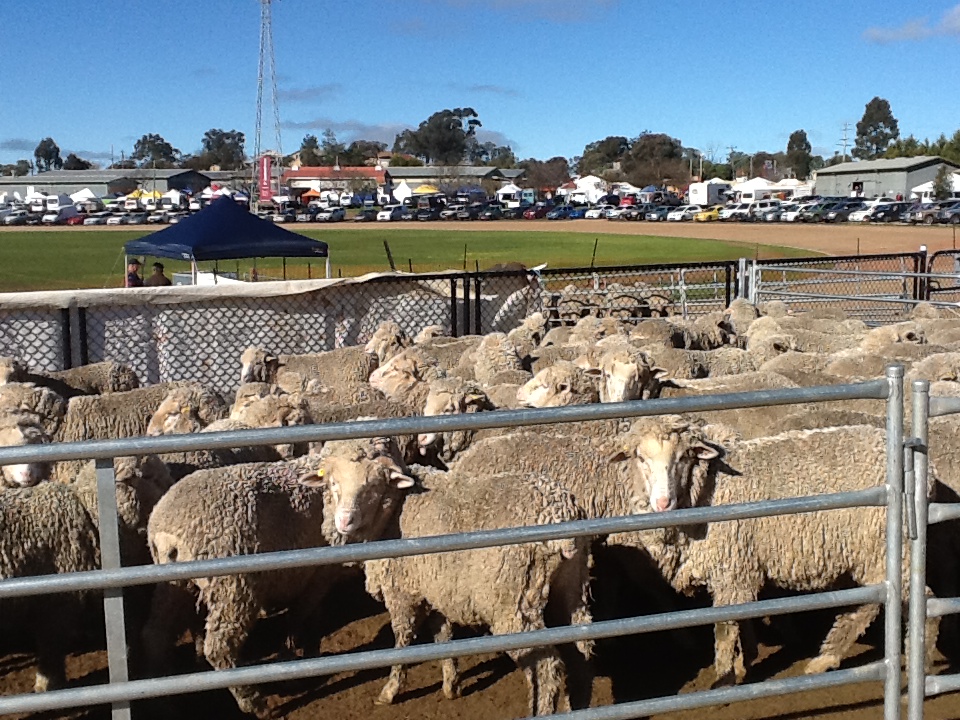
Next I headed to the sheds to check out the livestock. Smell the country! (A potpourri of straw, manure and sheep.) There was a mix of international and Australian breeds of sheep including Merino, Corriedale, Finn, Border Leicester as well as Angora goats and many more.

It was really interesting to see the different sheep breeds, the judging and the classed wool. The trophies looked pretty impressive, and it was all a very serious business.

One shed displayed all the place winners of the craft competitions in embroidery, felt, knitting and weaving. Unfortunately no photography was allowed in that shed but I can tell you the finished pieces were amazing. After seeing all the sheep I’d built up a farm-sized hunger. What else do you have for lunch at the sheep and wool show – barbecued lamb from the spit!

018lunch

I watched the sheep dog trials out on the oval while I ate. There are a variety of tests on the course that the dog has to herd the sheep through, over and into. The owner has to stand with their hand on a pole and just call out the commands – most of them sounded like “go beyond”, “get around”, “to me”, etc. There is a time limit and if the dog doesn’t herd the sheep in time they have to give up. Like a fresh deck of cards in poker, each new dog gets a fresh set of sheep. These guys looked a bit pedestrian compared to the blue ribbon winners I’d seen in the shed. It was great fun to watch because it was clear that the dogs loved it and were very good at their job. The sheep didn’t seem too impressed though.

019sheeppen

After lunch I chatted with a boutique wool farmer (Bennett and Gregor) who was selling natural coloured wool tops and yarn. He was saying that unfortunately it is becoming much harder these days for smaller operations like theirs to get their wool processed in Australia. Luckily there are still woollen mills in New Zealand they can use – their only other choice is to ship to China. I suppose this is a sign of the times. There was still loads more to see and I had more money to spend so on to the next shed.

Check out these big needles:

020bigneedles

Amazing felt balls and knick knacks from Papoose:

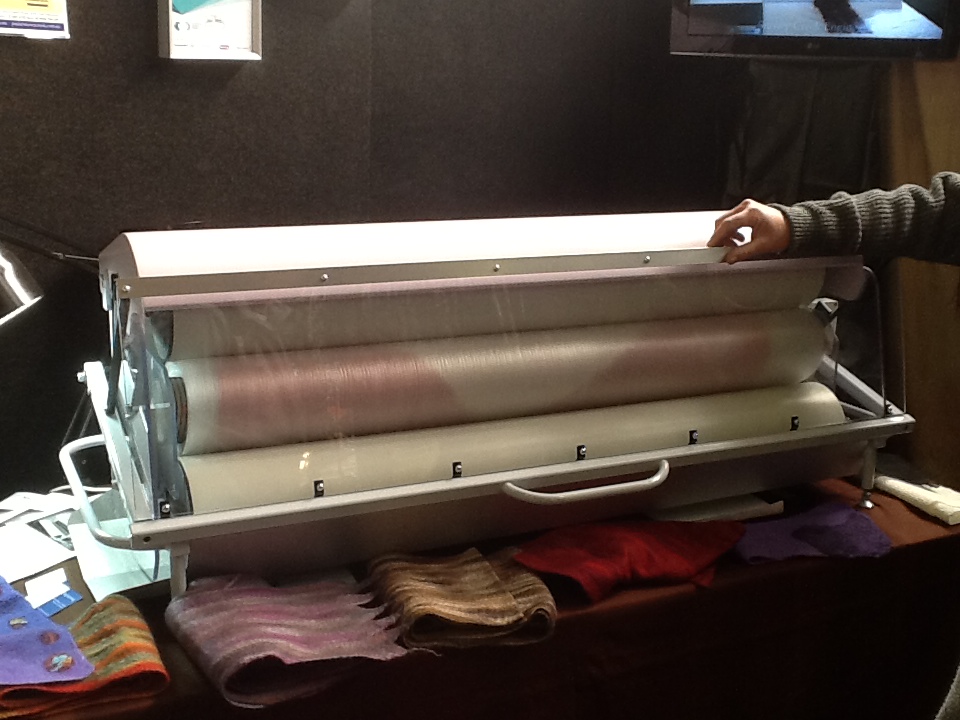
This felting machine will set you back a cool $7,000. It made lovely smooth finished felt.

023feltmachine

The Ashford stall is always worth a look because they have demo spinning wheels and blending boards.

It was a great day out and I was pretty tired by the end of it. I came home with enough yarn and fleece to keep me busy for a while. The most unusual fleece I bought is “Gra trondersau” which is from the Grey Troender a very rare Norwegian sheep (apparently there are only 50 of them!).

Thanks Felicity! It was a wonderful armchair trip you gave us and I’m sure everyone will enjoy the journey 🙂

Dyeing Fabric and Fibres – Guest Post

Dyeing Fabric and Fibres – Guest Post

Today we have another guest post from Cathy Wycliff (luvswool) who has recently been experimenting with different dyes.

***

Dyeing is one of the popular topics on the Felt & Fiber Forum, but I admit I was very reluctant to give it a try.  I read about the chemicals involved, the need for rubber gloves and a face mask, and I admit that scared me away.  But after I ordered 10 pounds of white wool (Domestic 56s), I realized I needed to do something, so–being the chicken that I am when it concerns “dangerous chemicals,” I opted for food colors, which are non-toxic and “easy to use.”  The Wilson icing gels I used met both of those criteria, so I happily dyed my wool in the microwave.  However, once I started wet-felting with the wool, I realized the colors bleed, even though I had followed the instructions (vinegar rinse).
That’s what led me to acid dyes, as I witnessed the beautiful results Forum members achieved through their use of acid dyes.  I went ahead and ordered Dharma yellow and blue (figuring I could make my own green), and began my dyeing journey.  I gathered my materials using Ruth Lane’s book “Complete Photo Guide to Felting,” even though Dharma offers instructions on their website.  I just do better with photos. Not pictured are the rubber gloves and mask I wore throughout the process.

5549Preparing to dye, I soaked the wool and silk according to the instructions.

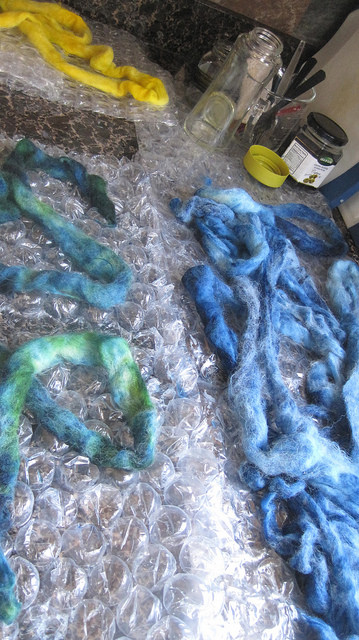
5550While the wool was soaking I laid out the plastic as protection for my kitchen countertops.

5551I mixed the acid dyes according to Dharma instructions on the labels, double-checking with Ruth’s instructions.  I used glass jars, which are fine, but I have since ordered those squirt bottles for easier and more direct application of the liquid dyes.

5554 Here you see the wet wool and silk, ready to be dyed and steamed.

5555I poured the dyes on the wool and silk, first batch, and then repeated for two other colors, mixing the blue and yellow to make green).

5556Each different color of wool was wrapped separately in plastic wrap and stacked in a stainless steel vegetable steamer. Here you see my designated stainless steel large pot, never to be used again for pasta!  I put in an inch of water in the pot and covered.

5557I steamed according to instructions, used a soaking solution again …

5559… and rinsed well — and there you see my first packet of wool (green) laid out on plastic to cool.

5561bI continued the process with the blue and yellow packets of wool.

5563bHere you see all of the dyed, wet wool laid out to dry.

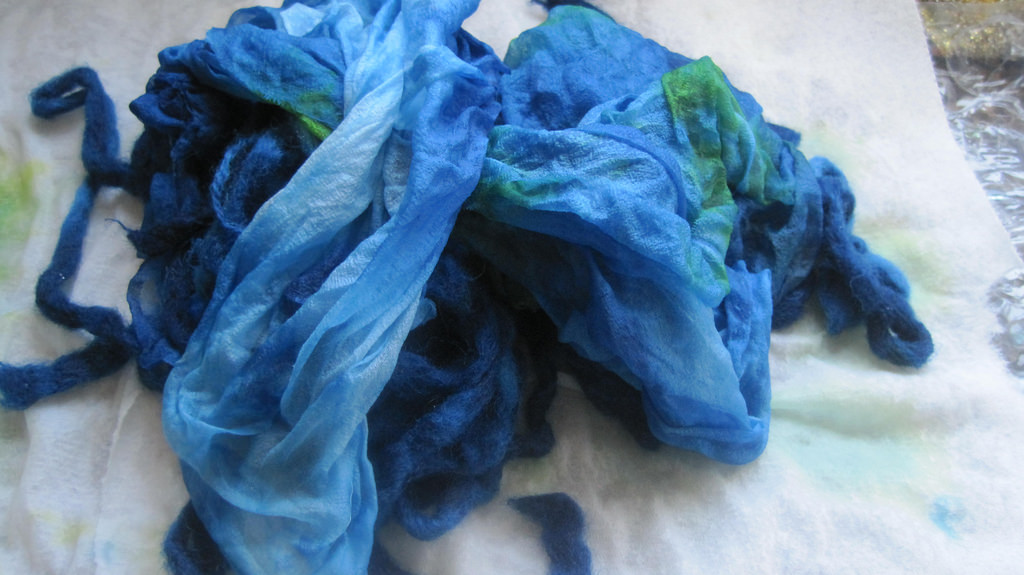
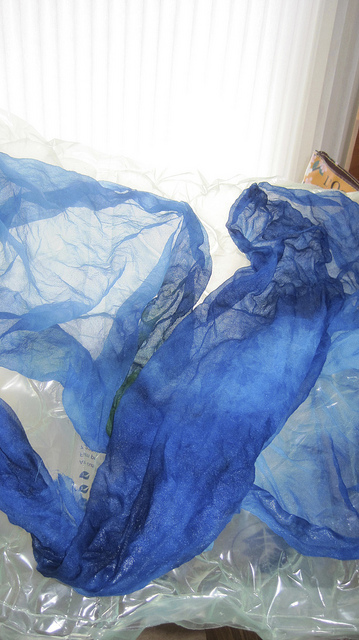
5564Here you see the beautiful blue habotai silk scarf stretched to dry…

5569… and the larger green silk habotai shawl as well.

5570bI now have a good supply of green, blue and yellow standard wool roving and pencil roving, along with a couple of silk pieces ready to be nuno-felted.  Would I do this again?  Absolutely!
Just received my new colors of Dharma dyes, ready to go again!

Cheesecloth Meets Merino Wool

Cheesecloth Meets Merino Wool

Today we have a guest post from Lyn.

***

I was lucky to win some of Ruth’s hand-dyed cheesecloth in a recent giveaway post – scrummy isn’t it?

hand dyed cheesecloth - Ruth Lane - small image

I really liked the pattern in the dark green piece, top left, so I cut a 27cm circle from it, then placed it on top of 2 layers of white merino wool fibres that had been laid out to form a rough, slightly larger circle.

I used white merino so that after the nuno process the colours of the cheesecloth would remain the same, although they would be slightly muted because of the migration of the white fibres.
To reduce the dulling effect of the white fibres,  I very carefully shaved the superfluous fibres from the top of the dry nuno felt. Shaving is a tricky process as the ruched fabric can easily be damaged.

shaving the felt - small image
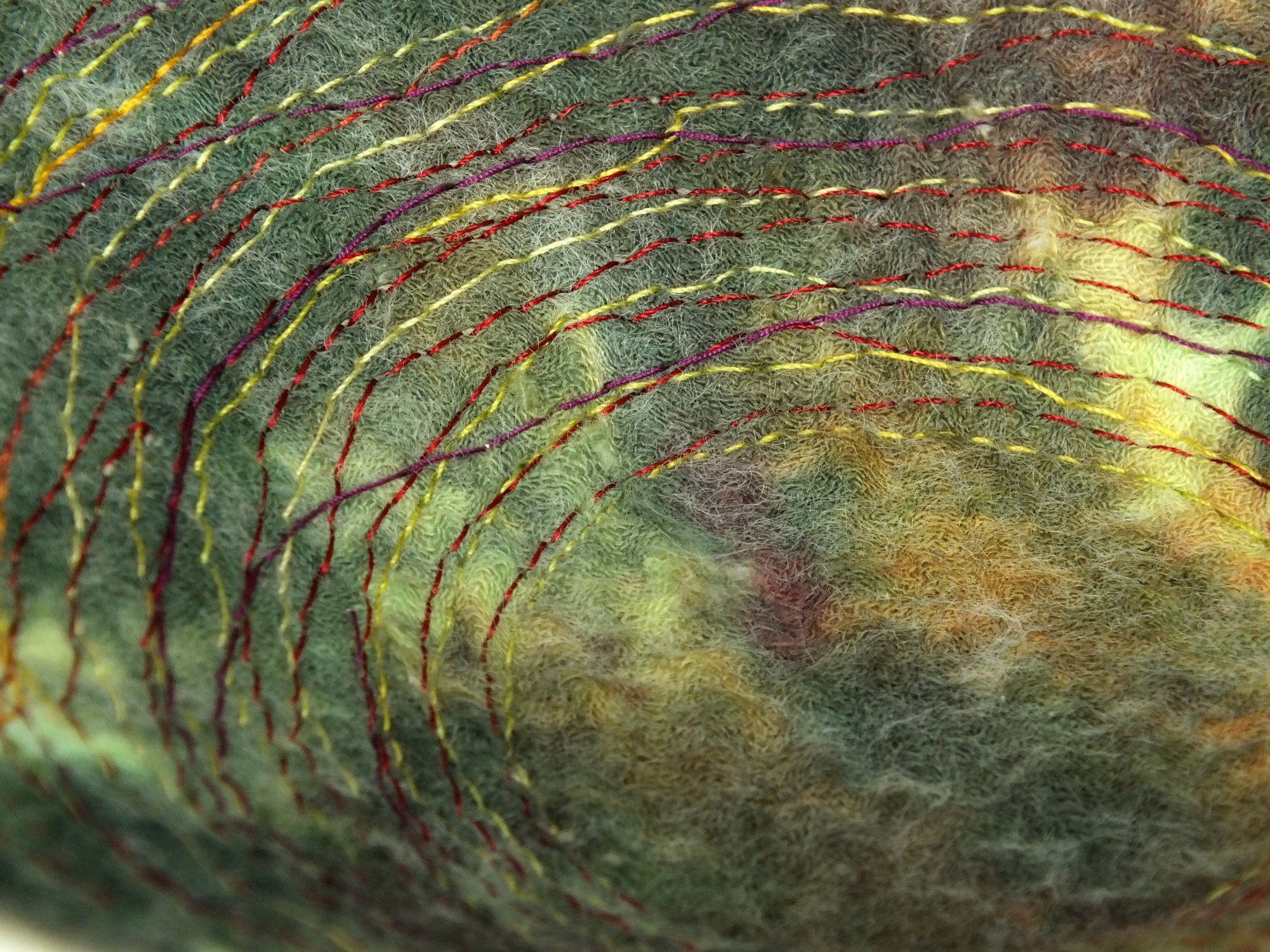
I then messy-stitched the piece of flat felt into a rustic bowl.  I love this kind of stitching and it’s best described as stitching done with your eyes shut – different coloured threads, short stitches, long stitches and rows of stitches that meander wherever they choose.

rustic stitching - small image
I thought the centre of the bowl looked pretty without stitches, but it wanted to buckle a bit, so I cut a circle of stiff, iron-on interfacing – the exact same size as the centre of the bowl – then ironed it to the underneath of the bowl.  I used the base of an upturned tall glass tumbler as an ironing board.

The finished rustic bowl:

rustic nuno and stitch bowl - small image

Nuno felting is an easy way to add interest to a plain item.  This pod was made with a 20cm circular resist.

pod with cheesecloth - small image
I used four layers of merino wool on each side of the resist, then placed a circle of cheesecloth on the top of the side that would have the hole cut into it.

cheesecloth on last layer of pod - small image
The cheesecloth added colour and texture to the top of the pod.

pod with cheesecloth close-up - small image
Thank you Ruth.  I’ve now got two lovely items and plenty of cheesecloth leftover for my stash.

Cathy’s Nuno Felt 2

Cathy’s Nuno Felt 2

Today we have another guest post from Cathy about Nuno Felting. If you’d like to read the previous post and all the comments, please click here.

***

Recently, I posted for the blog my first experience with nuno-felting, which was not too successful.  Many of you replied with terrific advice and tips on nuno-felting.  I used those tips, along with Zed’s e-book on Nuno Felt, to make another attempt.  I am happy to report success!
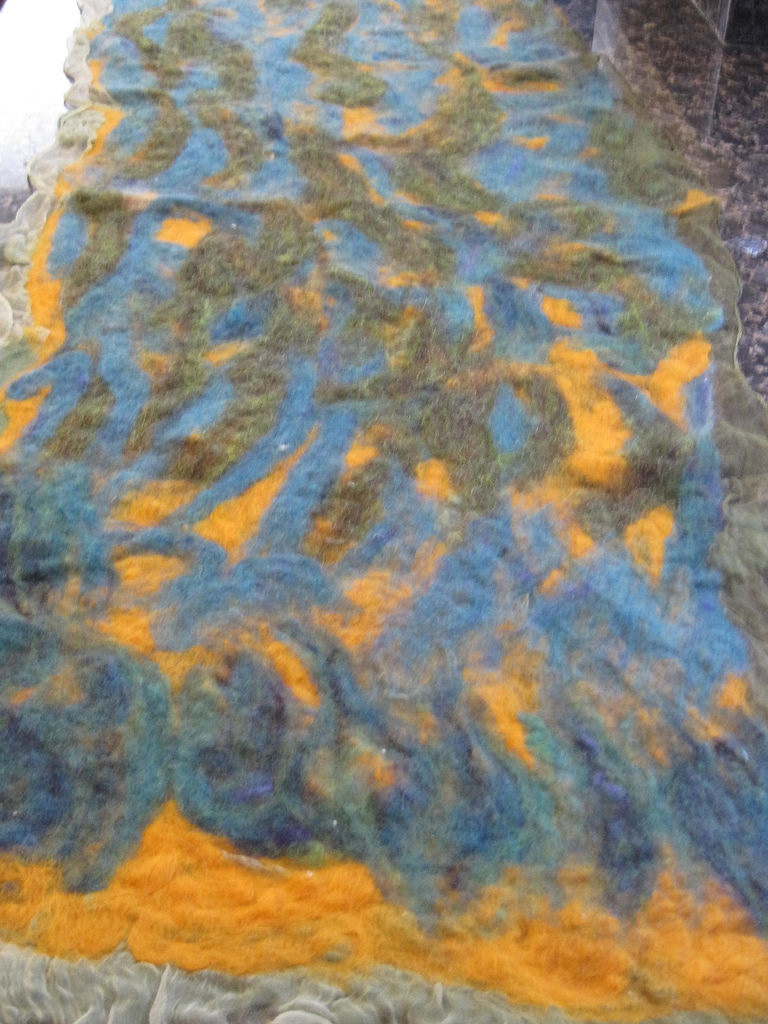
I began with a pale green silk gauze scarf, hemmed, measuring 56″ x 20″.  This was purchased on Etsy, as was the orange scarf used in my first nuno-felt experience.

Pic 1Armed with my new knowledge, I laid out merino roving in green, teal and gold, covering one side with 3 layers.  This time I used a rubbery rug mat as my base, covered by bubble wrap,  then wool.

Pic 2…and then flipped the package over…

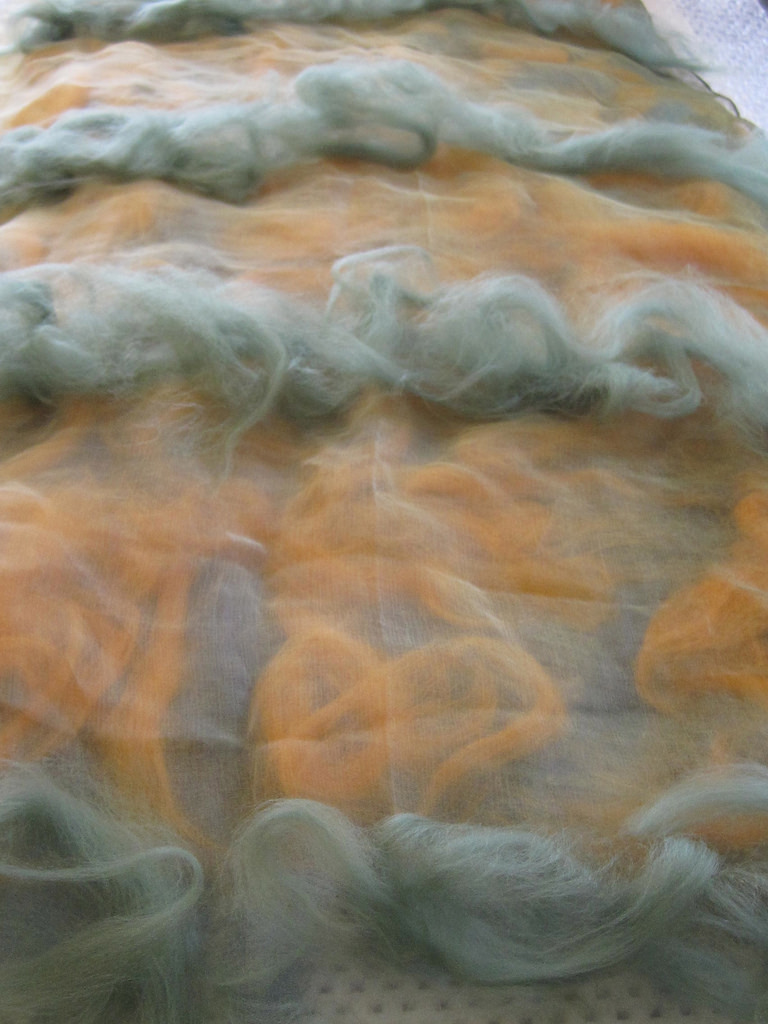
PIC 3and laid out pale green merino in bands, about every 6 inches.

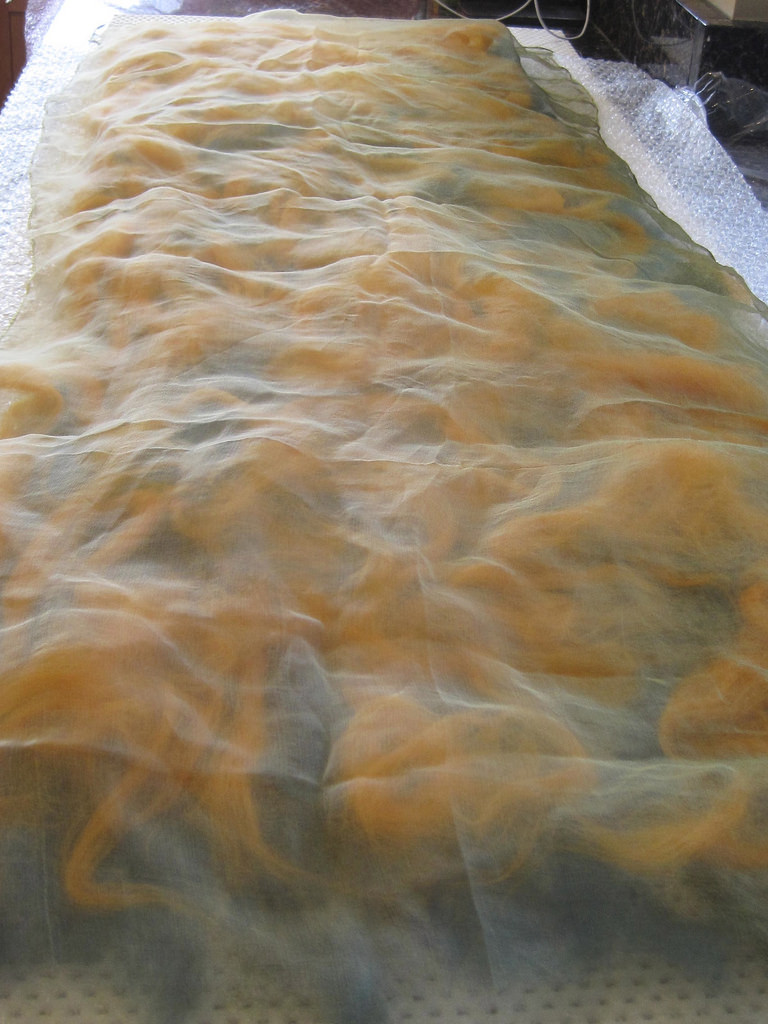
PIC 4This time I covered with a white polyester curtain sheer and began spraying using a Brauser ball and olive oil soap water–COOL this time–I began hand rubbing, spreading the water and continually rubbing GENTLY.    I lifted the sheer to make sure fibers were not coming through (but they were!)  Repeated process on underside of scarf, replacing bubble wrap with curtain sheer.

PIC 5After sufficient felting by hand rubbing, I laid on bubble wrap…

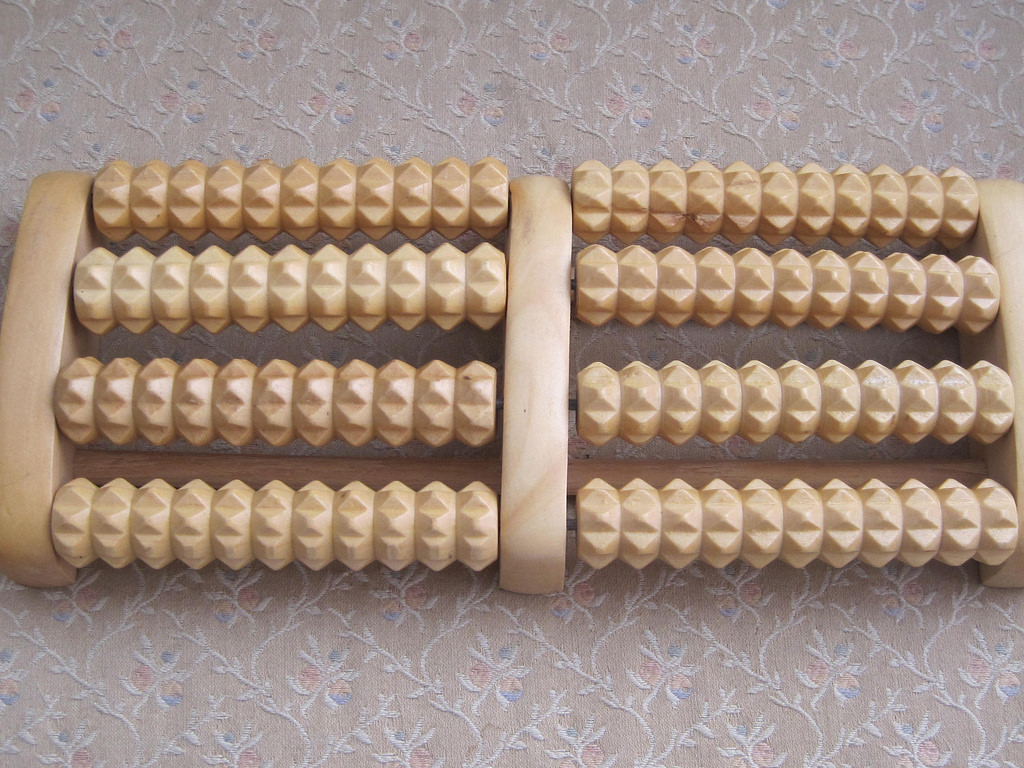
PIC 6… and began rolling my wooden foot massager over the nuno-felt package.

PIC 7I remembered to turn several times, so as to cover all angles.  Repeated the process on underside. I forgot to time myself.  After sufficient rolling, checking first side … then second side … I now felt ready to try the washer spin method of felting/fulling.  So I rolled the package in a wet towel, leaving bubble wrap inside and tied shoelaces around it.
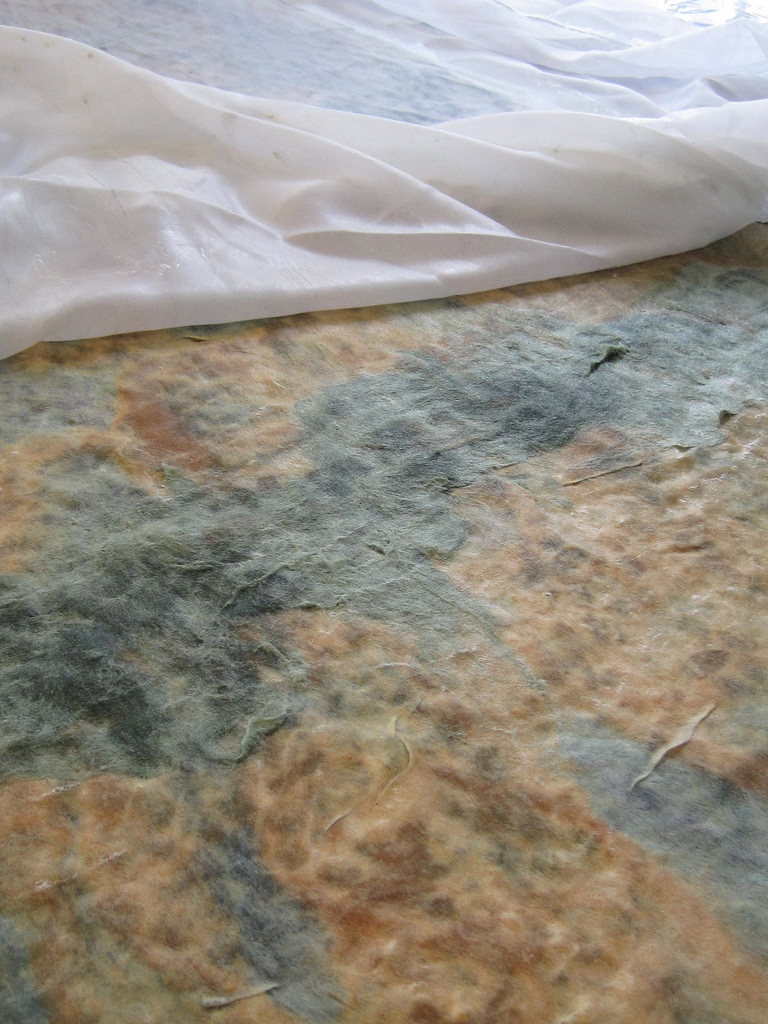
Four minutes in washer spin cycle, then popped the scarf only into a lingerie bag and put in dryer for 4 minutes.  Good thing I looked after 4 minutes, because the scarf jumped out of the lingerie bag and was folded in half.  I carefully peeled it apart (phew!) and there you go!
Long view:

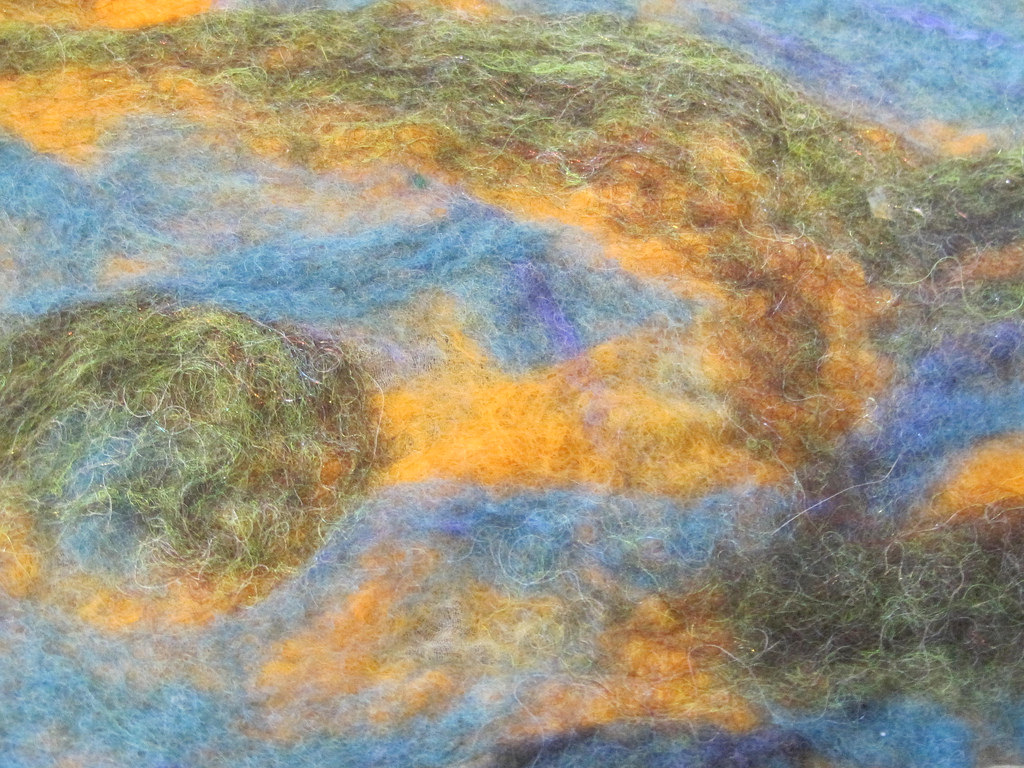
pic 8Close up:

Pic 9Underside, see prominent green bands:

pic 10Close up of underside:

pic 11There was a little shrinkage (finished scarf measures 49″ x 15″) but I would have liked to see more ruching or ruffling effects. I consider this a success and am ready to try my third scarf, hopefully improving along the way!
Many thanks to all of you who wrote in and provided sound advice to a newbie nuno-felter!

First Quarter Challenge 2014 – Lyn’s Entry

First Quarter Challenge 2014 – Lyn’s Entry

Our Guest Post today for the First Quarter Studio Challenge, is from Lyn.

***

I’ve enjoyed this challenge and I’ve learnt a little about one of America’s most influential artists. Some of Jackson Pollock’s art is interesting, yet some pieces remind me of kitchen counter tops – for example, ‘Lavender Mist’:

lavender-mistI wanted to find a Jackson painting to inspire me so I hit ‘Google images’ and quickly found one I liked.
It was headed ‘Abstract art by Jackson Pollock, oil painting on canvas’.
Enthusiastically I chose my colour palette:

Jackson Pollock merino wool paletteAt this point, I would like to have shown you the painting that was my inspiration, but (blushing ever so slightly) I can’t.
I have since discovered that it’s really a ‘Pollock-style’ painting that’s mass produced in Asia.

So, moving swiftly on, here is my Pollock-style felt picture – finished size is 18″ x 15″.

felt in the style of Jackson PollockI made a base of two layers of white merino topped with one layer of rusty-red.  I started the fourth layer by making a border all around with the same red, then working inwards with ever decreasing ovals, I put down dusty orange,  gold, yellow then white in the middle.  The fifth layer was a repeat of the fourth.  On top I placed strips of blue, rusty-red and slate in a representation of broad brush strokes then drizzled some strands of silk tops along some of them.  Finally, I dotted on wool nepps to represent drips of paint.

After ten minutes of agitating the wool fibres, I folded the edges under because I wanted the finished piece to have quite straight edges, as a painting on a canvas would.  They were looking good and straight during the felting but they warped during the fulling because of the uneven layers.

Happy though I was with finished piece, I decided to cut it up with a rotary cutter and re-arrange the slices.  I stuck the slices to a board, took a photo, then added a border to make it look like a painting.

framed felt in the style of Jackson Pollock - mk iiNow, where did I put the phone number for the Tate Modern……