
Composition and Design – Harmony and Unity

Unity is the presentation of an image that is integrated; an agreement exists between the various elements and they look as if they belong together. Another term for this is harmony. If the various elements are not harmonious, if they appear separate or unrelated, your design is not cohesive and lacks unity. An important aspect of unity is that the whole of the design should be dominant – you should see the whole before seeing the individual parts. Creating visual unity is made easier by the fact that the viewer is looking for some sort of organization, something to relate the elements. Viewers tend to group objects that are close into one unit; negative spaces will also be organized. Objects of similar shapes will be grouped together by the viewer’s brain. Our brain looks for similar elements, and when these elements are recognized, we will see a cohesive design.

Unity can be achieved by the following methods:

Proximity – put the elements close together
Repetition – repeat various parts of the design to relate the parts to each other
 Continuation – continue an element from one form or another to draw the eye

Continuity – the planned arrangement of various forms so that their edges are lined up i.e. using a grid to create serial designs (thanks for the use of your photo Zed!)

Using repetition to create harmony and unity is often seen in traditional quilt patterns. Shapes are repeated and colors are repeated to give a pleasing unity to the quilt. I don’t make many quilts and the piece above is made from selvages that are repeated. Often the quilting is repeated over the quilt’s surface and that may create a unifying factor.

However, you don’t want too much unity as it can be boring. Thus you must consider adding variety. Shapes may repeat, but perhaps in different sizes; colors may repeat, but in different values.

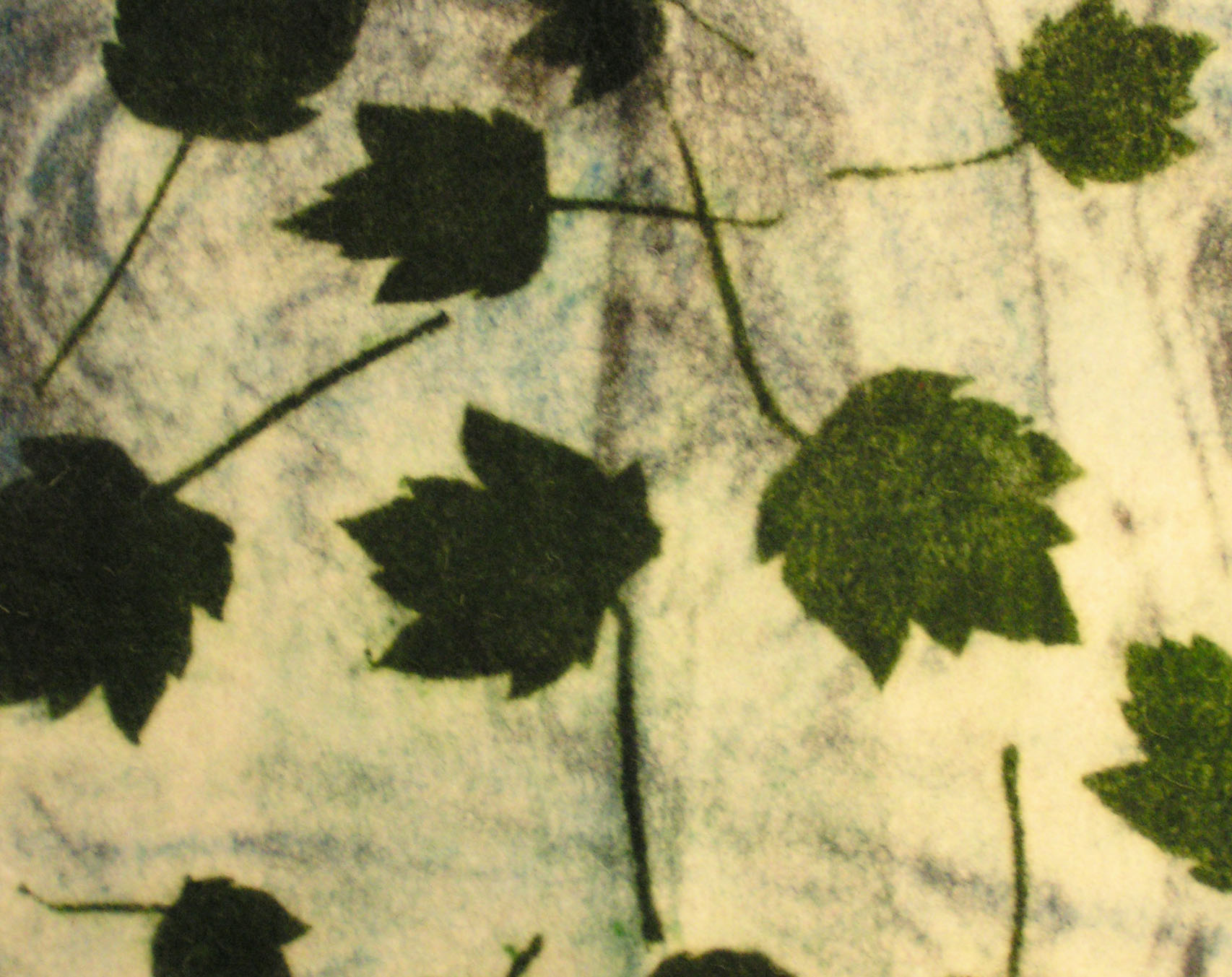
Any of the design elements that I have discussed before can be repeated. This is a simple pattern of repeating lines based on frost. Think about how to use the different elements in your composition and how you can repeat them to create harmony. Should you use repetition of line, shape, color?

And the shapes or lines that are repeated do not have to be the same. Similar shapes and lines that are related still give repetition and a feeling of unity without being too boring.

Questions to get you started:
Can you produce a design that is only of one subject repeated many times? How do you keep this design from becoming boring?

Practice making small compositions with a variety of geometrical shapes. How do the elements look scattered randomly across the surface? What happens when you move the items into groups that are close together or overlapping? What does your design look like with similar shapes repeating in a pattern? How can you move the viewer’s eye from one shape to the next? If you use a grid as your format, how does this affect the design?